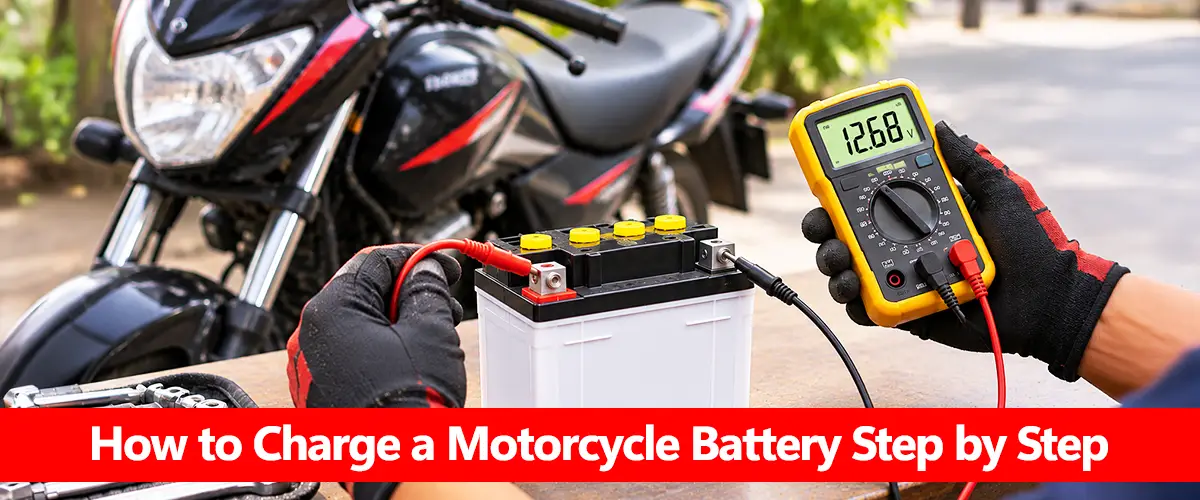
Learning how to test motorcycle battery starts with checking its voltage using a digital multimeter. A fully charged conventional 12V lead-acid motorcycle battery typically reads around 12.6V or higher after resting, while many AGM batteries measure approximately 12.8–13.0V.
However, voltage alone cannot confirm battery health. A motorcycle battery may appear fully charged but still struggle to power the starter motor. For a reliable assessment, check resting voltage, starting performance and whether the motorcycle’s charging system is working correctly.
What You Need Before Testing
Most basic motorcycle battery checks require only a digital multimeter and access to the battery’s approved test points. You do not normally need to remove the battery for a simple voltage measurement.
Before starting, prepare:
- Digital multimeter with DC voltage measurement
- Motorcycle owner’s manual
- Safety glasses and suitable gloves
- Clean, dry working area
- Compatible battery charger, if charging is needed
First, identify whether your motorcycle uses a 6V or 12V battery. Most modern motorcycles use 12V systems, but older motorcycles may differ. Also confirm whether the battery is conventional lead-acid, AGM or lithium, as the expected voltage readings are not identical.
Our motorcycle battery guide explains these specifications, while battery voltage explained covers the basics of voltage.
Safety: Do not test or charge a battery that is swollen, leaking, cracked, frozen or unusually hot. Seek professional assistance if physical damage is visible.
How to Test Motorcycle Battery With a Multimeter
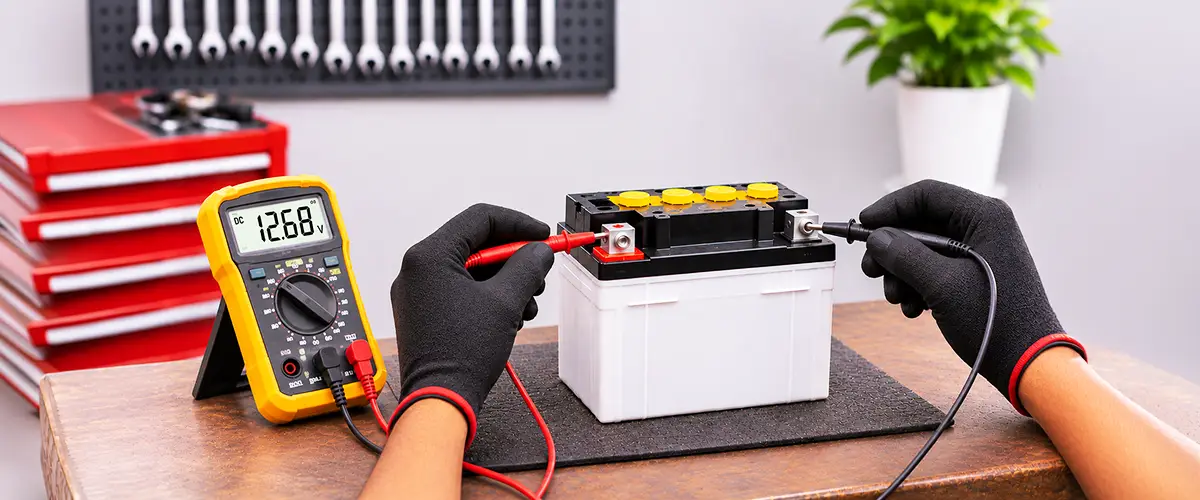
For a conventional 12V motorcycle battery, the basic resting-voltage test is simple. The main requirement is taking the measurement after the battery has had time to settle.
Follow these steps:
- Switch off the motorcycle. Remove the key and turn off all accessories.
- Let the battery rest. Wait at least one hour after riding or charging for a more reliable reading.
- Set the multimeter. Select DC voltage, using the 20V range if the meter is not auto-ranging.
- Connect the probes. Place the red probe on positive (+) and black on negative (−).
- Read the voltage. Record the measurement without allowing the probes to touch.
- Compare the result. Use the battery manufacturer’s voltage specifications to assess charge condition.
Keep the meter set to voltage rather than current. Never place a meter in amperes mode directly across the battery terminals, as this can create a dangerous short circuit. For additional multimeter guidance, see how to test a battery with a multimeter.
Motorcycle Battery Voltage Chart
For conventional 12V lead-acid batteries, resting voltage provides a useful indication of how much charge remains.
| Resting Voltage | General Battery Condition |
| 12.6V or higher | Well charged |
| Around 12.4V | Partially discharged |
| Around 12.1–12.2V | Significantly discharged |
| Around 12.0V | Very low charge |
| Below 12.0V | Severely discharged or potentially deteriorated |
These are approximate readings for conventional flooded lead-acid batteries at moderate temperatures. AGM batteries may have higher resting values, and lithium batteries require chemistry-specific interpretation.
For example, if your motorcycle battery reads 12.2V, charging may be needed before checking its overall health. But if it reads 12.7V and the starter still turns slowly, the battery may have insufficient starting-current capability.
This is the difference between battery state of charge and state of health. A multimeter reading can indicate charge level, but a professional performance test may still be necessary.
Check the Battery While Starting the Motorcycle
The starter motor places a much greater electrical load on the battery than lights or dashboard electronics. A weak battery may show normal resting voltage but experience an excessive voltage drop when the starter operates. For some conventional 12V lead-acid motorcycle batteries, a cranking reading below approximately 9.5V at moderate temperature suggests that further testing is needed. This is not a universal replacement threshold; battery charge, temperature and manufacturer specifications affect the result. If your motorcycle has accessible, manufacturer-approved test points and the leads can be secured safely, a suitable meter with a minimum-voltage function may help capture the drop during starting.
Do not hold loose probes near moving engine components. If the test points are difficult to access, let a qualified technician perform the check using a suitable battery analyzer or load tester.
A professional test can assess starting capability more reliably than voltage alone. See how to check battery health for the distinction between battery charge and performance.
Is Your Motorcycle Charging the Battery Properly?
A battery may test low because the motorcycle’s stator, regulator-rectifier or charging connections are not working correctly. In that situation, installing a new battery without repairing the fault can result in repeated discharge.
On many conventional 12V motorcycles, charging voltage may reach approximately 13.0–14.5V at the engine speed specified by the manufacturer, often around 3,000–4,000 rpm. The correct range depends on the motorcycle’s electrical system.
| Observation | What It May Suggest |
| Voltage rises to the specified charging range | Charging system may be operating normally |
| Voltage stays near resting battery voltage | Insufficient charging may be occurring |
| Voltage exceeds the manufacturer’s limit | Regulator or charging-control fault possible |
| Battery loses charge despite normal charging | Battery condition or standby electrical draw needs checking |
Do not treat one voltage reading as a complete charging-system diagnosis. Charging behavior varies by motorcycle design, engine speed and electrical demand. If the battery repeatedly becomes discharged, read motorcycle battery keeps dying for the related troubleshooting process.
What to Do When Your Test Results Are Low
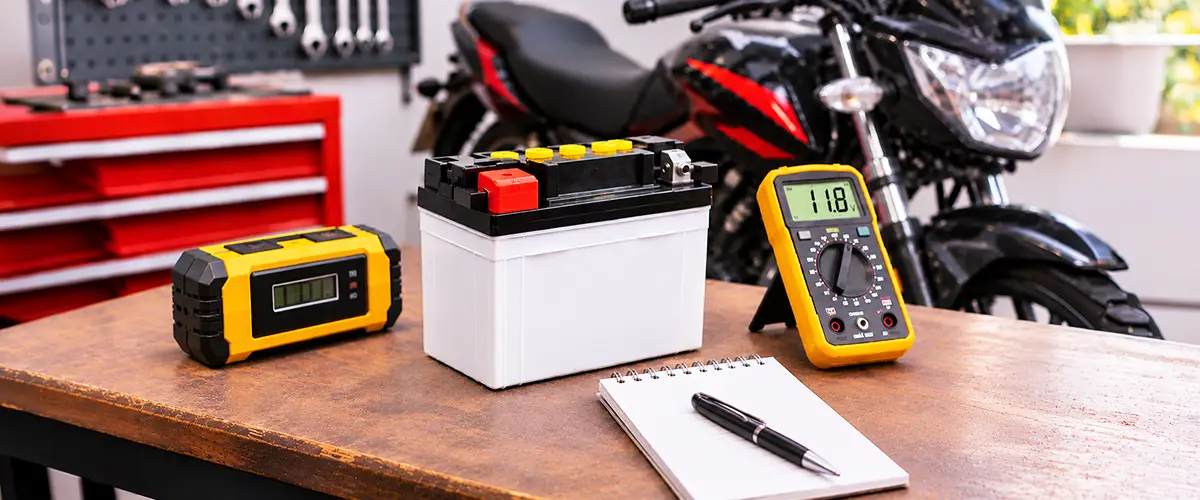
A low reading does not automatically mean you need a replacement. The battery may simply be discharged after extended parking, frequent short rides or electrical accessories remaining active.
Use this practical decision guide:
- Low resting voltage: Recharge using equipment approved for the battery.
- Good voltage but slow starting: Arrange a starting-current or load test.
- Low charging voltage: Have the regulator-rectifier, stator and connections inspected.
- Repeated discharge: Investigate battery condition and unwanted electrical consumption.
- Failed professional test: Consider replacing the battery with a compatible model.
Our how to charge a motorcycle battery guide explains safe charging procedures. If the battery is several years old, how long motorcycle batteries last provides useful replacement context. For batteries that cannot retain charge after proper testing, see battery won’t hold charge.
Mistakes That Lead to Incorrect Battery Test Results
The most common mistake is measuring voltage immediately after charging. Temporary surface charge may produce an unusually high reading, making the battery appear healthier than it is. Other mistakes include using 12V reference values for a 6V battery, treating normal voltage as proof of good starting performance, or applying lead-acid voltage charts to lithium starter batteries. A conventional flooded battery and an AGM battery can also have different full-charge voltage readings. Always check the manufacturer’s specifications before deciding that a reading is abnormal. If testing confirms replacement is necessary, compare the correct battery model and specifications rather than buying solely by price. Our motorcycle battery price in Pakistan guide covers local price research.
Conclusion
Knowing how to test motorcycle battery helps you distinguish a discharged battery from a weak battery or faulty charging system. Start with a resting-voltage measurement, then consider starting performance and charging voltage if problems continue.
For many conventional 12V lead-acid batteries, approximately 12.6V or higher indicates a well-charged state. However, battery health cannot be confirmed through voltage alone. If the motorcycle struggles to start after proper charging, arrange a professional performance test before replacing the battery.
Frequently Asked Questions
How Do I Test a Motorcycle Battery With a Multimeter?
Set the multimeter to DC volts and connect the red probe to the positive terminal and the black probe to the negative terminal. Record the resting voltage and compare it with the battery manufacturer’s specifications.
What Should a 12V Motorcycle Battery Read?
A fully charged conventional 12V lead-acid battery commonly reads around 12.6V or higher after resting. AGM batteries may measure approximately 12.8–13.0V.
Is 12.3V Too Low for a Motorcycle Battery?
For a conventional 12V lead-acid battery, 12.3V indicates partial discharge. Recharge it appropriately and retest before deciding whether replacement is necessary.
Can a Motorcycle Battery Show Good Voltage but Still Be Bad?
Yes. A battery can have normal resting voltage but insufficient starting-current capability. A professional load or conductance test can help identify the problem.
How Do I Know if My Motorcycle Is Charging the Battery?
A charging-system check compares battery voltage with the engine off and running. Follow the motorcycle manufacturer’s specified test speed and voltage range.
Can I Test an AGM Motorcycle Battery the Same Way?
You can measure its DC voltage similarly, but the expected values may differ from conventional flooded lead-acid batteries.
Does a Low Voltage Reading Mean I Need a New Battery?
Not necessarily. The battery may be undercharged. Recharge and retest it, then investigate charging or battery-health problems if the reading remains abnormal.