This motorcycle battery guide explains how bike batteries work, their different types and the specifications that matter when choosing or maintaining one. A motorcycle battery is a rechargeable electrical power source that supports engine starting, ignition systems, lights and electronic accessories, depending on the motorcycle’s design.
Most modern motorcycles use a 12V battery, while some older models operate on 6V systems. Battery capacity, physical dimensions and starting performance vary between motorcycles, so a battery suitable for a Honda CD 70 may not be appropriate for a Honda CG 125, Yamaha YBR or Suzuki motorcycle.
How Does a Motorcycle Battery Work?
A motorcycle battery stores chemical energy and converts it into direct current (DC) electricity. On motorcycles equipped with electric starters, the battery supplies current to the starter motor, which rotates the engine until it begins running. It also helps power lights, the horn and electronic systems.
Once the engine starts, the motorcycle’s charging system normally replenishes the battery. This system generally includes a stator or alternator and a regulator-rectifier that converts and regulates electricity for the bike’s electrical components.
However, riding does not always fully recharge a deeply discharged battery, especially during short journeys. Understanding how batteries store energy explains the basic principle, while our upcoming motorcycle battery charging guide covers charging methods in detail.
Different Types of Motorcycle Batteries
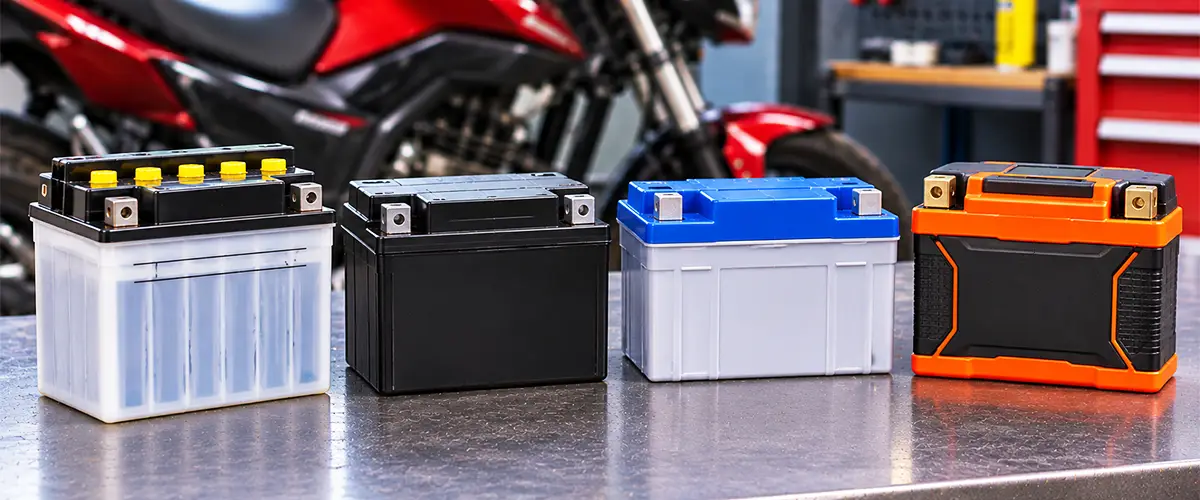
Motorcycle batteries are available in several technologies, each with different maintenance and charging requirements.
| Battery Type | Main Characteristics | Typical Use |
| Conventional lead-acid | Liquid electrolyte; some models require maintenance | Older and standard motorcycles |
| AGM | Absorbed electrolyte; sealed and low maintenance | Modern motorcycles and scooters |
| Gel | Immobilized electrolyte with specific charging needs | Selected compatible applications |
| Lithium starter battery | Lightweight; requires compatible charging and protection | Selected performance motorcycles |
Conventional lead-acid batteries remain common because they are widely available and suitable for many motorcycle electrical systems.
An AGM battery typically requires less routine maintenance because its electrolyte is held within glass-fiber separators. However, maintenance-free does not mean it never needs charging.
Specialized lithium batteries may offer weight savings, but compatibility with the motorcycle’s charging system and protection electronics must be verified before installation.
Motorcycle Battery Voltage, Ah and CCA Explained
Three important specifications appear on motorcycle battery labels: voltage, amp-hour capacity and cold cranking amps. Voltage (V) identifies the battery’s electrical system, Ah represents rated charge capacity, and CCA indicates starting-current performance under standardized cold conditions.
For example, a motorcycle battery labeled 12V, 5Ah supplies a nominal 12V electrical system and has a rated capacity of 5Ah under specified testing conditions.
A larger motorcycle may need more starting-current capability than a smaller commuter bike, but Ah alone cannot determine whether a battery is suitable.
When comparing specifications, remember:
- Voltage: Must match the motorcycle’s electrical system.
- Ah capacity: Should meet the manufacturer’s requirements.
- CCA: Matters for electric-starting performance.
- Dimensions: Must fit the existing battery compartment.
- Terminal position: Must match the motorcycle’s wiring.
The differences between Ah and battery capacity and battery voltage are explained in our dedicated guides.
6V vs 12V Motorcycle Batteries
Most modern motorcycles use 12V electrical systems, while some older and vintage models use 6V batteries. The two voltages are not interchangeable without appropriate system modifications. A 12V lead-acid battery contains six electrochemical cells, while a conventional 6V battery contains three. Each cell produces approximately 2V nominally. Installing a 12V battery in a motorcycle designed for 6V operation can damage electrical components. Similarly, a 6V battery cannot properly support equipment designed for a 12V system. Always check the motorcycle’s service manual and original battery specification before purchasing a replacement.
How to Choose the Right Motorcycle Battery in Pakistan
Motorcycle battery requirements vary by model, engine configuration and electrical equipment. Popular Pakistani motorcycles such as the Honda CD 70, Honda CG 125, Yamaha YBR and Suzuki GS 150 should not automatically be assumed to use identical batteries.
The safest approach is to identify the existing battery’s model code and confirm it against the manufacturer’s fitment information.
Before buying, check:
- Motorcycle make and model: Confirm the exact variant and year.
- Battery voltage and capacity: Match the specified V and Ah ratings.
- Battery type: Use an approved conventional, AGM or alternative design.
- Physical fit: Check dimensions and mounting position.
- Terminal arrangement: Ensure the positive and negative terminals match.
- Warranty and condition: Check manufacturing date and seller authenticity.
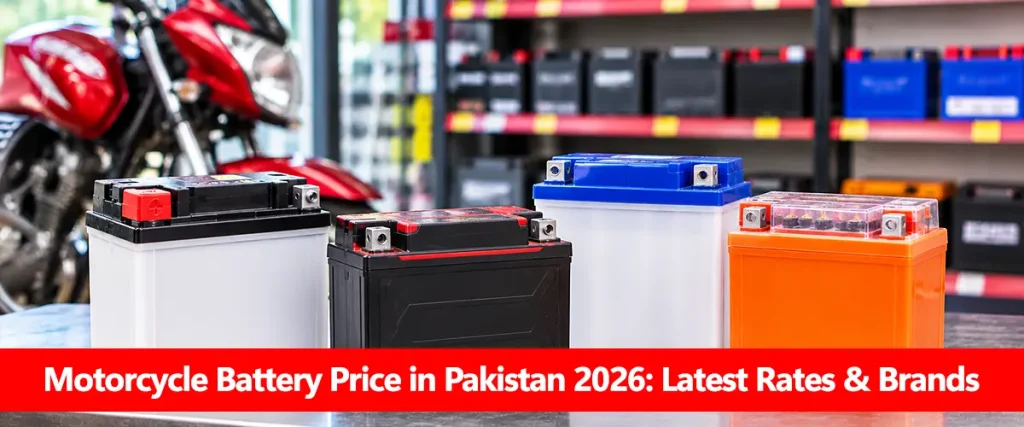
AGS and other manufacturers supply motorcycle batteries in Pakistan, but availability and fitment depend on the specific product. For local costs, our motorcycle battery price in Pakistan article covers the separate price-research topic.
Motorcycle Battery Charging and Maintenance
Regular maintenance helps maintain starting performance and reduce premature battery deterioration. Motorcycle batteries are relatively small, so extended parking, electrical accessories and insufficient charging can affect their available energy.
Yuasa recommends keeping motorcycle batteries adequately charged and using a suitable maintenance charger during extended storage. However, charging current and voltage must match the battery technology.
Useful maintenance habits include:
- Inspect battery terminals for corrosion or loose connections.
- Keep the battery securely mounted to minimize vibration.
- Avoid leaving electrical accessories operating unnecessarily.
- Check charge condition before extended storage.
- Use a charger approved for the battery’s voltage and chemistry.
- Maintain electrolyte levels only where the battery manufacturer permits servicing.
A conventional fully charged 12V lead-acid motorcycle battery often measures approximately 12.6–12.8V at rest, although AGM and lithium designs can have different voltage characteristics.
Our how to test a motorcycle battery guide explains how to assess its condition, while battery charging voltage covers charging fundamentals.
Signs Your Motorcycle Battery Needs Attention
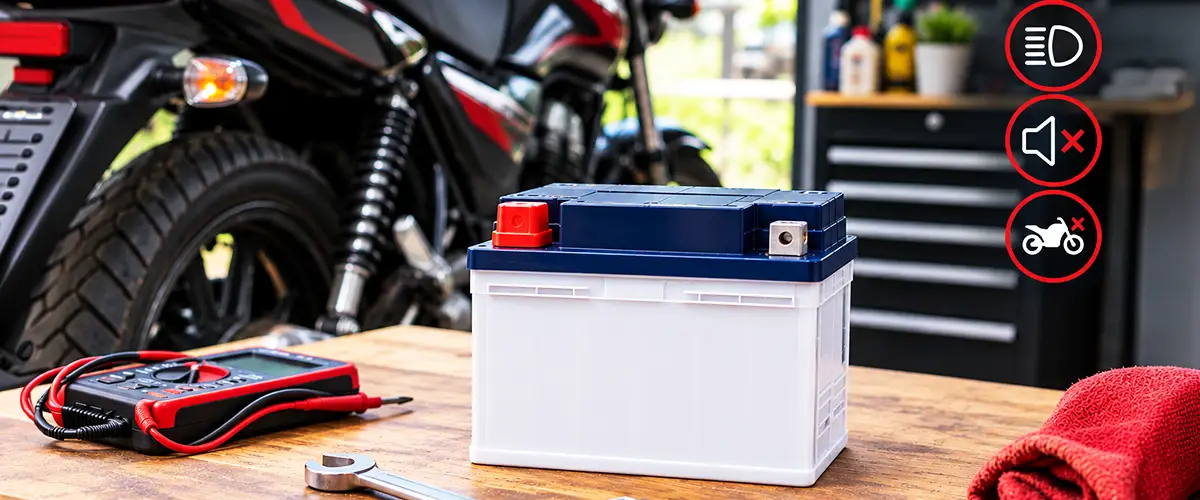
A weakening motorcycle battery may cause slow electric starting, dim lights, clicking sounds or difficulty starting after the bike has remained parked. However, faulty wiring, poor terminals and charging-system problems can create similar symptoms. If the motorcycle repeatedly struggles after being charged, inspect the battery’s condition and have the charging system tested. A regulator-rectifier fault can prevent proper charging or expose the battery to unsuitable voltage. Battery life also depends on temperature, use and maintenance. Our how long motorcycle batteries last guide explains expected service life, while motorcycle battery keeps dying covers repeated discharge problems.
Safety: Never charge or use a battery that is swollen, leaking, cracked, frozen or unusually hot. Lead-acid electrolyte is corrosive, and charging can release flammable gases. Seek professional assistance if the battery is physically damaged.
Motorcycle Batteries vs Other Battery Applications
Motorcycle starter batteries are generally designed to deliver relatively high current for engine starting. Their purpose differs from batteries used for continuous backup power or deep cycling.
For example, an electric bike battery often supplies energy to an electric drive motor rather than starting a petrol engine. Similarly, a generator battery may provide starting power for a different engine and operating environment.
A home backup battery is designed around storage and discharge requirements that are not necessarily suitable for motorcycle starting applications. These differences explain why batteries with similar voltage ratings cannot always be used interchangeably.
Conclusion
A motorcycle battery guide should help riders understand battery voltage, capacity, chemistry and compatibility before choosing or maintaining a battery.
Conventional lead-acid and AGM batteries are common options, while specialized lithium batteries require additional compatibility checks. The correct battery must match the motorcycle’s electrical system, physical dimensions and starting requirements.
Regular charging, secure connections and timely battery testing can help prevent unexpected starting problems and extend battery service life.
Frequently Asked Questions
What Type of Battery Is Used in Motorcycles?
Most motorcycles use rechargeable lead-acid batteries, including conventional flooded and AGM designs. Some models support specialized lithium starter batteries.
Are Motorcycle Batteries 6V or 12V?
Most modern motorcycles use 12V batteries, while some older or vintage motorcycles use 6V systems. Always confirm the vehicle’s original specification.
What Does Ah Mean on a Motorcycle Battery?
Ah stands for amp-hours and describes rated charge capacity under specified conditions. It does not directly indicate how much starting current the battery can deliver.
Is AGM Better Than a Normal Motorcycle Battery?
AGM batteries offer low-maintenance construction and can provide reliable performance, but they must be compatible with the motorcycle’s charging system.
Does a Motorcycle Battery Charge While Riding?
Yes. Most motorcycles have a charging system that replenishes the battery while the engine runs. However, short rides may not fully recharge a deeply discharged battery.
How Long Does a Motorcycle Battery Last?
Lifespan depends on battery technology, temperature, charging and usage. Many conventional batteries last around two to three years, while AGM designs may last longer under favorable conditions.
Can I Install a Higher Ah Battery in My Motorcycle?
Only if it meets the manufacturer’s voltage, physical fitment, terminal and charging-system requirements. Higher Ah alone does not guarantee better performance.
Why Does My Motorcycle Battery Keep Dying?
Possible causes include battery aging, insufficient charging, faulty regulator-rectifier operation, poor electrical connections or excessive power consumption while parked.