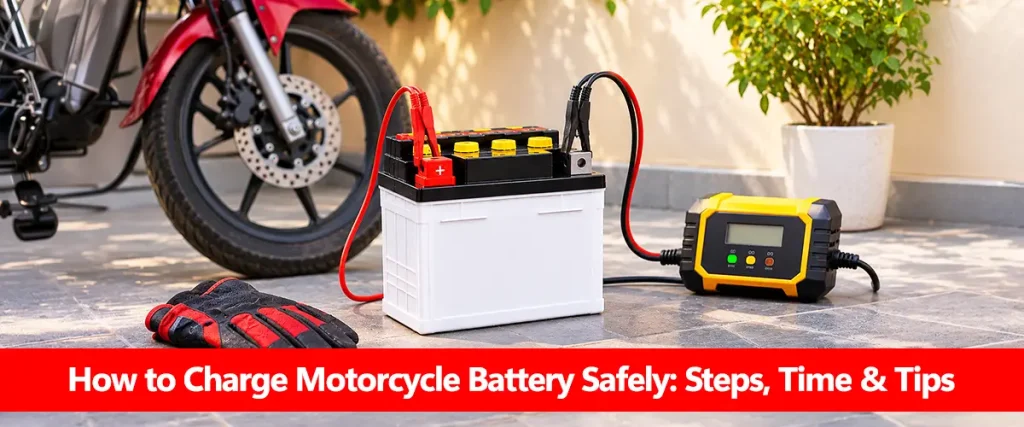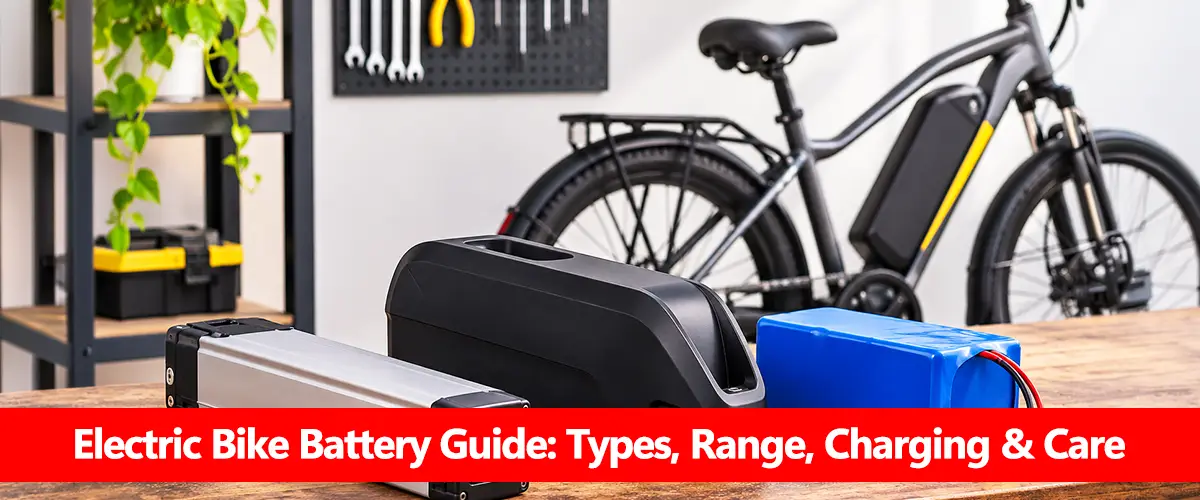
This electric bike battery guide explains how an e-bike battery works, what its voltage and capacity ratings mean, and how to maintain it safely. An electric bike battery is a rechargeable energy storage system that supplies DC electricity to the motor controller, which regulates power delivered to the electric motor.
Unlike a conventional motorcycle starter battery, an e-bike’s main battery powers the vehicle’s movement. Its capacity affects the potential riding range, while battery chemistry, controller compatibility and charging conditions influence overall performance. Understanding these basics helps riders compare battery specifications without relying only on advertised mileage.
How Does an Electric Bike Battery Work?
Most modern electric bicycles use rechargeable lithium-ion battery packs made from multiple cells connected in series and parallel. The cells store chemical energy and release electrical energy when the rider activates pedal assistance or throttle power, depending on the bike’s design.
Electricity flows from the battery through a motor controller to the electric motor. A Battery Management System (BMS) monitors important operating conditions such as voltage, current and temperature, and provides protection against certain electrical faults.
The key components are:
- Battery cells: Store and release energy through electrochemical reactions.
- BMS: Monitors and protects the battery pack within its designed limits.
- Motor controller: Regulates electricity supplied to the motor.
- Charger: Restores the battery’s stored energy.
- Battery enclosure and connectors: Protect components and provide electrical connections.
The underlying process is explained in how batteries store energy, while the battery management system guide covers the role of electronic protection.
Electric Bike Battery Types: Lithium-Ion, LiFePO4 and Lead-Acid
Different battery chemistries offer different combinations of weight, capacity, cycle life and cost. The most suitable option depends on the e-bike’s original design rather than chemistry alone.
| Battery Type | Main Advantage | Main Consideration |
| Lithium-ion (NMC and related types) | High energy density and relatively low weight | Requires appropriate BMS and charging |
| LiFePO4 | Strong cycle-life potential and thermal stability | Generally heavier for comparable stored energy |
| Lead-acid | Lower initial purchase cost in some applications | Heavy and lower usable energy for a given weight |
Lithium-ion batteries are common in modern pedal-assist bicycles because reducing battery weight improves handling and efficiency. LiFePO4 batteries are also used in selected electric two-wheelers where cycle life and durability are priorities.
Lead-acid systems are found in some budget electric scooters and bikes, but replacing one chemistry with another requires compatible voltage, charging equipment and controller settings. For a broader comparison, see lithium vs lead-acid batteries.
Understanding Voltage, Ah and Watt-Hours
Electric bike batteries are commonly described using three specifications: voltage (V), amp-hours (Ah) and watt-hours (Wh).
Voltage must match the electric bike’s approved electrical system. Ah describes rated charge capacity, while Wh represents nominal stored energy and is generally more useful when comparing potential riding range.
| Battery Rating | Nominal Energy |
| 36V 10Ah | 360Wh |
| 36V 15Ah | 540Wh |
| 48V 10Ah | 480Wh |
| 48V 15Ah | 720Wh |
The simplified relationship is Wh = V × Ah.
For example, a 48V 15Ah battery stores approximately 720Wh of nominal energy. However, usable energy may be lower because of battery protection limits, temperature and operating conditions.
Bosch’s official battery range includes 36V systems with energy capacities around 400Wh, 500Wh and 800Wh, demonstrating why Wh is a useful comparison metric. To understand these ratings further, see battery watt-hours and Ah vs Wh.
How Far Can an Electric Bike Travel on One Charge?
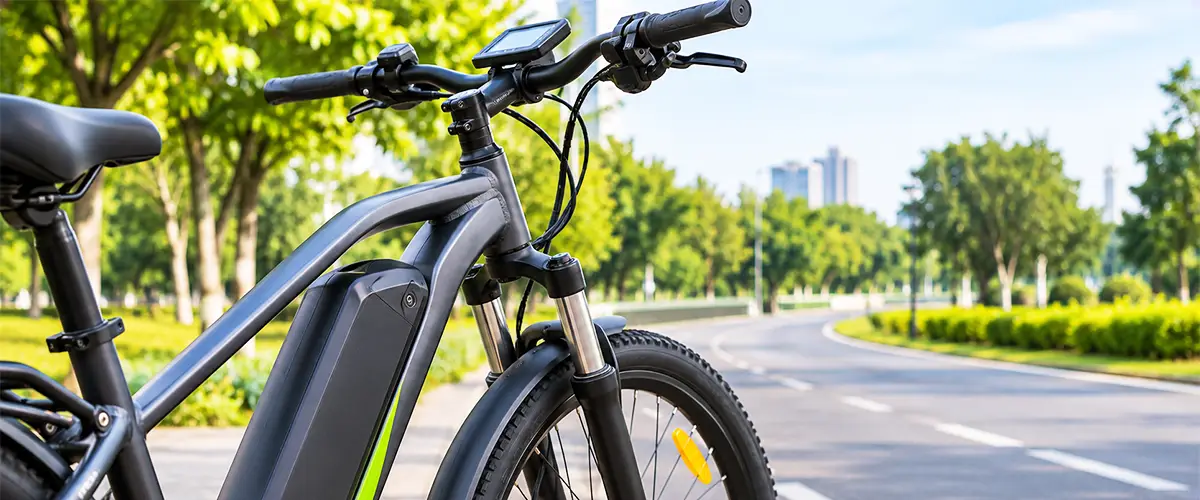
Electric bike range depends on battery capacity, motor efficiency, riding speed, rider weight and terrain. A larger Wh rating generally provides more potential riding distance when other conditions remain similar.
However, a 720Wh battery does not guarantee a specific number of kilometres. Riding uphill, accelerating frequently or using maximum motor assistance consumes more energy than riding steadily on flat roads.
The main factors affecting electric bike range include:
- Battery energy: Higher usable Wh can support longer riding.
- Motor assistance: Higher assistance or throttle use consumes more electricity.
- Rider and cargo weight: Heavier loads increase demand.
- Terrain: Hills require additional motor power.
- Tyre pressure and weather: Rolling resistance, wind and temperature influence performance.
Battery capacity is only one part of the equation. Our battery runtime calculation guide explains energy-use calculations, while depth of discharge helps explain why not all nominal energy is necessarily available.
How to Charge an Electric Bike Battery Safely
Charging safety is particularly important because e-bike batteries store substantial energy in compact packs. Use the original manufacturer-approved charger or an explicitly approved compatible replacement. Bosch recommends allowing its batteries to cool before charging, keeping them away from flammable materials and disconnecting the charger after charging is complete. Manufacturer instructions take priority because batteries may use different voltages, charging profiles and communication systems.
For everyday charging:
- Inspect the battery, charging socket and cable for visible damage.
- Let the battery cool if it is hot after riding.
- Charge in a dry, ventilated location away from combustible materials.
- Use the approved charger and follow its connection instructions.
- Disconnect when charging is complete, as directed by the manufacturer.
Avoid unattended or overnight charging, and never use a damaged, swollen or leaking battery.
Battery safety certification also matters. UL 2849 evaluates the electrical system of qualifying e-bikes, including interactions between the battery, charger and drive components. UL 2271 addresses battery packs for light electric vehicle applications. The battery charging time and battery charger selection guides explain related charging principles.
How Long Does an Electric Bike Battery Last?
Electric bike batteries gradually lose capacity through use and calendar aging. Their lifespan depends on chemistry, charging habits, operating temperatures and the number and depth of charge-discharge cycles. Lithium-ion batteries can provide many charging cycles, but a cycle-life figure does not guarantee a fixed number of years. High temperatures, prolonged storage at full charge and repeated deep discharge can contribute to faster deterioration.
For long-term storage, Bosch recommends approximately 30–60% charge for its e-bike batteries, while Shimano recommends around 70% for certain systems. Follow your battery manufacturer’s specific instructions rather than applying one rule to every pack. Our battery cycle life guide explains capacity loss over repeated use.
What to Check Before Replacing an E-Bike Battery
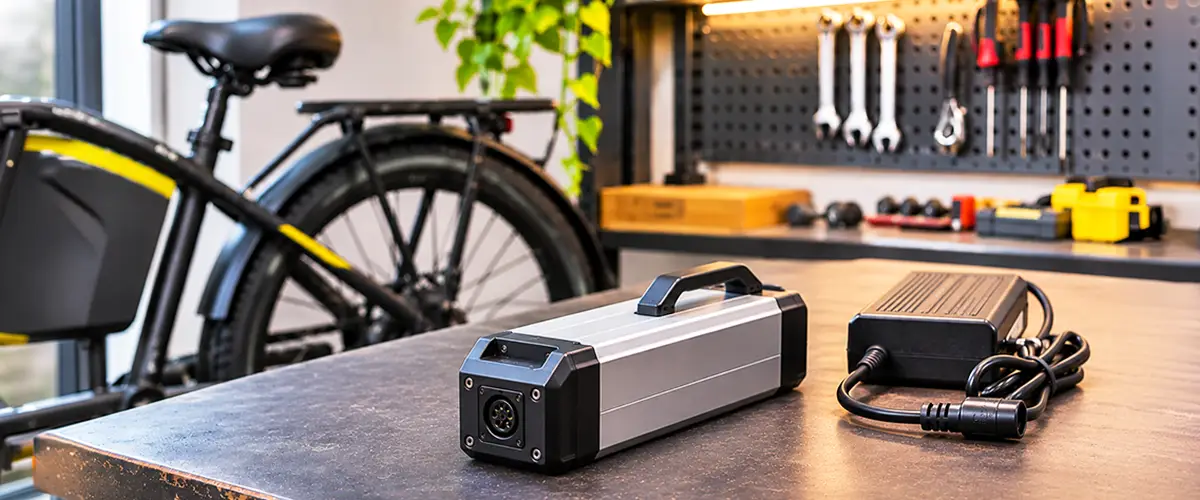
An electric bike battery is not interchangeable simply because another pack has the same voltage and Ah capacity. The connector, mounting system, BMS, controller compatibility and charger requirements must also match.
Before purchasing a replacement, verify:
- Original battery model and manufacturer-approved replacement.
- Nominal voltage and rated energy in Wh.
- Physical dimensions and mounting arrangement.
- Connector design and controller compatibility.
- BMS and charger compatibility.
- Warranty, product authenticity and safety certification where applicable.
This is especially important in Pakistan, where electric bicycles, scooters and electric motorcycles may use different battery designs despite similar marketing descriptions. An electric motorcycle’s traction battery also differs from the starter batteries covered in our motorcycle battery guide and motorcycle battery price in Pakistan articles.
Signs Your Electric Bike Battery Needs Attention
Reduced riding range does not always indicate battery failure. Tyre pressure, riding conditions and temperature can affect mileage, while charger or electrical-system faults can prevent proper charging.
However, a battery that repeatedly shuts down, loses capacity unusually quickly or fails to charge with approved equipment should be professionally inspected. Do not open the battery pack or attempt to replace individual lithium cells yourself.
Stop using or charging the battery if it swells, leaks, overheats, smokes or produces an unusual smell. Move away from the hazard, avoid handling it and contact emergency services if there are signs of fire or imminent ignition.
For related charging symptoms, see battery not charging. E-bike traction batteries also differ from the stationary storage systems described in home backup battery.
Conclusion
A reliable electric bike battery guide should help riders understand chemistry, voltage, Ah, Wh, riding range and battery safety. Lithium-ion batteries are widely used because of their energy density, while LiFePO4 and lead-acid systems have different strengths and limitations.
The right battery must match the bike’s electrical system, controller, BMS and charging requirements. Safe charging, sensible storage and manufacturer-approved replacement parts are essential for dependable performance.
Frequently Asked Questions
Which Battery Is Best for an Electric Bike?
Lithium-ion batteries are common in modern e-bikes because of their energy density and relatively low weight. The correct choice depends on the manufacturer’s specified chemistry and electrical system.
Is a 48V Battery Better Than a 36V Battery?
Not automatically. A 48V battery is suitable only for a compatible system. Riding performance and range also depend on Wh capacity, motor design and controller settings.
What Does Wh Mean on an Electric Bike Battery?
Wh stands for watt-hours and represents nominal stored energy. It is useful for comparing batteries’ potential riding range.
How Long Does an Electric Bike Battery Last?
Lifespan depends on chemistry, temperature, charging habits and cycling. Batteries gradually lose capacity over time, so manufacturer cycle-life data and warranty terms are useful references.
Can I Use a Higher Ah Battery on My Electric Bike?
Only when the manufacturer approves its voltage, BMS, connectors, mounting and controller compatibility. Higher Ah alone does not guarantee a safe replacement.
Can I Charge My E-Bike Battery With a Different Charger?
Use only the original or manufacturer-approved compatible charger. Matching voltage alone is not sufficient to establish charging safety.
Does Cold Weather Reduce Electric Bike Range?
Yes. Low temperatures can temporarily reduce available battery performance and riding range, although the effect varies by chemistry and conditions.
Can I Replace Lead-Acid With Lithium in an Electric Bike?
A conversion may be possible in some designs, but it requires compatibility checks for voltage, motor controller, charger, BMS, wiring and mounting. Professional evaluation is recommended.
Is an Electric Bike Battery the Same as a Motorcycle Battery?
Not generally. E-bike traction batteries supply energy to propel the vehicle, while conventional petrol motorcycle starter batteries primarily deliver current to start an engine.