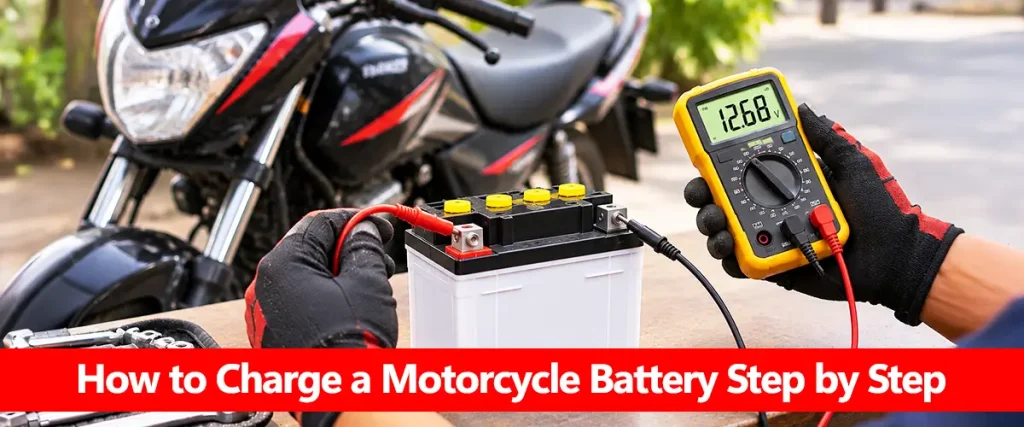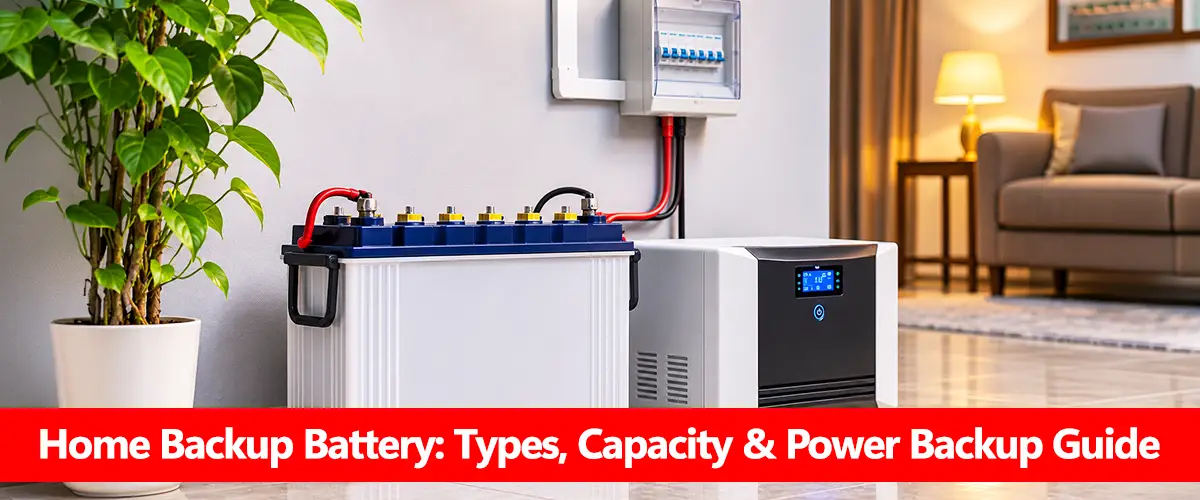
A home backup battery stores electrical energy and supplies power to household appliances during electricity outages. It normally works with a UPS, inverter or dedicated energy storage system to keep essential devices such as fans, lights, Wi-Fi routers and refrigerators running when grid electricity is unavailable.
In Pakistan, where load-shedding can interrupt daily activities, battery backup provides a practical alternative to relying entirely on grid power. However, backup performance depends on battery capacity, connected appliances, inverter efficiency and charging conditions. Understanding these factors helps homeowners select a suitable system without paying for unnecessary storage.
How Does a Home Backup Battery Work?
During normal operation, a backup system charges its battery using grid electricity, solar panels or another approved source. When electricity fails, a backup-capable inverter converts the battery’s stored DC energy into AC electricity for selected household circuits.
Some systems switch automatically, while others require manual operation. The battery supplies stored energy until grid power returns or its permitted discharge limit is reached. A suitable inverter battery and compatible charging equipment are therefore essential parts of the setup.
A battery alone cannot normally power standard AC household appliances directly. The complete system also requires correctly rated electrical protection and safe isolation from the utility grid.
Which Home Backup Battery Type Should You Choose?
Lead-acid and lithium batteries are common options for household backup systems. Their purchase costs, usable capacities and maintenance needs differ, so the choice depends on usage rather than battery technology alone.
| Battery Type | Main Advantage | Important Consideration |
| Flooded lead-acid | Often lower initial cost | Ventilation and maintenance requirements |
| Tubular lead-acid | Designed for suitable cycling applications | Heavy and requires proper charging |
| AGM / sealed lead-acid | Reduced routine maintenance | Sensitive to unsuitable charging |
| LiFePO4 lithium | High usable capacity and strong cycle-life potential | Requires compatible BMS and inverter |
For homes experiencing frequent power cuts, tubular batteries are one established lead-acid option. Meanwhile, LiFePO4 batteries are increasingly considered for systems requiring higher usable energy and less routine servicing.
Lithium does not automatically suit every existing inverter. Battery voltage, charger settings and communication requirements must match the equipment. Our lithium vs lead-acid battery guide explains these differences.
What Can a Home Backup Battery Run?
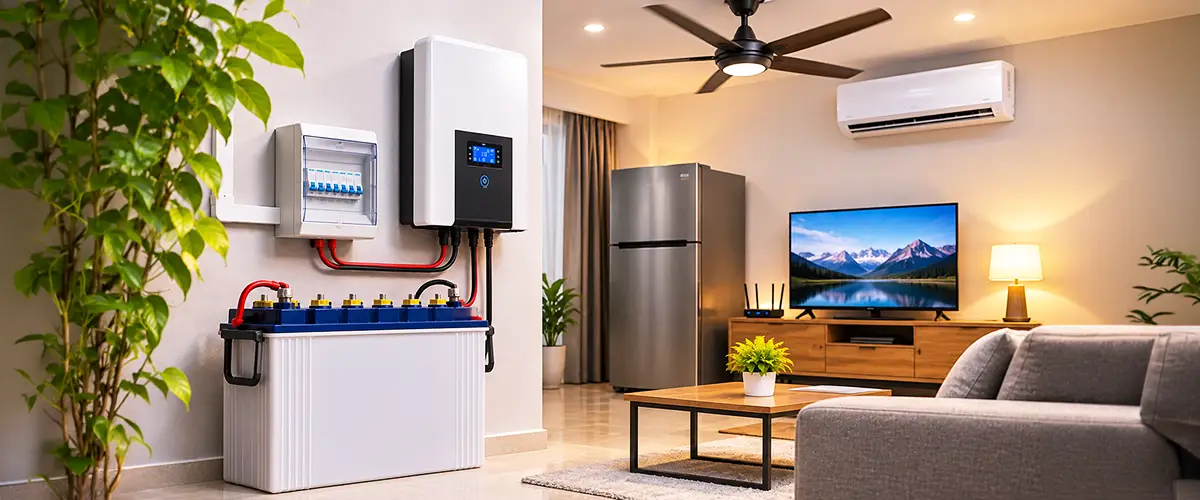
The appliances supported by a battery depend on their combined electricity consumption. A system powering LED lights and fans has very different requirements from one expected to run an air conditioner or electric heater.
For practical backup planning, divide household devices into essential and high-consumption loads.
| Appliance | Typical Power Range |
| LED bulb | 8–15W |
| Wi-Fi router | 8–20W |
| Efficient ceiling fan | 30–75W |
| LED television | 50–120W |
| Refrigerator | 100–250W while compressor runs |
| Air conditioner | Often 800W or more |
These are illustrative operating-power ranges. Actual appliance labels, operating cycles and startup surges determine system requirements.
Many households prioritize lights, fans, a router and selected outlets during outages. Refrigerators and motor-driven appliances also have startup surges that the inverter must handle. A larger battery increases potential backup duration, but it does not automatically increase the inverter’s maximum power output.
Understanding Home Battery Capacity and Backup Time
Home backup battery capacity is usually expressed in amp-hours (Ah) or watt-hours (Wh). Ah describes rated charge capacity, while Wh represents nominal stored energy.
For example, a 24V 100Ah battery bank contains approximately:
24V × 100Ah = 2,400Wh (2.4kWh)
However, not all nominal energy is available to household appliances. Battery discharge limits and inverter conversion losses reduce usable AC energy.
Consider an illustrative lithium system with:
- Nominal battery energy: 2,400Wh
- Permitted depth of discharge: 80%
- Assumed inverter efficiency: 90%
- Connected household load: 300W
Approximate usable AC energy:
2,400 × 0.80 × 0.90 = 1,728Wh
Estimated backup time:
1,728Wh ÷ 300W = 5.76 hours
This is a simplified example, not a guaranteed runtime. Actual performance depends on battery specifications, temperature, changing loads, inverter standby consumption and system protection limits. Lead-acid batteries may also deliver less rated capacity at higher discharge currents.
For precise planning, see battery bank sizing and how to calculate inverter battery backup time.
Home Backup Battery With Solar vs Without Solar
A home backup battery does not require solar panels. A conventional UPS or inverter system can charge from grid electricity and supply power during an outage.
Solar-connected systems can additionally store electricity generated during daylight hours. However, a standard grid-tied solar installation does not necessarily provide electricity during load-shedding. Backup operation requires suitable inverter capabilities, battery integration and safe grid isolation.
The practical differences are:
- Grid-charged backup: Stores electricity from the utility supply.
- Solar battery backup: Can store solar energy for later use.
- Hybrid backup: May combine solar and grid charging, depending on system design.
For solar-specific equipment and compatibility, explore solar batteries and solar battery sizing.
What Should You Check Before Installing a Backup System?
A reliable backup setup must match household electrical demand as well as battery specifications. The inverter should support the required continuous and startup power, while the battery bank must use the voltage and configuration approved by the manufacturer.
Before installation, confirm:
- Essential appliances: Identify which circuits need power during outages.
- Backup duration: Decide how many hours of support are required.
- Battery voltage: Match the inverter’s 12V, 24V or 48V requirements.
- Usable battery capacity: Consider chemistry and permitted depth of discharge.
- Charging compatibility: Confirm suitable charging voltage and current.
- Installation safety: Include appropriate protection, ventilation and grid isolation.
Lead-acid installations may require ventilation and maintenance access. Lithium systems require an approved battery management system and compatible electrical protection.
A qualified installer should design household connections. Never connect inverter output directly to household wiring without appropriate transfer and isolation equipment.
Home Backup Battery Maintenance and Lifespan
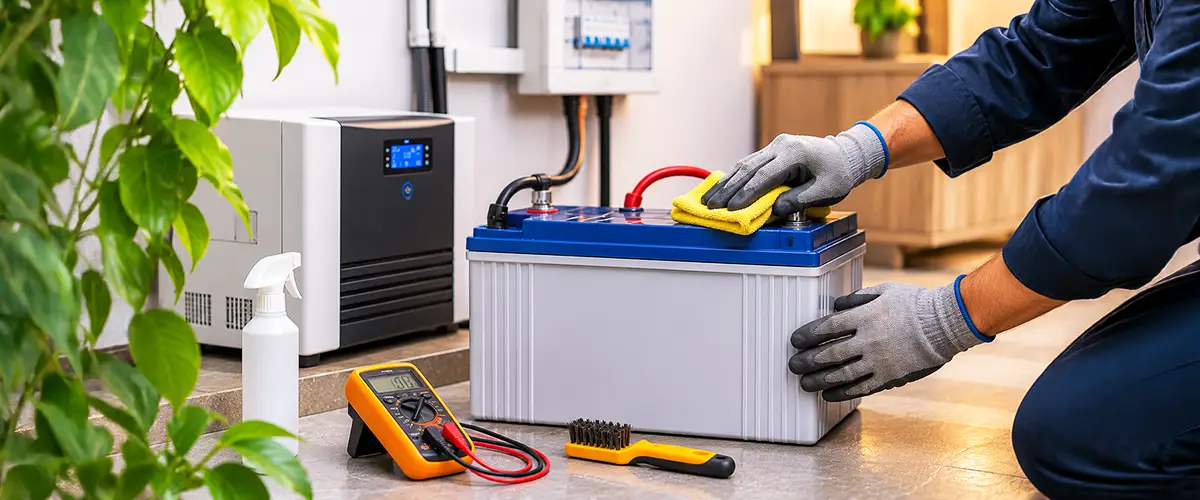
Battery lifespan depends on operating temperature, depth of discharge, charging conditions and how frequently the system is used. Repeated deep discharge can accelerate deterioration, particularly in lead-acid batteries.
For better performance, keep the system within its approved temperature range, maintain suitable ventilation and use the manufacturer’s charging settings. Inspect accessible connections periodically and address unusual heating or charging faults promptly.
Battery systems with adjustable backup reserves may also retain a portion of stored energy for outages. The depth of discharge and battery cycle life guides explain how usage affects long-term performance. If a battery becomes swollen, leaks, overheats or produces an abnormal odor, stop using the system where safe and seek professional assistance.
Is Battery Backup Better Than a Generator?
Battery systems provide stored electricity without running a fuel-powered engine, which can make them quieter for indoor household backup arrangements. However, backup duration remains limited by available stored energy and supported charging sources.
A fuel-powered generator produces electricity while its engine runs and fuel remains available, but it requires ventilation, servicing and appropriate electrical integration.
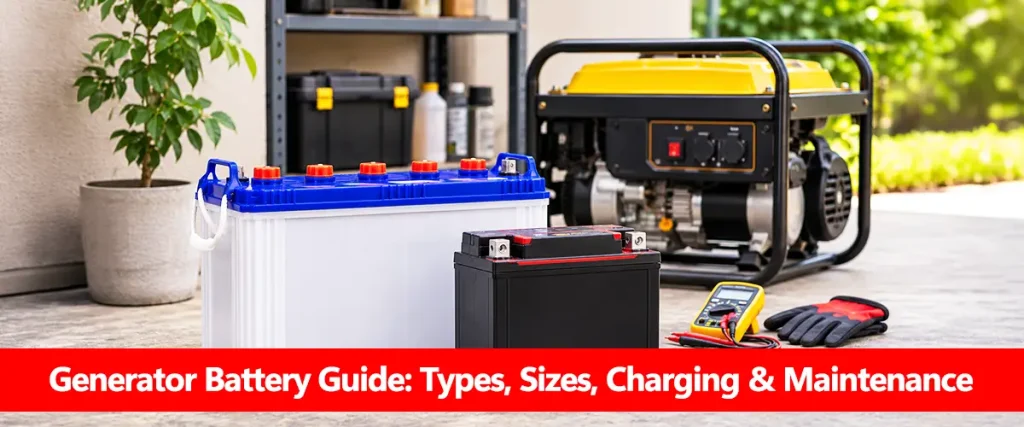
Some homes use both technologies for different outage scenarios. Our generator battery guide explains the generator’s starting battery, which serves a different purpose from household energy storage.
Conclusion
A home backup battery provides stored electricity for essential household appliances during power outages. Its effectiveness depends on usable battery capacity, appliance consumption, inverter compatibility and safe installation.
Lead-acid batteries remain suitable for many conventional backup systems, while LiFePO4 offers advantages in selected applications. The right choice is a system designed around your actual power requirements rather than battery capacity alone.
Frequently Asked Questions
What Is a Home Backup Battery?
A home backup battery stores electrical energy and supplies power through a compatible inverter or UPS when grid electricity becomes unavailable.
Which Battery Is Best for Home Backup?
The right battery depends on backup duration, budget, inverter compatibility and maintenance preferences. Tubular lead-acid and LiFePO4 are commonly considered options.
How Long Can a Home Backup Battery Last During an Outage?
Runtime depends on usable battery energy and appliance consumption. A larger battery may provide longer backup, but inverter losses and discharge limits affect actual performance.
Can a Home Backup Battery Work Without Solar Panels?
Yes. Grid-charged UPS and inverter systems can provide battery backup without solar panels.
Can One Battery Run an Entire House?
It depends on the battery’s usable capacity and the inverter’s power rating. High-consumption appliances may require a substantially larger system.
Is a Lithium Battery Better Than Lead-Acid for Home Backup?
Lithium batteries can offer higher usable capacity and longer cycle-life potential, but they usually involve greater initial cost and require compatible charging equipment.
Can I Connect a Home Backup Battery Directly to Appliances?
Standard AC household appliances generally require a compatible inverter. Electrical connections must follow appropriate protection and isolation requirements.
What Is the Difference Between a UPS Battery and a Home Backup Battery?
A UPS battery is one type of battery used for backup power. Home backup systems may use larger battery banks, hybrid inverters or solar-connected storage depending on household needs.