

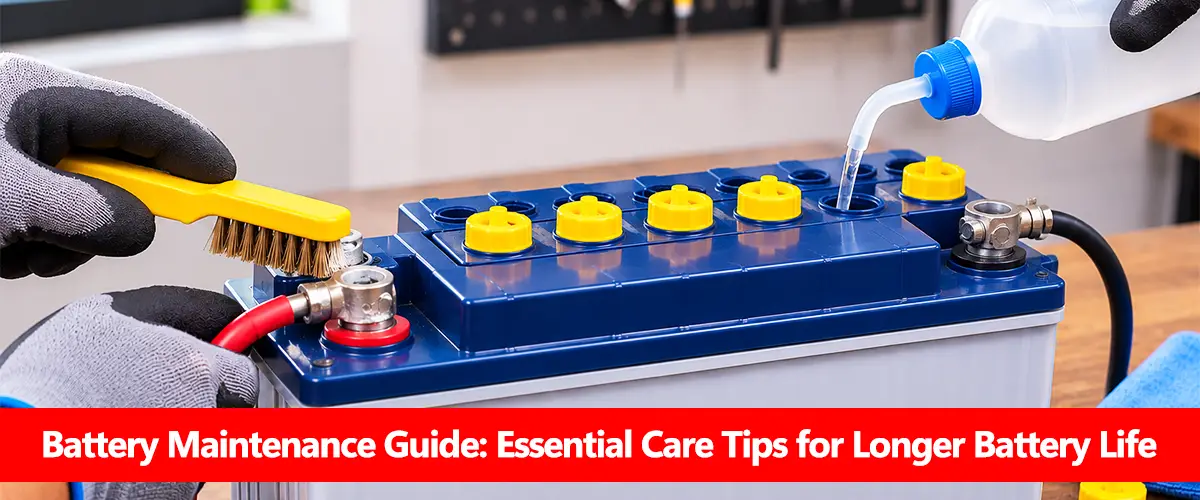
Battery maintenance means regularly checking, charging and caring for a battery to keep it operating safely and efficiently. It includes monitoring charge levels, inspecting terminals, preventing excessive heat and following the manufacturer’s maintenance instructions. Some batteries also require electrolyte-level checks, while sealed and lithium batteries have different servicing needs.
Proper care is important for car batteries, motorcycle batteries, UPS systems and solar energy storage. Although maintenance cannot stop natural battery aging, it can reduce avoidable damage, improve reliability and help extend usable service life.
Why Is Regular Battery Maintenance Important?
Rechargeable batteries gradually deteriorate as chemical reactions occur during charging and discharging. Excessive heat, prolonged undercharging and unsuitable charging voltage can accelerate this process, reducing capacity and overall performance.
For example, a lead-acid battery left partially discharged for long periods may develop battery sulfation. Similarly, dirty or corroded terminals can interfere with electrical connections, while poor charging can contribute to premature capacity loss. Understanding why batteries lose capacity helps explain why preventive maintenance matters. Regular inspection also makes it easier to identify problems before they interrupt vehicle starting or household backup power.
Battery Maintenance Requirements by Type
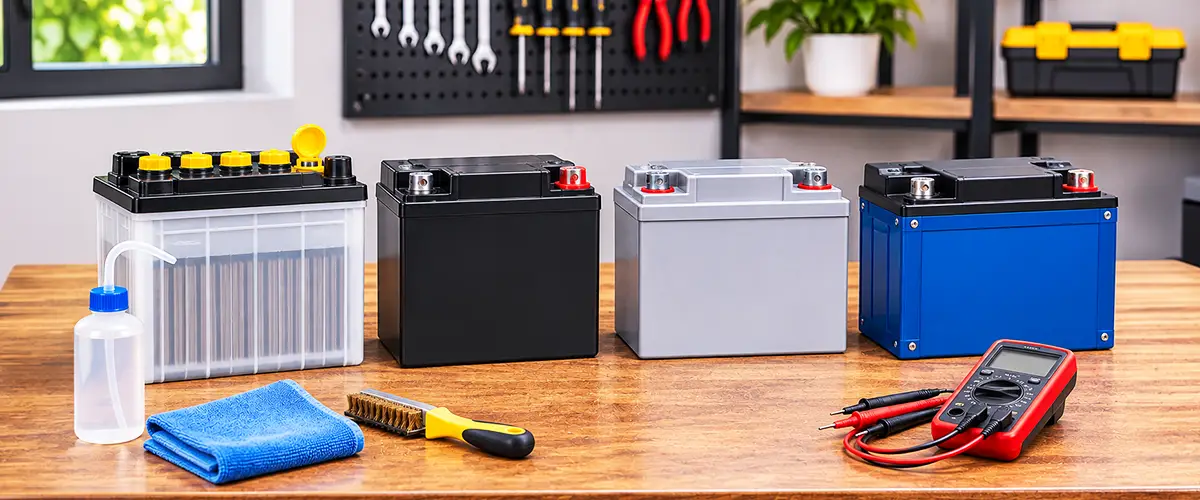
Not every battery requires the same maintenance. The correct approach depends on its chemistry, construction and application.
| Battery Type | Routine Maintenance | Important Precaution |
| Flooded lead-acid | Check electrolyte level, charge and terminals | Use approved water only |
| AGM | Check charge, connections and physical condition | Never open sealed cells |
| GEL | Monitor charging and connections | Use compatible charging settings |
| LiFePO4 | Monitor BMS, charge status and temperature | Follow lithium-specific limits |
Flooded lead-acid batteries may require periodic watering because charging can cause water loss. However, this applies only to serviceable designs. For more details, see how to check battery water level.
Sealed AGM batteries and GEL batteries do not require water top-ups. Lithium batteries generally need less routine physical servicing, but their charging equipment, battery management system and operating temperatures still need attention.
A Simple Battery Maintenance Checklist
Most routine battery care starts with observation rather than opening or disconnecting electrical equipment. A monthly visual check can be a useful starting point for accessible batteries, although inspection frequency should follow manufacturer recommendations and operating conditions.
Use this practical checklist:
- Inspect the battery case: Look for cracks, swelling, leaks or unusual heating.
- Check terminals: Identify corrosion, damaged cables or loose-looking connections.
- Monitor charge level: Check voltage or the system’s battery monitor where appropriate.
- Review charging equipment: Watch for charger errors or abnormal charging behavior.
- Check ventilation: Ensure the installation meets manufacturer requirements.
- Inspect electrolyte levels: Only for serviceable flooded batteries.
- Record unusual changes: Note declining runtime, starting difficulties or repeated discharge.
Not every inspection requires hands-on work. High-current battery banks, damaged connections and inaccessible installations should be checked by qualified personnel. For accurate electrical measurements, our how to check battery health guide covers the difference between battery charge and condition.
Keep Battery Charging Within the Correct Limits
Charging is one of the most important parts of maintenance. A battery repeatedly left undercharged may lose usable capacity, while excessive charging can cause heating, water loss or permanent damage.
Use a charger or inverter charging profile approved for the battery’s voltage and chemistry. Lead-acid systems may use bulk, absorption and float charging, whereas lithium systems require their own specified limits and protection controls.
Avoid these common mistakes:
- Using an incompatible charger.
- Ignoring charging-system warnings.
- Leaving a discharged lead-acid battery unused for long periods.
- Applying flooded-battery equalization settings to sealed AGM, GEL or lithium batteries.
- Assuming every battery should be charged at the same voltage.
Our battery charging voltage and how to choose a battery charger guides explain the relevant charging requirements.
Why Clean Terminals and Proper Water Levels Matter
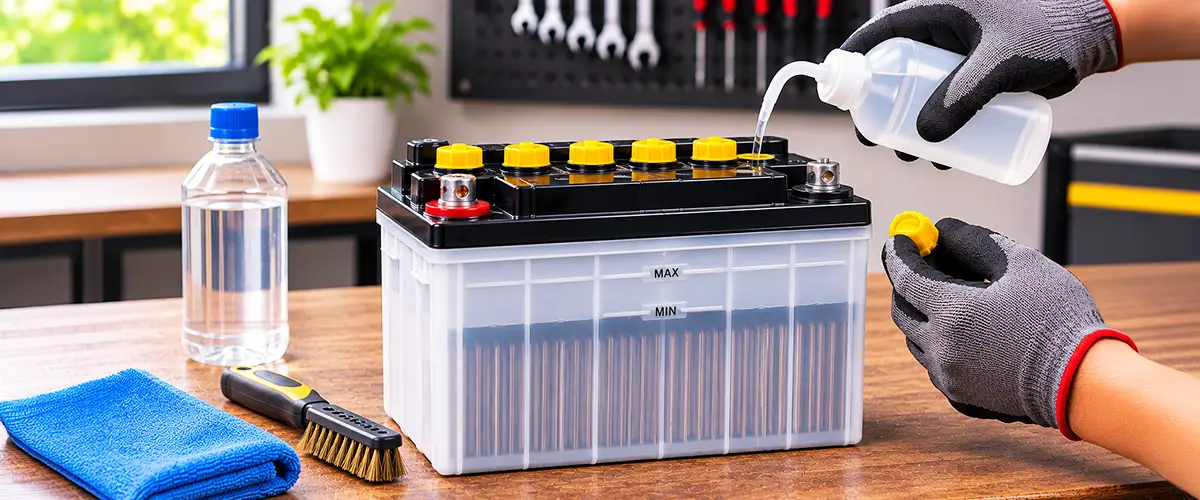
Battery terminals provide the electrical connection between the battery and the equipment it powers. Corrosion, dirt or loose connections can increase resistance and interfere with charging or discharge. Keeping terminals clean and dry helps maintain reliable performance, but cleaning must be done safely. Do not disconnect cables or apply cleaning solutions without following the manufacturer’s procedure. Our how to clean battery terminals guide covers the dedicated cleaning process.
For serviceable flooded batteries, electrolyte levels also require attention. Manufacturers such as Trojan recommend checking water levels regularly and using distilled water when top-ups are needed. In most circumstances, final water-level adjustment is performed after charging, with specific exceptions when plates are exposed.
Never add acid as routine maintenance, and never open sealed batteries. See distilled water for batteries for the correct water requirements.
Protect Batteries From Heat and Long-Term Discharge
Temperature and storage conditions strongly influence battery performance. High heat accelerates chemical aging, while prolonged discharge can damage some battery chemistries. These concerns are particularly relevant in Pakistan, where summer temperatures can put additional stress on car and home backup batteries.
Keep batteries within the manufacturer’s approved temperature range and maintain suitable ventilation. If a battery will remain unused, follow its chemistry-specific storage instructions rather than allowing it to discharge completely.
Lead-acid batteries generally need to be stored adequately charged. Lithium battery storage requirements differ by model and manufacturer, including recommended state of charge and periodic checks.
Read how to store batteries and temperature effect on batteries for detailed guidance. The battery self-discharge guide also explains why batteries lose charge even when disconnected.
How Do You Know When Maintenance Is Not Enough?
Maintenance can help preserve a healthy battery, but it cannot reliably restore severely damaged cells or reverse all age-related deterioration. A battery that repeatedly loses charge, provides unusually short backup or fails an approved performance test may require replacement.
Pay attention to warning signs such as:
- Noticeably reduced battery runtime or engine-starting performance.
- Frequent charging without lasting improvement.
- Excessive terminal corrosion or damaged connections.
- Repeated charger or battery-management-system faults.
- Swelling, leakage, smoke or abnormal temperature.
Stop using or charging a battery that is swollen, leaking, cracked, smoking or unusually hot. Avoid handling damaged batteries and seek qualified assistance. If smoke or fire is present, move away and contact emergency services.
Understanding battery state of charge vs state of health helps distinguish a temporarily discharged battery from one that has deteriorated. For longer-term care strategies, see how to extend battery life.
Conclusion
Effective battery maintenance involves regular inspections, correct charging, clean electrical connections and suitable operating temperatures. Serviceable flooded lead-acid batteries may also need water-level checks, while AGM, GEL and lithium batteries require maintenance appropriate to their construction.
Following manufacturer instructions and identifying problems early can help maintain reliable performance and reduce premature battery failure.
Frequently Asked Questions
What Is Battery Maintenance?
Battery maintenance involves monitoring charge condition, inspecting connections, keeping batteries within safe operating limits and performing manufacturer-approved servicing.
How Often Should a Battery Be Maintained?
Inspection frequency depends on the battery type and application. Monthly visual checks are useful for many accessible batteries, but manufacturer schedules take priority.
Do Maintenance-Free Batteries Need Maintenance?
Yes. Maintenance-free generally means reduced routine servicing, not zero care. Charging, connections, temperature and physical condition still matter.
Should I Add Water to Every Lead-Acid Battery?
No. Water is added only to serviceable flooded batteries when required. Sealed AGM and GEL batteries must not be opened or topped up.
Can Overcharging Damage a Battery?
Yes. Excessive charging can cause heating, deterioration and other safety problems. Always use the charging settings approved for the battery.
Does Battery Maintenance Increase Lifespan?
Proper maintenance can help prevent premature failure, but it cannot stop natural chemical aging or guarantee a specific lifespan.
Why Does a Battery Lose Charge When Not in Use?
Batteries experience self-discharge, and connected equipment may consume standby electricity. The rate depends on battery chemistry, temperature and operating conditions.
When Should a Battery Be Replaced?
Replacement may be necessary when a properly charged battery fails an approved health test, cannot deliver adequate performance or develops physical damage.
