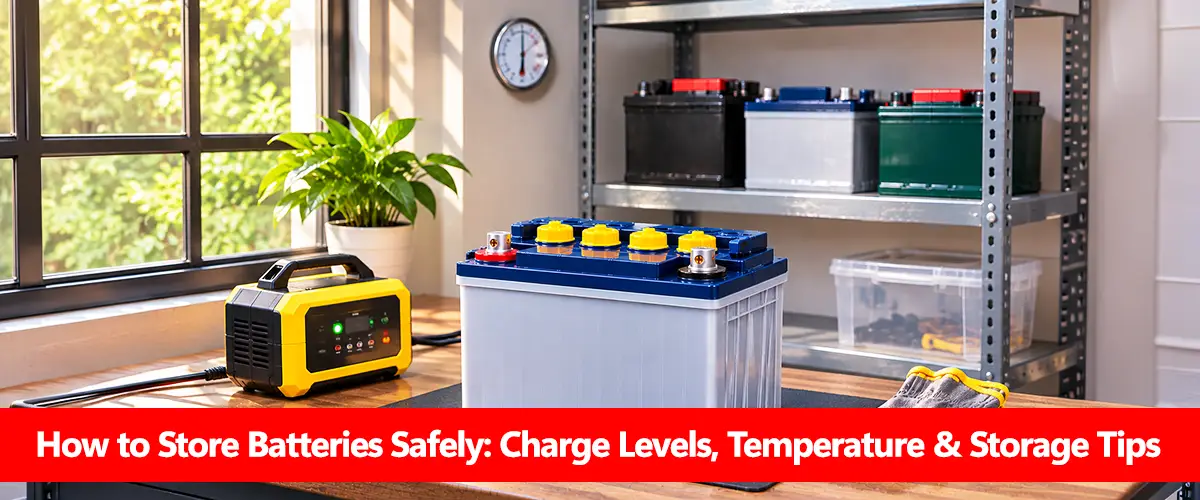
Knowing how to store batteries correctly helps prevent unnecessary discharge, corrosion and premature deterioration. The basic approach is to keep batteries in a cool, dry location, protect their terminals and follow the recommended storage charge level for their chemistry.
However, storage requirements are not identical. Lead-acid batteries should generally be stored fully charged, while many lithium-ion batteries are better stored at a partial state of charge. Whether you are storing a car battery, UPS battery, lithium pack or household AA batteries, preparing them correctly makes them safer and more reliable when needed again.
What Charge Level Should a Battery Have Before Storage?
The ideal storage charge depends on the battery’s chemistry. Storing a rechargeable battery completely discharged can cause permanent damage, while keeping certain lithium batteries fully charged for extended periods may accelerate aging.
| Battery Type | Recommended Storage Condition |
| Flooded lead-acid | Fully charged; monitor and recharge when needed |
| AGM / GEL | Fully charged; check periodically |
| Lithium-ion | Often around 30–60% charge, depending on manufacturer |
| LiFePO4 | Follow the specific battery and BMS storage instructions |
| Household alkaline | Keep unused cells in original packaging at room temperature |
Trojan Battery recommends fully charging its lead-acid batteries before storage. Bosch recommends 30–60% charge for its e-bike lithium batteries, while some industrial lithium systems specify different arrangements. These percentages describe state of charge (SoC), not battery health or permanent capacity loss. The state of charge vs state of health guide explains the difference.
How to Store Rechargeable Batteries Step by Step
Before placing a rechargeable battery into storage, prepare both the battery and its storage location. For car, motorcycle and removable equipment batteries, the following checklist provides a practical starting point.
- Identify the battery chemistry. Check whether it is flooded lead-acid, AGM, GEL or lithium.
- Inspect its condition. Do not store a swollen, leaking, cracked or unusually hot battery.
- Set the correct charge level. Fully charge applicable lead-acid batteries or follow the lithium manufacturer’s storage recommendation.
- Switch off connected equipment. Disconnect the battery only when the manufacturer’s instructions permit it.
- Protect the terminals. Use approved insulating covers to prevent accidental short circuits.
- Choose a suitable location. Keep the battery upright where required, dry and protected from direct sunlight and excessive heat.
- Schedule periodic checks. Monitor charge condition and physical appearance during storage.
Large UPS or solar battery systems may contain hazardous DC voltages and high fault currents. Have a qualified technician isolate those systems rather than disconnecting their battery banks yourself. For general inspection practices, see our battery maintenance guide.
Where Is the Best Place to Store Batteries?
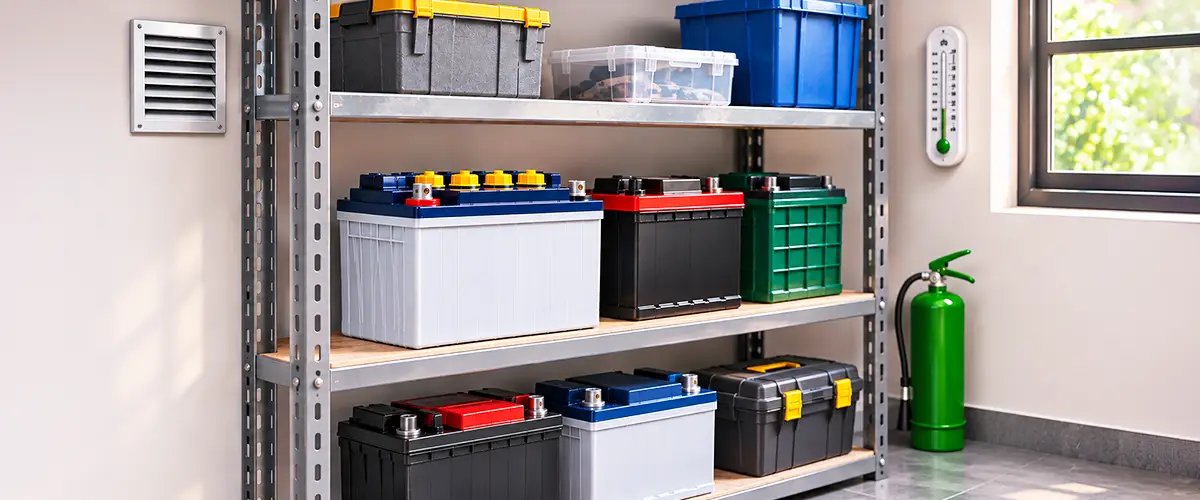
A dry, temperature-stable indoor location is generally preferable to a hot vehicle, sunny rooftop or damp outdoor storage area. In Pakistan, batteries left in garages or storage rooms without adequate ventilation may experience considerable summer heat.
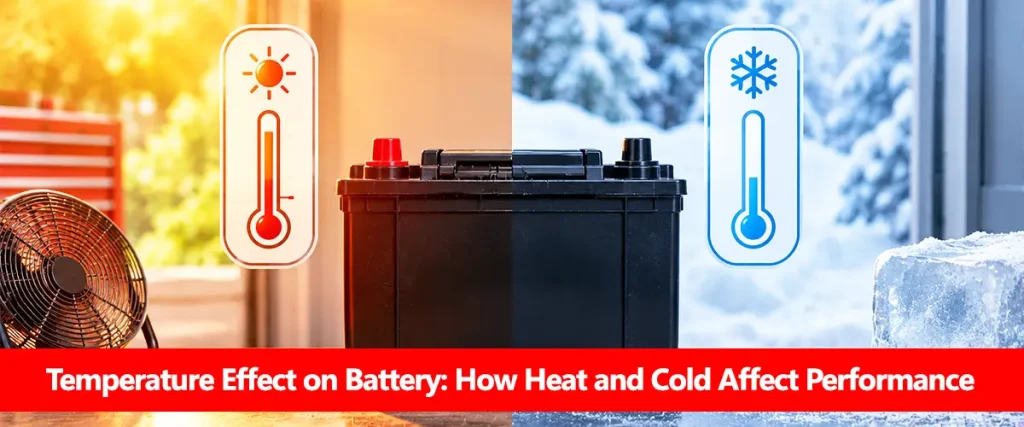
Heat accelerates self-discharge and can contribute to permanent capacity loss. Extreme cold also presents risks, particularly for discharged lead-acid batteries whose electrolyte may freeze.
For safe storage:
- Avoid direct sunlight, heaters and hot machinery.
- Keep batteries away from moisture and potential flooding.
- Follow ventilation requirements for the particular battery.
- Keep combustible materials away from large rechargeable packs.
- Store batteries away from children and pets.
Refrigerating ordinary household batteries is unnecessary and may introduce condensation problems. Our temperature effect on battery guide explains why temperature changes affect performance and aging.
How Long Can Batteries Stay in Storage?
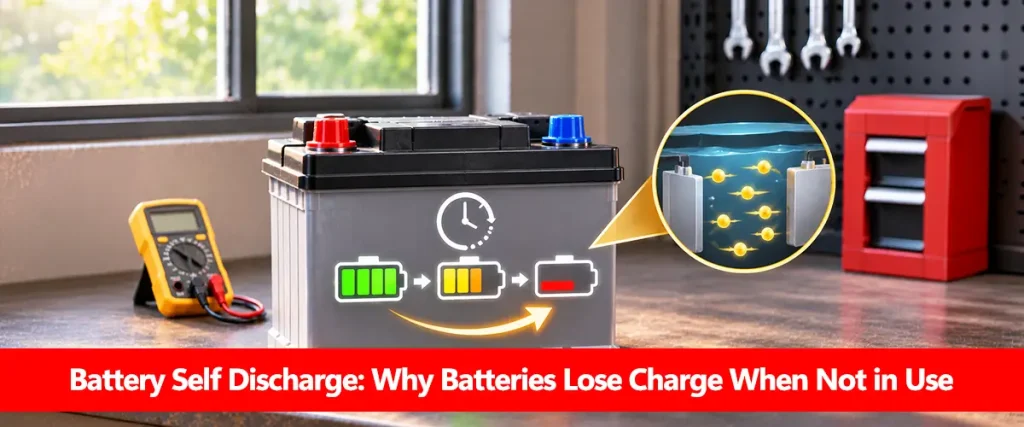
Even when disconnected, batteries gradually lose charge through self-discharge. The rate depends on chemistry, temperature, age and battery construction. Some connected battery management systems also consume a small amount of standby power.
For example, Trojan recommends monitoring stored flooded lead-acid batteries approximately every 4–6 weeks, with AGM and GEL products often checked every 2–3 months under its published guidance. Lithium battery inspection intervals vary considerably by manufacturer.
A practical approach is to record the storage date and set a reminder to check the battery according to its manual. Recharge only when necessary, using a compatible charger and the manufacturer’s approved procedure. See battery self-discharge for the factors that determine how quickly batteries lose stored energy.
Special Storage Precautions for Lithium Batteries
Lithium-ion and LiFePO4 batteries require attention to their battery management systems (BMS), operating temperatures and permitted charge levels.
For example, some lithium e-bike manufacturers recommend partial-charge storage, while certain stationary LiFePO4 systems require specific charging or cell-balancing routines before extended inactivity.
Do not assume every lithium battery should remain at exactly 50% charge. Always check the product manual, especially when storing larger solar batteries or electric bike packs. Never leave lithium packs near flammable materials, attempt to open their cells or charge them outside the manufacturer’s permitted temperature range. The LiFePO4 battery guide and battery management system guide explain these technologies further.
How Should You Store AA, AAA and 9V Batteries?
Household batteries need different precautions from large rechargeable battery systems. Energizer recommends storing them in a cool, dry place at normal room temperature and keeping batteries away from loose metal objects. For everyday storage, keep unused AA and AAA batteries in their original packaging or a suitable battery organizer. Keep different sizes, chemistries and used batteries separated to avoid confusion. 9V batteries require particular attention because their terminals sit close together. Keep them in protective packaging or use suitable terminal covers so metal objects cannot bridge the terminals. Coin and button-cell batteries must be stored securely out of children’s reach because swallowing them can cause severe injuries. Do not attempt to recharge ordinary non-rechargeable alkaline batteries.
Common Battery Storage Mistakes to Avoid
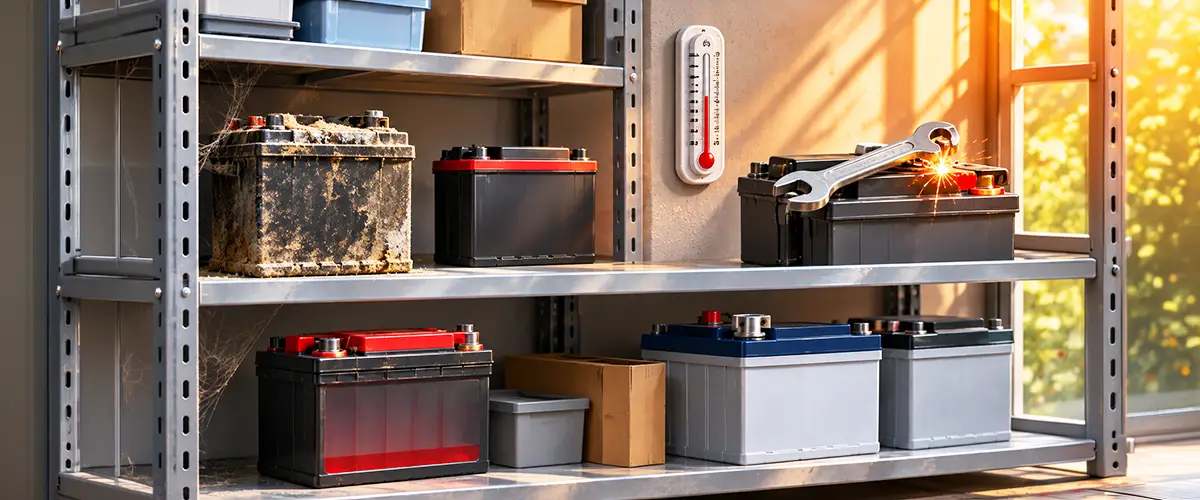
The most damaging storage mistakes often involve charge level, heat or unsafe electrical contact.
- Storing lead-acid batteries discharged: This can accelerate sulfation and reduce usable capacity.
- Leaving lithium batteries completely empty: Internal protection circuits may eventually prevent normal operation.
- Ignoring periodic checks: Batteries can fall below their safe charge limits without obvious symptoms.
- Keeping batteries in hot areas: Elevated temperatures accelerate chemical deterioration.
- Storing loose batteries with metal objects: Accidental terminal contact can cause dangerous short circuits.
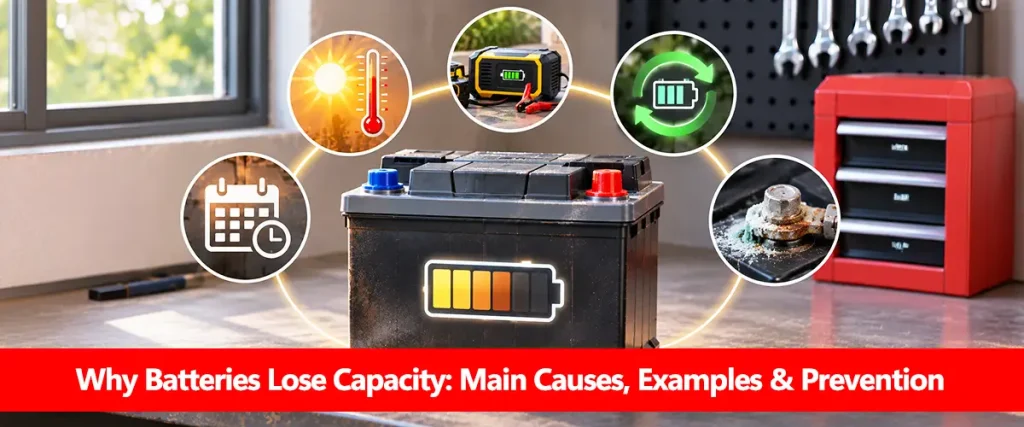
Long-term storage cannot prevent all chemical aging. Understanding why batteries lose capacity helps explain why an unused battery can still deteriorate over time.
What to Do Before Using a Stored Battery Again
Before reinstalling a stored battery, inspect the case, terminals and connections for corrosion or physical damage. Check its charge condition using the manufacturer’s recommended method, and recharge rechargeable batteries when needed.
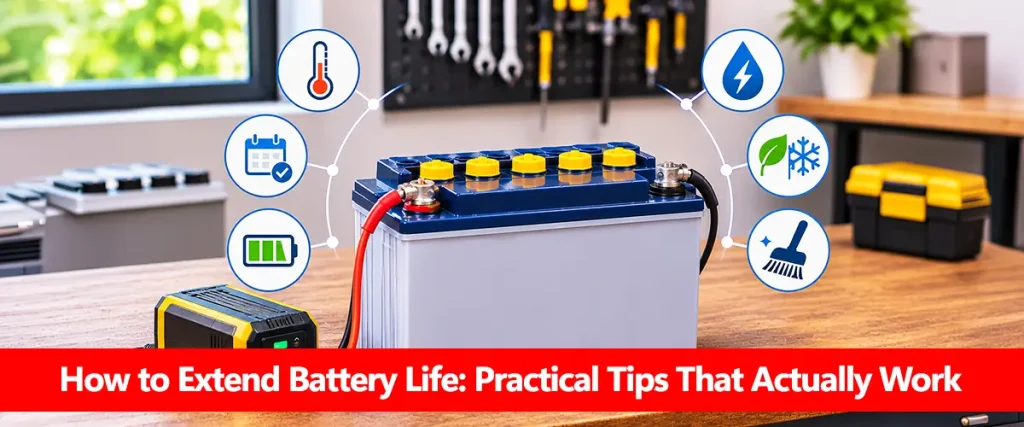
A battery that has been stored for several months may need testing before being relied upon for engine starting or emergency backup power. For lead-acid batteries, follow the manufacturer’s approved charging instructions. Lithium batteries should be reactivated only through their specified charger and BMS procedures. If a battery has swollen, leaked, overheated or failed an approved health test, do not attempt to force-charge it. Seek professional assessment and arrange appropriate recycling if replacement is necessary. Our how to extend battery life guide covers the habits that help preserve performance after storage.
Conclusion
Understanding how to store batteries safely comes down to matching storage conditions to battery chemistry. Lead-acid batteries generally need to be fully charged before storage, while many lithium-ion batteries require a manufacturer-approved partial charge.
A cool, dry environment, protected terminals and regular condition checks help prevent avoidable deterioration. Always follow the product manual, especially for large battery banks, sealed batteries and lithium systems.
Frequently Asked Questions
What Is the Best Way to Store Batteries?
Keep batteries in a cool, dry location, protect their terminals and follow the manufacturer’s recommended charge level and storage position.
Should Batteries Be Fully Charged Before Storage?
Lead-acid batteries should generally be fully charged. Many lithium-ion batteries are better stored partially charged, depending on manufacturer instructions.
Can I Store Batteries in the Refrigerator?
Refrigeration is unnecessary for normal household batteries and may create condensation problems. A cool, dry room is generally more appropriate.
How Often Should I Check Stored Batteries?
It depends on chemistry and manufacturer guidance. Some lead-acid batteries require checks every few weeks, while lithium systems may have different schedules.
Can Batteries Lose Charge While Not Being Used?
Yes. Batteries naturally self-discharge, and connected equipment may consume additional standby electricity.
Is It Safe to Store Batteries on a Concrete Floor?
Yes, modern batteries can generally be stored on clean, dry concrete. Temperature, moisture and correct physical support matter more than the floor material itself.
How Should I Store Lithium Batteries for Several Months?
Follow the specific manufacturer’s recommended state of charge, temperature and BMS procedures. Many consumer lithium-ion products recommend partial-charge storage.
Can I Use a Battery Immediately After Long Storage?
Inspect and test it first. Recharge if required and confirm that it performs normally before relying on it for important equipment.