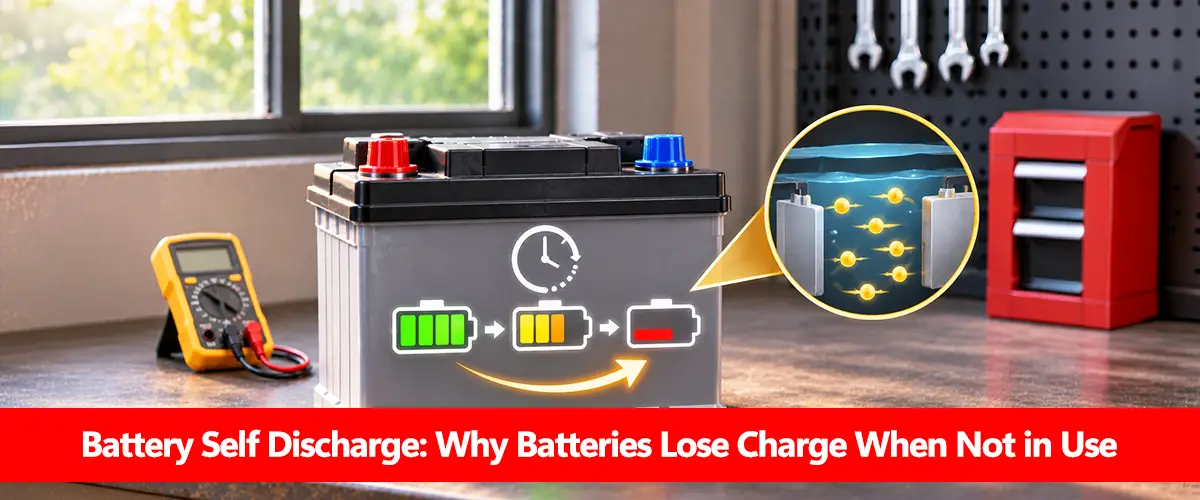
Battery self discharge is the gradual loss of stored electrical charge when a battery is not connected to a load or being used. It happens because small internal chemical reactions continue even while the battery is sitting idle. Every battery experiences some self-discharge, but the rate depends on its chemistry, temperature, age and condition.
For example, a fully charged car or UPS battery may have less available charge after several weeks in storage, even when disconnected. This is not necessarily a defect. However, excessive self-discharge can leave a battery deeply discharged and, in some chemistries, contribute to permanent damage.
Why Do Batteries Discharge Without Being Used?
A battery stores energy through electrochemical reactions involving its electrodes and electrolyte. Ideally, these reactions release energy only when electricity is required. In reality, small unwanted internal reactions can occur during storage.
These reactions gradually reduce the battery’s state of charge (SoC) without supplying useful electricity to an external device. Self-discharge is therefore a natural characteristic of electrochemical cells.
Its rate can increase because of temperature, impurities, internal deterioration and battery aging. For example, older flooded lead-acid batteries may develop internal conditions that increase unwanted electrical leakage.
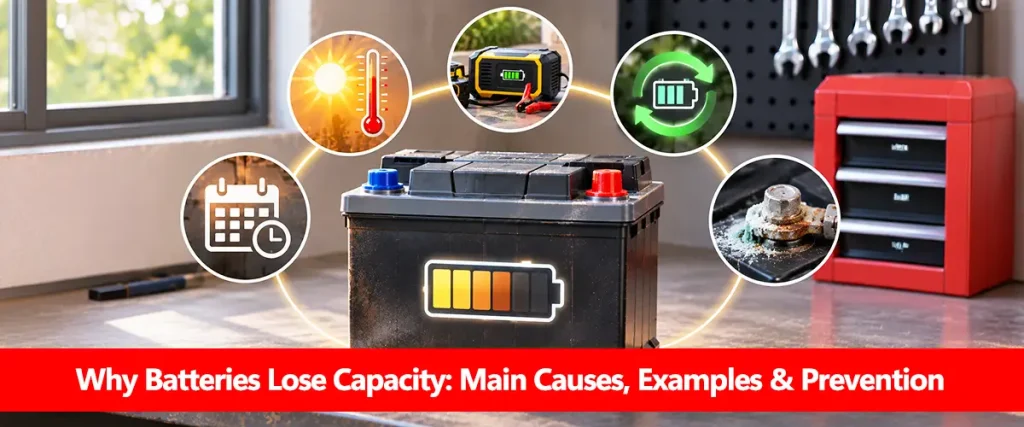
Self-discharge is different from the permanent deterioration explained in why batteries lose capacity. Lost charge can often be replenished through proper charging, while permanently lost capacity generally cannot be fully restored.
Battery Self Discharge Rates by Chemistry
Different battery technologies retain stored charge at different rates. Some batteries can remain unused for months with relatively little charge loss, while others need more frequent monitoring.
| Battery Type | Typical Self-Discharge Characteristics |
| Flooded lead-acid | Approximately 5–15% per month, depending on design and temperature |
| AGM / VRLA lead-acid | Often below 3% per month at around 25°C |
| Lithium-ion | Often approximately 1–2% per month at cell level under suitable conditions |
| LiFePO4 | Generally low cell self-discharge; connected BMS consumption varies |
| Conventional NiMH | Can lose charge relatively quickly compared with low-self-discharge designs |
| Alkaline | Usually retains charge for years when properly stored |
These are broad reference figures, not guaranteed rates. Battery age, temperature and manufacturer specifications can produce substantially different results.
Trojan Battery reports less than 3% monthly self-discharge for certain VRLA batteries at 25°C. Battery University describes approximately 1–2% monthly self-discharge for lithium-ion cells after their initial post-charge behavior, while noting that protection circuits can consume additional energy.
This means an AGM battery may retain its charge better during storage than some conventional flooded batteries. However, actual performance should always be checked against the product specifications.
A Simple Battery Self Discharge Example
Suppose a fully charged 100Ah battery loses 5% of its remaining charge each month while disconnected.
Its approximate charge retention would be:
| Storage Period | Remaining Charge |
| Initially | 100Ah |
| After 1 month | 95Ah |
| After 2 months | 90.25Ah |
| After 3 months | 85.74Ah |
The simplified calculation is:
Remaining charge = Initial charge × (1 − Monthly self-discharge rate) ^ Months
After three months:
100 × (0.95)³ ≈ 85.74Ah
This example assumes a constant percentage loss, stable temperature and no connected electrical equipment. Real batteries may discharge at changing rates. Also, the battery has not necessarily lost 14.26Ah of its permanent capacity. It has lost stored charge. A healthy rechargeable battery may recover its state of charge through appropriate charging. For the distinction between stored charge and battery condition, see state of charge vs state of health.
What Makes Battery Self Discharge Faster?
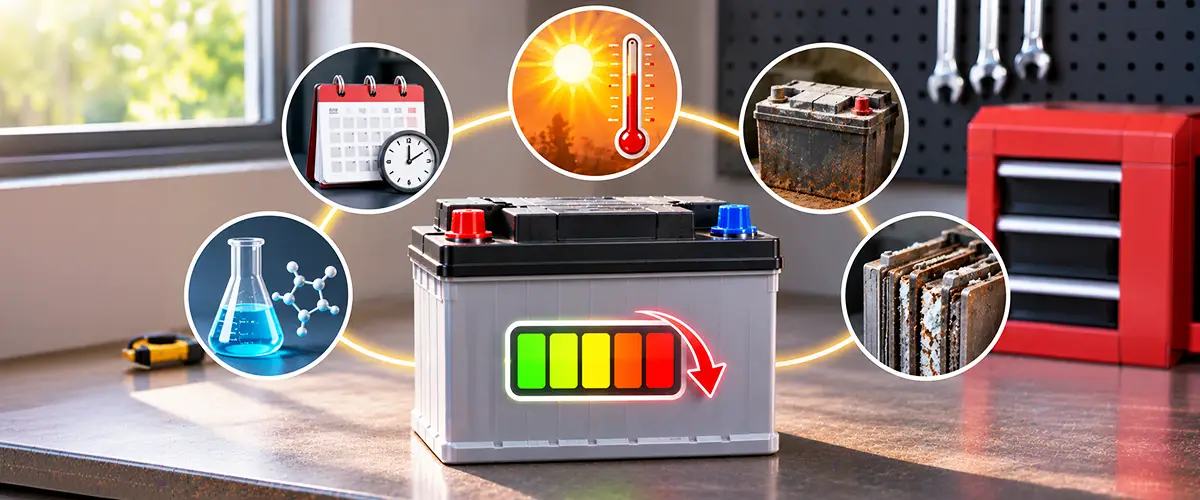
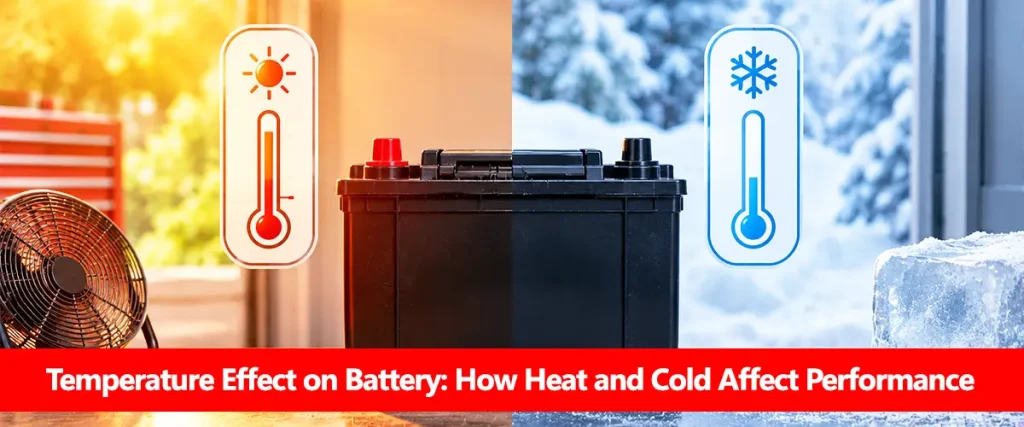
Temperature is one of the biggest influences on self-discharge. Higher temperatures generally accelerate unwanted chemical reactions, causing batteries to lose stored charge more quickly. This is particularly relevant in Pakistan, where batteries left in hot garages, vehicles or poorly ventilated equipment rooms can experience increased charge loss during summer.
Other contributing factors include:
- Battery age: Internal deterioration can increase self-discharge.
- Battery chemistry: Different electrode and electrolyte materials behave differently.
- Storage temperature: Higher temperatures generally increase charge loss.
- Cell condition: Manufacturing defects or internal damage can produce abnormal self-discharge.
- Storage duration: Longer periods without charging allow more accumulated charge loss.
For a more detailed explanation of heat and cold, read temperature effect on battery.
Self Discharge vs Parasitic Battery Drain
One important misconception is that every battery losing charge while parked or stored is experiencing excessive self-discharge. Self-discharge happens inside the battery itself. Parasitic drain occurs when connected electrical components continue consuming energy after the main equipment is switched off.
For example, a motorcycle battery may lose charge through natural self-discharge while also powering an alarm or GPS tracker. Similarly, a lithium battery pack may have a low cell self-discharge rate but experience additional consumption from its battery management system.
The difference matters because the solutions are not identical. Normal self-discharge is managed through suitable storage and charging practices, while abnormal external drain requires electrical diagnosis. If a battery becomes discharged unusually quickly, our battery draining fast guide covers the broader troubleshooting process.
Can Self Discharge Damage a Battery?
Self-discharge itself is normal, but allowing a battery to remain at a very low state of charge can cause problems. In lead-acid batteries, prolonged undercharging encourages the formation of persistent lead-sulfate deposits. This condition, known as battery sulfation, can reduce performance and service life.
Lithium-ion batteries have different risks. If a cell becomes excessively discharged, its protection system may disconnect the battery. Severe over-discharge can also cause internal damage, making forced recharging unsafe. A battery that loses charge extremely rapidly, becomes unusually hot or shows physical damage should be professionally assessed rather than repeatedly recharged.
How to Reduce Battery Self Discharge During Storage
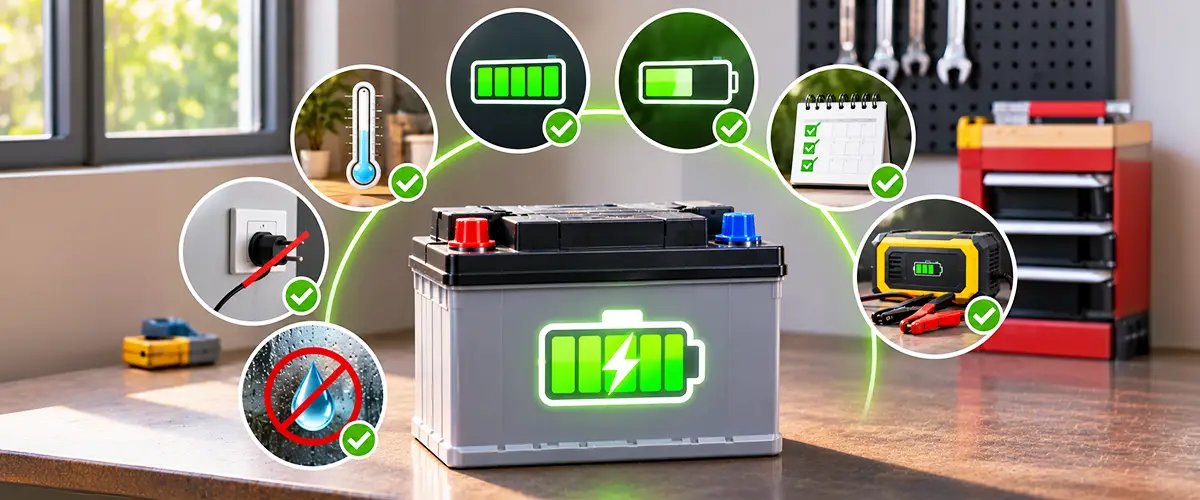
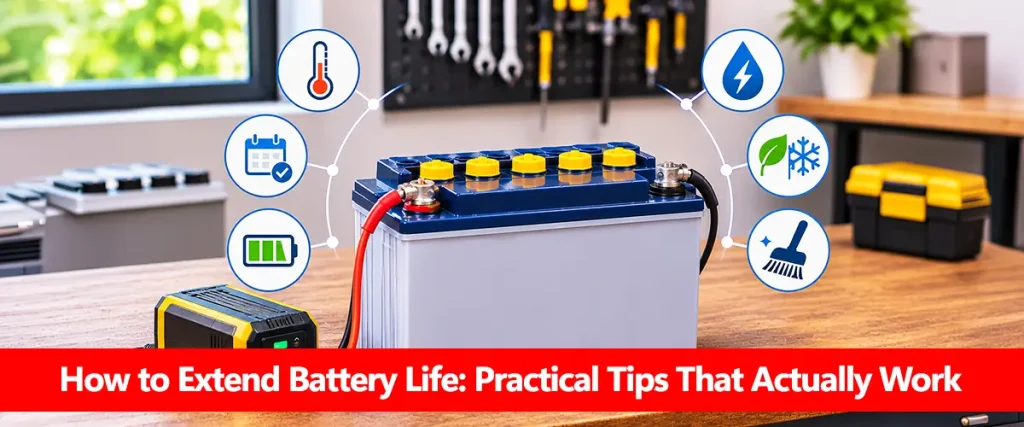
Self-discharge cannot be completely eliminated, but suitable storage conditions can help reduce its rate and prevent avoidable deterioration.
Useful practices include:
- Store batteries in a cool, dry location within their approved temperature range.
- Fully charge lead-acid batteries before storage, following manufacturer instructions.
- Use the recommended storage charge for lithium batteries, which may be a partial charge depending on the model.
- Monitor battery condition periodically instead of leaving stored batteries unchecked.
- Disconnect unnecessary electrical loads only when the equipment manufacturer permits it.
- Recharge with compatible equipment when the manufacturer’s specified threshold is reached.
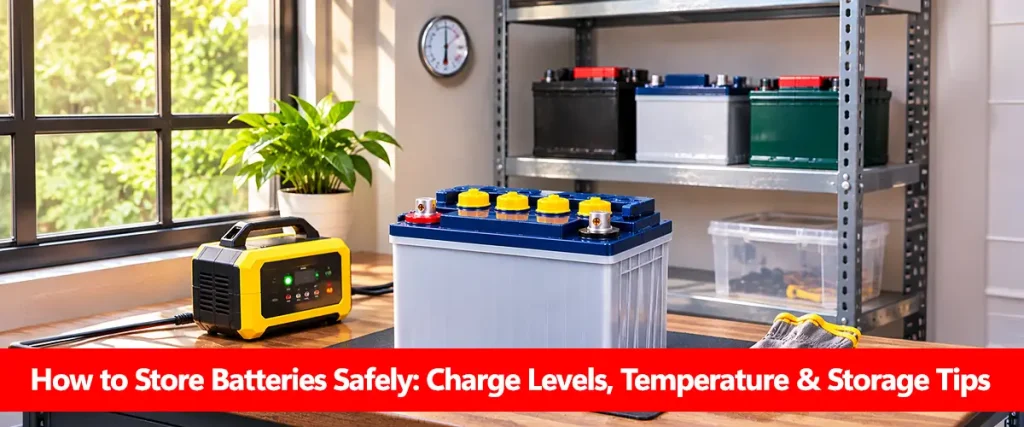
Trojan recommends monitoring stored flooded lead-acid batteries regularly and recharging when required. AGM and other sealed batteries may have different inspection intervals. Our how to store batteries guide covers storage procedures, while battery maintenance explains routine care.
When Is Self Discharge a Warning Sign?
A gradual reduction in charge during long-term storage is expected. However, a battery that becomes nearly empty within a few days despite being fully charged, disconnected and stored correctly may have an internal problem.
Before concluding that the battery is defective, verify its initial charge level, temperature and whether any equipment remains connected. A battery with reduced capacity may also appear to discharge quickly because it stores less energy than when new.
Do not attempt to open sealed batteries or bypass lithium protection circuits to restore charge. If the battery is swollen, leaking, smoking or unusually hot, stop using it and seek qualified assistance.
Conclusion
Battery self discharge is the natural loss of stored charge while a battery remains unused. It occurs in every battery chemistry, although the rate varies considerably between flooded lead-acid, AGM, lithium-ion and other technologies.
Heat, aging and internal battery condition can increase self-discharge. Storing batteries correctly, monitoring charge levels and following chemistry-specific charging recommendations can help prevent excessive discharge and premature deterioration.
Frequently Asked Questions
What Is Battery Self Discharge?
Battery self-discharge is the gradual loss of stored electrical charge caused by internal chemical processes while the battery is not supplying an external load.
Do All Batteries Self Discharge?
Yes. All batteries experience some self-discharge, although the rate depends on battery chemistry, temperature and condition.
How Much Charge Does a Lead-Acid Battery Lose Per Month?
It varies. Flooded lead-acid batteries may lose approximately 5–15% monthly, while certain AGM/VRLA batteries have rates below 3% per month under suitable conditions.
Do Lithium Batteries Self Discharge?
Yes. Lithium-ion cells generally have low self-discharge, but battery protection electronics can consume additional energy during storage.
Does Heat Increase Battery Self Discharge?
Yes. Higher temperatures generally accelerate unwanted internal chemical reactions and increase charge loss.
Is Self Discharge the Same as Battery Capacity Loss?
No. Self-discharge reduces the stored charge available at a particular time. Permanent capacity loss reduces the amount of energy the battery can store when fully charged.
Can a Disconnected Battery Still Go Dead?
Yes. Self-discharge continues even when a battery is disconnected. Over long periods, it may reach an excessively low state of charge.
Can Battery Self Discharge Be Prevented Completely?
No. It is a natural characteristic of batteries, but proper storage, temperature control and periodic charging can help manage its effects.