Understanding how to choose battery charger equipment starts with identifying your battery’s chemistry, nominal voltage, capacity and charging requirements. The right charger must deliver suitable voltage and current while following the battery manufacturer’s recommended charging profile.
Choosing a charger based only on price or charging speed can lead to poor performance, incomplete charging or battery damage. Whether you use a lead-acid battery for UPS backup or a lithium battery for energy storage, compatibility should always come first.
1. Identify Your Battery Chemistry
The first step is to check whether your battery uses flooded lead-acid, AGM, gel, LiFePO4 or another lithium-ion chemistry. Each type has different charging limits and may require a specific charging mode.
For example, an AGM battery and a gel battery both use lead-acid chemistry, but their recommended charging settings can differ. Similarly, a LiFePO4 battery requires a compatible lithium charging profile. Always confirm the chemistry printed on the battery label or specified in its manual.
2. Match the Charger Voltage
The charger’s supported battery voltage must match your battery system. Common rechargeable battery systems include 6V, 12V, 24V and 48V configurations, although actual charging voltages differ from nominal ratings.
A charger designed only for a 12V system should not be connected directly to a 24V battery bank. Even chargers supporting the same nominal voltage may use different charge limits depending on chemistry. Our battery charging voltage guide explains this distinction.
3. Choose the Correct Charging Current

Charging current determines how quickly electrical charge enters the battery. It is measured in amperes (A), while battery capacity is commonly rated in amp-hours (Ah).
A higher-current charger may reduce charging time, but only when the battery supports that charging rate.
| Battery Capacity | Example Charger Output | Selection Consideration |
| 50Ah | 5A | Lower charging current |
| 100Ah | 10A | Moderate charging current |
| 100Ah | 20A | Faster charging if permitted |
| 200Ah | 20A | Suitable only if within manufacturer limits |
These are illustrative combinations, not universal recommendations. The correct current depends on the battery’s approved charging rate, often expressed as a C-rate, and its operating temperature. Check battery charging current and battery C-rate when comparing charger specifications.
4. Check the Charging Profile
A suitable charger should automatically regulate its output according to the battery’s charging requirements. Different chemistries use different charging methods, and the selected profile must match the battery.
| Battery Chemistry | Charging Profile to Look For |
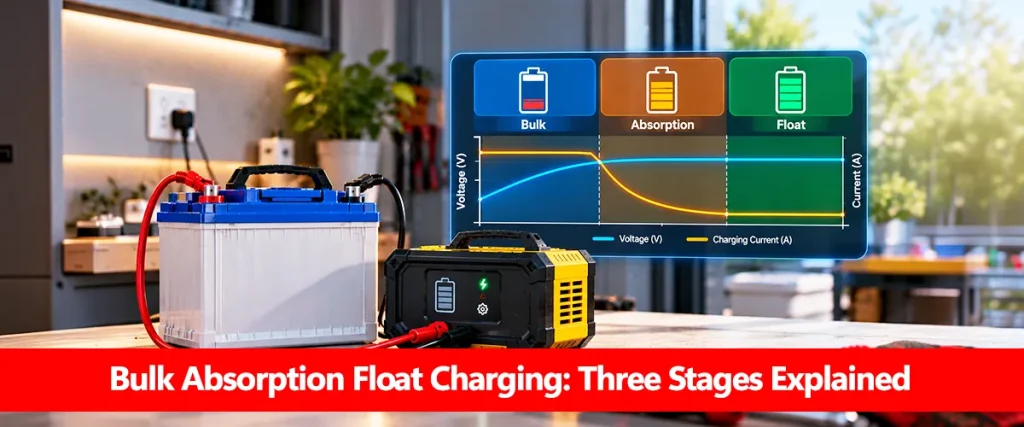
| Flooded lead-acid | Compatible bulk, absorption and float stages |
| AGM | AGM-approved charging profile |
| Gel | Gel-compatible voltage settings |
| LiFePO4 | Chemistry-specific lithium charging with suitable termination |
| Other lithium-ion | Exact chemistry and cell-count compatibility |
Many lead-acid chargers use bulk absorption float charging, while lithium-ion chargers commonly use constant-current/constant-voltage charging with specified termination conditions.
A lead-acid charger is not automatically suitable for lithium batteries, even when their nominal voltage ratings appear similar. The lead acid charger for lithium battery guide covers this compatibility issue.
5. Look for Essential Safety Features
A good battery charger should include appropriate protection against electrical faults and unsuitable charging conditions. Automatic charging control is particularly important because batteries may require reduced current or charge termination as they approach full charge.
Useful charger features include:
- Automatic charging voltage and current regulation.
- Overvoltage and overcurrent protection.
- Reverse-polarity protection.
- Temperature monitoring or compensation where required.
- Suitable charge termination or maintenance mode.
- Clear charging status and fault indicators.
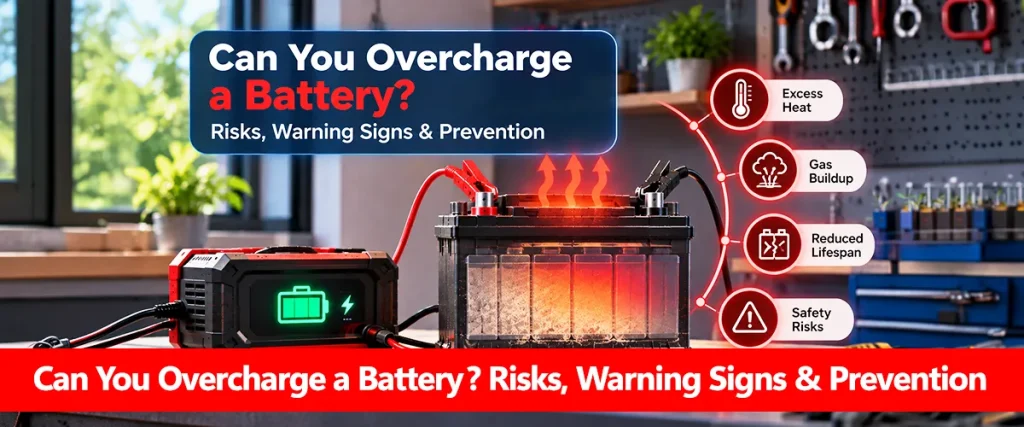
Lithium systems may also require communication or coordination with a battery management system. These features help reduce the risk of battery overcharging, but they cannot compensate for an incompatible charger.
6. Consider How the Battery Will Be Used

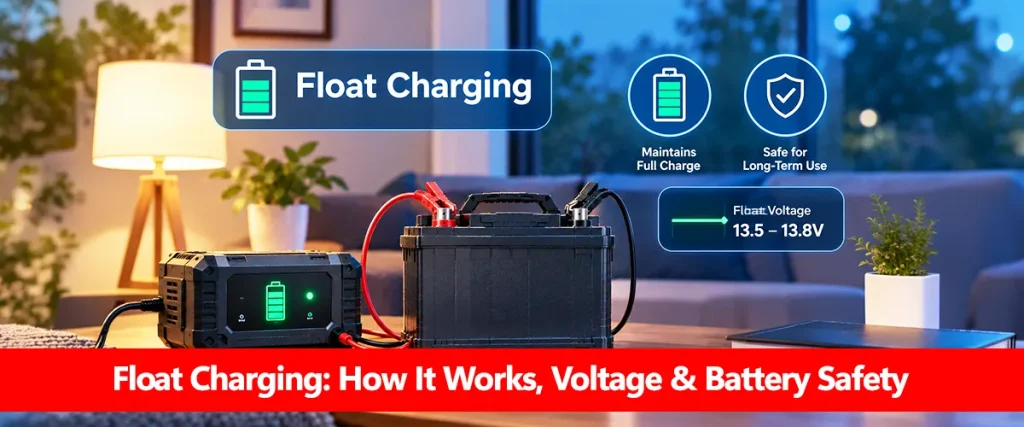
Charger selection also depends on whether the battery is used for regular cycling, occasional backup or long-term standby. A battery that is discharged frequently may benefit from a charger capable of restoring its charge within the available time, while standby batteries may require suitable maintenance charging.
For UPS systems and solar installations, check whether the charger supports connected loads and the battery system’s operating requirements. If equipment will remain powered during charging, our charge battery while using it guide explains why power management matters.
7. Confirm Practical Compatibility Before Buying
Before making a final decision, check the charger’s electrical ratings and installation requirements against the battery manufacturer’s documentation. Suitable voltage and chemistry alone are not enough if the connectors, input power supply or operating environment are incompatible.
Final battery charger selection checklist:
- Battery chemistry and supported charging mode match.
- Nominal system voltage is correct.
- Maximum charging current is within battery limits.
- Charging profile and termination settings are suitable.
- Required temperature protection is available.
- Connectors and polarity are compatible.
- AC input or other power-source requirements are supported.
- Manufacturer instructions permit the intended application.
If charging speed is an important requirement, consider battery capacity and charge tapering rather than relying only on the charger’s ampere rating. Actual battery charging time depends on several operating factors.
What Should You Avoid When Selecting a Charger?
The most common mistake is assuming that any charger with a matching voltage label will work. Battery chemistry, charging current, charge termination and temperature limits are equally important.
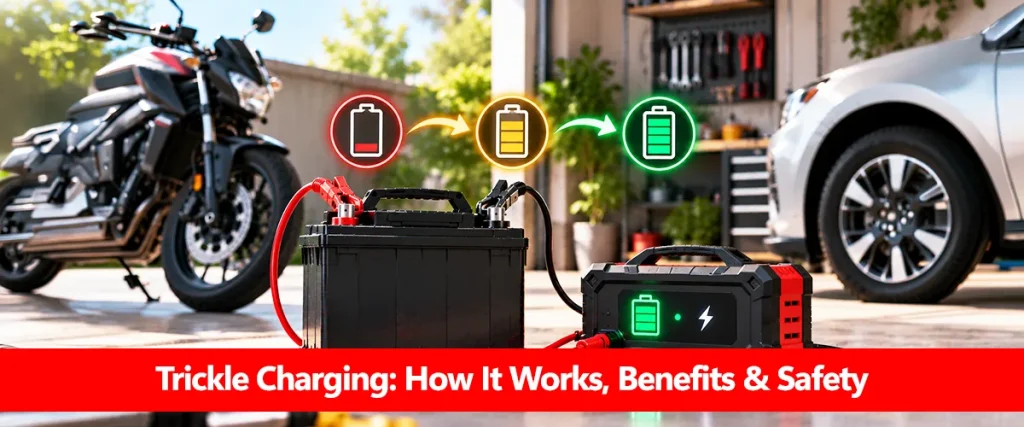
Avoid selecting chargers that lack clear specifications, exceed the battery’s permitted limits or use charging modes unsupported by the manufacturer. A charger with a higher amperage rating is not automatically better, and a basic trickle charger may be unsuitable for long-term maintenance. Understanding can you overcharge a battery helps explain why automatic charging control matters.
Conclusion
Knowing how to choose battery charger equipment correctly comes down to matching battery chemistry, nominal voltage, charging current and the required charging profile. Safety features, temperature protection and the intended application should also influence the decision.
A compatible charger helps maintain battery performance, reduce charging risks and support long-term reliability. Before connecting a new charger, verify its specifications and follow the manufacturer’s approved battery charging procedure.
Frequently Asked Questions
How Do I Choose the Right Battery Charger?
Identify your battery chemistry, voltage and capacity, then select a charger supporting the manufacturer’s recommended charging current, profile and safety requirements.
What Amp Charger Do I Need for a 100Ah Battery?
The correct charger current depends on the battery’s permitted charging rate. A 10A or 20A charger may be suitable for certain 100Ah batteries, but manufacturer specifications must determine the final selection.
Can I Use the Same Charger for AGM and Lithium Batteries?
Only if the charger explicitly supports both battery chemistries and provides the appropriate charging settings for each.
Is a Higher Amp Battery Charger Better?
Not necessarily. Higher charging current may reduce charging time, but exceeding the battery’s approved limits can cause heating and premature degradation.
Should I Choose a Smart Battery Charger?
A compatible smart charger can provide useful features such as automatic charging control, charge termination and fault protection. Its charging modes must still match the battery.
What if My New Charger Does Not Charge the Battery?
Check battery compatibility, charger settings, connections and fault indicators. Do not attempt to bypass protective circuits. The battery not charging guide covers common charging problems.