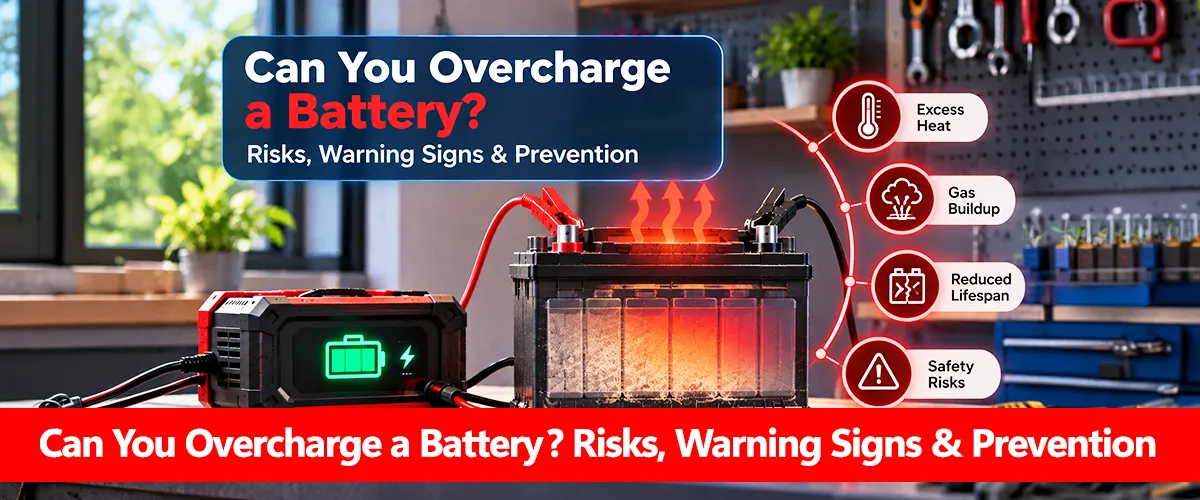
Can you overcharge a battery? Yes, rechargeable batteries can be overcharged when charging continues beyond their recommended limits. Excessive charging voltage, incorrect charger settings or failed charging controls can cause overheating, battery damage and reduced lifespan.
Modern automatic chargers and battery protection systems help prevent overcharging, but they do not eliminate every risk. Battery chemistry, charger compatibility and operating temperature all influence charging safety. Understanding how battery charging works helps explain why proper charge regulation is essential.
What Happens When You Overcharge a Battery?
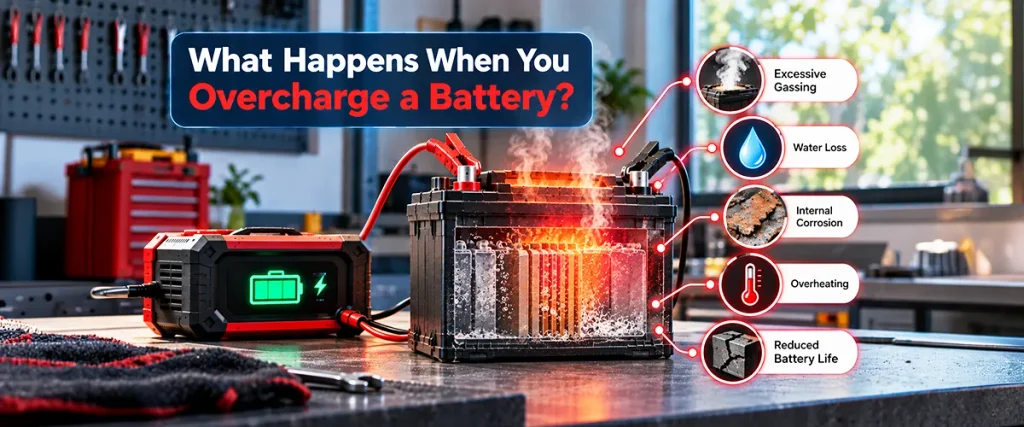
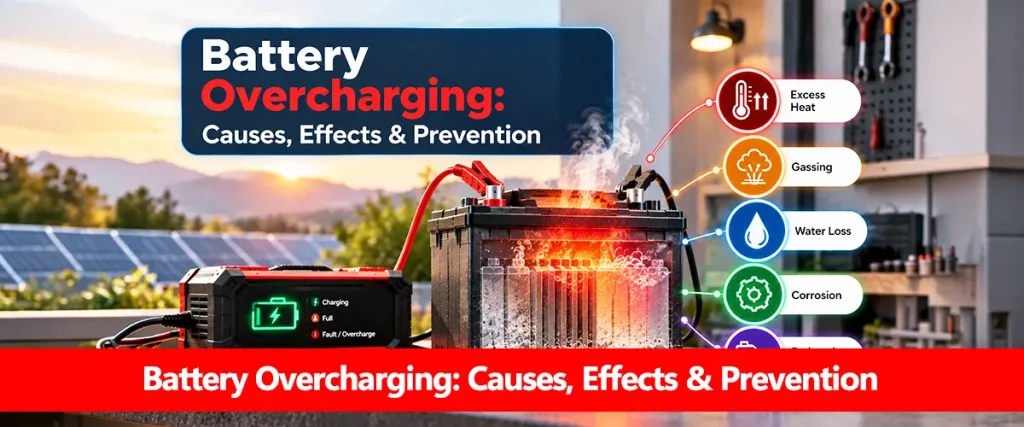
Battery overcharging occurs when a battery receives more charging energy than it can safely accept under its specified operating conditions. Instead of storing useful energy, the excess input can produce heat and unwanted chemical reactions that damage internal components.
In lead-acid batteries, overcharging can cause excessive gassing, water loss and corrosion. Lithium-ion batteries may experience cell degradation, gas generation and potentially dangerous thermal failures when voltage limits are exceeded. The detailed causes and effects are covered in our battery overcharging guide.
Can Different Battery Types Be Overcharged?
All rechargeable battery chemistries have charging limits, but the consequences of exceeding them vary. Lead-acid batteries are particularly sensitive to sustained excessive voltage, while lithium-ion batteries require strict cell-voltage control and suitable charge termination.
| Battery Type | Possible Overcharging Effects |
| Flooded lead-acid | Excessive gassing, water loss and plate deterioration |
| AGM | Heating, gas venting and capacity loss |
| Gel | Gas pockets, electrolyte damage and reduced performance |
| LiFePO4 | Cell stress, overheating and potential protection shutdown |
| Other lithium-ion | Cell degradation, swelling and possible thermal runaway |
Many lithium battery packs include a battery management system that monitors voltage, current and temperature. However, a BMS is a protective safeguard, not a replacement for a compatible charger.
Signs Your Battery May Be Overcharging
Overcharging does not always produce obvious warning signs, particularly in sealed batteries. However, changes in temperature, appearance and charger behavior can indicate a problem.
Possible warning signs include:
- Unusually high battery temperature.
- Swelling or deformation of the battery case.
- Excessive bubbling or gassing in flooded lead-acid batteries.
- Unusual odors or visible leakage.
- Repeated charger faults or protection shutdowns.
- Battery voltage exceeding manufacturer limits.
Some symptoms can have other causes, so they do not confirm overcharging on their own. If a battery becomes swollen, excessively hot, leaking or visibly damaged, stop charging if it is safe to do so, avoid handling it and seek professional assistance.
Can You Overcharge a Battery With an Automatic Charger?
A properly functioning automatic charger reduces overcharging risk by controlling charging voltage, current and termination conditions. Many chargers reduce current or stop charging when the battery reaches its specified limit.
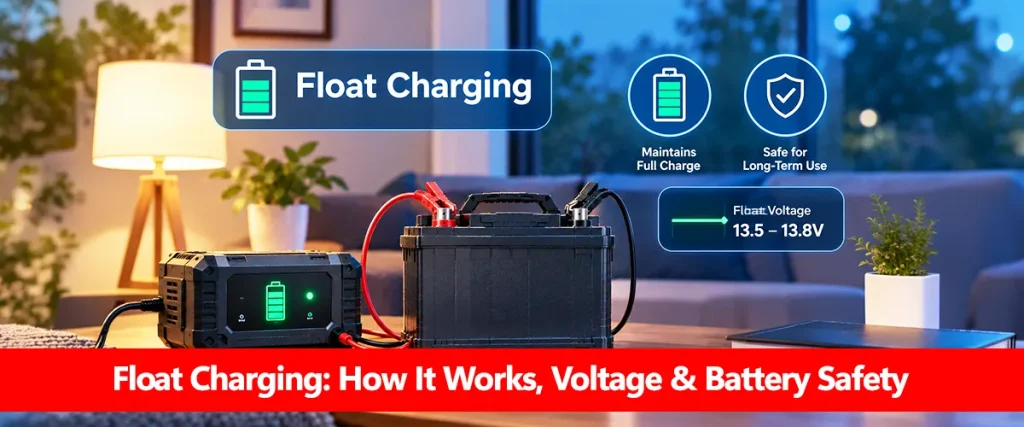
However, an automatic charger can still be unsuitable if its voltage settings or charging profile do not match the battery chemistry. For example, lead-acid maintenance methods such as float charging are not automatically appropriate for lithium batteries. The charger’s supported battery types should always be checked.
Does Leaving a Battery on Charge Overnight Cause Overcharging?
Leaving a battery connected overnight does not necessarily cause overcharging. The risk depends on the charger, battery condition and whether charging is correctly regulated.
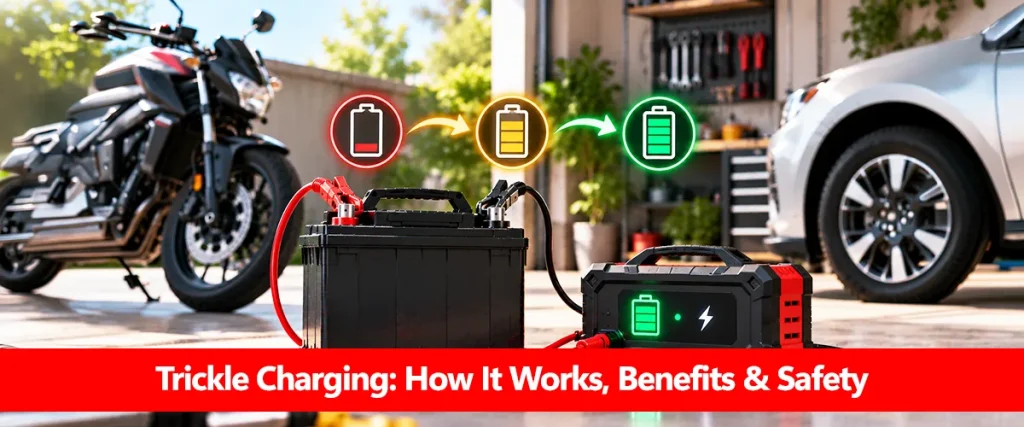
A compatible automatic charger may terminate charging or enter an approved maintenance mode. In contrast, a basic charger that continues supplying current can eventually overcharge a battery. This distinction is especially important with trickle charging, where a continuous low current is not always safe for fully charged batteries.
How to Prevent Battery Overcharging
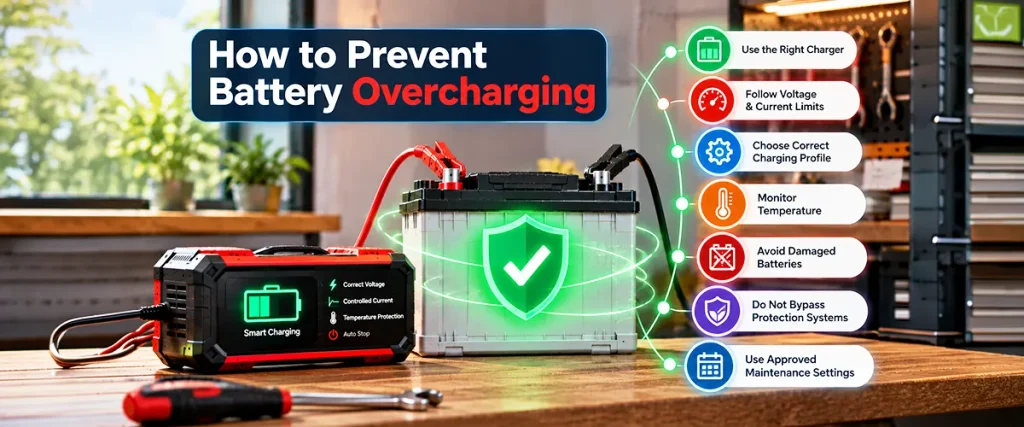
Preventing overcharging starts with using equipment designed for the battery’s chemistry, nominal voltage and charging limits. Correct settings help the charger deliver energy safely and stop or reduce charging when required.
Follow these precautions:
- Use a charger compatible with the battery type.
- Follow manufacturer charging voltage and current limits.
- Select the correct charging profile.
- Observe battery temperature restrictions.
- Avoid charging damaged or swollen batteries.
- Do not bypass lithium battery protection systems.
- Use approved maintenance charging settings for long-term storage.
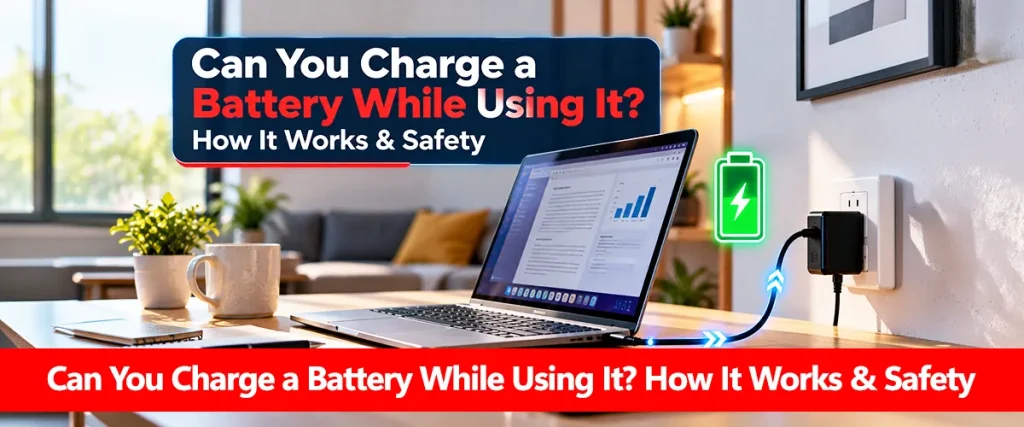
Charging requirements may also change when equipment operates while the battery is connected. Our charge battery while using it guide explains these compatibility considerations.
What Should You Do if a Battery Is Overcharged?
If you suspect overcharging, stop the charging process using the manufacturer’s safe shutdown procedure, provided there is no immediate danger. Do not touch a battery that is excessively hot, leaking or visibly damaged. Keep people away from the battery and seek qualified assistance if there are signs of smoke, fire or severe overheating.
Do not attempt to repair, force-charge or reuse a damaged battery without professional assessment. If the battery simply fails to accept charge or the charger reports an error, consult the manufacturer’s instructions and our battery not charging guide before taking further action.
Conclusion
Can you overcharge a battery? Yes. Overcharging can damage rechargeable batteries, reduce capacity and create serious safety risks. The consequences depend on battery chemistry, charging voltage, current and temperature.
Using a compatible automatic charger, following manufacturer specifications and monitoring battery condition are the most effective ways to reduce overcharging risk. Explore more battery safety information in the Battery Charging section at Batteries Hub.
Frequently Asked Questions
Can You Overcharge a 12V Battery?
Yes. A 12V battery can be overcharged if the charger applies excessive voltage or continues charging beyond the battery’s permitted limits. The correct settings depend on battery chemistry.
Can You Overcharge a Lithium Battery?
Yes. Lithium batteries can be damaged by excessive charging voltage or incorrect charging conditions. Compatible chargers and battery protection systems help reduce this risk.
Does an Automatic Charger Prevent Overcharging?
A properly functioning, compatible automatic charger can significantly reduce overcharging risk by regulating voltage, current and charge termination. It does not guarantee protection against every fault.
Can a Battery Explode From Overcharging?
Severe overcharging can create dangerous conditions. Lead-acid batteries may release flammable hydrogen gas, while lithium-ion batteries can experience thermal runaway and fire under certain failure conditions.
Can You Leave a Battery Charging Overnight?
Only when the battery and charger are designed for that operating mode and the manufacturer permits it. Unregulated chargers should not be assumed safe for unattended charging.
Can an Overcharged Battery Be Recovered?
Recovery depends on the battery chemistry and extent of damage. Batteries showing swelling, leakage, overheating or other damage should not be reused without qualified assessment.