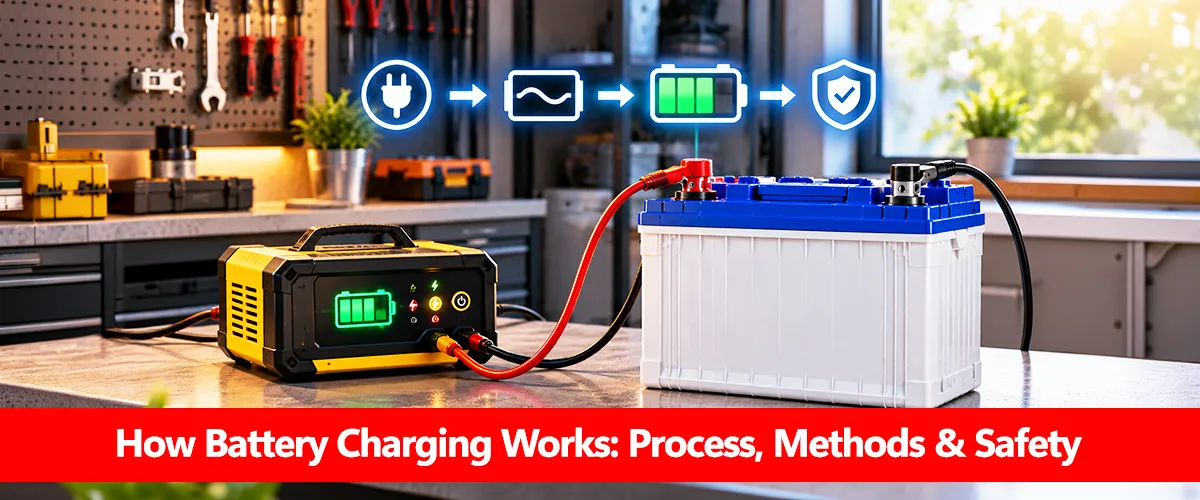
How battery charging works is based on using electrical energy to reverse the chemical reactions that occur when a rechargeable battery discharges. A compatible charger supplies controlled voltage and current, allowing the battery to store energy for later use.
The charging process depends on battery chemistry, state of charge, temperature, and charger settings. Lead-acid and lithium-ion batteries use different charging profiles, so understanding their requirements is essential for safe operation and long battery life. For a basic explanation of battery construction and operation, read our what is a battery guide.
What Happens When a Battery Charges?
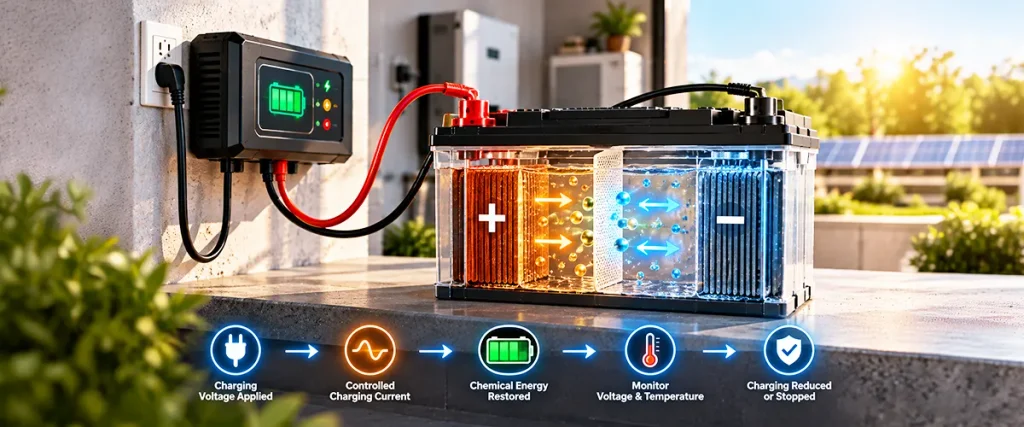
A rechargeable battery contains positive and negative electrodes, an electrolyte, and separators that support electrochemical reactions.
During discharge, chemical reactions release electrical energy to a connected circuit. During charging, an external power source drives the electrochemical reactions in the opposite direction.
The charger supplies electrical energy, which changes the chemical state of the battery’s active materials.
The charging process involves:
- Applying a suitable charging voltage.
- Controlling the amount of charging current.
- Restoring the battery’s stored chemical energy.
- Monitoring voltage, temperature, and charging conditions.
- Reducing or stopping charging when the required conditions are reached.
The exact process varies by battery chemistry and charging method.
Main Components Involved in Battery Charging
Battery charging requires compatible equipment and suitable electrical conditions.
| Component | Function |
| Battery | Stores electrical energy chemically |
| Charger | Supplies controlled electrical power |
| Charging voltage | Provides the electrical potential needed for charging |
| Charging current | Determines how quickly charge enters the battery |
| Charge controller | Regulates charging conditions where applicable |
| Battery management system | Monitors and protects many lithium battery packs |
| Temperature monitoring | Helps prevent charging outside safe limits |
Not every system uses these components as separate devices. Some chargers and battery packs contain integrated control and protection electronics.
How Charging Voltage and Current Work
Charging voltage and charging current are two essential parts of the charging process.
Charging Voltage
Charging voltage is the electrical potential applied by the charger. It must be appropriate for the battery’s chemistry, cell count, and operating conditions.
Incorrect voltage can cause incomplete charging, excessive stress, or unsafe operating conditions. Learn more in our battery charging voltage guide.
Charging Current
Charging current is the rate at which electrical charge flows into the battery, measured in amperes (A).
Higher charging current can reduce charging time when the battery and charger support it. However, excessive current can increase heat and accelerate degradation. Our battery charging current guide explains the factors that determine suitable charging rates.
What Are the Main Battery Charging Methods?
Different rechargeable batteries require different charging methods.
| Charging Method | How It Works | Common Applications |
| Constant Current (CC) | Charger regulates current while voltage changes | Initial charging of many lithium-ion batteries |
| Constant Voltage (CV) | Charger maintains voltage while current decreases | Later charging stage of many lithium-ion batteries |
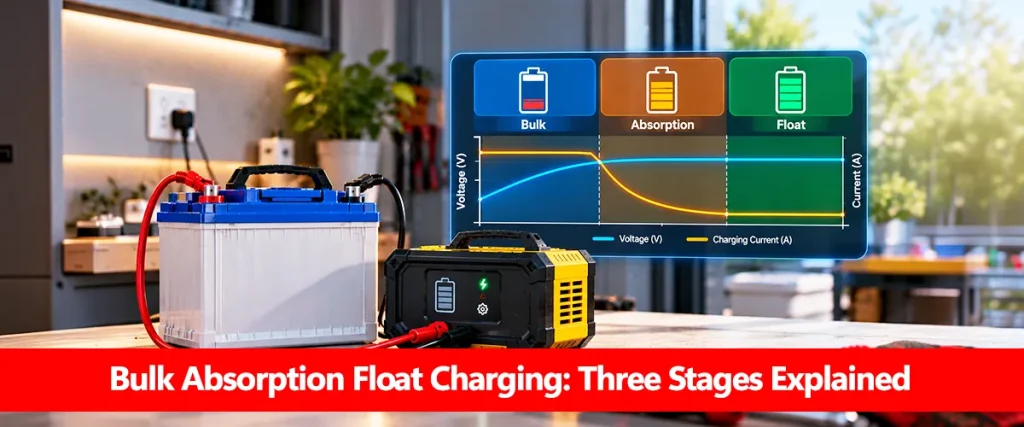
| Bulk Charging | Supplies substantial charging current within limits | Lead-acid batteries |
| Absorption Charging | Maintains a specified voltage as current tapers | Lead-acid batteries |
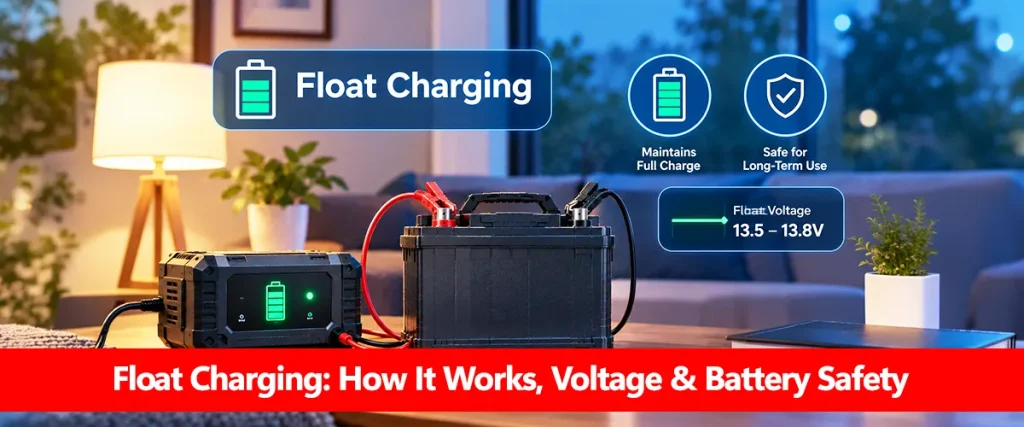
| Float Charging | Maintains a lower voltage to support standby readiness | Suitable lead-acid batteries |
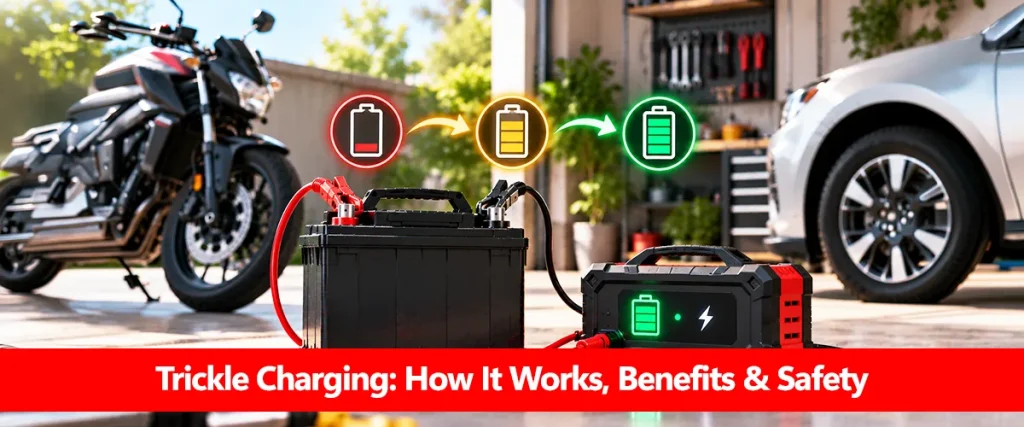
| Trickle Charging | Supplies a small charging current | Selected compatible battery applications |
These methods are not interchangeable. The appropriate charging profile depends on battery chemistry and manufacturer specifications. For lead-acid charging stages, read our bulk absorption float charging guide.
How Lithium-Ion Battery Charging Works
Lithium-ion batteries commonly use a constant-current and constant-voltage charging process.
During the constant-current phase, the charger supplies controlled current while battery voltage rises.
Once the specified voltage limit is reached, the charger maintains that voltage and charging current gradually decreases. Charging normally terminates when the manufacturer’s required conditions are met.
Many lithium battery packs include a battery management system (BMS) to monitor cell voltages, temperature, and current.
Cell balancing may also help keep individual cells within suitable operating limits.
Lithium-ion batteries generally should not be maintained indefinitely at their maximum charging voltage through a conventional lead-acid-style float charge. Learn more about electronic protection in our battery management system guide.
How Lead-Acid Battery Charging Works
Lead-acid batteries commonly use bulk, absorption, and float charging stages.
During bulk charging, the charger supplies current to restore much of the battery’s charge. During absorption, it maintains a specified voltage while current gradually decreases.
Float charging may then maintain the battery at an appropriate standby voltage to compensate for self-discharge.
Flooded, AGM, and gel batteries can have different charging voltage requirements. Temperature compensation may also be necessary because lead-acid charging voltage requirements change with temperature. For more information about maintaining standby batteries, read our float charging guide.
What Affects Battery Charging Time?
Battery charging time depends on several factors rather than charger output alone.
Important factors include:
- Battery capacity.
- Initial state of charge (SoC).
- Charging current.
- Battery chemistry.
- Charging efficiency.
- Battery temperature.
- Current reduction near full charge.
A battery with greater capacity generally requires more charging energy. However, charging is not always performed at a constant rate from empty to full. For charging-time calculations, explore our battery charging time guide.
How Battery Temperature Affects Charging
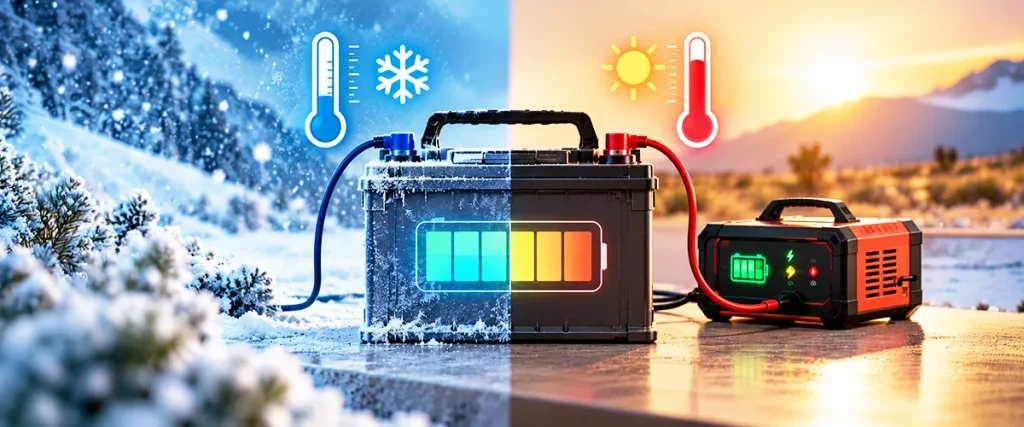
Temperature influences battery chemistry, internal resistance, charging efficiency, and safety. High temperatures can accelerate battery degradation, while low temperatures may reduce charge acceptance.
Lithium-ion batteries require particular care when charging in cold conditions. Many lithium battery designs restrict charging below 0°C unless approved heating or temperature-control features are provided.
Lead-acid batteries may require temperature-compensated charging voltage to avoid overcharging or undercharging. Always follow the manufacturer’s temperature limits rather than assuming the same conditions apply to every battery.
What Happens When a Battery Is Fully Charged?
A compatible charger identifies the appropriate charging endpoint using voltage, current, time, temperature, or other chemistry-specific conditions.
For many lithium-ion batteries, charging ends when current falls below a specified threshold during the constant-voltage stage.
For suitable lead-acid batteries, the charger may transition to a lower float voltage to maintain standby readiness.
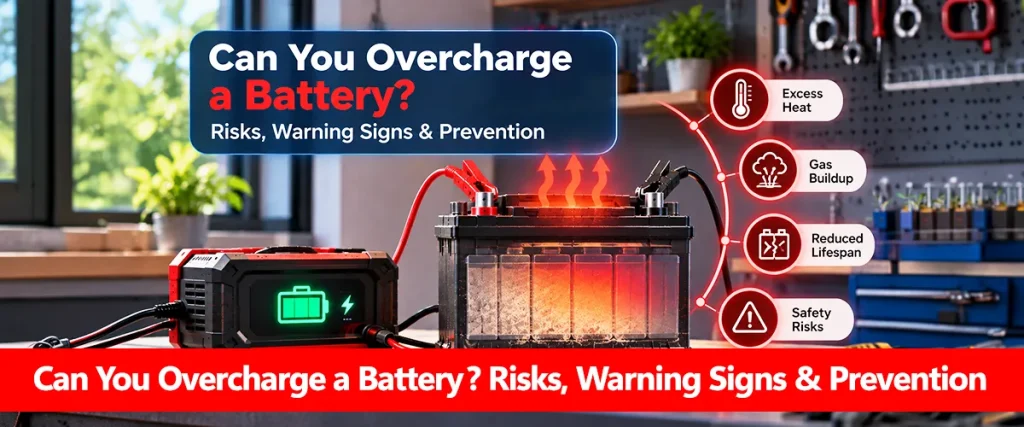
A battery should not continue receiving uncontrolled charging energy after reaching its recommended limits. Our can you overcharge a battery guide explains why charging control matters.
Why Charger Compatibility Matters
Not every charger works with every rechargeable battery. A charger must match the battery’s nominal voltage, chemistry, charging profile, current limits, and temperature requirements.
For example, a charger configured for lead-acid batteries may use float or equalization settings that are unsuitable for lithium-ion batteries.Incorrect charger selection can reduce battery life or create safety risks.
Read our how to choose battery charger guide and lead acid charger for lithium battery comparison for more details.
Common Misconceptions About Battery Charging
Several misunderstandings can lead to incorrect charging practices.
Myth: All rechargeable batteries use the same charging method.
Different chemistries require different voltage limits, current controls, and charging termination conditions.
Myth: A higher-current charger is always better.
Charging current must remain within the battery manufacturer’s limits.
Myth: Every battery should remain on float charge.
Float charging is appropriate for certain lead-acid applications but is generally unsuitable for conventional lithium-ion charging at maximum voltage.
Myth: A fully charged battery cannot be damaged by further charging.
Incorrect charging controls can cause battery overcharging, heat generation, and battery degradation.
Practical Battery Charging Safety Tips
Safe charging depends on using suitable equipment and following manufacturer instructions.
- Use a charger designed for the battery chemistry and voltage.
- Follow recommended charging current limits.
- Keep batteries within approved temperature ranges.
- Maintain suitable ventilation where required.
- Avoid damaged batteries, cables, and connectors.
- Follow manufacturer guidance on charging while equipment is operating.
For practical charging instructions, read our how to charge a battery guide. If a battery fails to accept charge, our battery not charging guide covers common causes and checks.
Conclusion
Understanding how battery charging works helps explain why rechargeable batteries require controlled voltage, current, and temperature conditions.
Charging restores stored chemical energy, but the correct method depends on battery chemistry. Lithium-ion batteries commonly use constant-current and constant-voltage charging, while lead-acid batteries often use bulk, absorption, and float stages.
Using compatible charging equipment and following manufacturer specifications supports battery safety, performance, and service life. Explore more educational guides in the Battery Charging category at Batteries Hub.
Frequently Asked Questions
How Does Battery Charging Work?
Battery charging uses electrical energy to reverse the chemical reactions that occur during discharge. A compatible charger controls voltage and current to restore stored energy.
What Is the Difference Between Charging Voltage and Charging Current?
Charging voltage is the electrical potential applied to the battery, while charging current is the rate of electrical charge flow into the battery.
How Does Lithium Battery Charging Work?
Many lithium-ion batteries use constant-current charging followed by constant-voltage charging. Charging ends when the required termination conditions are met.
What Are Bulk, Absorption and Float Charging?
These are common lead-acid charging stages. Bulk restores much of the charge, absorption completes charging at controlled voltage, and float maintains suitable standby batteries.
Can a Battery Be Damaged by Overcharging?
Yes. Excessive voltage or uncontrolled charging can cause overheating, degradation, and potentially hazardous failures.
Does Battery Temperature Affect Charging?
Yes. Temperature affects charging efficiency, battery reactions, and safety. Chargers and battery protection systems may restrict charging outside approved temperature ranges.
Can You Charge a Battery While Using It?
Some systems support simultaneous charging and power delivery, but compatibility depends on the charger, battery, and connected equipment.