What is a battery, and how does it keep your devices running without a direct electricity supply? A battery is an electrochemical device that stores chemical energy and converts it into electrical energy. It powers smartphones, vehicles, UPS systems, and solar energy storage through controlled chemical reactions.
Inside every battery, electrodes and an electrolyte work together to generate electrical current. The amount of energy it can supply depends on its chemistry, voltage, capacity, and operating conditions. In this guide, you’ll learn how batteries work, their main types and components, and what specifications such as volts (V), amp-hours (Ah), and watt-hours (Wh) mean.
Key Takeaways
- A battery converts chemical energy into electrical energy through electrochemical reactions.
- Primary batteries are generally single-use, while secondary batteries are rechargeable.
- Voltage (V), capacity (Ah), and energy (Wh) help determine compatibility and available power.
- Lead-acid and lithium-based batteries are widely used in vehicles, UPS systems, and solar storage.
What Is a Battery and How Does It Work?
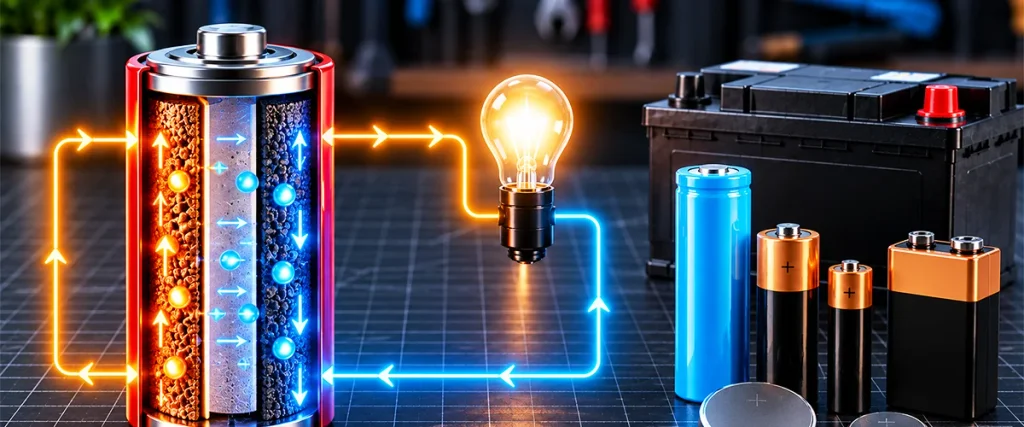
A battery produces electrical energy through chemical reactions between two electrodes: the anode and cathode. An electrolyte allows ions to move between them, while electrons flow through the external circuit when a device is connected. This movement supplies the electrical current needed to operate the equipment.
During discharge, oxidation at the anode releases electrons, while reduction at the cathode accepts them. At the same time, ions move through the electrolyte to maintain charge balance. The device keeps receiving power until the cell reaches its discharge limit.
How Does a Battery Produce Electricity?
The electricity generation process involves three main stages:
- Chemical reactions begin: Oxidation releases electrons at the anode, while reduction takes place at the cathode.
- Electrons and ions move together: Electrons travel through the external circuit, while ions move through the electrolyte.
- Electrical energy is delivered: The connected equipment receives power as these reactions continue.
Electron flow and ion movement occur simultaneously, not as separate consecutive events.
How Electricity Flows Through a Battery
The diagram below shows the basic working principle of a discharging electrochemical cell.
External circuit: Anode (−) → Electrons → Electrical load → Cathode (+)
Inside the cell: Ions move through the electrolyte between the electrodes, completing the electrochemical process.
The exact ion movement depends on the battery chemistry. For example, lithium-ion cells transfer lithium ions between electrodes during charging and discharging.
What Are the Main Parts of a Battery?
A battery contains several components that work together to store and deliver electrical energy. Their materials differ by chemistry, but their functions follow the same basic principles.
| Component | Function |
| Anode | Releases electrons during discharge |
| Cathode | Accepts electrons during discharge |
| Electrolyte | Allows ions to move between electrodes |
| Separator | Prevents direct electrode contact in many battery designs |
| Terminals | Connect the battery to an external circuit |
| Casing | Protects the internal components |
The materials used for these components influence voltage, performance, durability, and safety. To understand their construction in greater detail, read our guide to the parts of a battery.
How Does a Battery Store Energy?
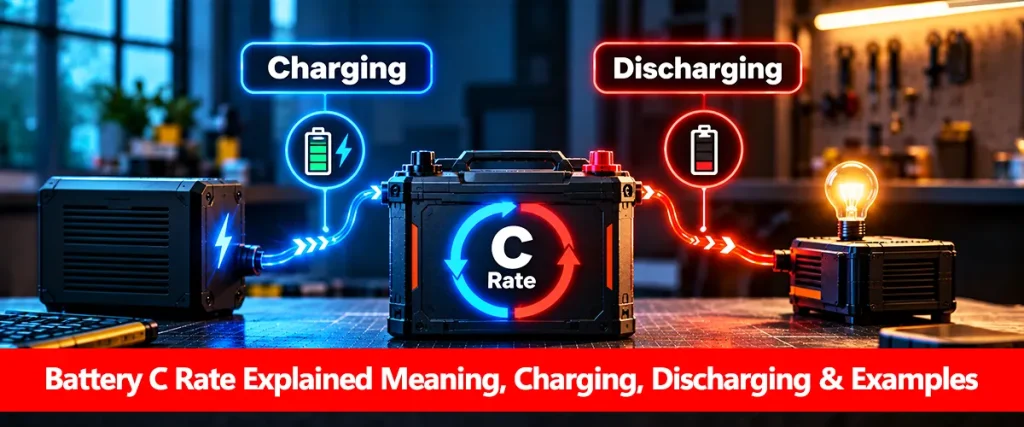
Batteries store energy in chemical form rather than holding electricity directly. When connected to a load, electrochemical reactions release this stored energy as electrical power. Rechargeable batteries can restore much of their chemical energy when an appropriate charger drives the reactions in the charging direction.
The amount of energy stored depends on the active materials, chemistry, and design. Some energy is also lost as heat during charging and discharging. Our guide to battery energy storage explains the process in greater detail.
What Are the Different Types of Batteries?
There are two main types of batteries: primary (non-rechargeable) and secondary (rechargeable). They are further classified by their chemical composition, construction, and intended applications.
Primary Batteries
Primary batteries are designed mainly for single use and cannot be safely recharged using ordinary chargers. Common examples include alkaline and primary lithium cells. They are frequently used in clocks, remote controls, toys, and low-power electronics.
Secondary Batteries
Secondary batteries support repeated charging and discharging. Lead-acid, lithium-ion, lithium iron phosphate (LiFePO4), and nickel-metal hydride (NiMH) are common rechargeable technologies used in vehicles, portable electronics, and energy storage systems.
Common Battery Types and Uses
| Battery Type | Rechargeable | Common Applications |
| Alkaline | No | Remotes, clocks, toys |
| Lead-acid | Yes | Cars, UPS, backup power |
| AGM | Yes | Vehicles, standby power |
| Lithium-ion | Yes | Phones, laptops, power tools |
| LiFePO4 | Yes | Solar storage, backup systems |
| NiMH | Yes | Rechargeable household electronics |
AGM is a type of lead-acid battery, while LiFePO4 belongs to the lithium-ion family. LiFePO4 generally offers better thermal stability than several other lithium-ion chemistries, although safe operation still requires suitable protection and charging equipment.
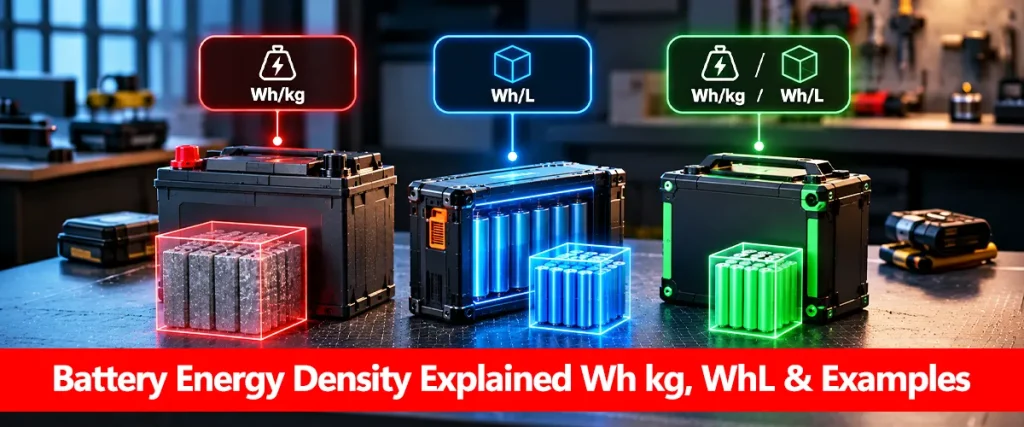
Each technology has different advantages in terms of energy density, weight, charging requirements, lifespan, and cost. Explore our detailed guide to the different types of batteries to compare their characteristics.
What Are the Most Important Battery Specifications?
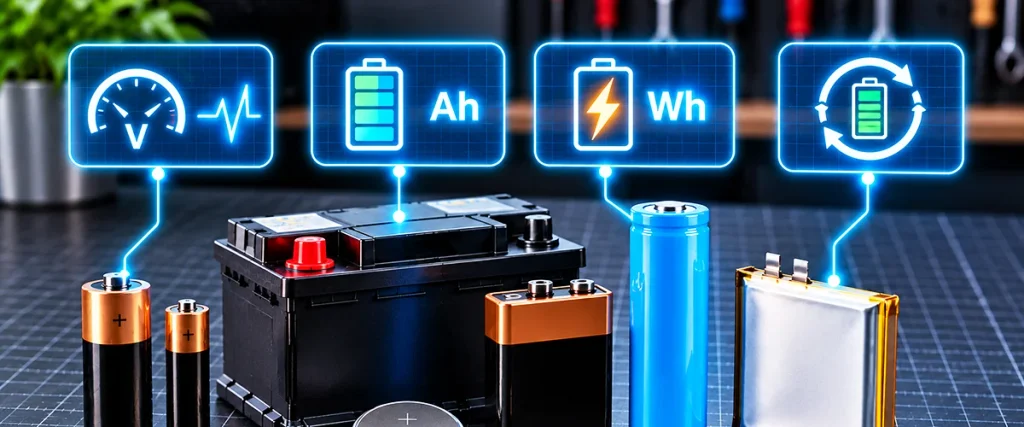
Voltage, capacity, stored energy, and cycle life are the main specifications used to evaluate battery performance. Understanding these measurements helps you compare products and choose suitable equipment.
Battery Voltage (V)
Voltage is the electrical potential difference between a battery’s terminals. A typical alkaline cell provides 1.5V nominally, while a LiFePO4 cell has a nominal voltage of 3.2V. The voltage of a complete battery depends on its chemistry and the number of cells connected together. Learn more about battery voltage and its importance.
Battery Capacity (Ah)
Battery capacity describes the amount of electric charge a battery can deliver. It is commonly measured in amp-hours (Ah) or milliamp-hours (mAh). A 100Ah rating represents 100 amp-hours of charge at the manufacturer’s rated conditions, but actual runtime also depends on the electrical load and discharge rate. Our Ah rating guide explains this measurement further.
Battery Energy (Wh)
Watt-hours measure stored electrical energy. For a simple nominal calculation:
Energy (Wh) = Voltage (V) × Capacity (Ah)
For example, a 12V 100Ah battery has:
12 × 100 = 1,200Wh (1.2kWh)
This represents nominal stored energy, not necessarily the full amount available to a connected device. Usable energy depends on discharge limits, temperature, battery condition, and system efficiency.
Battery Cycle Life
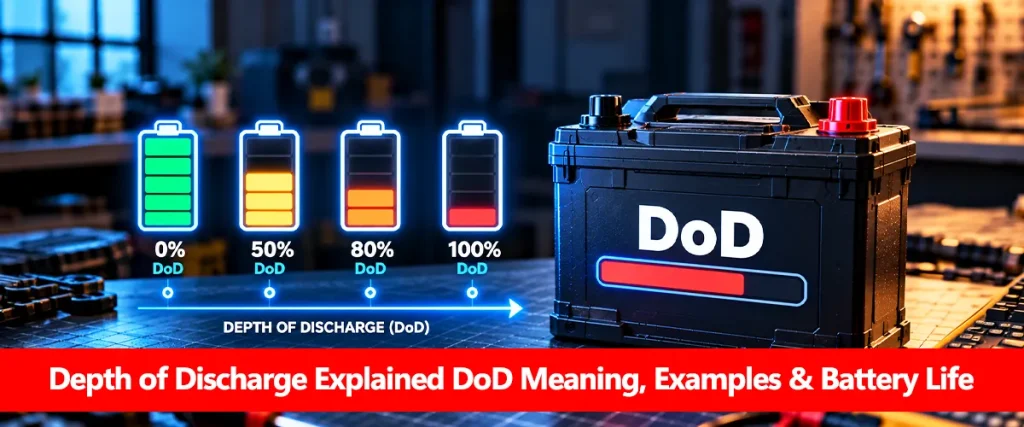
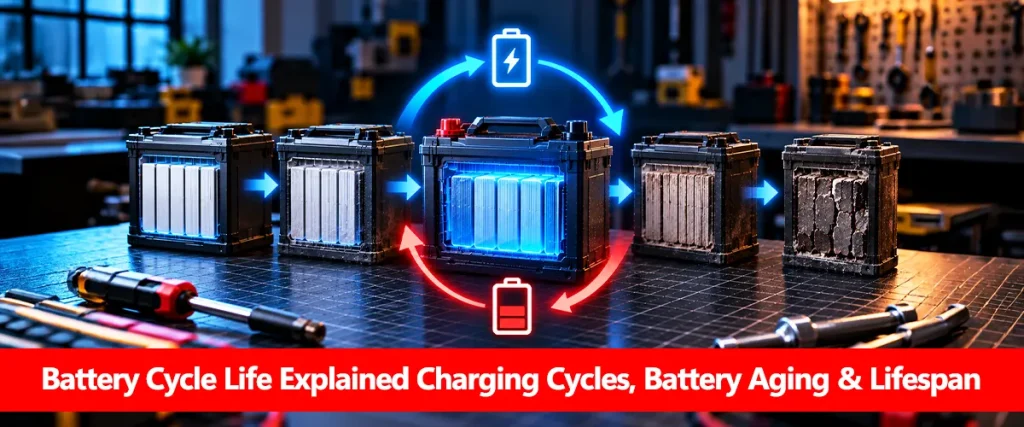
Cycle life measures how many equivalent full charge and discharge cycles a rechargeable battery can deliver before reaching a defined capacity threshold, often 80% of its original rated capacity. The result depends on chemistry, operating temperature, and depth of discharge. For reliable comparisons, use the manufacturer’s cycle-life rating and stated test conditions.
What Is the Difference Between a Battery and a Cell?
A cell is one electrochemical unit that converts chemical energy into electricity. A battery may contain a single cell or multiple cells connected together.
For example, a conventional 12V lead-acid car battery contains six cells connected in series, each providing roughly 2V. Connecting cells in series increases total voltage, while parallel connections increase capacity when properly matched cells are used.
Which Batteries Are Commonly Used in Pakistan?
In Pakistan, batteries are widely used for vehicle starting, UPS backup, inverter systems, and solar energy storage. Their importance is particularly noticeable in areas affected by load shedding, where households and businesses need stored electricity during power interruptions.
The most common applications include:
- UPS and inverter systems: Lead-acid, tubular, and lithium-based batteries provide backup power for lights, fans, and other electrical loads.
- Solar energy systems: Deep-cycle lead-acid and LiFePO4 batteries are used to store electricity generated by solar panels.
- Cars and motorcycles: Lead-acid starter batteries remain common, with AGM and other designs used in suitable vehicles.
- Portable electronics: Lithium-ion batteries power smartphones, laptops, and rechargeable devices.
For backup applications, the best choice depends on required runtime, electrical load, budget, charging system, and expected cycling frequency. You can explore our dedicated guides to UPS batteries, solar batteries, and car batteries for application-specific information.
How Can You Use Batteries Safely?
Correct handling helps reduce the risk of overheating, leakage, electrical damage, and premature failure. Always use charging equipment suitable for the battery chemistry, avoid excessive heat, and follow the manufacturer’s charging and discharge limits.
Damaged, swollen, or leaking batteries should not be used. Used batteries also require proper collection or recycling rather than disposal with ordinary household waste. Safety procedures vary by chemistry, especially for lead-acid and lithium-based products.
Frequently Asked Questions About Batteries
Who Invented the Battery?
Alessandro Volta developed the first widely recognized electric battery, the voltaic pile, in 1800. His invention provided a continuous source of electrical current and helped establish modern electrochemistry.
How Many Types of Batteries Are There?
Batteries are divided into two main categories: primary and secondary. Within these groups are several chemistries, including alkaline, lead-acid, lithium-ion, LiFePO4, and nickel-metal hydride.
Which Battery Is Best for UPS or Solar Systems?
The best choice depends on your budget, required backup time, charging equipment, and expected usage. Tubular lead-acid batteries remain an option for many UPS installations, while LiFePO4 batteries are often attractive for frequent cycling and solar storage because of their long cycle life and usable capacity.
Do Batteries Supply AC or DC?
Batteries supply direct current (DC). An inverter converts DC electricity into alternating current (AC) when needed for household appliances or other AC equipment.
Can All Batteries Be Recharged?
No. Primary batteries are generally intended for single use, while secondary batteries are rechargeable. Attempting to recharge a non-rechargeable cell can create safety hazards.
How Long Does a Battery Last?
Runtime depends on stored usable energy and the connected load. Service life depends on chemistry, temperature, charging practices, and aging. A battery used for occasional backup may age differently from one cycled daily.
Conclusion
A battery stores chemical energy and converts it into electrical power through electrochemical reactions. Understanding its components, types, voltage, capacity, and cycle life makes it easier to compare technologies and select the right power source.
For application-specific advice, read our guides to UPS batteries, car batteries, and solar batteries. You can also explore more battery education and practical guides on Batteries Hub.