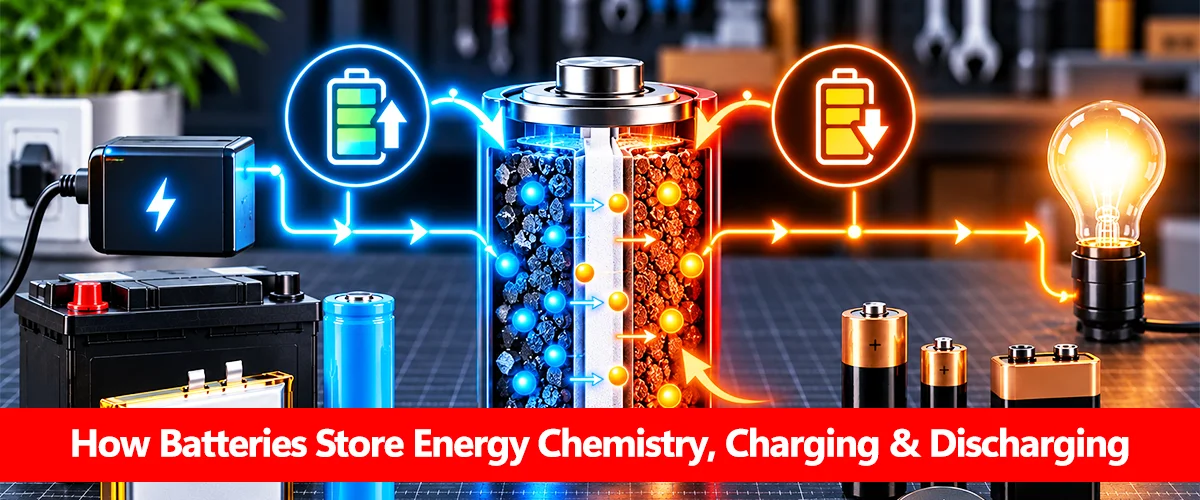
How batteries store energy without holding electricity inside them is one of the most interesting facts about modern energy storage. Instead of storing electrical current, batteries preserve energy as chemical potential energy. When connected to a device, electrochemical reactions convert that stored energy into electricity. Rechargeable batteries can reverse much of this process during charging, allowing energy to be stored and used repeatedly.
This process powers smartphones, electric vehicles, UPS systems, and solar battery banks. In this guide, you’ll learn where energy is stored inside a cell, how charging and discharging work, and why a battery’s rated capacity differs from the energy you can actually use.
Key Takeaways
- Batteries store chemical potential energy, not a reserve of electrical current.
- Charging stores energy by driving electrochemical reactions using an external power source.
- Discharging releases energy through reactions that supply electricity to a connected circuit.
- Usable stored energy depends on capacity, voltage, temperature, discharge limits, and battery condition.
How Do Batteries Store Energy?
Batteries store energy through differences in the chemical states of their internal materials. These differences create chemical potential energy that can be released through electrochemical reactions. In a rechargeable cell, charging uses an external electrical supply to move the system toward a higher-energy chemical state. Once charged, the cell can retain much of that energy until it is needed.
The energy is associated with the chemical composition and arrangement of materials inside the cell, particularly the active electrode materials and their reactions. It is not simply electricity trapped between two terminals. The amount available for conversion into electrical work depends on the chemistry and the difference in energy between the charged and discharged states.
To understand the broader principle, read our guide on what a battery is.
Where Is Energy Stored Inside a Battery?
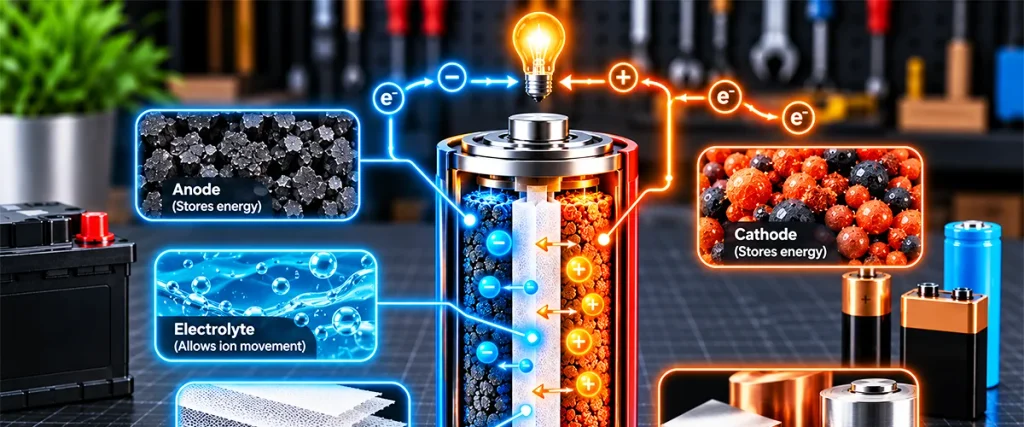
Energy is stored in the electrochemical system, not in one isolated component. The active materials at the positive and negative electrodes have different chemical states during charging and discharging. The electrolyte supports ion movement between them, allowing these energy-changing reactions to occur.
The main components involved are:
| Component | Role in Energy Storage |
| Anode and cathode | Participate in reactions that change the cell’s chemical energy |
| Electrolyte | Allows ions to move between electrodes |
| Separator | Keeps electrodes apart while permitting ionic transport in many designs |
| Current collectors | Transfer electrons between electrode materials and external connections |
The chemical properties of these materials determine how much energy a cell can store and how efficiently it can release it. For a component-by-component explanation, see our guide to the parts of a battery.
Is Energy Stored in Electrons or Chemical Bonds?
A battery does not store energy as a collection of electrons waiting to escape. Its stored energy comes from differences in the chemical potential of the materials involved in its reactions. Chemical bonding, atomic arrangements, and the movement of ions all contribute to these energy differences.
When the cell discharges, the reactions move toward a lower-energy state and release energy through the external electrical circuit. This is why the chemistry of the electrodes matters so much to battery performance.
How Does a Battery Store Energy During Charging?
Charging transfers energy from an external electrical source into a rechargeable battery’s chemical system. The charger applies a suitable voltage and current, driving electrochemical reactions that restore the cell toward its charged state. During charging, electrons move through the external circuit while ions move within the cell. These movements occur together. The resulting chemical changes increase the energy available for a later discharge.
The process can be summarized in three stages:
- Electrical energy enters: A suitable charger supplies energy to the cell.
- Chemical reactions proceed: Electrons and ions move as the electrode materials change state.
- Stored energy increases: The cell approaches its permitted upper state of charge.
Charging must stop or transition to an appropriate control stage when the battery reaches its specified limits. Overcharging can accelerate degradation and create safety risks. Different chemistries require different charging methods, which are covered in our dedicated battery charging guides.
How Is Stored Energy Released During Discharging?
Discharging converts chemical potential energy into electrical energy when a battery supplies power to a connected load. Oxidation occurs at the anode, releasing electrons into the external circuit, while reduction at the cathode accepts them. At the same time, ions move through the electrolyte to maintain charge balance.
As these reactions continue, the cell moves toward a lower-energy chemical state. Its state of charge decreases, and the voltage may change depending on chemistry and load. Once the battery reaches its permitted discharge limit, the connected equipment or protective system should stop drawing power. The resulting electrical output is direct current (DC). Our guide on whether batteries supply AC or DC explains how that output differs from household AC electricity.
How Do Different Battery Chemistries Store Energy?
All electrochemical batteries rely on chemical potential energy, but the reactions and materials used are different. These differences influence energy density, rechargeability, efficiency, and operating characteristics.
| Battery Chemistry | How Energy Is Stored | Common Application |
| Lead-acid | Reversible reactions involving lead, lead dioxide, and sulfuric acid | UPS, vehicles, backup power |
| Lithium-ion | Lithium ions move between electrode materials during charging and discharging | Phones, laptops, electric vehicles |
| LiFePO4 | Lithium-ion storage using lithium iron phosphate as the positive electrode material | Solar storage, backup systems |
| Nickel-metal hydride (NiMH) | Reversible reactions involving hydrogen-storing metal alloys and nickel-based positive electrodes | Rechargeable household electronics |
| Alkaline | Chemical potential in zinc and manganese dioxide reactants, generally intended for single use | Remote controls, clocks |
For example, lithium-ion batteries store and release energy through the movement of lithium ions between electrode materials. Lead-acid batteries rely on different reversible chemical reactions involving their plates and electrolyte. Although both can be recharged, their charging requirements and performance characteristics are not interchangeable.
How Much Energy Can a Battery Store?
The amount of stored electrical energy is commonly expressed in watt-hours (Wh) or kilowatt-hours (kWh). Battery capacity is also rated in amp-hours (Ah), but Ah measures electric charge rather than energy.
A useful estimate of nominal energy is:
Energy (Wh) = Nominal Voltage (V) × Capacity (Ah)
For example, a 12V 100Ah battery has:
12V × 100Ah = 1,200Wh = 1.2kWh
This is its nominal energy rating, not a guarantee that the full 1.2kWh can be delivered to connected equipment. Actual energy depends on the voltage during discharge, the amount of capacity used, and losses within the battery and electrical system. For a detailed explanation of electrical potential, read our battery voltage guide.
What Is the Difference Between Stored and Usable Energy?
Stored energy refers to the energy represented by the battery’s charged electrochemical state. Usable energy is the portion that can be delivered within the system’s permitted operating limits.
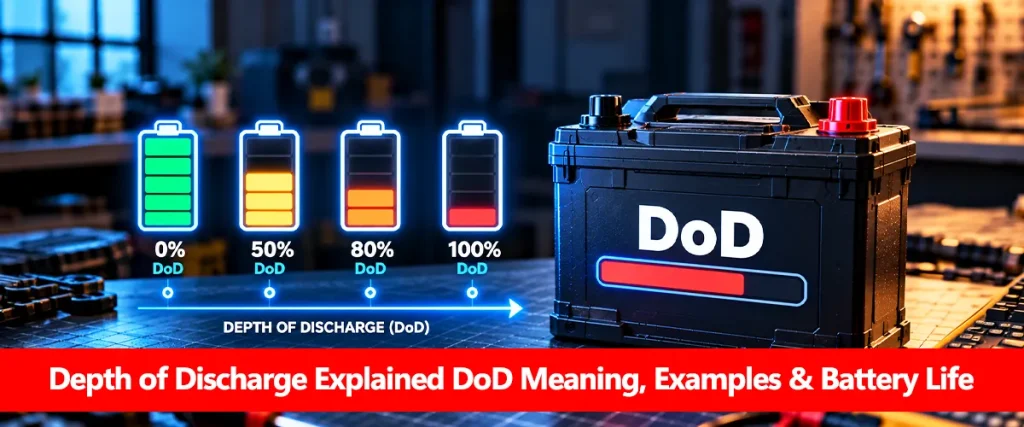
For example, a battery with 1.2kWh of nominal energy and an allowed depth of discharge of 80% would have approximately 0.96kWh available before accounting for other losses. This is an illustrative calculation; actual limits depend on the product and chemistry.
What Affects a Battery’s Ability to Store Energy?
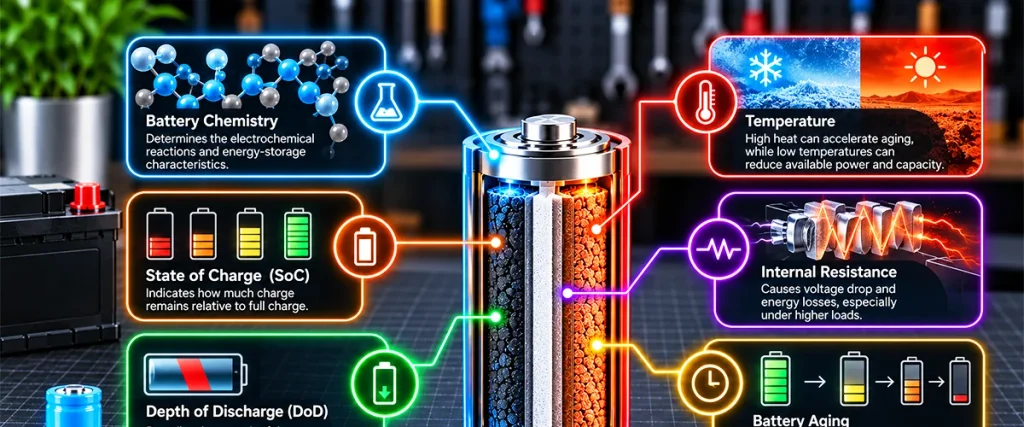
A battery’s rated capacity does not remain constant under every operating condition. Several factors influence its available energy, charging efficiency, and long-term performance.
- Battery chemistry: Determines the electrochemical reactions and practical energy-storage characteristics.
- State of charge (SoC): Indicates how much charge remains relative to the battery’s defined full-charge condition.
- Depth of discharge (DoD): Describes how much of the rated capacity has been used.
- Temperature: Excessive heat can accelerate aging, while low temperatures can reduce available power and capacity.
- Internal resistance: Causes voltage drop and energy losses, especially under higher loads.
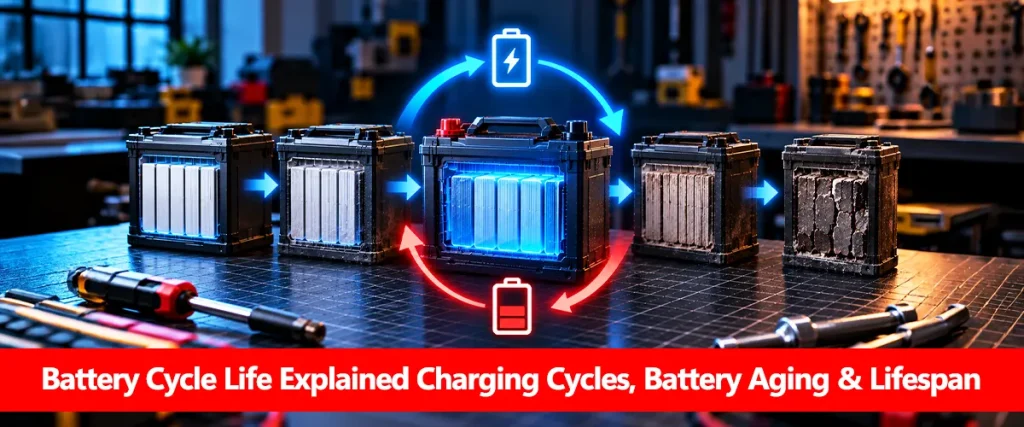
- Battery aging: Repeated cycling and time can reduce the amount of energy a cell can store and deliver.
For this reason, two batteries with similar nominal energy ratings may provide different usable runtimes. Manufacturer specifications and real operating conditions are important when evaluating performance.
How Is Battery Energy Storage Used in Pakistan?
Battery energy storage is particularly useful in Pakistan for managing electricity interruptions and using solar-generated power after sunset. Households and businesses commonly rely on UPS systems, inverters, and solar battery banks to keep selected electrical equipment operating when grid electricity is unavailable.
In a solar installation, panels generate electricity during daylight hours. A suitable charge controller or hybrid inverter manages the energy supplied to the battery, where it is stored chemically. Later, the inverter can convert the battery’s DC output into AC electricity for household loads.
Lead-acid and lithium-based batteries are both used in these systems. Their usable capacity, cycle life, charging requirements, and installation costs differ, so choosing between them requires considering the complete electrical system rather than capacity alone.
What Are Common Misconceptions About Battery Energy Storage?
Understanding the difference between chemical storage and electrical output helps avoid several common misunderstandings.
| Misconception | Correct Explanation |
| Batteries store electricity directly | They store chemical potential energy and convert it into electricity |
| A fully charged battery always delivers its entire rated energy | Usable energy depends on discharge limits and operating conditions |
| Higher Ah always means more stored energy | Voltage must also be considered when comparing energy capacity |
| Rechargeable batteries store energy without losses | Charging, discharging, and storage involve energy losses |
| All batteries store energy in the same way | Different chemistries use different electrochemical reactions |
Conclusion
Understanding how batteries store energy comes down to one principle: electrical energy can be converted into chemical potential energy during charging and released again through electrochemical reactions. The chemistry, state of charge, voltage, and operating conditions determine how much energy can be stored and used. For a clearer understanding of the underlying technology, read our guides on the parts of a battery, battery voltage, and battery fundamentals. You can also explore more educational battery guides at Batteries Hub.
Frequently Asked Questions
Do Batteries Store Electricity or Chemical Energy?
Batteries store chemical potential energy. During discharge, electrochemical reactions convert this energy into electricity that can power connected devices.
Can a Battery Store Energy Without Being Connected?
Yes. A charged battery can retain stored chemical energy while disconnected from a circuit. However, self-discharge and aging gradually reduce the energy available over time.
Why Do Batteries Lose Stored Energy Over Time?
Batteries experience self-discharge because small internal chemical reactions continue even when no device is connected. Temperature, chemistry, and age influence how quickly stored charge decreases.
Can All Batteries Store Energy Again After Discharging?
No. Rechargeable batteries are designed to restore their chemical energy through charging. Primary batteries are generally intended for single use and should not be recharged using ordinary charging equipment.
Is Battery Energy Storage 100% Efficient?
No. Some energy is lost during charging and discharging because of internal resistance, chemical processes, and heat generation. Efficiency varies with battery chemistry and operating conditions.
Why Is Battery Storage Important for Solar Power?
Solar generation changes throughout the day and stops at night. Battery storage allows some electricity produced during sunny periods to be saved for later use, improving the flexibility of a compatible solar power system.