
This car battery guide explains how automotive batteries work, how to identify a weak battery and what to check before choosing a replacement. A car battery is a rechargeable energy storage device that supplies electrical power to start the engine and operate essential vehicle electronics.
Most conventional petrol and diesel passenger cars use a nominal 12V lead-acid starter battery. Although it may appear to be a simple component, its performance depends on starting current, charging conditions, temperature and compatibility with the vehicle’s electrical system. Understanding what a battery is provides the foundation for maintaining reliable vehicle starting performance.
What Does a Car Battery Do?
A car battery performs three important functions: delivering electrical current to the starter motor, supplying power when the engine is switched off and helping stabilize the vehicle’s electrical system.
When the driver starts the engine, the battery delivers a high current for a short period. Once the engine is running, the alternator normally supplies electrical power and replenishes charge used during starting.
The battery also supports electronic systems such as central locking, security alarms, lights and vehicle computers. Modern cars may have additional electrical requirements because of automatic start-stop technology and advanced electronics. The detailed relationship between the battery, starter motor and alternator is covered in how a car battery works.
Main Types of Car Batteries
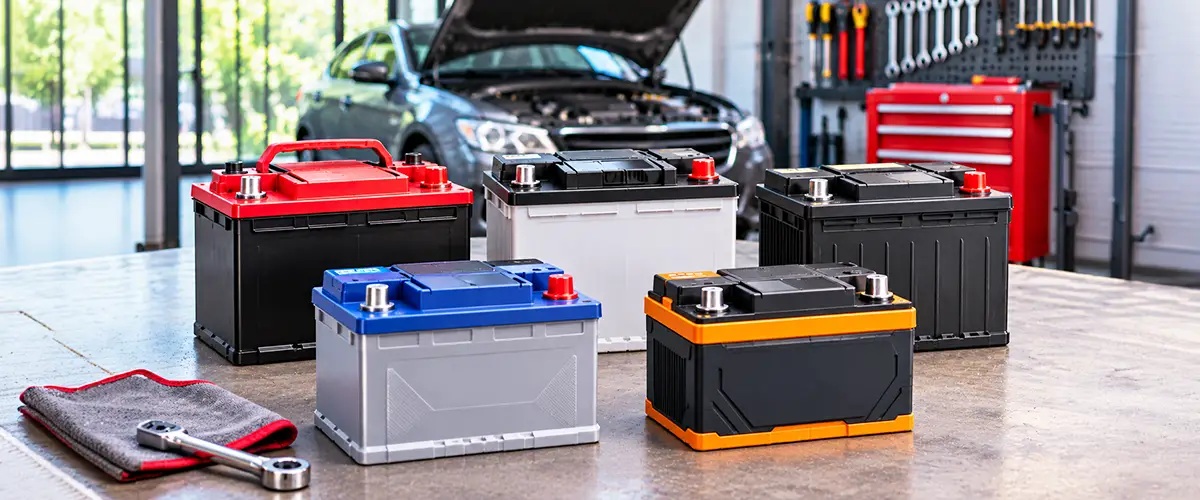
Car batteries are available in several technologies, but conventional flooded lead-acid, enhanced flooded and AGM batteries are among the most relevant for everyday passenger vehicles.
| Battery Type | Main Characteristic | Common Application |
| Flooded lead-acid | Conventional liquid-electrolyte design | Many standard petrol and diesel cars |
| Maintenance-free lead-acid | Lead-acid construction with reduced routine servicing | Everyday passenger vehicles |
| EFB | Enhanced cycling performance | Selected start-stop vehicles |
| AGM | Absorbent glass mat construction | Vehicles with higher electrical demands |
| Lithium starter battery | Specialized lightweight design | Selected approved automotive applications |
An AGM battery is designed differently from a standard flooded battery and can better support certain repeated cycling requirements.
Vehicles originally equipped with AGM or EFB batteries should use the replacement technology approved by the vehicle manufacturer. Some modern vehicles also require battery registration or electronic system adaptation after replacement. For broader chemistry information, see lead-acid batteries.
Understanding Car Battery Voltage
Most conventional passenger cars use a nominal 12V electrical system. However, a fully charged 12V lead-acid battery normally measures above 12V when the engine is off.
A battery’s open-circuit voltage provides an indication of its charge level when measured after sufficient rest, without significant electrical loads.
| Resting Voltage | General Interpretation |
| Around 12.6–12.8V | Generally well charged |
| Around 12.4V | Partially discharged |
| Around 12.2V | Significantly discharged |
| Around 12.0V or lower | Low charge; investigate |
These are approximate readings for conventional 12V lead-acid batteries at suitable temperatures. Battery technology, temperature and recent charging activity affect interpretation.
A voltage reading does not confirm whether a battery can deliver enough current to start the engine. A battery may show normal voltage but fail under a heavy starting load. Our detailed car battery voltage guide explains resting and charging voltage measurements.
What Do Ah and CCA Mean on a Car Battery?
Two important specifications found on automotive battery labels are amp-hours (Ah) and cold cranking amps (CCA). Ah describes rated charge capacity under defined test conditions. CCA measures the battery’s ability to deliver high starting current at a specified low temperature.
For example, a battery labeled 12V, 60Ah and 550 CCA provides three different pieces of information:
| Specification | Example | Meaning |
| Nominal voltage | 12V | Electrical system class |
| Capacity | 60Ah | Rated charge storage |
| Cold cranking amps | 550 CCA | Standardized cold-starting capability |
A high Ah rating does not automatically mean a battery provides the best starting performance. The battery must also supply the current required by the engine.
CCA is especially important in cold conditions, but adequate starting-current capability matters in warmer climates too. The car battery CCA guide explains starting-current ratings in detail, while what Ah means on a battery covers capacity terminology.
How to Choose the Correct Car Battery Size
Automotive battery selection involves more than choosing a battery with sufficient voltage and capacity. The replacement must fit the battery compartment, connect correctly and satisfy the vehicle manufacturer’s performance requirements. Important specifications include physical dimensions, terminal orientation, hold-down arrangement, Ah capacity, CCA and battery technology.
Different vehicles may use BCI group sizes or JIS and DIN battery designations. The correct fitment can vary by vehicle model, engine, production year and market. A battery that is too large may not fit securely, while the wrong terminal arrangement can make installation unsafe. Always check the owner’s manual or a manufacturer-approved fitment catalogue. Our car battery size guide explains the relevant dimensions and compatibility codes.
How to Tell If Your Car Battery Is Weak
A weakening car battery often produces noticeable symptoms before complete failure, although some batteries can stop working with little warning. Common signs include slow engine cranking, repeated clicking when starting, dim lights during startup and a battery that struggles after the vehicle has been parked.
| Warning Sign | Possible Explanation |
| Engine cranks slowly | Weak charge or poor starting-current capability |
| Clicking sound during startup | Low battery power or starting-circuit fault |
| Lights dim significantly | Battery or electrical connection problem |
| Repeated jump-starts needed | Battery aging, charging fault or parasitic draw |
| Corrosion around terminals | Poor connection or electrolyte-related issue |
| Battery warning light | Possible charging-system malfunction |
These symptoms do not always mean the battery needs replacing. Starter-motor problems, loose cables and alternator faults can produce similar behavior. Read signs of a bad car battery for more specific diagnostic clues.
How to Check Your Car Battery Condition
A basic battery check starts with visual inspection and a suitable voltage reading. However, voltage alone cannot establish battery health. A safe preliminary assessment involves confirming that the vehicle is switched off, visually checking the battery casing and terminals, and measuring resting voltage with an appropriate multimeter if the vehicle manual permits direct access.
A properly rested, fully charged conventional lead-acid battery commonly measures around 12.6V or above. A lower reading may indicate insufficient charge rather than permanent battery failure. Professional battery testing can include a conductance test or manufacturer-approved load test to assess the battery’s ability to deliver starting current.
| Check | What It Helps Identify |
| Visual inspection | Damage, leakage or terminal corrosion |
| Resting voltage | Approximate battery charge state |
| Battery conductance test | Starting capability and battery condition |
| Charging-system test | Alternator and charging performance |
| Parasitic-draw diagnosis | Abnormal current consumption while parked |
For the complete procedure, see how to test a car battery. If the battery is swollen, cracked, leaking or unusually hot, avoid handling or charging it and seek professional assistance.
Car Battery vs Alternator: What Is the Difference?
The car battery and alternator perform different functions. The battery supplies high starting current and supports electrical systems when the engine is off. The alternator generates electrical power when the engine is running and normally recharges the battery. In many conventional vehicles, charging voltage with the engine running may be around 13.5–14.8V. However, modern smart-charging systems can intentionally vary their voltage, so a single running-voltage reading should not be treated as a universal pass-or-fail test.
A defective alternator can repeatedly discharge a healthy battery. Similarly, a weak battery may cause starting problems even when the charging system operates correctly. If the vehicle’s battery continues failing after charging or replacement, explore why a car battery keeps dying before purchasing another battery.
Why Does a Car Battery Drain Overnight?
A car battery naturally loses some charge while parked, and modern vehicles use a small amount of standby electricity for alarms, clocks and electronic modules. However, excessive electrical consumption while the vehicle is switched off can discharge the battery overnight. Possible causes include interior lights remaining on, aftermarket accessories, malfunctioning electronic modules or an aging battery that cannot retain charge.
Frequent short journeys can also leave the battery undercharged because the vehicle may not run long enough to replenish the energy consumed during starting. The causes and diagnosis of abnormal standby consumption are covered in car battery draining overnight.
How Long Does a Car Battery Last?
Most conventional car batteries last approximately three to five years under suitable conditions, although some fail sooner and others remain usable longer.
Battery service life depends on temperature, driving patterns, charging performance, vibration and maintenance.
Hot weather is particularly important in Pakistan. Prolonged exposure to high under-bonnet temperatures can accelerate chemical deterioration, while repeated short trips and extended periods of inactivity can contribute to undercharging.
Regular testing becomes increasingly useful as a battery approaches three years of service. For a detailed discussion of battery aging and replacement timing, see how long car batteries last.
Essential Car Battery Maintenance Tips
Good battery maintenance can reduce avoidable starting problems and help preserve battery performance.
For most drivers, useful habits include keeping the battery securely mounted, checking for visible corrosion, avoiding unnecessary electrical loads while parked and having the charging system inspected when warnings appear.
Battery terminals should remain clean and secure. Corrosion can increase electrical resistance and interfere with both starting and charging.
Our car battery corrosion guide explains the causes and safe servicing considerations.
When a battery becomes discharged, use charging equipment suitable for its chemistry and follow the vehicle manufacturer’s instructions. Detailed procedures are available in how to charge a car battery. Never open a sealed AGM battery or attempt to service an electrical system while ignoring its safety warnings.
When Should You Jump-Start or Replace a Car Battery?
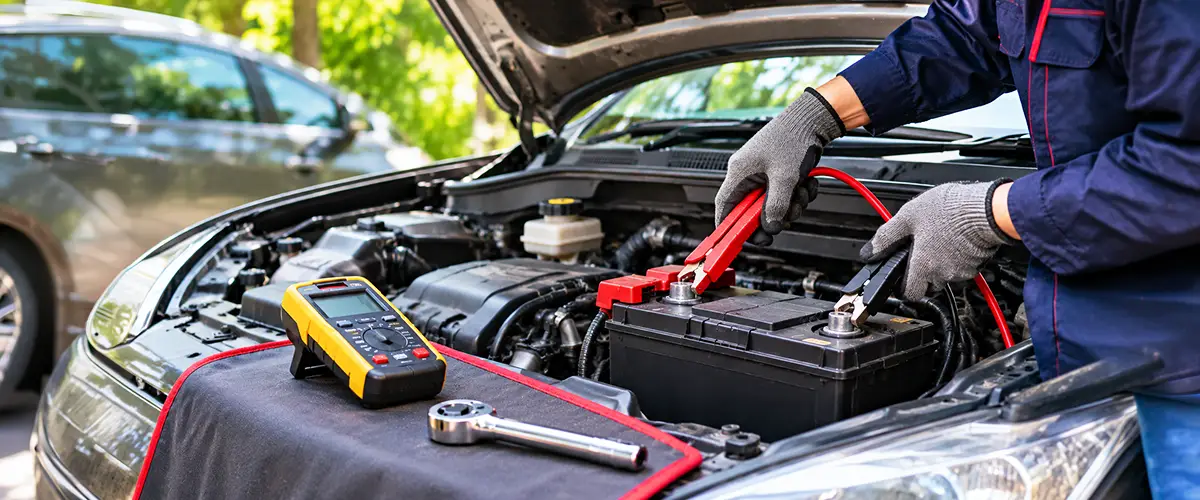
A jump-start may be appropriate when a vehicle has a discharged but otherwise undamaged 12V starter battery and the manufacturer permits the procedure.
However, jump-starting does not fix battery aging, poor charging or abnormal current drain. A vehicle that repeatedly requires jump-starting needs further diagnosis.
The vehicle manual should determine the correct jump-start points, especially in vehicles with electronic battery monitoring or batteries located outside the engine compartment.
For specific instructions, consult how to jump-start a car.
Replacement becomes appropriate when an approved battery test identifies insufficient starting performance or the battery can no longer reliably hold charge after other faults have been excluded. Modern vehicles may require battery registration or electronic adaptation. The process is explained in how to replace a car battery.
What Should You Check Before Buying a New Car Battery?
Before choosing a replacement, confirm the vehicle’s exact requirements rather than buying the largest Ah capacity available.
Use this short checklist:
- Confirm the vehicle make, model, engine and model year.
- Identify the correct battery technology: flooded, EFB or AGM.
- Check required voltage, Ah and CCA.
- Verify battery dimensions and terminal position.
- Confirm the hold-down and cable connections.
- Review manufacturing date and warranty.
- Check whether battery registration is required.
- Choose a reputable seller with appropriate installation support.
For Pakistani vehicle owners, the best car battery in Pakistan guide covers local brand-selection considerations. Current costs, warranties and dealer quotations are addressed separately in car battery price in Pakistan.
Conclusion
A reliable car battery guide should help you understand more than battery voltage and capacity. The most important considerations are starting-current capability, vehicle compatibility, charging condition, temperature and battery health.
Conventional 12V lead-acid batteries remain widely used in petrol and diesel vehicles, while EFB and AGM designs support selected vehicles with greater electrical demands.
Regular checks, correct charging and timely replacement can reduce unexpected starting problems. Always select a battery that matches the vehicle manufacturer’s specifications rather than relying only on Ah, CCA or price.
Frequently Asked Questions
What Is the Main Purpose of a Car Battery?
A car battery supplies the high electrical current needed to start the engine, powers selected electronics when the engine is off and helps stabilize the electrical system.
How Many Volts Should a Car Battery Have?
Most conventional passenger cars use a nominal 12V battery. A well-charged lead-acid battery commonly measures approximately 12.6–12.8V at rest.
What Is CCA in a Car Battery?
CCA stands for cold cranking amps. It indicates the battery’s ability to supply starting current under standardized cold-temperature test conditions.
Is a Higher Ah Car Battery Always Better?
No. A higher Ah rating means greater rated charge capacity, but the battery must still match the vehicle’s dimensions, starting-current requirements and electrical system.
How Often Should You Test a Car Battery?
Periodic inspection is useful, especially before extreme weather. Testing becomes particularly important after approximately three years of service or whenever starting problems appear.
Can a Bad Alternator Drain a New Battery?
Yes. If the alternator or charging system fails to replenish the battery correctly, even a recently installed battery can become discharged.
How Long Can a Car Battery Last Without Driving?
It depends on battery condition, temperature and the vehicle’s standby electrical consumption. Some vehicles may experience starting difficulties after extended periods without driving.
Is AGM Better Than a Normal Car Battery?
AGM can offer advantages in selected vehicles with demanding electrical systems or start-stop technology. The correct battery is the type approved for the vehicle, not automatically the most expensive option.
Can I Replace a Car Battery Myself?
Some conventional vehicles allow straightforward replacement, but modern cars may require specific safety procedures, battery registration or electronic resets. Follow the manufacturer’s instructions or use a qualified technician.
Do Electric Cars Also Have 12V Batteries?
Many electric vehicles use a separate low-voltage auxiliary battery to power control electronics and other systems. Their main high-voltage traction battery serves a different purpose.