Learning how to replace car battery starts with selecting a compatible replacement and disconnecting the old battery safely. In most conventional 12V negative-ground cars, you remove the negative terminal first, followed by the positive terminal. After installing the new battery, reconnect the positive terminal first and the negative terminal last.
Battery replacement is relatively straightforward in some older vehicles, but modern cars may require additional electronic procedures. Before starting, check your vehicle’s manual, confirm the battery specifications and make sure the existing battery actually needs replacing.
Before Replacing Your Car Battery
A car that refuses to start does not always have a defective battery. Low charge, loose terminals, starter problems and alternator faults can produce similar symptoms.
If the battery has simply discharged, proper charging may restore normal performance. However, replacement may be necessary when a fully charged battery fails a professional performance test or can no longer deliver sufficient starting current.
Check the signs of a bad car battery before purchasing a replacement. You can also follow our car battery testing guide to understand the difference between low charge and battery failure.
Choose the Correct Replacement Battery

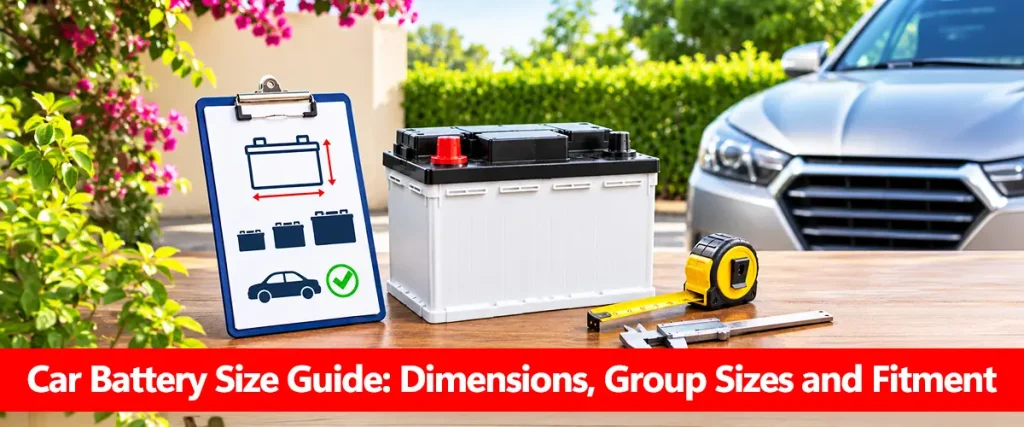
Installing the wrong battery can create fitment, charging and starting problems. The replacement should match the vehicle manufacturer’s specifications rather than simply having a higher Ah rating.
Check these requirements before buying:
| Specification | What to Verify |
| Voltage | Usually 12V for conventional passenger cars |
| Battery size | Fits the tray and hold-down bracket |
| Terminal position | Positive and negative connections match |
| Ah capacity | Meets manufacturer requirements |
| CCA | Provides sufficient starting-current capability |
| Battery chemistry | Correct flooded, EFB or AGM technology |
For example, a car originally equipped with an AGM battery should generally receive the manufacturer-approved AGM replacement. Some vehicles also require battery registration after installation.
Our car battery size guide explains fitment, while car battery CCA covers starting-current requirements.
Tools and Safety Precautions
Before removing the old battery, prepare the replacement and suitable equipment.
You will generally need:
- Safety glasses and protective gloves
- Correct-size spanner or socket wrench
- Compatible replacement battery
- Battery terminal cleaning brush, if required
- Vehicle owner’s manual
Park on level ground, switch off the engine and all accessories, and apply the parking brake. Remove metal jewelry and keep tools away from both battery terminals.
Do not attempt replacement if the battery is leaking, swollen, cracked, frozen or unusually hot. Lead-acid batteries contain corrosive electrolyte and can release flammable gases.
If the battery is difficult to access or the manufacturer’s instructions require specialist equipment, use a qualified technician.
How to Replace a Car Battery in 8 Steps
The following procedure applies generally to conventional 12V negative-ground vehicles where the manufacturer permits routine battery replacement.
Step 1: Locate the Battery
Open the bonnet and locate the battery. Some vehicles have their batteries in the boot or beneath a seat, so check the owner’s manual if it is not visible.
Identify the positive (+) and negative (−) terminals. Do not rely only on cable colors.
Step 2: Disconnect the Negative Terminal First
Loosen the negative (−) terminal clamp using the correct tool and carefully move the cable away from the battery.
Disconnecting the negative terminal first reduces the risk of an accidental short circuit between the positive terminal and the vehicle’s grounded metal body.
Step 3: Disconnect the Positive Terminal
Remove the positive (+) cable and position it so it cannot accidentally contact the negative terminal or vehicle body.
Do not force a stuck terminal clamp. If it cannot be removed safely, seek professional assistance.
Step 4: Remove the Battery Hold-Down
Locate the bracket, clamp or strap securing the battery. Carefully remove the retaining hardware and keep it somewhere safe.
Lift the old battery out while keeping it upright. Car batteries can be heavy, so use the manufacturer’s approved lifting method.
Step 5: Inspect the Battery Tray
Check the tray, cable clamps and surrounding area for corrosion, dirt or damage.
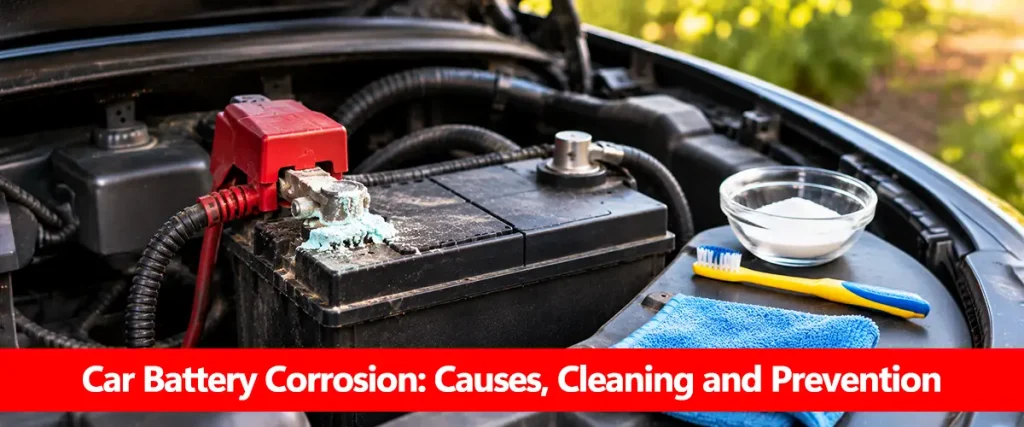
Minor deposits may need appropriate cleaning before installation. If terminals are heavily corroded or damaged, repair them before connecting the replacement. Our car battery corrosion guide covers this separately.
Step 6: Install and Secure the New Battery
Place the replacement battery in the correct orientation. Confirm that it sits properly in the tray and that its terminals match the vehicle cables. Reinstall the hold-down bracket and tighten it according to manufacturer specifications. The battery should remain secure without excessive pressure on its casing.
If the original battery has a vent tube, reconnect the approved venting arrangement as required by the vehicle manufacturer.
Step 7: Reconnect Positive, Then Negative
Connect the positive (+) terminal first, followed by the negative (−) terminal.
Tighten the clamps to the specified torque without overtightening. Make sure the cables are correctly positioned and cannot rub against moving or hot components.
Step 8: Start the Car and Check Operation
Start the vehicle and confirm that it operates normally. Check for unexpected dashboard warnings and make sure the battery is securely installed.
Some vehicles may need clock, window or other electronic settings restored. Others require diagnostic battery registration before the replacement process is complete.
Battery Terminal Connection Order
One of the most important parts of replacing a battery is following the correct cable sequence.
| Operation | First | Second |
| Removing the old battery | Negative (−) | Positive (+) |
| Connecting the new battery | Positive (+) | Negative (−) |
This is the standard procedure for conventional negative-ground vehicles. Always follow manufacturer-specific instructions if they differ.
Do Modern Cars Need Battery Registration?
Some modern vehicles have a Battery Management System (BMS) that monitors battery condition and controls charging. When the battery is replaced, the system may need to be informed through a diagnostic tool. This is known as battery registration or coding. It is especially relevant to certain vehicles equipped with automatic start-stop technology, AGM or EFB batteries.
Not every vehicle requires registration, but skipping a required procedure can affect charging behavior or start-stop performance. VARTA recommends specialist replacement for many modern start-stop vehicles.
Do not assume that installing a physically compatible battery completes the job. Check the service manual or ask a qualified technician whether battery registration is necessary.
Common Mistakes to Avoid
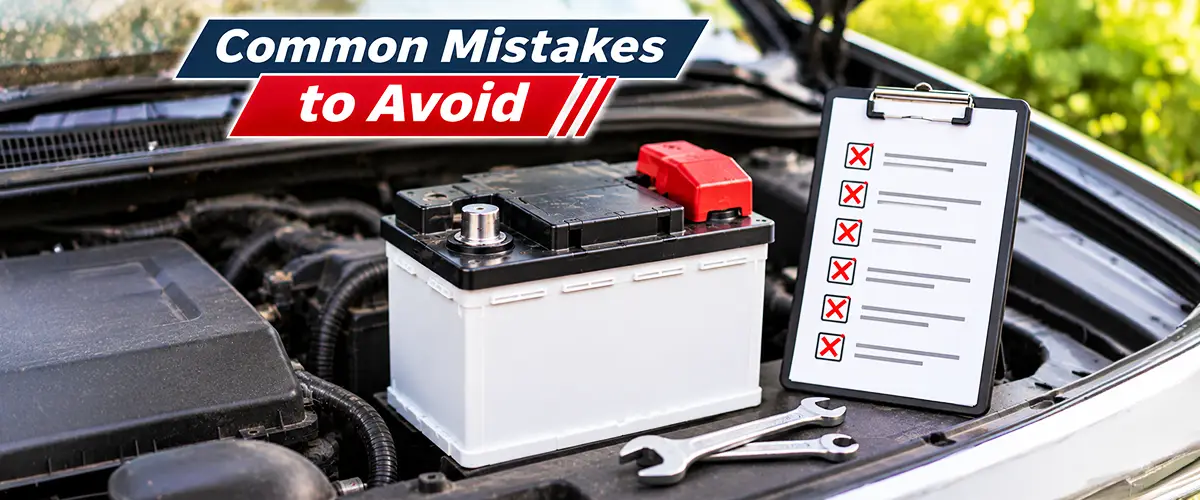
Even a correctly sized replacement can cause problems if installed incorrectly.
Avoid these mistakes:
- Disconnecting the positive cable before the negative cable.
- Installing a battery with the wrong terminal orientation.
- Choosing incompatible AGM, EFB or flooded technology.
- Leaving the battery hold-down loose.
- Overtightening terminal clamps.
- Ignoring required battery registration.
- Replacing the battery without checking repeated charging problems.
If your car battery keeps dying after replacement, the alternator or another electrical component may be responsible.
Likewise, a vehicle with a battery draining overnight problem may continue discharging the new battery until the underlying fault is repaired.
What Should You Do With the Old Battery?
An old lead-acid car battery contains recyclable materials and hazardous electrolyte. It should never be discarded with household waste. Return it to an authorized battery dealer, workshop or appropriate recycling facility. In Pakistan, some dealers also offer an old-battery exchange adjustment when purchasing a replacement.
Keep the old battery upright and avoid transporting it if its case is leaking or damaged. Ask the dealer to arrange safe handling where necessary.
Conclusion
Understanding how to replace car battery safely involves more than removing two cables. The replacement must match the vehicle’s electrical and physical requirements, the old battery must be disconnected in the correct order, and the new battery must be securely installed.
For conventional negative-ground vehicles, remember: negative off first, positive on first. If your car uses a modern battery management system or requires specialist installation, follow the manufacturer’s instructions or use a qualified technician.
Frequently Asked Questions
Can I Replace a Car Battery Myself?
Yes, some conventional vehicles allow straightforward battery replacement. Modern cars with battery monitoring, complex access or registration requirements may need professional installation.
Which Battery Terminal Should I Disconnect First?
Disconnect the negative (−) terminal first, then the positive (+) terminal on a conventional negative-ground vehicle.
Which Terminal Should I Connect First on a New Battery?
Connect the positive (+) terminal first, followed by the negative (−) terminal.
How Long Does It Take to Replace a Car Battery?
A straightforward replacement may take around 20–40 minutes. Additional time may be required for difficult access, diagnostics or battery registration.
Will Changing the Battery Reset My Car?
It can. Some vehicles may lose clock, window or other stored settings. Certain vehicles also require electronic battery registration or initialization.
Do I Need to Charge a New Car Battery Before Installing It?
A properly supplied replacement battery should have sufficient charge for installation, but its condition should be checked. If charging is necessary, follow the manufacturer’s approved procedure.
Can I Replace an AGM Battery With a Normal Battery?
Generally, no. Vehicles specified for AGM technology should use an approved AGM replacement unless the manufacturer explicitly allows another type.
What If My Car Still Won’t Start After Replacing the Battery?
Check the installation and arrange professional diagnosis. The problem may involve battery connections, the starter motor, charging system or another electrical component.