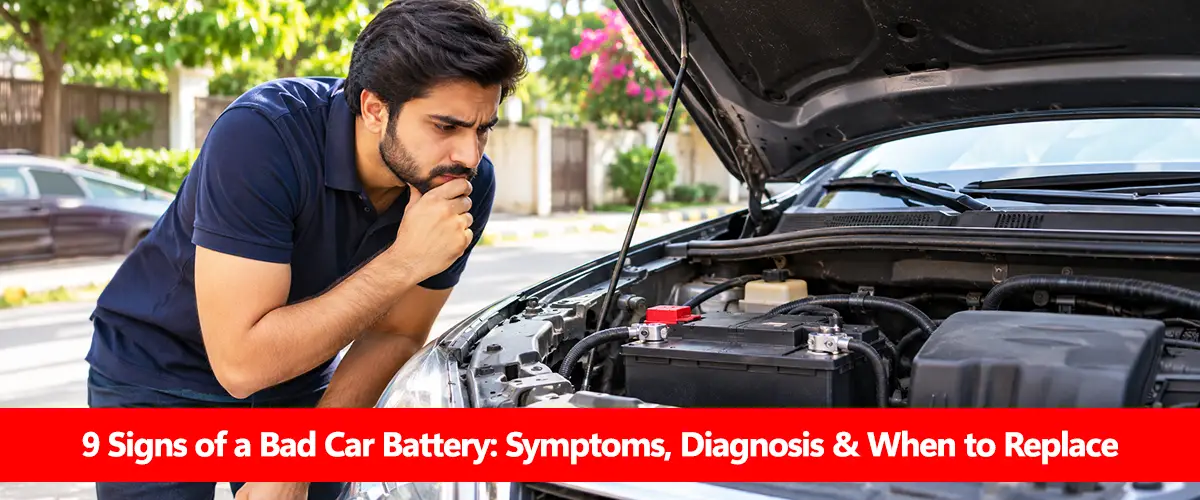
The most common signs of bad car battery include slow engine cranking, clicking sounds when starting, dim headlights, repeated jump-starts and difficulty starting after the vehicle has been parked. A weak battery may also cause electrical accessories to behave unusually or fail to hold a charge.
However, these symptoms do not always mean the battery needs replacement. Loose terminals, a faulty alternator, starter-motor problems or excessive electrical consumption can produce similar warning signs. Understanding the symptoms before replacing a battery can help avoid unnecessary expense.
Our car battery guide covers general battery care, while this article focuses specifically on recognizing battery failure and deciding what to check next.
1. Engine Cranks Slowly When Starting
Slow engine cranking is one of the clearest warning signs of a weak car battery. Instead of starting promptly, the engine turns over more slowly than normal or struggles before starting. A conventional automotive battery supplies a high current to the starter motor. As the battery ages, its internal resistance may increase, reducing its ability to deliver sufficient starting power. Cold weather can make the problem more noticeable, but a deteriorated battery may also struggle during hot weather or after remaining parked.
If the engine consistently cranks slowly, arrange a battery and starting-system test. The relationship between starting current and car battery CCA helps explain why a battery can have reasonable voltage but insufficient starting performance.
2. Clicking Sound but the Engine Does Not Start
A clicking sound when turning the ignition key or pressing the start button can indicate insufficient electrical power reaching the starter. Rapid repeated clicking may occur when battery voltage drops under load and the starter circuit repeatedly engages and disengages. However, a single loud click can also suggest a starter-motor or solenoid problem. Loose battery connections can create similar symptoms.
The correct diagnosis requires checking the battery, electrical connections and starter circuit rather than assuming every clicking noise means a dead battery. Understanding how a car battery works helps clarify why starting requires a much higher current than operating small vehicle electronics.
3. Headlights and Interior Lights Appear Dim
A weak battery may cause headlights, dashboard illumination or interior lights to appear dim, particularly when the engine is switched off. Some drivers also notice that the lights dim significantly when attempting to start the engine. However, flickering headlights while the engine is running can indicate charging-system, alternator or grounding problems.
The pattern matters more than the symptom alone.
| Observation | Possible Explanation |
| Dim lights with engine off | Low battery charge or weak battery |
| Lights dim heavily during starting | High starter demand or weak electrical supply |
| Lights flicker while driving | Possible alternator or connection problem |
| Lights become normal after charging | Previous battery discharge may be involved |
Battery voltage provides useful initial information, but it does not confirm battery health. The car battery voltage guide explains how voltage changes under different operating conditions.
4. Car Needs Frequent Jump-Starts
Needing a jump-start occasionally after leaving the lights on does not necessarily indicate a defective battery. However, repeated jump-starts without an obvious reason can suggest that the battery cannot retain enough charge or deliver sufficient starting current. The underlying problem may also involve the alternator, an electrical drain or inadequate charging from frequent short trips. A jump-start temporarily helps the engine start; it does not repair an aging battery or faulty charging system. If the vehicle repeatedly needs assistance, have the battery and charging system tested. The dedicated guides on how to jump-start a car and why a car battery keeps dying cover these situations separately.
5. Battery Warning Light Stays On
The battery-shaped warning light on the dashboard is often misunderstood. Although the symbol resembles a battery, it commonly indicates a charging-system problem rather than a weak battery alone. A faulty alternator, damaged drive belt, electrical wiring problem or charging-control fault may trigger the warning while the engine is running. If the charging system stops working, the vehicle may continue operating temporarily using stored battery energy. Eventually, the available electrical power can become insufficient. A battery warning light that remains illuminated while driving needs prompt professional assessment. Follow the vehicle manufacturer’s safety instructions and avoid unnecessary electrical loads while arranging assistance.
6. Car Struggles After Being Parked Overnight

A vehicle that starts normally after driving but struggles the next morning may have a battery that loses charge too quickly. This can happen because of battery aging, internal self-discharge or excessive parasitic draw from vehicle electronics. Common causes include interior lights left on, aftermarket accessories, faulty control modules and a battery that was not adequately charged.
A normal amount of standby electrical consumption is expected in modern vehicles, so overnight discharge is not automatically evidence of a faulty battery. The guide on car battery draining overnight explains how to distinguish normal standby power use from an excessive electrical drain.
7. Corrosion Around Battery Terminals
White, blue or greenish deposits around the battery terminals may indicate corrosion. Corrosion can increase electrical resistance and interfere with charging or starting, producing symptoms similar to a weak battery. However, terminal corrosion does not necessarily mean the battery’s internal cells are damaged. Loose connections, moisture and battery venting can contribute to deposits. If significant corrosion is visible, the electrical connections should be professionally inspected and serviced using the appropriate precautions.
Our car battery corrosion guide covers its causes and safe cleaning considerations. Do not touch damaged terminals or attempt servicing around leaking electrolyte.
8. Swollen Battery Case or Unusual Smell
A swollen, cracked or leaking battery is a serious warning sign. Excessive heating, overcharging or internal faults may cause the battery casing to bulge. A strong sulfur-like or rotten-egg odor can indicate abnormal battery conditions.These symptoms should not be treated as routine maintenance issues.
If the battery is swollen, leaking, unusually hot or producing an abnormal odor, stop using the vehicle where safe and seek qualified assistance. Do not attempt to jump-start, charge, open or handle the damaged battery.
Incorrect battery charging voltage can contribute to battery deterioration, but a professional should diagnose the cause before installing a replacement.
9. Battery Is Old and Starting Performance Is Getting Worse
Car batteries gradually deteriorate with age. Most conventional automotive lead-acid batteries have an expected service life of approximately three to five years, although temperature and operating conditions can shorten that period. A battery approaching this age deserves closer attention when combined with slow starting, frequent discharge or a failed performance test.
High summer temperatures, repeated short journeys and prolonged undercharging can accelerate deterioration. However, a three-year-old battery is not automatically defective, and a recently purchased battery can still develop faults. Our how long car batteries last guide explains the factors affecting replacement intervals.
Bad Battery vs Alternator vs Starter: How to Tell the Difference
The same starting problem can originate from different parts of the electrical system.
The following table helps identify which component needs attention first.
| Symptom | Battery Problem | Other Possible Cause |
| Slow cranking | Weak starting capability | Starter motor or poor connections |
| Rapid clicking | Low battery voltage under load | Loose cables or starter circuit |
| Battery light while driving | Battery may be discharging | Alternator or charging-system fault |
| No crank but lights operate | Battery may lack starting current | Starter motor or relay |
| Repeated discharge overnight | Weak battery may not retain charge | Excessive parasitic draw |
| Difficulty after short trips | Battery may be undercharged | Charging system or driving pattern |
A resting voltage measurement alone cannot reliably separate these faults. Professional conductance testing, a suitable load test and charging-system evaluation can help identify the real cause.
The how to test a car battery guide covers these methods, while how to check battery health explains the broader difference between charge level and battery condition.
How to Check for a Bad Battery Safely
Before replacing anything, begin with checks that do not require opening the battery or disconnecting vehicle wiring.
- Observe the starting behavior: Note whether the engine cranks slowly, clicks or does not crank at all.
- Check dashboard warnings: Look for battery or charging-system alerts.
- Review battery age: Identify when the battery was last replaced.
- Inspect visually: Look for corrosion, loose-looking connections, swelling or leakage without touching damaged parts.
- Consider recent usage: Think about long parking periods, short trips or lights left on.
- Check voltage if appropriate: Use a suitable multimeter only if you understand the vehicle manufacturer’s safety procedure.
- Arrange a proper battery test: Ask a qualified technician to assess starting capability and charging-system performance.
For a conventional 12V lead-acid starter battery, a well-charged resting voltage is commonly around 12.6–12.8V. A lower reading may mean the battery needs charging, not necessarily replacing. A battery can also show normal resting voltage and still fail under starter load. This is why open-circuit battery voltage and a battery-health test provide different information.
When Is Battery Replacement Necessary?
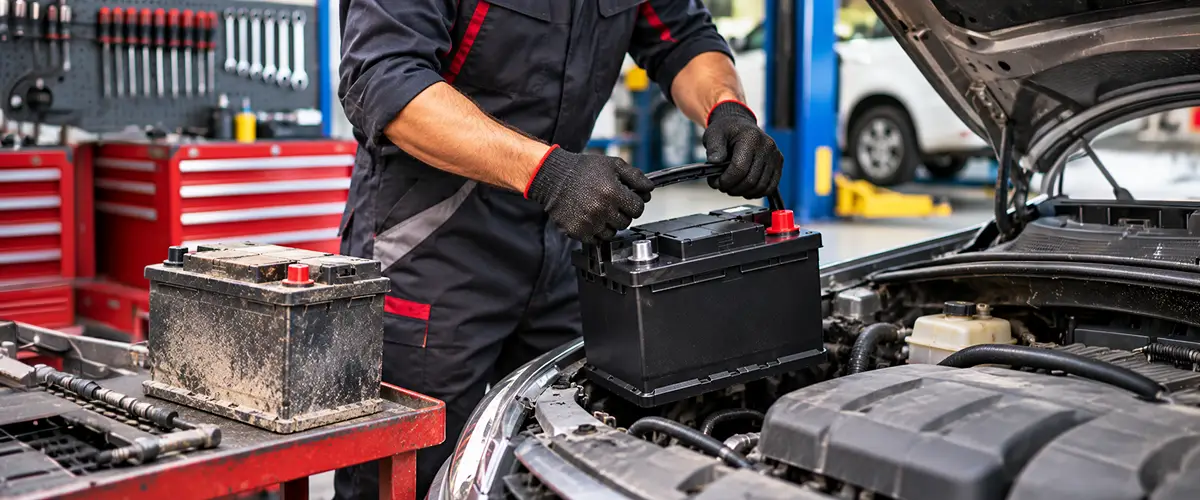
Replacement is usually appropriate when a properly charged battery fails an approved performance test, cannot reliably start the vehicle or has physical damage that makes continued use unsafe.
| Battery Condition | Recommended Action |
| Low voltage but otherwise healthy | Recharge and investigate cause |
| Slow starting with uncertain cause | Battery and electrical-system testing |
| Normal voltage but poor CCA performance | Consider replacement after diagnosis |
| Repeated discharge despite healthy charging system | Investigate battery health and parasitic draw |
| Failed professional battery test | Replace with compatible battery |
| Swelling, cracking or leakage | Stop use and arrange safe replacement |
A replacement battery must match the vehicle’s required chemistry, capacity, CCA, terminal arrangement and physical dimensions.
See car battery size guide for fitment requirements and how to replace a car battery for replacement considerations, including electronic registration on certain vehicles.
Can Charging Fix a Weak Car Battery?
Charging may restore normal starting performance if the battery was simply discharged and remains healthy. For example, a battery drained because the headlights were left on may operate normally again after proper charging. However, charging cannot reliably restore a battery with severe internal deterioration, damaged cells or insufficient remaining starting capability. A suitable car battery charger must match the battery type. AGM, flooded and other automotive batteries may have different charging requirements. The broad battery not charging guide covers charger-related problems, while professional testing can help determine whether a discharged battery is still serviceable.
How to Reduce the Risk of Unexpected Battery Failure
Battery failure cannot always be predicted, but routine checks can reduce the likelihood of being stranded. Pay attention to changes in starting speed, avoid unnecessary electrical loads when parked and arrange battery testing before periods of extreme weather. Keep battery connections in good condition, make sure the battery is securely mounted and address charging-system warnings promptly. If the vehicle frequently sits unused, follow the manufacturer’s storage recommendations. Regular monitoring of battery state of charge vs state of health can also help distinguish a low charge from long-term deterioration. A correctly matched replacement is more important than simply choosing a battery with the highest advertised Ah rating.
Conclusion
The most important signs of bad car battery are slow engine cranking, repeated starting clicks, dim lights, frequent jump-starts and worsening performance after parking. However, these symptoms can also result from alternator faults, poor electrical connections or excessive parasitic draw. A visual inspection and resting voltage check may provide clues, but a professional battery-performance test is often necessary for confirmation. If the battery is physically damaged, stop using it and seek professional help. Otherwise, identify the actual cause before deciding whether charging, electrical repairs or battery replacement is required.
Frequently Asked Questions
What Are the First Signs of a Bad Car Battery?
Slow engine cranking, clicking during starting, dim headlights and repeated starting difficulty are common early warning signs. These symptoms should be confirmed through battery and electrical-system testing.
Can a Car Battery Be Bad but Still Start the Car?
Yes. An aging battery may still start the engine under favorable conditions but fail after a cold night, several days of parking or increased starting demand.
How Do I Know if It Is My Battery or Alternator?
Difficulty starting after parking can suggest battery trouble, while a battery warning light during driving may point toward the alternator or charging system. Proper testing is needed to confirm the cause.
Is 12.6V a Sign of a Good Car Battery?
A resting reading around 12.6V generally indicates a well-charged conventional lead-acid battery. It does not prove that the battery can deliver sufficient starting current.
Does Clicking Mean the Car Battery Is Dead?
Not always. Rapid clicking may indicate inadequate voltage or a poor connection, while a single click can also indicate a starter-related fault.
Can a Bad Battery Cause Dashboard Warning Lights?
Yes, insufficient electrical power may contribute to unusual electronic behavior. However, the battery-shaped warning light commonly indicates a charging-system problem.
Will a Bad Battery Cause the Car to Stop While Driving?
A weak battery alone does not necessarily stop a running conventional vehicle because the alternator normally supplies electricity. However, a charging-system failure can eventually cause the vehicle to lose electrical power.
Can Corroded Terminals Make a Good Battery Seem Bad?
Yes. Corrosion or poor terminal connections can restrict current flow and cause starting problems even when the battery itself is serviceable.
Should I Replace a Three-Year-Old Car Battery?
Not automatically. Consider the battery’s condition, starting performance, local temperatures and test results. Regular testing is sensible as the battery ages.
When Is a Car Battery Too Dangerous to Use?
A battery that is swollen, leaking, cracked, excessively hot or producing an unusual strong odor should not be charged or jump-started. Seek qualified assistance for safe handling and replacement.