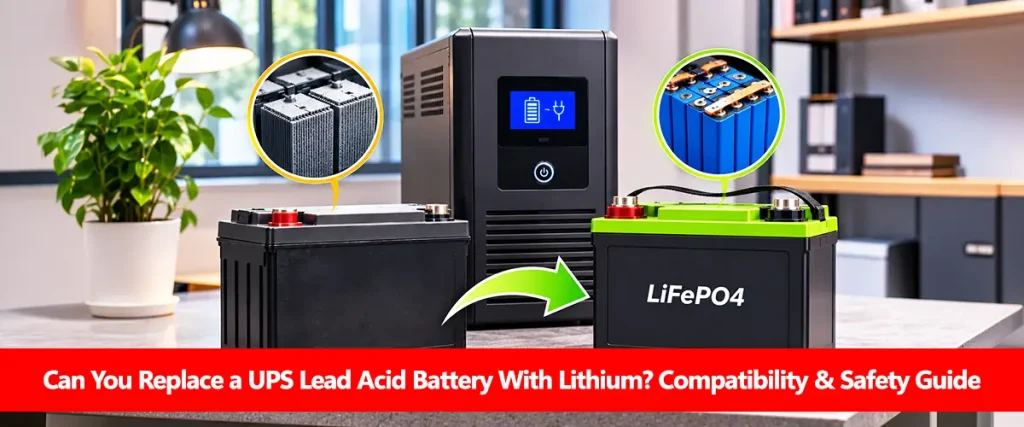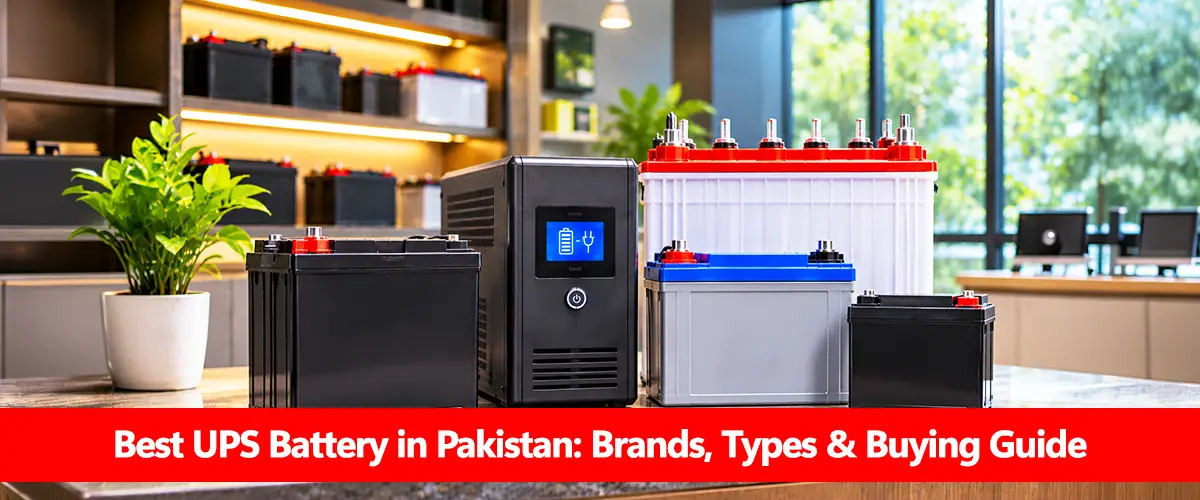
The best UPS battery in Pakistan depends on your backup requirements, UPS compatibility, budget and expected battery life. For homes experiencing frequent load-shedding, deep-cycle tubular batteries from established manufacturers such as Osaka and Exide are worth comparing. For desktop computers and networking equipment, a manufacturer-approved sealed lead-acid battery is usually more appropriate.
Lithium batteries are another option for compatible modern UPS systems, particularly where frequent cycling and low maintenance are important. However, choosing the right UPS battery requires checking its actual specifications rather than relying only on brand reputation or advertised plate count.
Which UPS Battery Brands Are Available in Pakistan?
Several established battery manufacturers supply products suitable for UPS and backup-power applications in Pakistan. Their ranges include tubular lead-acid batteries for extended backup and sealed batteries for compact UPS equipment.
The following examples are based on published manufacturer specifications rather than independent performance rankings.
| Brand and Model | Published Capacity | Battery Type | Typical Application |
| Osaka HT-1800 | 12V, 185Ah at 10-hour rate | Flooded tubular | Compatible home UPS and inverter |
| Osaka HT-2000 | 12V, 200Ah at 10-hour rate | Flooded tubular | Extended household backup |
| Exide TR-1800 | 185Ah at 20-hour rate | Tubular lead-acid | Compatible external-battery UPS |
| Exide TR-2000 | 210Ah at 20-hour rate | Tubular lead-acid | Longer backup requirements |
| Osaka NP7-12 | 12V, 7.2Ah at 20-hour rate | Sealed AGM/VRLA | Selected compact UPS systems |
These are manufacturer-listed examples, not a best-to-worst ranking. Availability, capacity testing rates and compatibility vary. The UPS manufacturer must approve the battery configuration.
An important detail is that battery Ah figures can be measured at different discharge rates. Osaka’s tubular-series listing uses a 10-hour capacity rating, while the cited Exide TR specifications use a 20-hour rating. These figures should not be treated as perfectly equivalent without comparing discharge-performance data.
Osaka UPS Batteries: Tubular and Sealed Options
Osaka offers different battery technologies for household and commercial backup applications.
Its HT tubular range includes models such as HT-1800, HT-2000 and HT-2500, designed for deep-cycle applications including UPS and inverter systems. The manufacturer describes their tubular positive-plate construction and suitability for repeated power interruptions.
Osaka also offers sealed VRLA batteries, including the NP series, for compact backup equipment. The NP7-12 is a 12V, 7.2Ah model listed for UPS applications.
The right choice depends on whether your equipment supports an external tubular battery or requires a sealed internal cartridge. For longer backup, understanding a tubular battery for UPS is useful. For compact equipment, the characteristics of a sealed lead-acid battery are more relevant.
Exide UPS Batteries: Options for Household Backup
Exide Pakistan offers tubular batteries in its TR series, including TR-1800, TR-2000 and other higher-capacity models.
According to its published product information, the TR-1800 is rated at 185Ah and the TR-2000 at 210Ah, both measured at the 20-hour rate.
These products are relevant to household backup systems designed for compatible lead-acid battery banks. However, users should confirm charger capacity, dimensions, required battery voltage and local warranty coverage before buying.
Exide’s official store also explains that its deep-discharge tubular batteries require periodic electrolyte top-ups. This matters for buyers who prefer low-maintenance equipment. For a broader understanding of deep-cycle batteries, compare their construction and usage requirements rather than assuming every lead-acid battery offers the same cycling performance.
Phoenix Batteries: Check the Exact Product Series
Phoenix is another battery manufacturer associated with the Pakistani market. Its published technical documentation includes a 12V, 100Ah VRLA battery intended for applications including UPS and emergency backup systems.
The specifications show that effective capacity changes with discharge rate. For example, the manufacturer’s technical sheet lists 100Ah at its 10-hour rate and approximately 55Ah at a one-hour discharge rate under stated test conditions.
This illustrates an important purchasing lesson: two batteries with similar Ah ratings may perform differently when a UPS draws a high current.
Before choosing a Phoenix or another locally available battery, verify the exact model, chemistry, Ah testing rate, warranty and UPS compatibility. The relationship between discharge current and battery C-rate explains why advertised capacity alone cannot guarantee runtime.
Tubular vs Lithium vs AGM: Which Is Best in Pakistan?
The most suitable battery chemistry depends on how often electricity outages occur and how much backup power is required.
| Battery Technology | Main Advantage | Main Limitation | Suitable Buyer |
| Tubular lead-acid | Generally lower initial cost | Water maintenance and discharge limitations | Home UPS users with compatible systems |
| AGM / VRLA | Sealed and low routine maintenance | Often shorter life under frequent deep cycling | Desktop and office UPS users |
| Gel lead-acid | Sealed construction | Requires suitable charging settings | Selected compatible systems |
| LiFePO4 lithium | High usable energy and cycle-life potential | Higher initial cost and strict compatibility | Frequent-backup users with approved equipment |
For household systems experiencing long outages, tubular batteries can be practical. In suitable modern installations, LiFePO4 batteries for UPS may offer longer-term benefits.
However, a lithium battery must not be installed into an ordinary lead-acid UPS without manufacturer approval. Our lithium battery for UPS guide explains the charging and protection requirements.
Best UPS Battery for Different Uses in Pakistan
Not every home or business needs the same battery type or capacity.
| Application | Battery Type to Consider | Main Requirement |
| Desktop computer | Approved AGM/VRLA cartridge | Reliable short-duration backup |
| Wi-Fi router and networking | Compatible sealed UPS battery | Low-load protection |
| Fans, lights and television | Compatible tubular lead-acid | Several hours of backup |
| Frequent daily load-shedding | Approved LiFePO4 system | Repeated cycling |
| Office with multiple devices | Properly sized UPS battery bank | Load and charging compatibility |
| Hybrid solar and backup system | Compatible deep-cycle or lithium storage | Solar and inverter charging support |
A conventional computer UPS often requires an exact replacement cartridge rather than a large external battery.
For households seeking several hours of backup, a compatible inverter battery system may be more suitable. The difference between UPS and inverter systems should be understood before deciding which equipment to buy.
How Many Ah Do You Need for Home UPS Backup?
The right battery capacity depends on the wattage of connected appliances and the number of backup hours required.
Consider a household operating two fans, several LED lights and an internet router with a combined load of approximately 200W.
For four hours of operation:
200W × 4 hours = 800Wh
This is the required AC energy before accounting for inverter losses and battery discharge limits.
Suppose a compatible lead-acid system operates with an assumed 85% inverter efficiency and 50% usable depth of discharge.
Nominal Battery Energy = 800 ÷ (0.85 × 0.50) ≈ 1,882Wh
This suggests a nominal storage requirement of approximately 1.9kWh before adding allowances for battery aging and high-current discharge behavior.
A battery’s Ah rating must always be evaluated alongside voltage. For detailed sizing, use how to choose UPS battery capacity. Buyers comparing common sizes can also read 100Ah vs 200Ah battery for UPS.
Why Battery Voltage and UPS Compatibility Matter
UPS systems may require nominal 12V, 24V, 48V or other battery configurations.
A higher-Ah battery does not automatically work with every UPS. The equipment must support the battery voltage, charging current, discharge capability and connection arrangement.
For example, a nominal 24V lead-acid UPS may use two matching 12V batteries in series, provided that configuration is specified by the manufacturer.
The battery must also support the connected electrical load. A UPS rated in volt-amperes (VA) has a separate watt rating, and its surge capability must be considered where relevant.
Before purchasing, verify the required battery-bank voltage and approved battery bank sizing arrangement. Do not modify compact UPS wiring to accommodate an unsupported external battery.
Battery Warranty and After-Sales Support in Pakistan
Warranty coverage should be an important part of any UPS battery purchase.
A battery with a longer advertised warranty is not necessarily the better option if coverage conditions, registration requirements or replacement procedures are unclear.
Check the written warranty for the exact model, including any free-replacement period, prorated conditions, exclusions and authorized claim locations.
For example, Exide’s online product listings specify a six-month warranty plus an additional six-month online-purchase warranty for selected TR products. Coverage may differ through other sales channels.
Buyers should also confirm manufacturing date, authenticity and whether installation by an authorized dealer is required. An established service network can be particularly valuable if your UPS runs daily or supports essential equipment.
Which Battery Offers the Best Long-Term Value?
Initial purchase price is only one part of the total ownership cost. Flooded tubular batteries may have a lower upfront cost but require maintenance and eventual replacement. Lithium systems generally cost more initially but can offer higher usable energy and longer cycle-life potential when correctly installed. Battery lifespan is influenced by temperature, discharge frequency, charging conditions and depth of discharge. In Pakistan, hot installation environments can shorten service life, especially if batteries are placed in poorly ventilated rooms or exposed to direct sunlight.
Review how long UPS batteries last and battery cycle life when comparing lifetime value.
If an existing battery provides unexpectedly short backup, investigate UPS battery draining fast before assuming another brand will solve the problem.
UPS Battery Buying Checklist for Pakistan
Before buying from a dealer or online store, use the following checklist:
- Identify the UPS model: Confirm supported battery voltage and chemistry.
- Measure the electrical load: List the appliances and their actual power consumption.
- Determine backup hours: Choose the operating duration needed during load-shedding.
- Compare capacity correctly: Check Ah, Wh and the manufacturer’s discharge-rate specification.
- Verify charging compatibility: Match the battery to the charger’s voltage and current limits.
- Review the warranty: Confirm written coverage and authorized claim procedures.
- Inspect the battery: Check manufacturing date, condition and authenticity.
- Consider maintenance: Make sure you can meet any ventilation or electrolyte-service requirements.
- Compare lifetime cost: Include battery replacements, installation and maintenance.
- Arrange safe installation: Use qualified personnel for larger battery banks and electrical connections.
For detailed buying criteria across different battery types, see best battery for UPS. For local price comparisons, visit UPS battery price in Pakistan. Prices and stock availability can change between dealers and cities.
Conclusion
The best UPS battery in Pakistan is the one that matches your UPS specifications, required backup time and long-term operating needs.
Osaka and Exide offer manufacturer-documented tubular batteries suitable for compatible household backup systems. Sealed VRLA batteries are generally more appropriate for compact computer UPS equipment, while approved lithium systems are worth evaluating for frequent cycling and reduced maintenance. Choose by verified capacity, discharge performance, charging compatibility, warranty and dealer support rather than brand name or plate count alone.
Frequently Asked Questions
Which Brand Is Best for UPS Batteries in Pakistan?
Osaka and Exide offer documented tubular ranges for backup applications, while suitable sealed VRLA batteries are available for compact UPS systems. No single brand is universally best; compare the exact model and its specifications.
Is an Osaka or Exide Tubular Battery Better for UPS?
Both brands offer tubular batteries for backup applications. Compare capacity at the same discharge rate, warranty, charging requirements and suitability for your UPS before deciding.
Which Battery Is Best for Home UPS in Pakistan?
A compatible tubular deep-cycle battery is often practical for extended household backup. Approved LiFePO4 storage may suit frequent cycling where the inverter or UPS supports it.
Is a 200Ah Battery Enough for Home UPS?
It can be sufficient for many light or moderate loads, but the answer depends on battery voltage, appliance wattage and required backup duration.
Which Battery Is Best for a Computer UPS?
A manufacturer-approved sealed AGM or VRLA replacement is generally appropriate for conventional desktop UPS equipment. Check the UPS model’s specified cartridge.
Are Lithium UPS Batteries Available in Pakistan?
Lithium backup batteries and compatible inverter systems are available through suppliers, but the exact models, certifications, warranties and compatibility should be verified before purchase.
How Long Does a Tubular UPS Battery Last in Pakistan?
Service life varies with charging conditions, temperature, discharge frequency and maintenance. The manufacturer’s expected-life and cycle-rating information should guide comparisons.
Should I Buy a 100Ah or 200Ah UPS Battery?
Choose according to required backup energy and UPS compatibility. A 200Ah battery stores more nominal energy at the same voltage, but it also generally costs more and requires greater charging energy.
What Should I Check Before Buying a UPS Battery Online?
Verify the battery model, specifications, manufacturing date, seller authorization, written warranty, delivery conditions and return policy. Confirm that the battery is approved for your UPS.