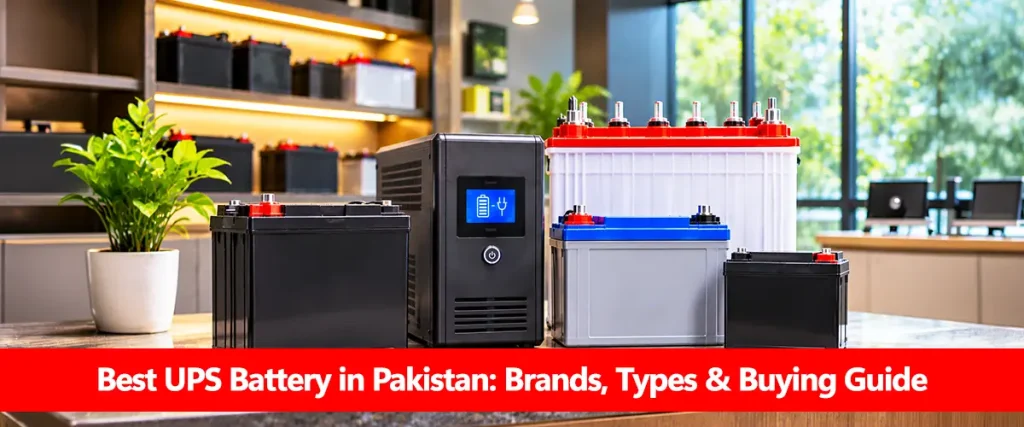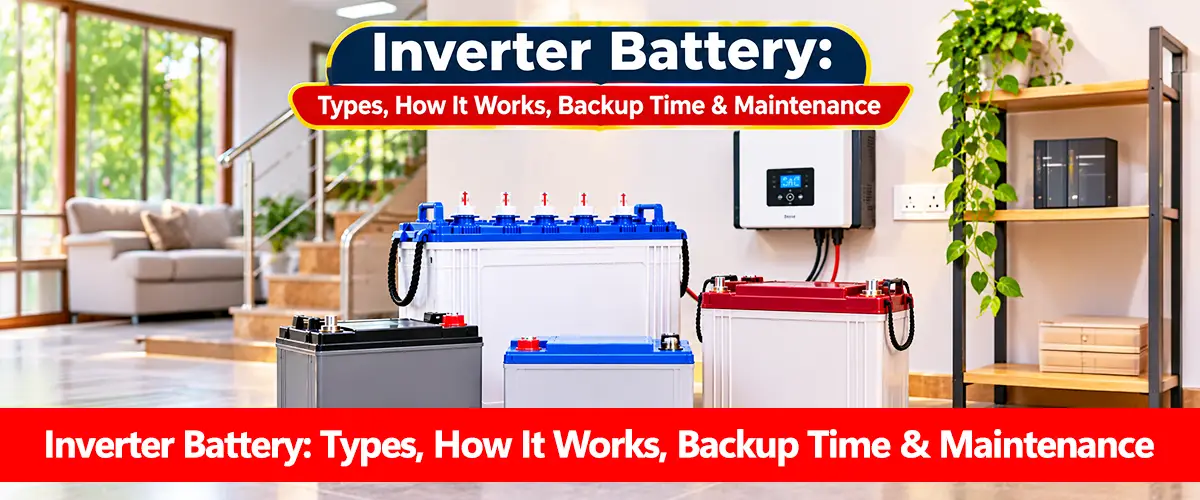
An inverter battery is a rechargeable battery that stores electrical energy and supplies power to a compatible inverter during electricity outages. The inverter converts the battery’s direct current (DC) into alternating current (AC), allowing connected appliances such as fans, lights, routers and selected household equipment to operate.
Inverter batteries are commonly used in homes and offices where reliable backup electricity is important. They are available in tubular lead-acid, AGM, gel and lithium technologies, each offering different usable capacities, charging requirements and maintenance needs. Choosing a suitable home backup battery starts with understanding how the inverter and battery work together.
How Does an Inverter Battery Work?
An inverter battery stores energy when a suitable charging source is available. In a typical home backup system, the inverter-charger replenishes the battery using mains electricity and automatically supplies stored power to connected loads when the electricity supply fails.
During backup operation, the battery delivers DC electricity to the inverter, which converts it into AC power. The available backup duration depends on stored energy, appliance consumption and inverter efficiency.
Some hybrid inverters can also charge compatible batteries using photovoltaic (PV) panels. However, solar charging is not a feature of every home inverter, and the supported charging source depends on the equipment. The main differences between a UPS battery and a home inverter setup are explained further in UPS vs inverter.
Types of Inverter Batteries
The main inverter battery technologies differ in construction, usable capacity, service life and maintenance requirements. The suitable option depends on backup frequency, budget and charger compatibility.
| Battery Type | Main Advantage | Main Consideration |
| Tubular lead-acid | Suitable for repeated backup cycling | Flooded models need water checks |
| Flat-plate lead-acid | Often lower initial cost | Less suited to frequent deep discharge |
| AGM | Sealed and low routine maintenance | Sensitive to incorrect charging |
| Gel | Sealed construction | Requires appropriate charging voltage |
| Lithium / LiFePO4 | High usable capacity and low routine maintenance | Requires compatible inverter and BMS |
A tubular battery is commonly used in extended home backup systems, while AGM batteries are widely used in compact UPS equipment and selected inverter installations.
Modern LiFePO4 batteries offer another option for systems designed to support lithium charging and battery protection. Their suitability should be checked against the exact inverter specifications.
Inverter Battery Voltage: 12V, 24V or 48V?
Inverter batteries are selected according to the DC voltage required by the inverter. Common battery-bank configurations include 12V, 24V and 48V, although actual battery operating voltages vary by chemistry.
A 12V inverter generally requires a compatible 12V battery arrangement. A nominal 24V lead-acid system may use two matching 12V batteries in series, while a 48V system commonly uses four.
| Inverter System | Example Lead-Acid Configuration |
| 12V | One 12V battery |
| 24V | Two 12V batteries in series |
| 48V | Four 12V batteries in series |
These examples assume compatible batteries and equipment. A 48V-class lithium system may instead use a purpose-built 51.2V LiFePO4 battery module.
Connecting batteries in series increases voltage, while parallel connections increase available Ah capacity. Our guides on 12V vs 24V vs 48V battery systems and batteries in series vs parallel explain these arrangements in detail.
Understanding Inverter Battery Capacity
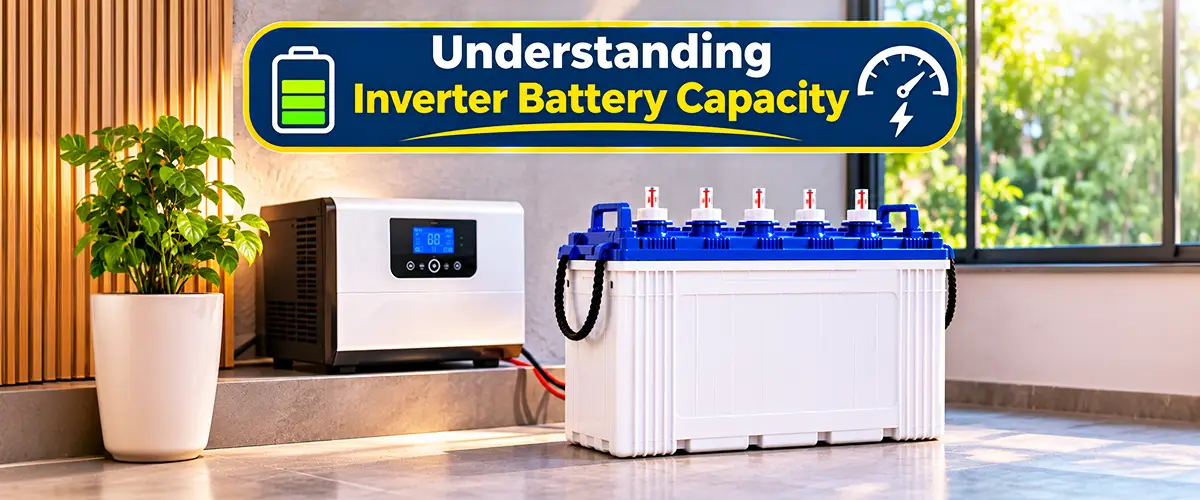
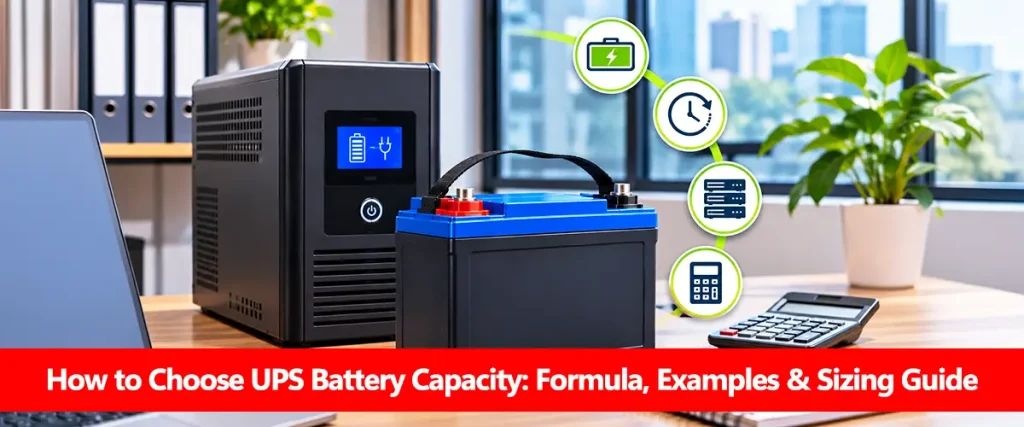
Battery capacity determines how much electrical energy can be stored. Traditional lead-acid batteries are commonly rated in amp-hours (Ah), while larger lithium storage systems often display capacity in kilowatt-hours (kWh).
For example, a 12V 150Ah battery has approximately:
12 × 150 = 1,800Wh or 1.8kWh nominal energy
However, nominal energy is not the same as the electricity available to appliances. Usable capacity depends on battery chemistry, permitted discharge depth and conversion losses.
The difference between battery capacity and usable depth of discharge is important when comparing inverter batteries. A higher Ah rating can provide more stored energy at the same voltage, but actual performance also depends on discharge current and battery condition.
How Long Does an Inverter Battery Last During a Power Outage?
Backup time depends on the total stored energy, the load connected to the inverter and system losses. Appliances drawing more power will generally reduce the available operating time.
Consider a 12V 150Ah lead-acid battery connected to a compatible inverter. Assume 50% usable depth of discharge and 85% inverter efficiency.
| Parameter | Example |
| Battery capacity | 12V 150Ah |
| Nominal energy | 1,800Wh |
| Assumed usable discharge | 50% |
| Assumed inverter efficiency | 85% |
| Connected load | 200W |
| Estimated backup time | 3.8 hours |
The simplified calculation is:
Backup Time = 1,800 × 0.50 × 0.85 ÷ 200 = 3.83 hours
This is an estimate rather than a guaranteed runtime. Lead-acid capacity may decrease under higher discharge currents, and inverter standby consumption can reduce actual backup time.
For calculations involving different battery sizes and appliance loads, see inverter battery backup time or how to calculate battery runtime.
Inverter Power Rating vs Battery Capacity
One common misunderstanding is that increasing battery capacity also increases the inverter’s power output. In reality, these are separate specifications.
The inverter’s watt rating determines how much electrical load it can supply, while the battery’s Wh or kWh capacity determines how long it can potentially supply that load.
For example, an inverter rated for 1,000W cannot safely operate a continuous 1,500W load simply because a larger battery has been installed. Starting surges from motors and compressors must also fall within the inverter’s approved limits.
VA and W ratings should not be treated as interchangeable. The manufacturer’s output-watt rating, power factor and surge specifications must be checked before connecting appliances.
Which Inverter Battery Is Best for Home Backup?
The right battery depends on how often electricity outages occur, the desired backup duration and the available budget.
A tubular lead-acid battery may be practical for a household seeking affordable backup with compatible existing equipment. AGM and gel batteries can be useful where sealed construction is preferred and the charging system supports them.
LiFePO4 batteries are often attractive for frequent cycling because of their usable capacity, cycle-life potential and reduced routine maintenance. However, their charging requirements and initial costs differ from conventional lead-acid systems.
For a complete decision framework, review best battery for inverter. Households comparing backup technologies may also find best battery for UPS helpful.
Charging Requirements and Battery Compatibility

An inverter battery must be charged using settings appropriate for its chemistry and operating voltage. Incorrect charging can cause premature capacity loss, repeated shutdowns or battery damage.
Many lead-acid battery systems use bulk, absorption and float charging stages. Lithium batteries require chemistry-specific charging profiles, and certain models need communication with a battery management system.
Before connecting a battery, verify:
- Required inverter battery voltage.
- Supported battery chemistry.
- Charging voltage and maximum current.
- Battery discharge-current rating.
- Manufacturer-approved connection arrangement.
- BMS communication requirements, if applicable.
- Temperature and ventilation limits.
A lead-acid inverter charger should not automatically be used for lithium batteries. The compatibility concerns discussed in lead-acid charger for lithium battery also apply to home inverter systems.
Inverter Battery Maintenance and Lifespan
Inverter battery lifespan depends on chemistry, charging conditions, temperature and discharge frequency. High temperatures and repeated excessive discharge can shorten service life, particularly in lead-acid batteries.
Flooded tubular batteries may require periodic electrolyte checks and distilled-water maintenance. Sealed AGM, gel and lithium batteries do not require routine water refilling, but their charging condition and electrical connections still need monitoring.
Good maintenance practices include keeping batteries within the manufacturer-approved temperature range, maintaining suitable ventilation and addressing unusual heating or swelling promptly.
Correct battery charging voltage and appropriate battery cycle life expectations are important for reliable performance. Regular checks can also help identify battery sulfation risks in lead-acid systems.
Common Inverter Battery Problems and Selection Mistakes
Many inverter battery problems result from incorrect battery selection, unsuitable charging settings or unrealistic backup expectations.
Avoid these common mistakes:
- Selecting a battery using Ah capacity alone.
- Connecting a battery with the wrong voltage.
- Overloading the inverter beyond its watt rating.
- Ignoring the starting surge of connected appliances.
- Using lithium batteries with unsupported charging equipment.
- Combining incompatible battery types or capacities.
- Repeatedly discharging lead-acid batteries too deeply.
- Installing batteries in excessively hot or poorly ventilated spaces.
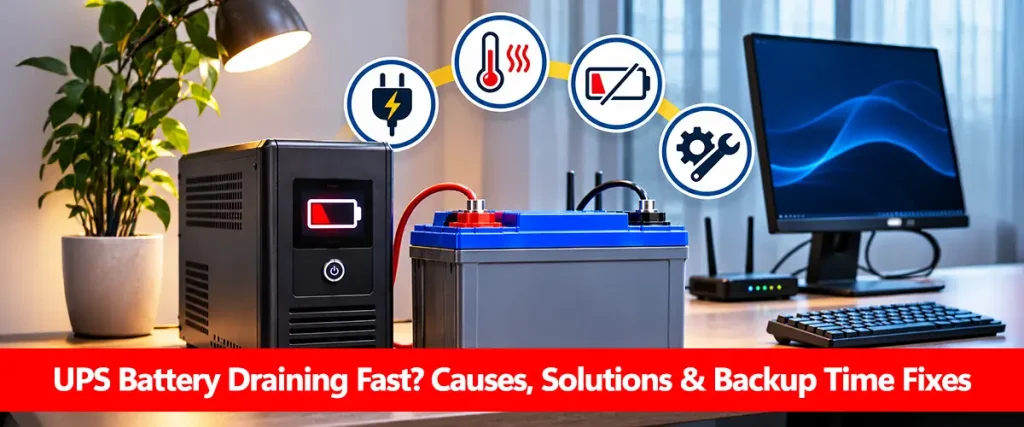
Short backup duration does not always indicate a defective battery. Increased appliance load, incomplete charging or an aging battery bank can produce similar symptoms.
Understanding battery not charging and UPS battery draining fast can help identify when professional testing is needed.
What to Check Before Buying an Inverter Battery
Before purchasing, start with the appliances you want to operate during electricity outages. Estimate their combined power consumption and determine how many backup hours are necessary.
Then compare batteries using the following criteria:
- Match the inverter’s required battery voltage.
- Select sufficient usable energy for the required backup duration.
- Confirm continuous discharge and surge capability.
- Choose a compatible lead-acid or lithium chemistry.
- Verify charging current, voltage and BMS requirements.
- Compare warranty, cycle-life rating and maintenance needs.
- Check installation conditions and professional support.
An appropriately sized battery bank is more important than choosing the largest individual battery. For homes using both solar panels and battery backup, the same principle applies to solar battery sizing.
Conclusion
An inverter battery stores energy for use during electricity outages and supplies DC power that a compatible inverter converts into household AC electricity.
Tubular lead-acid, AGM, gel and lithium batteries can all serve backup applications when correctly matched to the equipment. Battery voltage, usable capacity, inverter efficiency and charging compatibility determine how effectively the system performs.
For reliable backup power, choose a battery based on actual appliance loads, required operating time and manufacturer specifications rather than Ah rating or purchase price alone.
Frequently Asked Questions
What Is an Inverter Battery Used For?
An inverter battery stores electricity for use during power outages. A compatible inverter converts the battery’s DC electricity into AC power for connected household or office appliances.
Which Battery Is Best for a Home Inverter?
The best choice depends on backup duration, cycling frequency, budget and inverter compatibility. Tubular batteries are commonly used for household backup, while LiFePO4 offers advantages for compatible frequently cycled systems.
How Long Does a 150Ah Inverter Battery Last?
Backup duration depends on battery voltage, connected load, discharge limit and inverter efficiency. A 12V 150Ah battery may provide several hours of backup for light loads, but runtime decreases as power consumption increases.
Can I Use a Lithium Battery With My Existing Inverter?
Only if the inverter supports the battery’s voltage range, charging requirements and protection system. An older lead-acid inverter may require different settings or replacement equipment.
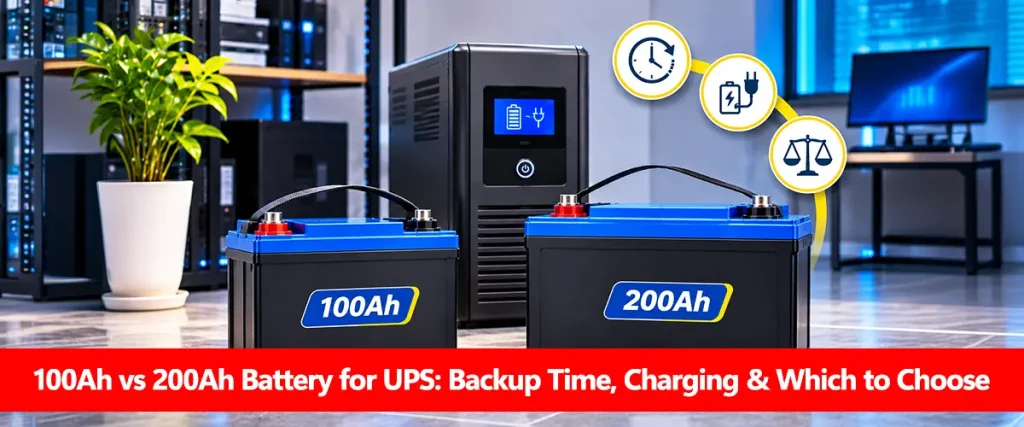
Is a 200Ah Battery Better Than a 150Ah Battery?
At the same nominal voltage and chemistry, a 200Ah battery generally stores more energy than a 150Ah battery. However, the inverter must support its charging and discharge requirements.
Can an Inverter Work Without a Battery?
Some grid-connected and hybrid inverters can operate without battery storage, depending on their design. Traditional battery-based home backup inverters generally require a battery to supply electricity during outages.
What Is the Difference Between a UPS Battery and an Inverter Battery?
The batteries may use similar chemistry, but the equipment requirements can differ. Compact UPS units often prioritize short, immediate backup, while home inverter systems may be designed for larger external battery banks and longer operation.
Does an Inverter Battery Charge Automatically?
Many inverter-charger systems charge their batteries automatically when a suitable electricity source is available. Charging behavior depends on the inverter configuration and battery type.
How Do I Know if My Inverter Battery Needs Replacement?
Common signs include consistently reduced backup duration, difficulty holding charge, abnormal heating, swelling or repeated battery-related warnings. Professional testing can help distinguish battery deterioration from inverter or charging faults.