If your motorcycle battery keeps dying, the problem usually comes from a weak battery, faulty charging system or an electrical component consuming power when the bike is parked. Frequent short rides, loose terminals and incorrect battery installation can also cause repeated starting problems.
A motorcycle battery should receive charge while the engine runs, but riding alone cannot fix a damaged battery or faulty regulator-rectifier. Before purchasing a replacement, identify when the battery loses power and check whether the motorcycle is charging it correctly.
Why Does Your Motorcycle Battery Keep Going Dead?
The timing of the problem often helps identify its cause. A battery that becomes weak after several days of parking may have a different problem from one that loses power during a ride.
| What Happens | Likely Cause | What to Check |
| Battery dies after parking | Electrical drain or aging battery | Accessories and battery health |
| Battery dies while riding | Stator or regulator-rectifier fault | Charging-system output |
| Bike starts after charging but dies again | Battery deterioration or charging fault | Battery and charging tests |
| Electric starter turns slowly | Low charge or weak starting performance | Battery condition and terminals |
| New battery dies repeatedly | Electrical or charging-system issue | Wiring, regulator and standby drain |
Understanding these patterns helps avoid replacing a battery that is still serviceable. Our motorcycle battery guide explains how the battery and electrical system work together.
Common Reasons Your Motorcycle Battery Keeps Dying
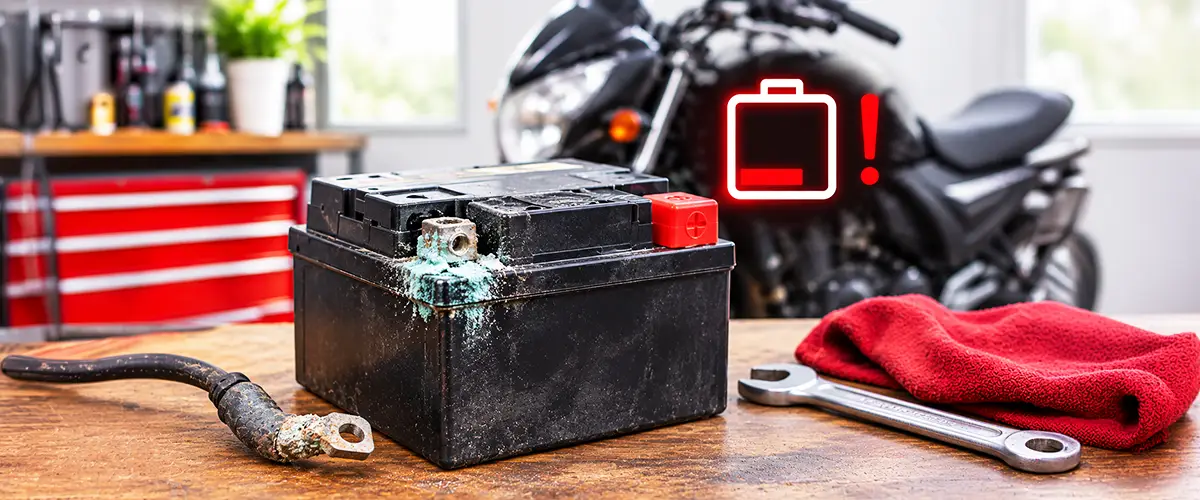
A Weak or Aging Battery
Motorcycle batteries gradually lose their ability to retain charge and deliver starting current. Repeated deep discharge, extreme temperatures and prolonged storage can accelerate deterioration.
A battery may show reasonable resting voltage yet struggle when the electric starter demands high current. If it repeatedly fails after proper charging, professional performance testing is advisable.
Most conventional motorcycle batteries last around two to three years, although actual service life varies. Our motorcycle battery lifespan guide explains when replacement becomes more likely.
Faulty Stator or Regulator-Rectifier
The stator generates electrical power while the engine operates, while the regulator-rectifier converts and controls the electricity supplied to the battery.
If either component fails, the battery may receive insufficient charge or unsuitable charging voltage. The motorcycle can start normally after external charging but become weak again during regular use. A qualified technician should compare charging output against the motorcycle manufacturer’s specifications before replacing any component.
Electrical Accessories Draining Power
Some motorcycles have alarms, GPS trackers, USB chargers or other accessories that continue consuming electricity after the ignition is switched off.
Since motorcycle batteries generally have smaller capacities than car batteries, even modest standby consumption can become significant during extended parking.
Check whether recently installed accessories are connected correctly and switch off when intended. Persistent drain may require professional parasitic-current testing.
Short Rides and Poor Battery Connections
Starting a motorcycle uses stored electrical energy. Frequent journeys lasting only a few minutes may not give the charging system enough time to replenish that energy, particularly at low engine speeds.
Loose or corroded terminals can also interfere with charging and starting. Inspect visible connections and battery mounting without touching damaged components. Our battery terminal corrosion guide explains how connection problems can affect electrical performance.
How to Diagnose a Motorcycle Battery That Keeps Dying
Start with simple checks before moving to electrical-system testing. This helps distinguish insufficient charge from actual battery deterioration.
- Inspect the battery: Look for damage, loose connections or heavy corrosion.
- Check accessories: Turn off USB chargers, lights and aftermarket electronics.
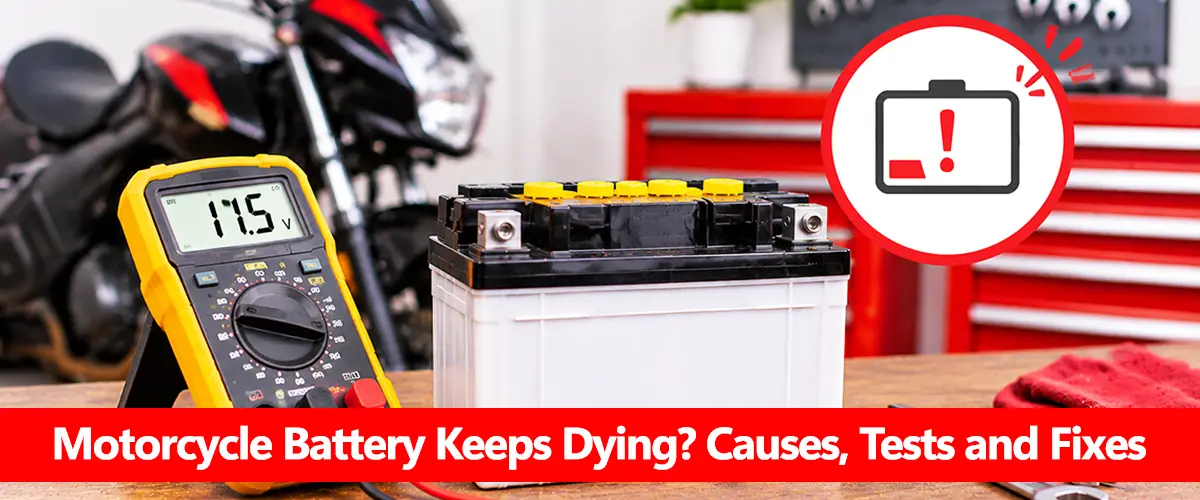
- Measure resting voltage: A well-charged conventional 12V lead-acid battery commonly reads around 12.6–12.8V after resting.
- Recharge properly: Use a charger compatible with the battery’s voltage and chemistry.
- Observe starting performance: Check whether the electric starter still struggles after charging.
- Test the charging system: Have the stator and regulator-rectifier assessed at the manufacturer’s specified engine speed.
- Investigate standby draw: If battery and charging tests pass, check for unwanted electrical consumption.
The how to test a motorcycle battery guide covers voltage and performance measurements in greater detail.
Safety: Never connect a multimeter set to amperes directly across battery terminals. Running-engine electrical checks should only be performed with safely secured equipment and adequate clearance from moving parts.
How to Tell If the Battery or Charging System Is Faulty
A battery can be undercharged without being defective. Similarly, a healthy battery can repeatedly discharge when the motorcycle’s charging system is not operating correctly.
Consider these practical situations:
- Low voltage after parking: Recharge the battery and check for standby electrical consumption.
- Normal voltage but slow starting: Arrange a battery load or starting-performance test.
- Battery loses charge while riding: Investigate the stator and regulator-rectifier.
- New battery develops the same problem: Check wiring, charging and electrical accessories before buying another battery.
Charging voltage varies by motorcycle design and engine speed, so one generic voltage value cannot confirm that every charging system is healthy.
Also, AGM, flooded lead-acid and lithium batteries have different voltage characteristics. Always follow the manufacturer’s specifications when interpreting results.
How to Stop Your Motorcycle Battery From Dying
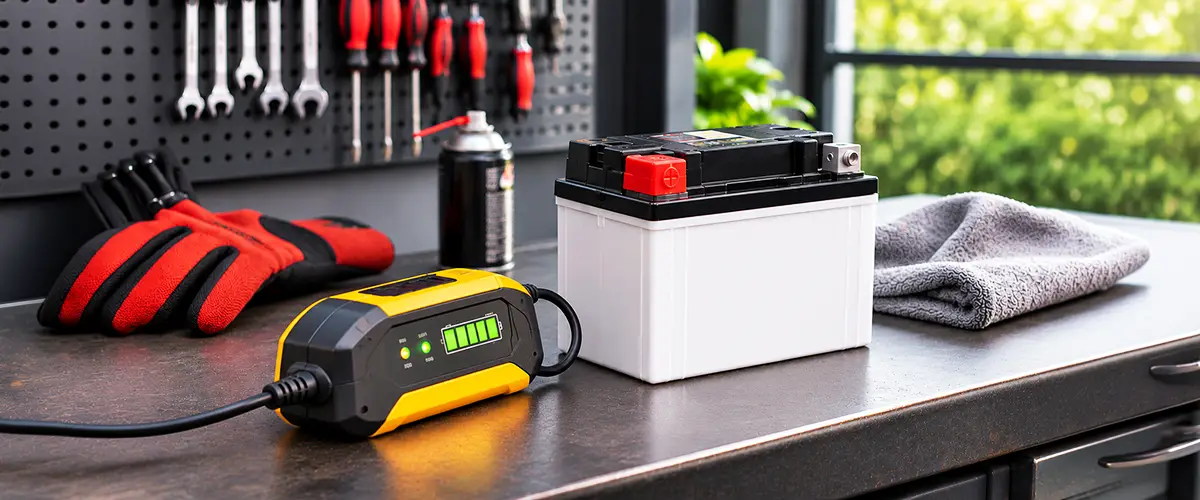
The most effective solution is to repair the confirmed fault rather than repeatedly charging the battery.
Useful preventive steps include:
- Use a compatible smart charger during extended storage.
- Avoid unnecessary deep discharge from accessories left operating.
- Keep terminals secure and inspect them regularly.
- Repair charging-system faults before installing a new battery.
- Protect the battery from excessive heat and ensure secure mounting.
- Check battery condition periodically, especially before long trips.
A healthy discharged battery may recover through proper charging. Follow our how to charge a motorcycle battery guide for the correct procedure.
If the motorcycle is used infrequently, an approved battery maintainer may help preserve charge, but it should not be used to conceal a persistent electrical fault.
When Should You Replace the Motorcycle Battery?
Replacement becomes appropriate when a properly charged battery fails an approved performance test, cannot retain sufficient charge or has physical damage.
If the battery is new and repeatedly dies, test the motorcycle’s charging system and connected accessories first. Installing another battery will not fix a defective regulator-rectifier or persistent electrical drain.
Do not charge or use a swollen, cracked, leaking, frozen or unusually hot battery. Stop and seek professional assistance.
When replacement is confirmed, choose the correct voltage, Ah capacity, physical dimensions and terminal arrangement. The motorcycle battery price in Pakistan guide covers the separate topic of local product costs.
Conclusion
If your motorcycle battery keeps dying, the main suspects are battery deterioration, insufficient charging or unwanted electrical consumption.
Begin with battery condition, connections and accessories, then check starting performance and charging-system output. A suitable charger may restore a healthy discharged battery, but repeated failure requires proper diagnosis. Fixing the actual electrical problem before replacing the battery helps prevent another breakdown and unnecessary replacement costs.
Frequently Asked Questions
Why Does My Motorcycle Battery Keep Dying After Charging?
The battery may be deteriorating, or the motorcycle’s stator, regulator-rectifier or electrical system may have a fault. Recharge and test the battery, then investigate the charging system.
Can a Bad Stator Drain a Motorcycle Battery?
A faulty stator can prevent the battery from receiving sufficient charge while riding. As the motorcycle continues consuming electricity, the battery may become discharged.
Can a Bad Regulator-Rectifier Kill a New Battery?
Yes. Incorrect charging voltage can undercharge or overcharge a replacement battery, causing repeated problems or premature damage.
Why Does My Motorcycle Battery Die Overnight?
Electrical accessories, trackers, alarms or abnormal standby current may be responsible. An aging or undercharged battery can also fail after parking.
Does Riding a Motorcycle Recharge the Battery?
Normally, yes. However, very short rides may not fully restore charge, particularly if the battery was significantly discharged.
Can Loose Battery Terminals Cause Starting Problems?
Yes. Loose or corroded terminals can restrict current flow and interfere with both charging and electric starting.
Should I Replace a Motorcycle Battery That Keeps Dying?
Only after checking its health and the motorcycle’s charging system. A good battery may repeatedly discharge because of an electrical fault.