

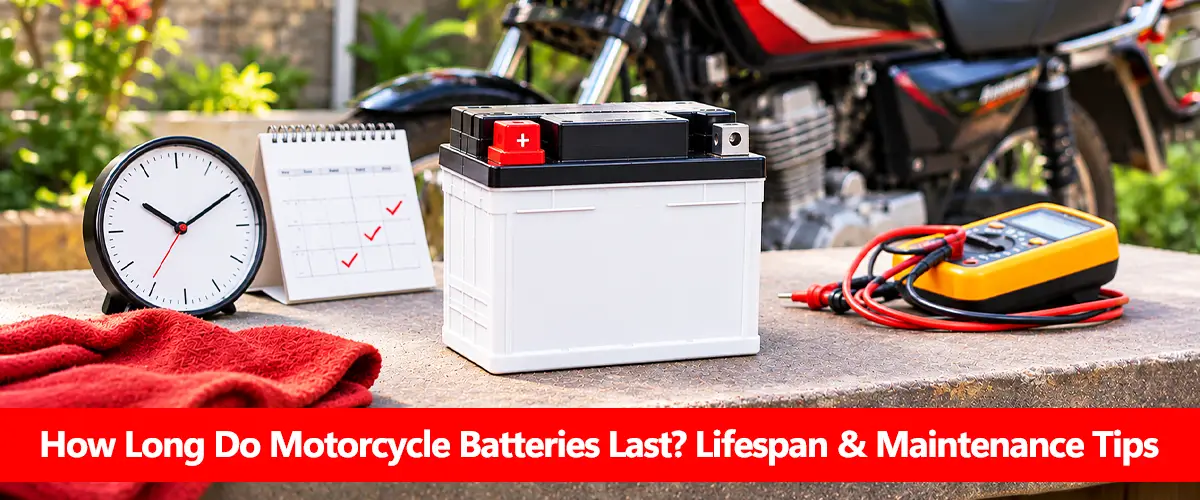
How long do motorcycle batteries last? Most motorcycle batteries last approximately 2–5 years, depending on battery type, charging conditions and maintenance. Conventional flooded lead-acid batteries typically last around 2–3 years, while well-maintained AGM batteries can last 3–5 years, according to Yuasa’s motorcycle battery guidance.
In Pakistan, extreme summer temperatures, frequent short rides and leaving a motorcycle unused for weeks can shorten battery life. However, age alone cannot determine when a battery needs replacing. Its ability to hold charge and start the motorcycle reliably is equally important.
Average Motorcycle Battery Lifespan by Type
Battery construction influences how well a motorcycle battery handles vibration, charging and everyday use. AGM batteries generally require less routine maintenance than conventional flooded batteries, although neither type lasts indefinitely.
| Motorcycle Battery Type | Typical Lifespan | Important Consideration |
| Conventional flooded lead-acid | 2–3 years | Requires appropriate maintenance |
| AGM battery | 3–5 years | Sealed design, but still needs charging |
| Gel battery | Varies by model | Requires compatible charging |
| Lithium starter battery | Manufacturer-dependent | Requires suitable charging and protection |
These are general expectations, not guaranteed replacement intervals. Lithium battery lifespan also depends on its particular chemistry, battery management system and manufacturer specifications. For a better understanding of the available technologies, see our motorcycle battery guide and AGM battery explanation.
Why Some Motorcycle Batteries Die Early
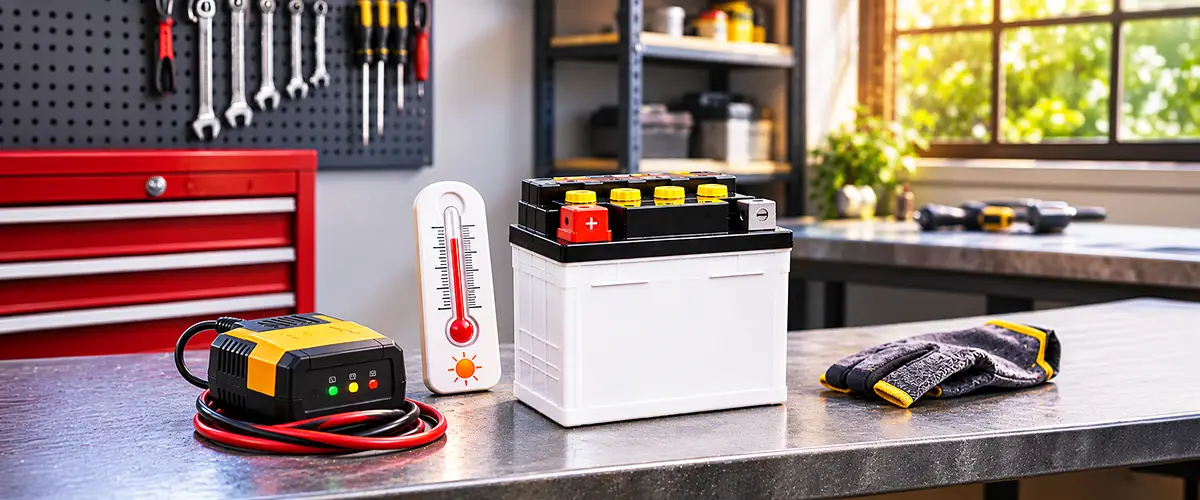
A motorcycle battery gradually loses its ability to deliver starting current as its internal components age. Repeated discharge, poor charging and high temperatures can accelerate this deterioration.
The most common factors affecting lifespan include:
- Extreme heat: Accelerates chemical aging and self-discharge.
- Infrequent riding: Allows the battery to lose charge during storage.
- Frequent short trips: May not provide enough time to restore starting energy.
- Faulty charging system: Can leave the battery undercharged or overcharged.
- Vibration: May contribute to damage if the battery is mounted incorrectly.
- Deep discharge: Can promote sulfation in lead-acid batteries.
Pakistan’s summer heat makes correct storage and maintenance particularly important. Parking in a shaded location where practical and keeping the battery properly charged can help reduce unnecessary stress. These factors also explain why battery cycle life and actual calendar lifespan are not necessarily the same.
Does Riding Your Motorcycle Every Day Extend Battery Life?
Regular riding can help keep the battery charged because the motorcycle’s charging system replenishes energy while the engine operates. However, starting the bike and riding for only a few minutes may not fully replace the energy consumed during starting.
A motorcycle used regularly for suitable journeys may therefore maintain its battery charge better than one that remains parked for long periods. This assumes its stator, regulator-rectifier and electrical connections are functioning correctly.
If you frequently make short journeys or leave your motorcycle unused, a compatible maintenance charger may be helpful. Our how to charge a motorcycle battery guide explains the correct charging approach.
How Long Can a Motorcycle Battery Sit Without Riding?
An unused motorcycle battery gradually loses charge through natural self-discharge. Some motorcycles also consume standby electricity through alarms, trackers and electronic systems even when switched off.
Consider an illustrative motorcycle with a 12V 5Ah battery and a continuous electrical draw of 20mA:
| Time Parked | Charge Consumed |
| 1 day | 0.48Ah |
| 3 days | 1.44Ah |
| 7 days | 3.36Ah |
This example assumes a constant 20mA draw and excludes natural self-discharge. It does not mean the motorcycle will reliably start after losing that amount of charge; starting performance may become inadequate much earlier.
Yuasa recommends using an appropriate battery maintainer during extended storage. For many motorcycle batteries, maintaining adequate charge is more useful than simply starting the engine occasionally.
How to Know When Your Motorcycle Battery Is Getting Old
An aging battery may work normally for months before gradually showing signs of weakness. Slow electric starting is often one of the earliest indicators, particularly after the motorcycle has been parked overnight.
Other warning signs include:
- The starter motor turns more slowly than usual.
- The battery requires frequent recharging.
- The motorcycle struggles to start after several days of parking.
- Electrical accessories behave unusually when starting.
- The battery fails a professional starting-performance test.
These symptoms are not always caused by battery aging. Loose terminals and a faulty regulator-rectifier can create similar problems.
A conventional, fully charged 12V lead-acid motorcycle battery often measures around 12.6–12.8V at rest, but voltage alone cannot confirm battery health. Our motorcycle battery testing guide covers the relevant checks.
How to Make a Motorcycle Battery Last Longer
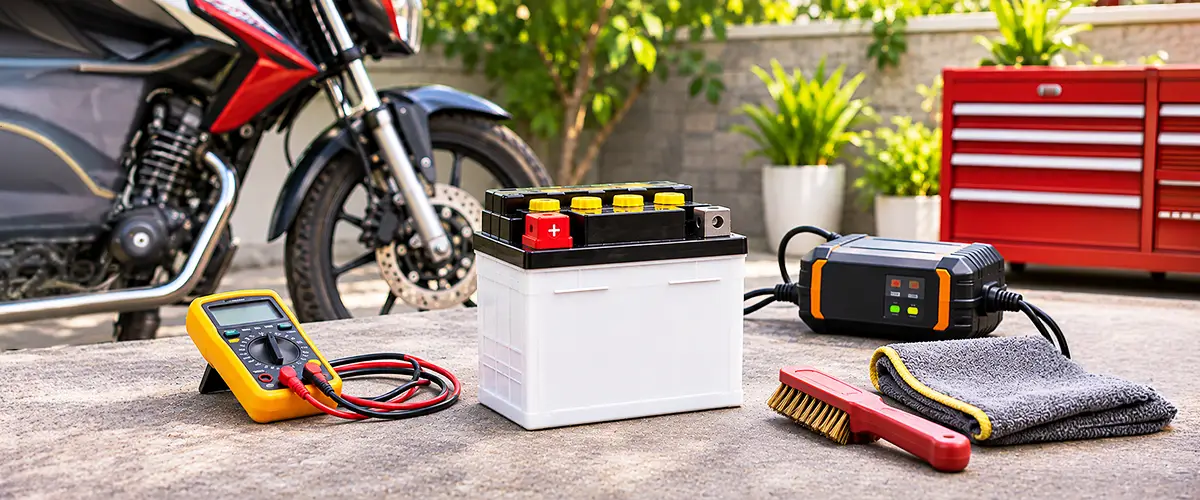
A few practical maintenance habits can help prevent premature battery failure. The goal is to keep the battery adequately charged without exposing it to unnecessary electrical or physical stress.
- Check battery charge regularly, especially if the bike remains unused.
- Use the correct charger for flooded, AGM or lithium battery technology.
- Keep terminals clean and secure to maintain reliable electrical connections.
- Avoid deep discharge by switching off unnecessary electrical accessories.
- Maintain the charging system so the battery receives the correct voltage.
- Secure the battery properly to reduce vibration-related damage.
For serviceable flooded batteries, check electrolyte levels only as instructed by the manufacturer. Never open a sealed AGM battery or add water to it.
Correct battery charging voltage and appropriate maintenance can help preserve performance, but they cannot reverse severe internal aging.
When Should You Replace Your Motorcycle Battery?
There is no fixed age at which every motorcycle battery must be replaced. A conventional battery approaching three years or an AGM battery approaching five years deserves closer attention, but a healthy battery should not be replaced based on age alone.
Replacement becomes more appropriate when the battery no longer holds charge reliably, delivers insufficient starting power or fails an approved performance test after proper charging.
If a relatively new battery repeatedly becomes discharged, investigate the motorcycle’s charging system before buying another. Our motorcycle battery keeps dying guide addresses those faults.
Safety: Never charge or use a swollen, leaking, cracked, frozen or unusually hot battery. Seek qualified assistance if physical damage is present.
Conclusion
So, how long do motorcycle batteries last? Conventional lead-acid batteries generally last around 2–3 years, while AGM batteries commonly last 3–5 years under suitable conditions.
Actual lifespan depends on temperature, storage, charging habits and battery condition. Keeping the battery adequately charged, avoiding deep discharge and maintaining the motorcycle’s electrical system can help prevent early failure. Instead of replacing a battery at a fixed age, monitor its starting performance and arrange proper testing when problems appear.
Frequently Asked Questions
Can a Motorcycle Battery Last 5 Years?
Yes. A well-maintained AGM battery may last five years under favorable conditions. Actual lifespan varies with charging, temperature and usage.
How Long Does a Motorcycle Battery Last in Pakistan?
Conventional batteries commonly last around 2–3 years, while AGM batteries may last 3–5 years. Pakistan’s high summer temperatures can shorten these ranges.
Does Riding Every Day Charge a Motorcycle Battery?
Usually, yes. A functioning charging system replenishes the battery while the engine runs, although very short journeys may not restore a full charge.
How Long Can a Motorcycle Battery Sit Unused?
It depends on battery condition, storage temperature and standby electrical consumption. Extended storage without charging can cause harmful discharge.
Do AGM Motorcycle Batteries Last Longer?
AGM batteries typically have a longer average lifespan than conventional flooded motorcycle batteries, provided they are compatible and maintained correctly.
Can Charging Restore an Old Motorcycle Battery?
Charging may restore a healthy discharged battery, but it cannot reliably reverse severe internal deterioration or damage caused by prolonged discharge.
Should I Replace a Motorcycle Battery After Two Years?
Not automatically. A two-year-old battery may still be healthy. Test its condition if starting becomes slow or it repeatedly loses charge.
What Shortens Motorcycle Battery Life the Most?
Common factors include high temperatures, prolonged undercharging, repeated deep discharge, incorrect charging settings and extended storage without maintenance.

