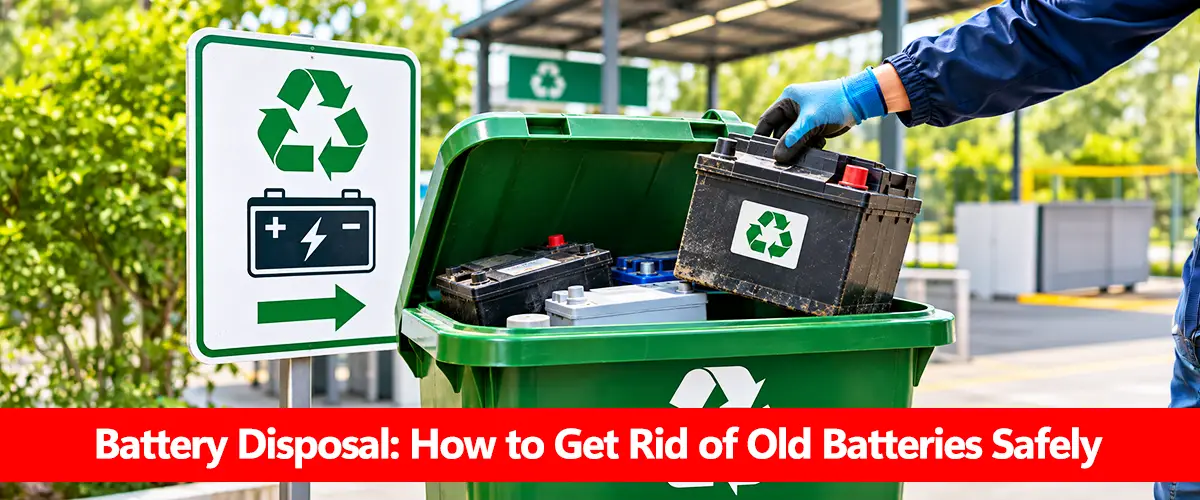
Proper battery disposal means sending used batteries to a suitable collection, recycling or waste-management service according to their chemistry and condition. Lithium-ion and lead-acid batteries should not be placed in ordinary household rubbish because they can create fire, chemical or environmental hazards.
A used car battery, smartphone battery and alkaline AA cell may look very different, but even seemingly discharged batteries can retain electrical energy. Before throwing one away, identify its type, check for damage and confirm that the receiving facility accepts it.
How to Dispose of Different Battery Types
The correct disposal method depends on the battery’s chemistry, not simply its size or whether it can still power a device.
Start by checking the label to identify your battery chemistry. Common markings include Li-ion, LiFePO4, Pb, NiMH and alkaline.
| Battery Type | Common Applications | Recommended Disposal Route |
| Lead-acid | Cars, motorcycles, UPS and inverters | Battery retailer or qualified lead-acid recycler |
| Lithium-ion / LiFePO4 | Phones, laptops, solar storage and e-bikes | Specialized lithium battery or electronics recycler |
| Alkaline | AA, AAA and household devices | Local approved collection or recycling program |
| Rechargeable NiMH / NiCd | Tools, cameras and rechargeable household cells | Collection service accepting rechargeable batteries |
| Button and coin cells | Watches, remotes and small electronics | Specialized battery collection point |
Some jurisdictions permit undamaged alkaline batteries in household rubbish, but local rules vary and recycling is preferable where available. Do not assume the same rule applies to lithium coin cells or rechargeable batteries. The US Environmental Protection Agency provides chemistry-specific guidance for used household batteries, including separate handling requirements for lithium and lead-acid types.
Why Improper Battery Disposal Is Dangerous
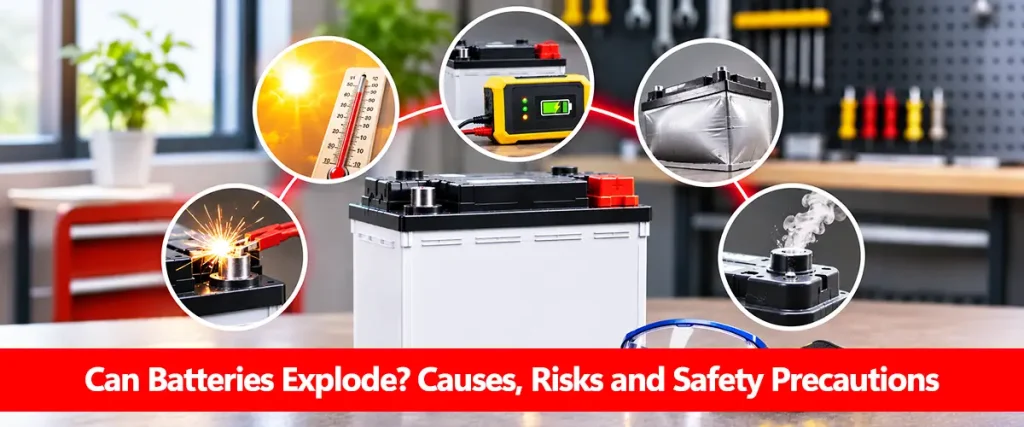
Discarded batteries can create hazards even after they stop working. A lithium battery may short-circuit if its terminals contact metal or if it is crushed during waste collection. Lead-acid batteries contain lead and corrosive sulfuric acid that can contaminate the surrounding environment when improperly handled. Poorly controlled informal lead-acid battery recycling is also a serious concern. The World Health Organization warns that unsafe dismantling and processing can release lead into the air, soil and nearby communities.
The main risks include electrical fires, chemical leaks, injuries to waste workers and pollution from uncontrolled battery processing. Our battery safety guide explains these hazards in more detail.
Six Steps for Safe Battery Disposal
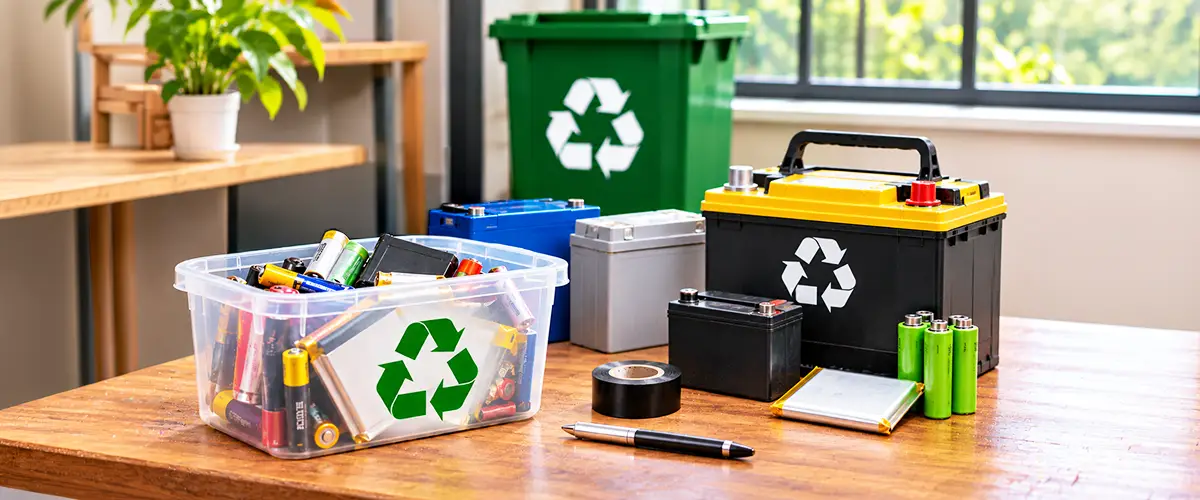
For ordinary, undamaged consumer batteries, follow this practical checklist before arranging collection.
- Identify the battery type. Check the printed chemistry, model information or device manual.
- Inspect for damage. Look for swelling, leakage, cracks, smoke or unusual heat without opening the battery.
- Choose the correct collection service. Confirm that the facility accepts the exact chemistry and battery size.
- Prevent terminal contact. For undamaged small lithium batteries, use non-conductive terminal tape or individual packaging as recommended by the collection service.
- Keep batteries separate. Do not mix loose batteries with metal objects or household recyclables.
- Arrange safe handover. Follow the recycler’s packaging and transport instructions rather than mailing batteries without approval.
For large car, UPS, solar or electric-vehicle batteries, ask the retailer, installer or qualified technician to manage disconnection and collection where necessary. Never cut battery cables, open sealed cells, drain electrolyte or deliberately short-circuit a battery before disposal.
Disposing of Lead-Acid Batteries
Car and UPS batteries commonly use lead-acid chemistry. Their lead plates and sulfuric acid electrolyte require controlled handling. An undamaged used lead-acid battery should generally be returned through a battery retailer or a qualified recycler that accepts this chemistry. Some retailers offer an old-battery return option when purchasing a replacement.
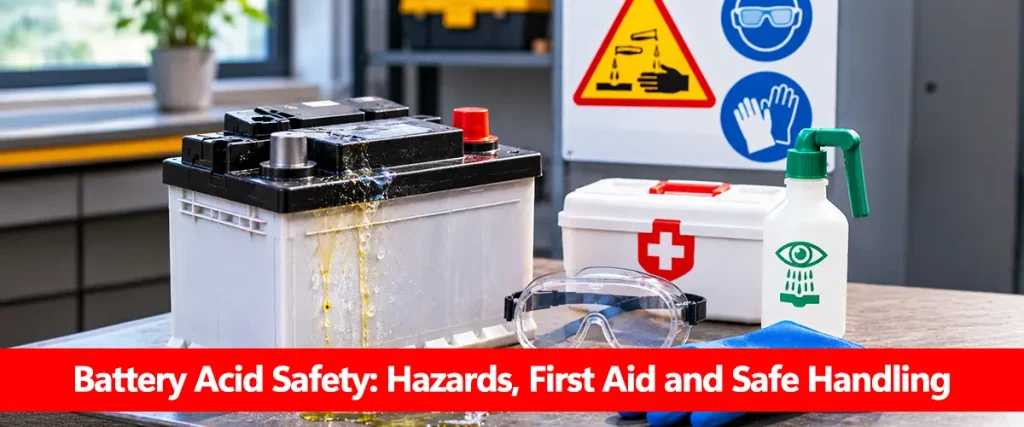
Keep the battery upright where applicable and follow the collector’s handling requirements. Never empty its electrolyte into a drain or dispose of its casing with general scrap materials. If the case is cracked or leaking, do not move it without professional instructions. Our battery acid safety article explains the chemical exposure risks.
Disposing of Lithium-Ion Batteries
Lithium-ion batteries require special attention because crushing, puncturing or short circuits can create dangerous heat and fire. The EPA recommends taking used lithium-ion batteries to dedicated battery recyclers or suitable hazardous-waste collection services, not household rubbish or mixed recycling.
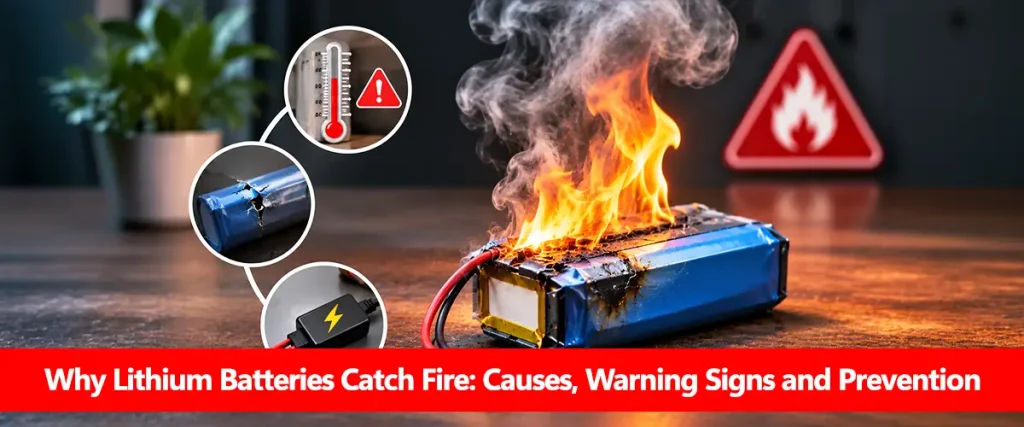
Small, undamaged removable batteries can usually be prepared for collection according to the facility’s guidance. For built-in smartphone or laptop batteries, use an electronics recycler or authorized service provider rather than forcing the battery out of the device. Large e-bike, solar storage and electric-vehicle battery packs should be handled through the manufacturer, installer or a qualified recycling service. For background on fire-related hazards, see why lithium batteries catch fire.
What About Swollen, Leaking or Damaged Batteries?
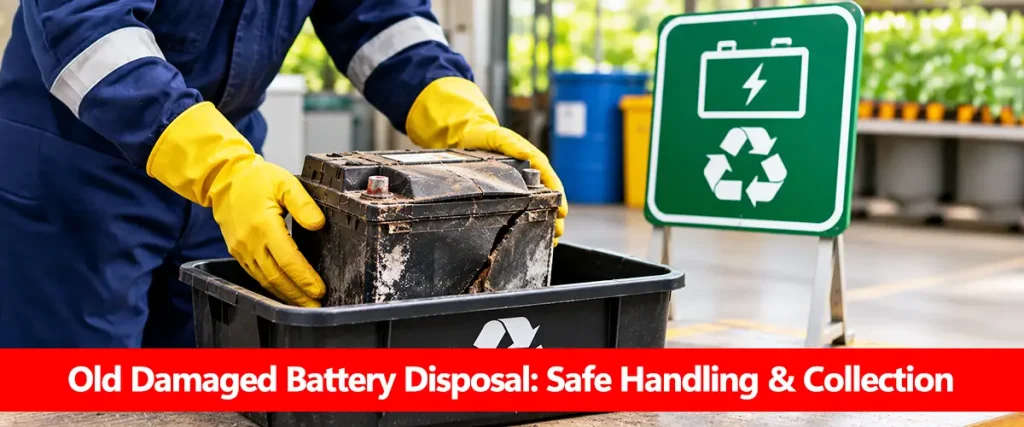
Damaged batteries need a different disposal process from ordinary used batteries. Do not charge, puncture, dismantle or attempt to discharge a swollen or leaking battery. Avoid touching exposed electrolyte or damaged electrical components. Contact the manufacturer or a specialist waste handler and clearly describe the damage before arranging collection. Ordinary battery drop-off bins may not accept swollen, leaking or recalled batteries.
If a battery is smoking, hissing, venting gas or rapidly heating, move away, warn others and contact emergency services. Do not try to carry it to a recycling point. Our old damaged battery disposal guide covers these situations separately.
Where Can You Dispose of Old Batteries?
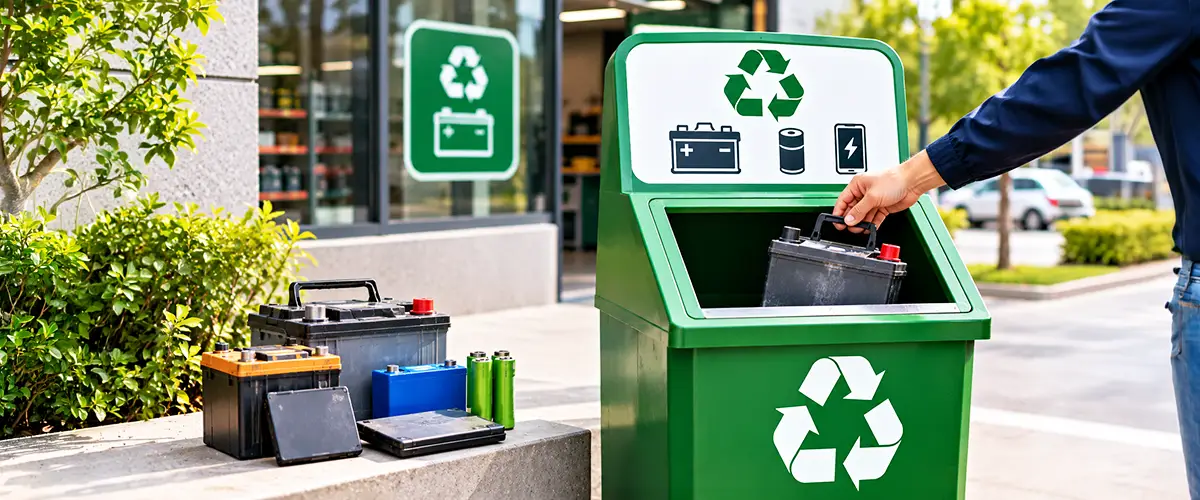
Available services depend on your city, battery type and the size of the battery. For readers in Pakistan, practical starting points include established battery retailers, authorized brand service centers, electronics take-back providers and qualified recycling companies. Confirm their actual collection and downstream recycling arrangements before handing over a battery.
For small rechargeable batteries, ask whether the provider has a dedicated collection program. For large lithium battery packs, contact the installer or manufacturer first. International resources also describe how lithium-ion battery collection points should handle battery waste, but US collection directories should not be assumed to operate in Pakistan.
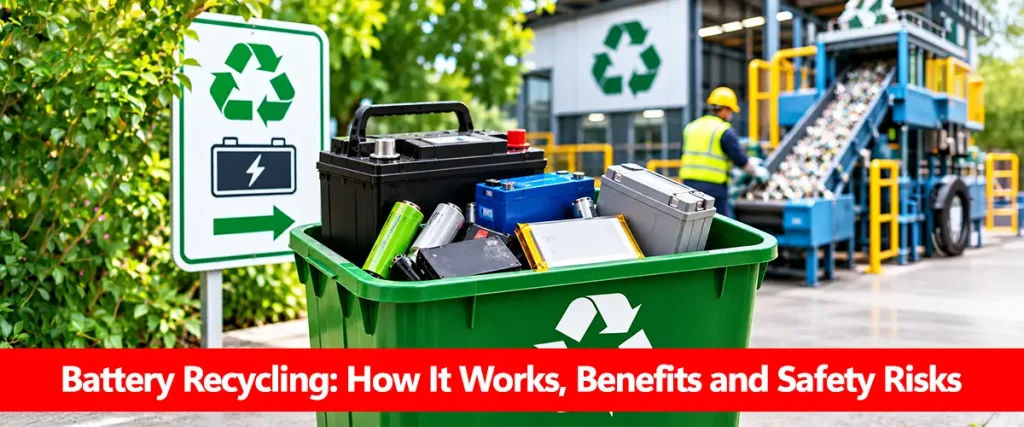
Choose facilities that can confirm they accept your battery chemistry and manage it responsibly. Our battery recycling article explains what happens after collection.
Common Battery Disposal Mistakes
Several seemingly convenient disposal methods create avoidable risks.
- Throwing lithium batteries into household rubbish.
- Mixing batteries with metal scrap or loose tools.
- Assuming a completely discharged battery cannot cause a short circuit.
- Removing built-in lithium packs by force.
- Selling leaking batteries to unqualified scrap handlers.
- Burning, crushing or opening batteries to recover materials.
Responsible disposal is not simply about getting an old battery out of your home. It is about ensuring the battery reaches an appropriate facility without endangering people along the way.
Conclusion
Safe battery disposal starts with identifying the battery chemistry and choosing a suitable collection or recycling service. Lead-acid batteries should go through qualified battery retailers or recyclers, while lithium-ion batteries require specialized collection rather than ordinary household waste. Alkaline and other small batteries should be handled according to local rules.
If a battery is swollen, leaking or overheating, stop handling it and obtain specialist advice. Proper disposal protects waste workers, reduces environmental contamination and helps recover valuable battery materials.
Frequently Asked Questions
Can I Throw Batteries in the Trash?
Lithium-ion and lead-acid batteries should not go into ordinary household rubbish. Rules for some undamaged alkaline batteries vary by location, so check local disposal guidance.
How Do I Dispose of a Car Battery?
Return it to an established battery retailer or qualified lead-acid recycler. Do not drain the electrolyte or dismantle the battery.
Where Should I Dispose of Lithium Batteries?
Use a specialist lithium battery recycler, suitable electronics take-back service or approved collection facility that accepts the specific battery type.
Can Dead Batteries Still Cause Fires?
Yes. Used batteries may retain enough energy to short-circuit or generate heat, particularly when damaged or crushed.
Should I Tape Battery Terminals Before Disposal?
For undamaged small lithium batteries, non-conductive terminal tape or individual packaging can reduce short-circuit risks. Follow the receiving facility’s guidance and do not handle damaged or overheating batteries.
Can I Dispose of a Swollen Battery Normally?
No. A swollen battery requires specialist handling. Contact the manufacturer or an appropriate recycler before moving or transporting it.
How Do I Dispose of UPS Batteries in Pakistan?
Contact a qualified battery retailer, authorized service provider or established lead-acid recycler. Confirm that the provider accepts your UPS battery type.
Can Alkaline AA and AAA Batteries Be Recycled?
Yes, where suitable collection services exist. Local disposal rules differ, so recycling through an accepted battery collection program is preferable.
Is Battery Disposal the Same as Battery Recycling?
No. Disposal is the process of safely removing a battery from service and directing it to an appropriate waste pathway. Recycling is one possible pathway that recovers useful materials.