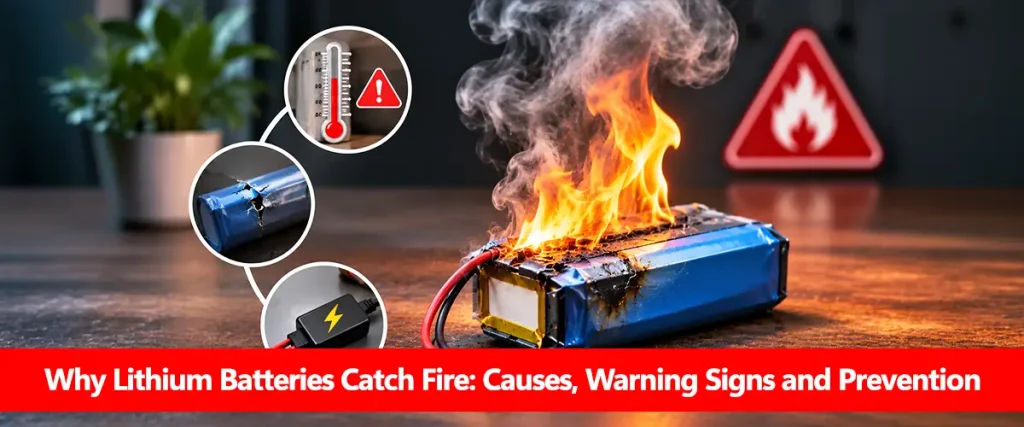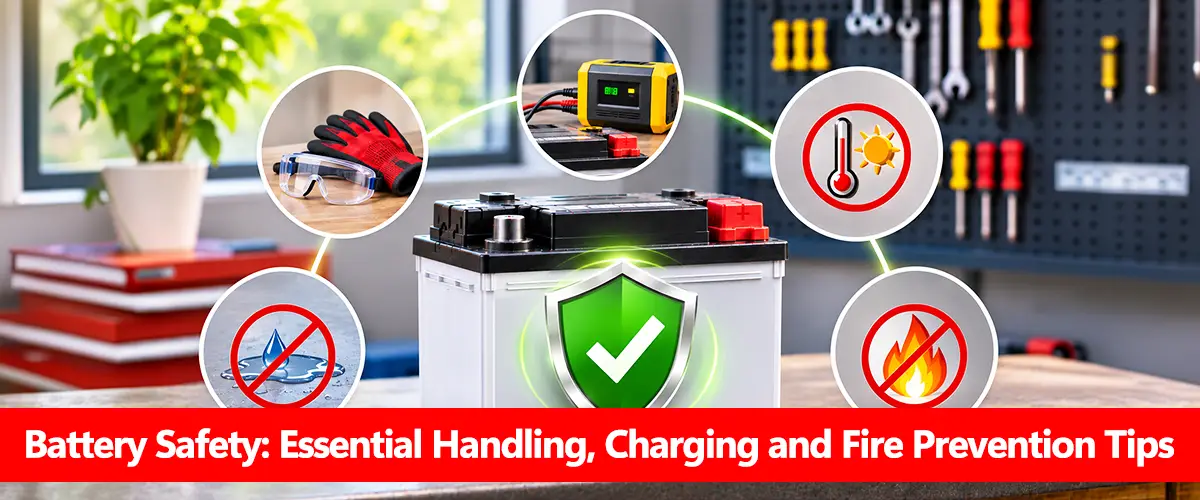
Battery safety means following proper precautions when using, charging, storing and disposing of batteries to prevent electrical injuries, chemical exposure, overheating and fires. Whether you use lead-acid batteries for cars and UPS systems or lithium batteries for solar storage and electric bikes, understanding their specific hazards is essential.
Batteries store considerable electrical energy, and improper handling can create dangerous conditions. Most are safe when used according to manufacturer instructions, but damaged batteries, incorrect chargers and unsafe installations can increase the risk of serious incidents.
What Are the Main Battery Safety Risks?
Battery hazards depend on their chemistry, size, condition and application. A small household battery and a large home backup battery bank do not present identical risks.
| Battery Hazard | Common Cause | Main Safety Concern |
| Electrical short circuit | Exposed terminals or metal contact | Burns, sparks and fire |
| Overheating | Excessive current, poor charging or damage | Battery deterioration and fire risk |
| Chemical leakage | Damaged casing or failed seals | Skin and eye injuries |
| Gas buildup | Charging certain lead-acid batteries | Fire or explosion hazard |
| Internal cell failure | Damage, defects or unsuitable conditions | Venting, smoke or fire |
The first warning signs may include unusual heat, corrosion, leaks or changes in battery shape. These conditions should be investigated before continued operation. Our battery getting hot guide explains abnormal heating, while swollen battery covers visible deformation.
Lead-Acid Battery Safety: Acid and Gas Hazards
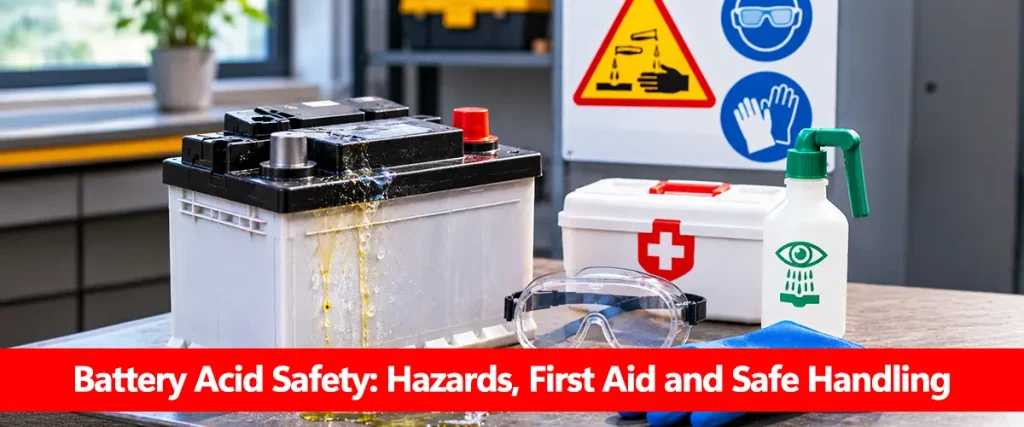
Lead-acid batteries are widely used in cars, motorcycles, UPS systems and generators. Their electrolyte contains sulfuric acid, which can cause serious chemical burns if the battery leaks or is handled incorrectly. During charging, lead-acid batteries may also produce hydrogen gas. Hydrogen can ignite when exposed to sparks, flames or other ignition sources, particularly where ventilation is inadequate. Appropriate lead-acid battery ventilation helps prevent flammable gas from accumulating around charging equipment.
Important precautions include:
- Keep flames, cigarettes and sparks away from charging batteries.
- Use suitable protective eyewear and acid-resistant gloves for approved servicing.
- Maintain manufacturer-required ventilation.
- Keep conductive tools and metal jewelry away from exposed terminals.
- Never open sealed AGM or GEL batteries.
- Stop using batteries with cracks, leaks or severe deformation.
Serviceable flooded batteries may require electrolyte checks, but the work must follow manufacturer guidance. Our battery acid safety article covers chemical exposure and handling precautions in greater detail.
Lithium Battery Safety and Fire Risks
Lithium-ion batteries are common in smartphones, laptops, electric bikes and modern battery storage systems. Their high energy density provides useful performance, but damaged cells can develop dangerous internal conditions. One serious hazard is thermal runaway, where an internal reaction produces heat faster than the cell can release it. This can lead to rapid heating, gas venting, smoke or fire. Lithium batteries often contain a Battery Management System (BMS) that monitors voltage, current and temperature. However, electronic protection cannot guarantee safety after severe physical damage or internal failure. Never puncture, crush, dismantle or attempt to repair damaged lithium battery packs. Use only manufacturer-approved chargers and replacement batteries. For a dedicated explanation, see why lithium batteries catch fire.
How to Charge Batteries Safely
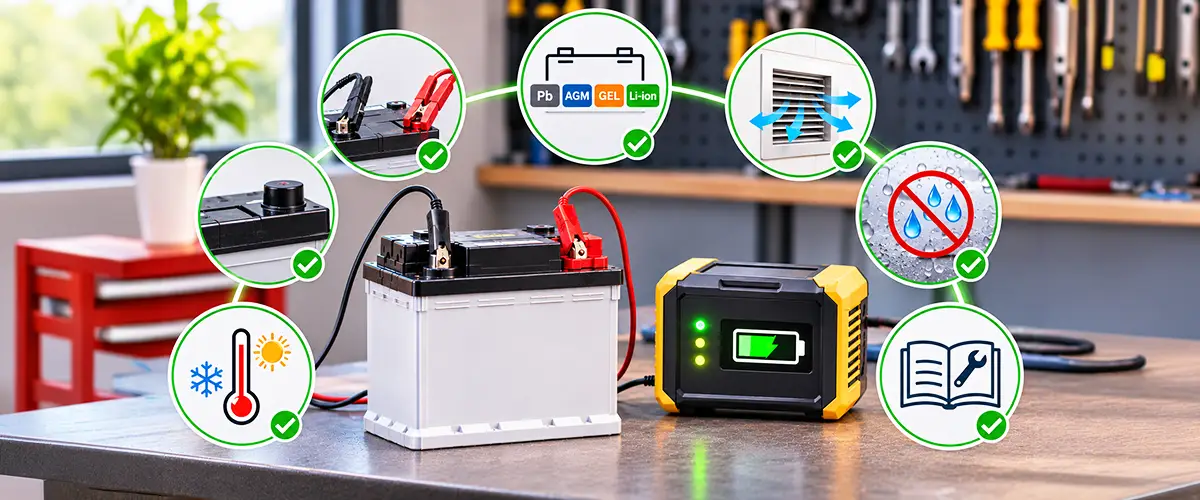
Incorrect charging is a preventable cause of battery problems. A charger must match the battery’s voltage, chemistry and permitted charging characteristics.
For example, a conventional flooded lead-acid charger may not be suitable for a lithium battery. Similarly, applying an unsupported high-current charging mode can damage smaller batteries.
A practical charging checklist includes:
- Inspect the battery and charger for visible damage before use.
- Confirm compatibility with the battery’s voltage and chemistry.
- Choose a safe charging location away from unnecessary heat and combustible materials.
- Maintain suitable ventilation and keep charging equipment dry.
- Follow the manufacturer’s charging instructions and approved connection procedure.
- Monitor warnings and stop charging if unusual heating, odor or error conditions develop.
Do not charge large battery packs where they block entrances or emergency exits. Avoid unattended overnight charging where the manufacturer or local fire-safety guidance advises against it. Our how to charge a battery guide covers normal charging methods, while can you overcharge a battery explains the risks of excessive charging.
Battery Warning Signs You Should Never Ignore
Some battery problems are minor performance issues, but others require immediate action.
| Warning Sign | Recommended Response |
| Slight warmth during approved operation | Check against manufacturer limits |
| Unusual or increasing heat | Stop use or charging if safe |
| Visible swelling or leakage | Do not recharge; seek professional advice |
| Strong chemical smell or hissing | Move away and keep others clear |
| Smoke, flames or rapid heating | Evacuate and contact emergency services |
Never touch, carry or attempt to disconnect a battery that is smoking, venting or becoming rapidly hotter. If a lithium battery develops signs of fire, the safest action for an untrained person is to leave the affected area, warn others and contact local emergency services. Do not attempt improvised repairs or firefighting. For an explanation of battery ignition hazards, see can batteries explode.
What Should You Do During a Battery Emergency?
The appropriate response depends on whether the incident involves chemical exposure, overheating or fire.
- If battery acid contacts your skin or eyes: Immediately flush the affected area with running water for at least 15 minutes and seek urgent medical advice. Eye exposure requires emergency medical assessment. Do not attempt chemical neutralization on the skin or eyes.
- If a battery starts smoking or venting: Move away from the battery, avoid breathing fumes, alert others and contact emergency services. Do not handle the affected battery.
- If a large UPS or solar battery system develops a fault: Do not open the enclosure or disconnect unfamiliar high-current wiring. Follow the equipment’s emergency instructions and contact qualified personnel.
Electrical battery systems can remain hazardous even after the power switch is turned off. Professional assessment is necessary when damaged wiring, exposed terminals or high-voltage equipment is involved.
Safe Battery Storage and Everyday Handling
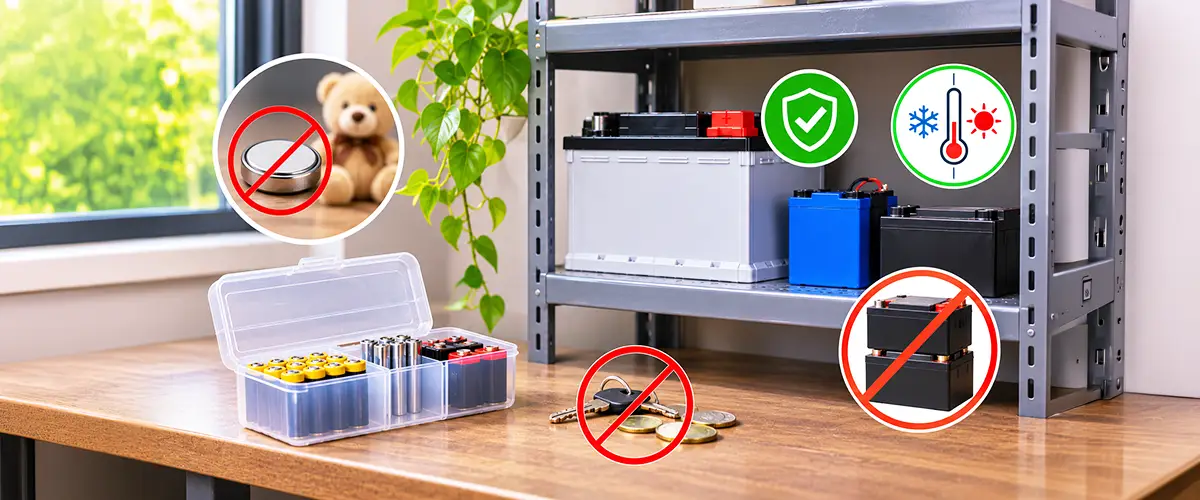
Good storage practices help prevent accidental short circuits and reduce unnecessary battery stress. Keep batteries within the manufacturer’s specified temperature range and away from moisture, direct sunlight and heat sources. Loose batteries should not be stored alongside keys, coins or other metal objects that could connect their terminals.
For household batteries, use original packaging or a suitable organizer. Keep button-cell batteries securely away from children because swallowing them can cause severe injuries. Large rechargeable batteries require secure mounting, suitable ventilation and approved electrical protection. Avoid stacking or mixing batteries unless the system manufacturer explicitly permits that configuration. For long-term storage procedures, read how to store batteries.
Safe Battery Disposal and Recycling
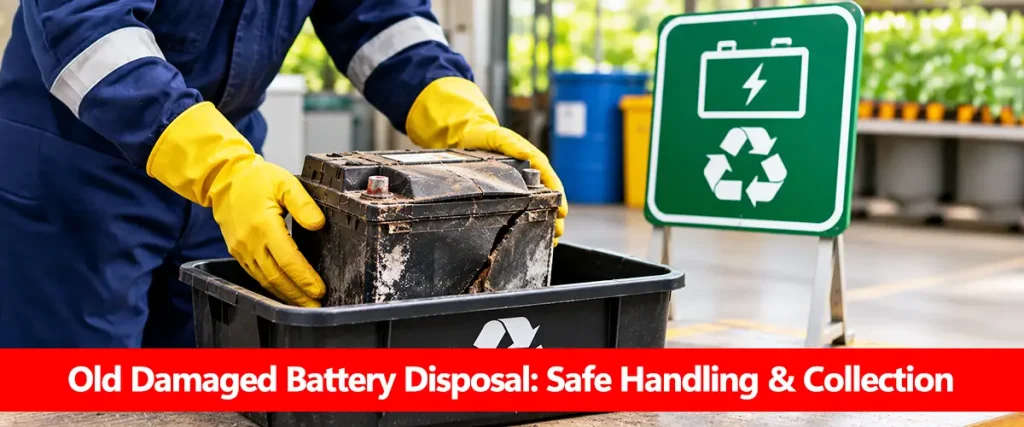
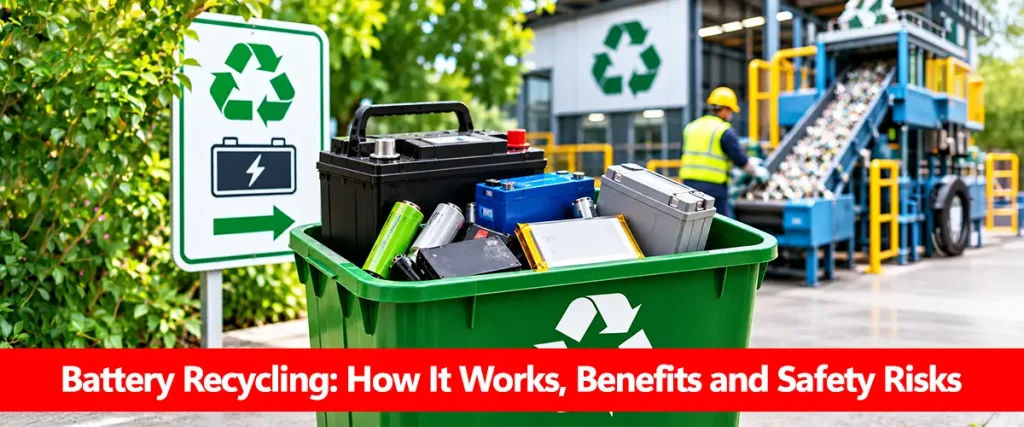
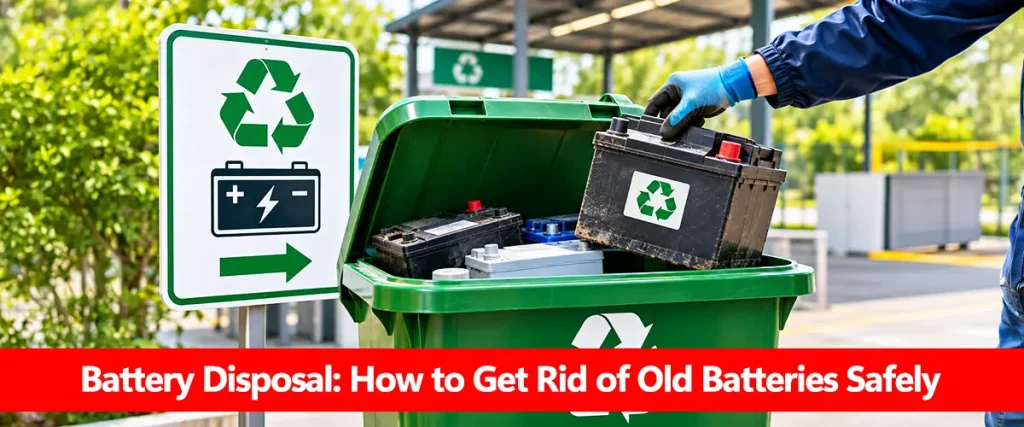
Battery safety continues after a battery reaches the end of its useful life. Discarded batteries may still contain enough stored energy to cause a short circuit, fire or injury. Lithium-ion batteries should not be placed in ordinary household waste or mixed recycling. Instead, use appropriate battery recycling collection points or an authorized recycling service. Lead-acid batteries also require proper recycling because they contain lead and corrosive electrolyte. In Pakistan, contact an established battery dealer or authorized recycler and confirm that the facility accepts the particular battery type.
For safer disposal:
- Keep damaged and undamaged batteries separate.
- Protect exposed terminals when manufacturer guidance permits safe handling.
- Do not crush, puncture or dismantle batteries.
- Inform the recycler about swelling, leakage or other damage.
- Obtain specialist instructions before transporting a damaged lithium battery.
Our battery disposal and battery recycling guides cover end-of-life options, while old damaged battery disposal addresses hazardous battery conditions.
Conclusion
Battery safety depends on understanding the hazards of different battery chemistries and following appropriate charging, handling, storage and disposal practices. Lead-acid batteries require precautions against corrosive electrolyte and flammable gas, while lithium batteries require particular attention to internal damage, overheating and fire risks. Using compatible equipment, recognizing warning signs and avoiding unsafe repair attempts can significantly reduce preventable battery incidents. When a battery is physically damaged or shows dangerous symptoms, professional assistance is the safest choice.
Frequently Asked Questions
What Are the Most Important Battery Safety Rules?
Use compatible chargers, avoid short circuits, follow temperature limits, inspect for damage and never attempt to recharge or repair a visibly damaged battery.
Can Batteries Catch Fire While Charging?
Yes. Incorrect charging, internal faults or physical damage can create fire hazards. Appropriate equipment and manufacturer-approved charging procedures reduce the risk.
Are Lead-Acid Batteries Dangerous?
They can be hazardous because they contain corrosive electrolyte, may release flammable gas during charging and can deliver high short-circuit currents.
Are Lithium Batteries Safe for Home Use?
Properly designed lithium batteries can be used safely with approved charging equipment, protective electronics and correct installation. Damaged or incompatible equipment increases risk.
What Should I Do if a Battery Starts Swelling?
Stop using or charging it. Avoid touching, puncturing or compressing the battery, and arrange professional assessment and safe disposal.
Can I Touch a Leaking Battery?
Avoid direct contact with leaking electrolyte. Keep others away and obtain qualified assistance. If electrolyte contacts skin or eyes, immediately rinse with water and seek medical attention.
Should Batteries Be Kept Away From Heat?
Yes. Excessive heat accelerates battery deterioration and may increase safety risks. Store and operate batteries within their manufacturer’s specified limits.
Can I Throw Old Batteries in Household Waste?
Lithium-ion and lead-acid batteries should go through appropriate recycling or hazardous-waste collection arrangements, not ordinary household disposal.
What Should I Do if a Battery Is Smoking?
Move away, warn others, avoid inhaling fumes and contact emergency services. Do not attempt to carry or open the battery.
Should I Repair a Damaged Battery Myself?
No. Opening sealed cells, bypassing protective electronics or attempting chemical repairs can create serious hazards. Use qualified battery service providers.