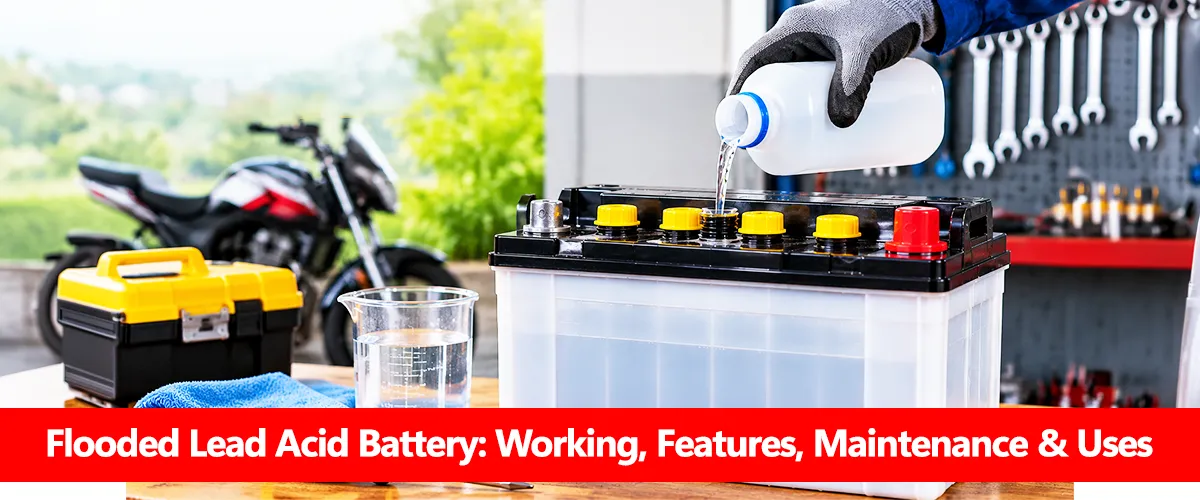
A flooded lead acid battery is a rechargeable battery that contains lead-based plates immersed in a liquid sulfuric acid electrolyte. Unlike sealed designs, many flooded batteries have accessible cells that allow electrolyte levels to be checked and distilled water to be added when required.
Flooded batteries are widely used in automotive starting systems, industrial equipment, solar energy storage, and inverter backup applications. Their established technology and relatively affordable initial cost make them practical, although they require appropriate maintenance and ventilation.
How Does a Flooded Lead Acid Battery Work?
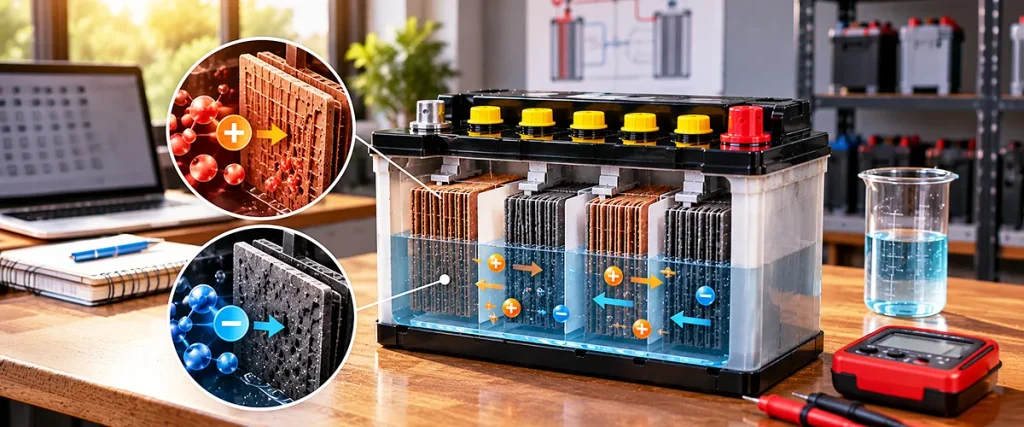
A flooded lead-acid battery stores electrical energy through reversible chemical reactions between its lead-based plates and sulfuric acid electrolyte. During discharge, both electrodes gradually form lead sulfate, while the electrolyte becomes more diluted. Charging reverses these reactions and restores the battery’s active materials. The process can also produce hydrogen and oxygen gases, particularly during certain charging conditions.
Main components include:
- Positive plates: Contain lead dioxide in the charged state.
- Negative plates: Contain spongy lead in the charged state.
- Liquid electrolyte: Sulfuric acid solution that supports ionic conduction.
- Separators: Prevent direct contact between opposing plates.
- Vents or caps: Allow gas management and, in serviceable designs, maintenance access.
- Battery container: Holds the cells and electrolyte.
A conventional 12V flooded battery generally contains six electrochemical cells, each with a nominal voltage of approximately 2V. For a broader explanation of this chemistry, read our lead acid battery guide.
Key Features of Flooded Batteries
Flooded batteries are distinguished by their free-flowing liquid electrolyte and construction. Their performance depends on plate design, discharge rate, operating temperature, and charging conditions.
| Feature | Description |
| Battery chemistry | Lead-acid |
| Electrolyte | Liquid sulfuric acid solution |
| Rechargeability | Rechargeable |
| Maintenance | Required for many serviceable models |
| Ventilation | Important during charging |
| Common voltage | 6V and 12V batteries, among others |
| Applications | Vehicles, inverters, solar storage, industrial systems |
Not every flooded battery has removable caps. Some are marketed as maintenance-free, so servicing instructions must be checked for the specific product.
Common Applications
Flooded lead-acid batteries are used in applications where established charging technology, availability, and cost are important considerations.
Common uses include:
- Automotive systems: Supplying high current for engine starting.
- UPS and inverter systems: Providing electricity during power interruptions.
- Solar energy storage: Storing energy in appropriately designed battery banks.
- Industrial equipment: Powering forklifts and other electric machinery.
- Deep-cycle applications: Supporting repeated discharge and recharge cycles.
Battery construction matters. Automotive starting batteries are not necessarily suitable for repeated deep discharge.
Advantages and Limitations
Flooded batteries remain widely used because of their established design and relatively accessible initial cost. However, their maintenance and installation requirements may make other technologies more suitable in some situations.
Advantages:
- Generally affordable initial purchase cost.
- Widely available in different capacities.
- Established charging and recycling infrastructure.
- Available in starting and deep-cycle designs.
- Serviceable models allow electrolyte inspection.
Limitations:
- May require periodic water replenishment.
- Can release gases during charging.
- Require appropriate ventilation and spill precautions.
- Heavy compared with many lithium batteries.
- Vulnerable to damage from prolonged undercharging and excessive discharge.
The best battery choice depends on the application’s electrical and maintenance requirements.
Flooded Lead Acid Battery Maintenance
Proper maintenance helps preserve battery performance and reduce premature deterioration. Requirements vary by manufacturer, so the battery’s service instructions should always take priority.
Essential maintenance practices:
- Check electrolyte levels: Inspect only serviceable batteries and follow the manufacturer’s procedure.
- Use distilled water: Add water only when instructed; never add sulfuric acid as routine maintenance.
- Maintain proper charging: Use approved charging voltage and current settings.
- Keep terminals clean: Prevent corrosion and poor electrical connections.
- Ensure ventilation: Avoid enclosed spaces where charging gases may accumulate.
- Monitor battery condition: Watch for abnormal heating, swelling, leakage, or declining performance.
Flooded batteries contain corrosive acid and can produce flammable hydrogen gas. Wear suitable protection, avoid sparks and flames, and use qualified assistance when necessary.
Common Problems and Performance Factors
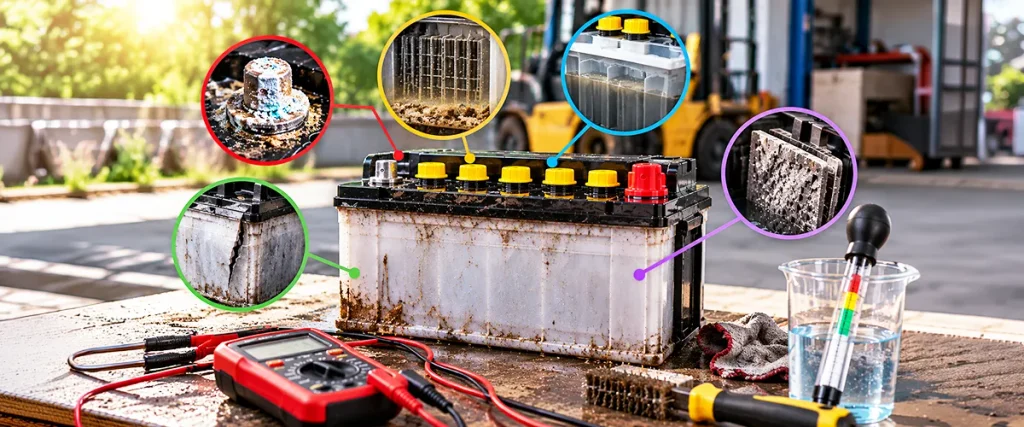
Flooded batteries can lose capacity or experience premature failure when exposed to unsuitable operating conditions. Repeated deep discharge, excessive heat, poor charging, and neglected maintenance can shorten their useful service life.
Important technical factors include:
- State of charge (SoC): Indicates the estimated remaining charge.
- Depth of discharge (DoD): Influences usable capacity and cycle life.
- Internal resistance: Affects voltage drop and power delivery.
- Sulfation: Can develop when batteries remain insufficiently charged.
- Electrolyte condition: Affects electrochemical performance.
Detailed diagnosis and repair procedures should follow manufacturer guidance.
Flooded vs Sealed Lead Acid Batteries
The main difference is electrolyte management and maintenance requirements. Flooded batteries contain free liquid electrolyte, while sealed lead-acid batteries commonly use valve-regulated construction with immobilized electrolyte.
Sealed designs generally require less routine maintenance, but they also have specific charging and operating requirements. For a focused comparison of construction and applications, explore sealed lead acid batteries and AGM batteries.
Conclusion
A flooded lead acid battery is an established rechargeable battery technology used in vehicles, backup systems, and industrial applications. Its liquid electrolyte construction offers practical benefits but requires attention to charging, ventilation, and maintenance. Understanding its features and limitations helps ensure that the battery is used in an appropriate electrical system.
Explore types of batteries, lead acid batteries, and the Battery Types and Chemistries category. Visit Batteries Hub for more battery education.
Frequently Asked Questions
What Is a Flooded Lead Acid Battery?
It is a rechargeable lead-acid battery with electrodes immersed in a liquid sulfuric acid electrolyte.
Do Flooded Lead Acid Batteries Need Water?
Many serviceable flooded batteries require periodic distilled-water replenishment. Maintenance-free designs may not permit access to the electrolyte.
Are Flooded Batteries Suitable for Solar Systems?
Yes. Deep-cycle flooded batteries can be used in compatible solar installations with appropriate charging, ventilation, and maintenance.
How Long Does a Flooded Battery Last?
Its service life depends on battery construction, charging practices, temperature, discharge depth, and maintenance.
Can a Flooded Battery Be Used Indoors?
Flooded batteries require suitable ventilation and installation precautions because they may release hydrogen during charging. Follow applicable safety requirements and manufacturer instructions.