A gel battery is a rechargeable lead-acid battery that uses a gelled sulfuric acid electrolyte instead of freely flowing liquid electrolyte. It is typically a valve-regulated lead-acid (VRLA) battery designed to operate without routine water refilling. Gel batteries are used in selected solar storage, backup power, mobility, and deep-cycle applications. Their immobilized electrolyte reduces spill risk, but correct charging is essential for reliable performance and service life.
How Does a Gel Battery Work?
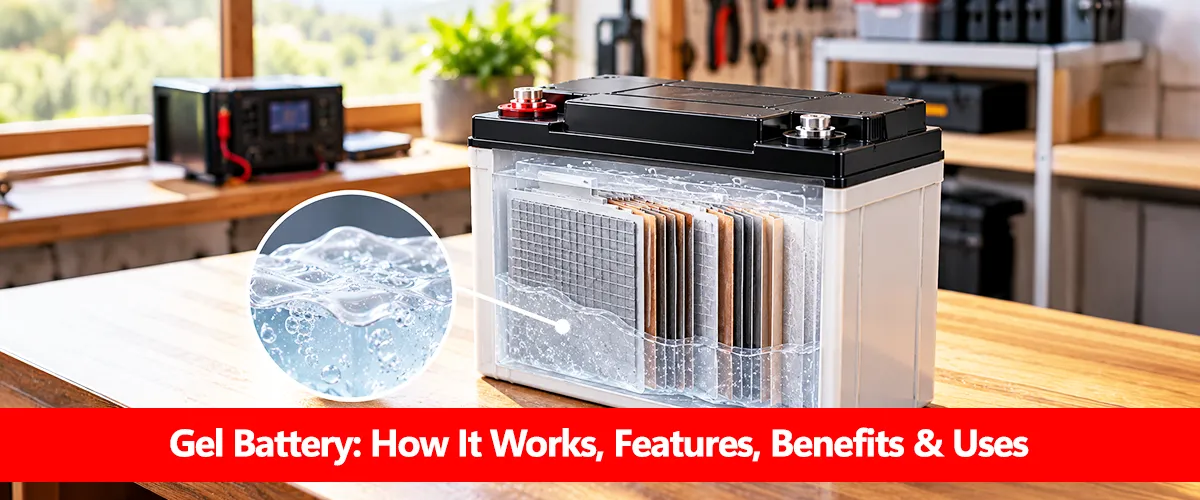
A gel battery stores and releases electrical energy through the same basic electrochemical reactions as other lead-acid batteries. During discharge, lead dioxide at the positive plate and spongy lead at the negative plate react with sulfuric acid, forming lead sulfate. Charging reverses these reactions and restores stored energy. The main difference is that silica is added to the electrolyte to create a gel-like structure.
Main components include:
- Positive plates: Contain lead dioxide when charged.
- Negative plates: Contain spongy lead when charged.
- Gel electrolyte: Sulfuric acid immobilized using silica.
- Separators: Prevent direct contact between opposing plates.
- Pressure-relief valves: Release excessive internal pressure when necessary.
- Battery casing and terminals: Protect internal components and provide electrical connections.
Gel batteries use internal gas recombination to reduce water loss during normal operation. For the underlying chemistry, read our lead acid battery guide.
Key Features of Gel Batteries
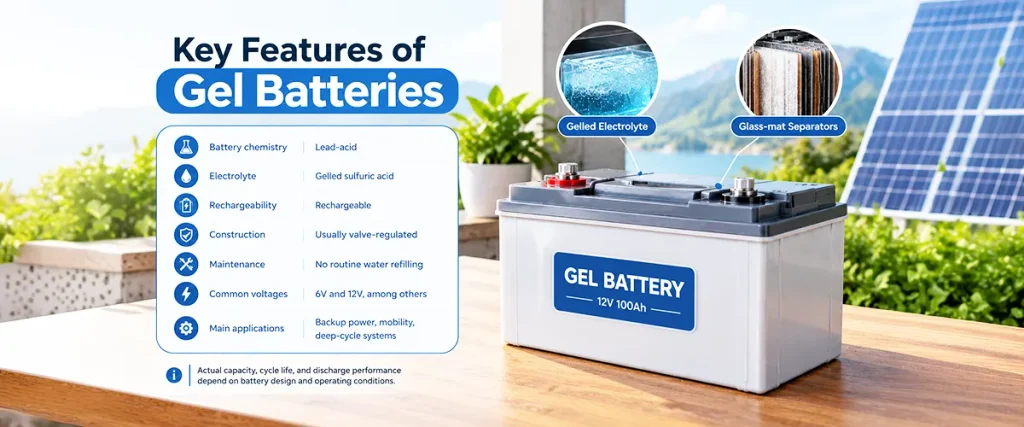
Gel batteries have distinct construction and charging characteristics that influence their performance.
| Feature | Description |
| Battery chemistry | Lead-acid |
| Electrolyte | Gelled sulfuric acid |
| Rechargeability | Rechargeable |
| Construction | Usually valve-regulated |
| Maintenance | No routine water refilling |
| Common voltages | 6V and 12V, among others |
| Main applications | Backup power, mobility, deep-cycle systems |
Actual capacity, cycle life, and discharge performance depend on battery design and operating conditions.
Common Applications of Gel Batteries
Gel batteries are used in applications where reduced electrolyte leakage risk and low routine maintenance are important.
Common uses include:
- Solar energy storage: Compatible off-grid and backup systems.
- UPS systems: Selected standby power applications.
- Mobility equipment: Wheelchairs and mobility scooters.
- Marine equipment: Suitable auxiliary power installations.
- Emergency systems: Backup lighting and security equipment.
- Deep-cycle applications: Repeated discharge in appropriately rated gel batteries.
Not every gel battery has the same cycle-life or current-delivery capability. Application-specific specifications should always be checked.
Advantages of Gel Batteries
Gel battery construction offers several practical benefits.
Main advantages:
- No routine electrolyte topping-up.
- Reduced risk of liquid electrolyte spills.
- Low maintenance requirements.
- Suitable for certain deep-cycle applications.
- Available in different capacities and configurations.
- Established lead-acid technology and recycling infrastructure.
These advantages make gel batteries useful where maintenance access is limited or electrolyte containment is important.
Limitations of Gel Batteries
Gel batteries also have restrictions that should be considered before installation.
Important limitations include:
- Sensitive to excessive charging voltage.
- Require gel-compatible charging settings.
- Generally higher initial cost than comparable flooded batteries.
- Lower energy density than many lithium batteries.
- High discharge currents may be unsuitable for some designs.
- Excessive heat and deep discharge can shorten service life.
Incorrect charging can cause gas pockets, water loss, or permanent battery damage.
Gel Battery Charging and Maintenance
Although gel batteries are often described as maintenance-free, they still require correct charging and periodic inspection.
Recommended practices:
- Use a charger approved for gel batteries.
- Follow the manufacturer’s voltage and current limits.
- Avoid prolonged overcharging.
- Keep terminals clean and connections secure.
- Protect the battery from excessive temperatures.
- Avoid discharging below recommended limits.
- Inspect the casing for swelling, leakage, or damage.
Gel batteries should not be opened or refilled with water. They can release gas through pressure-relief valves under abnormal conditions, so appropriate ventilation remains important.
Gel vs AGM Batteries
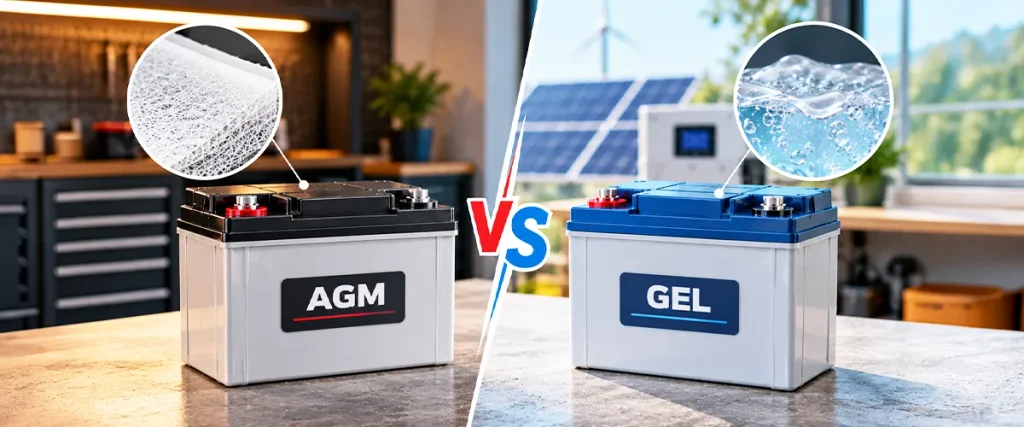
Both gel and AGM batteries belong to the sealed lead-acid family, but they use different electrolyte constructions. AGM batteries absorb liquid electrolyte into fiberglass separators, while gel batteries immobilize the electrolyte using silica. Their charging requirements, current-delivery characteristics, and suitability for specific applications may differ. Read our AGM battery guide or the dedicated AGM vs gel battery comparison.
Important Battery Performance Terms
Several technical specifications influence gel battery performance:
- Nominal voltage: Reference operating voltage of the battery.
- Rated capacity (Ah): Charge capacity under specified test conditions.
- State of charge (SoC): Estimated remaining charge.
- Depth of discharge (DoD): Percentage of capacity removed.
- Cycle life: Number of charge-discharge cycles under defined conditions.
- Internal resistance: Influences voltage drop and power delivery.
Battery performance should be evaluated using manufacturer specifications rather than chemistry alone.
Conclusion
A gel battery is a rechargeable lead-acid battery that uses immobilized electrolyte to provide reduced maintenance and improved electrolyte containment. It is used in selected backup power, mobility, and deep-cycle applications. Its performance depends on appropriate charging, temperature control, and matching the battery design to the intended use. Explore sealed lead acid batteries, tubular batteries, and the Battery Types and Chemistries category. Visit Batteries Hub for more battery education.
Frequently Asked Questions
What Is a Gel Battery?
A gel battery is a rechargeable lead-acid battery with sulfuric acid electrolyte immobilized using silica.
Is a Gel Battery Rechargeable?
Yes. Gel batteries are rechargeable and require charging equipment compatible with their specific voltage and chemistry.
Does a Gel Battery Need Water?
No. Gel batteries are designed to operate without routine water refilling.
Are Gel Batteries Suitable for Solar Systems?
Yes. Appropriately rated gel batteries can be used in compatible solar storage systems with suitable charging settings.
How Long Does a Gel Battery Last?
Its lifespan depends on battery design, operating temperature, depth of discharge, charging conditions, and maintenance.
Is a Gel Battery a Deep-Cycle Battery?
Some gel batteries are designed for deep-cycle use, but gel construction alone does not guarantee a particular cycle-life rating. Learn more about deep-cycle batteries.