Solid state batteries are batteries that use a solid electrolyte instead of the liquid electrolyte found in many conventional rechargeable batteries. The solid electrolyte allows ions to move between electrodes while helping keep the positive and negative electrodes electrically separated.
Solid-state technology is being developed for electric vehicles, portable electronics, medical devices, and energy storage systems. Although certain solid-state batteries are already commercially available, many advanced high-energy designs remain under development. Understanding solid-state technology begins with the basic structure and operating principles of different types of batteries.
How Do Solid State Batteries Work?
Solid state batteries store and release electrical energy through electrochemical reactions. Like other batteries, they contain positive and negative electrodes, but they use a solid material to transport ions between them.
During discharge, ions move through the solid electrolyte while electrons travel through the external circuit to power connected equipment. Charging reverses the relevant electrochemical processes in rechargeable designs.
The main components include:
- Positive electrode (cathode during discharge): Receives ions during discharge in many lithium-based designs.
- Negative electrode (anode during discharge): Releases ions during discharge.
- Solid electrolyte: Conducts ions between the electrodes.
- Current collectors: Carry electrical current into and out of the cell.
- Cell casing: Protects the internal materials.
Some solid-state battery designs use lithium-metal negative electrodes, while others use different materials. The exact operating mechanism depends on the battery chemistry.
Types of Solid Electrolytes
The solid electrolyte is one of the most important components of a solid-state battery. Different materials offer different levels of ionic conductivity, mechanical stability, and manufacturing complexity.
| Solid Electrolyte Type | Key Characteristics |
| Ceramic oxides | Often chemically stable but may require careful interface engineering |
| Sulfide-based materials | Can offer high ionic conductivity but may be moisture-sensitive |
| Solid polymers | Flexible and potentially easier to process, but conductivity can be temperature-dependent |
| Composite electrolytes | Combine materials to balance conductivity and mechanical properties |
No single solid electrolyte is ideal for every application. Researchers continue to improve electrode interfaces, material stability, and manufacturing methods.
Key Features of Solid State Batteries

Solid state batteries are attracting attention because their construction may enable improvements in battery safety and energy storage performance. However, the benefits depend on the specific cell design. Using a solid electrolyte does not automatically guarantee greater capacity, longer lifespan, or better performance than existing lithium-ion batteries.
| Feature | Description |
| Electrolyte | Solid material |
| Rechargeability | Depends on battery chemistry and design |
| Nominal voltage | Varies by cell chemistry |
| Energy density | Potentially high in advanced designs |
| Safety | May reduce some liquid-electrolyte hazards |
| Cycle life | Depends on materials and operating conditions |
| Commercial availability | Established in some niches; advanced designs remain under development |
Actual performance must be evaluated using manufacturer data and independent testing rather than general technology claims.
Potential Applications of Solid State Batteries
Solid-state technology is being explored for applications where compact energy storage, safety, and long-term reliability are important.
Important applications include:
- Electric vehicles: Advanced battery designs may improve energy storage and vehicle performance.
- Portable electronics: Compact batteries for future electronic devices.
- Medical devices: Certain miniature solid-state batteries are already used in specialized applications.
- Wearable technology: Small battery designs for compact equipment.
- Industrial sensors: Power sources for selected monitoring devices.
- Energy storage research: Investigation of new battery materials and configurations.
Large-scale adoption depends on manufacturing costs, production capacity, reliability, and proven performance under real operating conditions.
Advantages of Solid State Batteries
The main potential advantage of solid state batteries is their ability to use electrolyte materials with different properties from conventional liquid electrolytes. Some advanced designs may support higher energy density, improved packaging, or reduced flammable-liquid content. However, these outcomes are not guaranteed across all solid-state chemistries.
Potential advantages include:
- Reduced dependence on liquid electrolytes.
- Opportunities for higher energy density.
- Potential improvements in certain safety characteristics.
- Flexible material choices for specialized applications.
- Opportunities for compact battery construction.
- Potential compatibility with lithium-metal electrode designs.
These advantages explain why solid-state technology remains an important area of battery research.
Limitations and Challenges of Solid State Batteries
Despite their potential, solid state batteries face technical and manufacturing challenges. Maintaining effective contact between solid electrodes and electrolytes can be difficult, particularly as battery materials expand and contract during cycling. High internal resistance at material interfaces can reduce power delivery and charging performance. Some solid electrolytes also require controlled manufacturing environments or specialized production processes.
Major challenges include:
- High manufacturing costs for certain designs.
- Difficulties maintaining stable electrode interfaces.
- Material cracking or mechanical degradation.
- Resistance to ion movement at interfaces.
- Limited large-scale production of advanced designs.
- Uncertain long-term performance for newer technologies.
Solid electrolytes also do not eliminate every safety risk. Internal short circuits, overheating, and hazardous reactions remain possible depending on the materials used.
Important Solid State Battery Specifications
Battery specifications are essential for understanding the real-world performance of solid-state technology. Like other rechargeable batteries, solid-state cells are evaluated using voltage, capacity, energy density, and operating-life measurements.
| Specification | Meaning |
| Nominal voltage | Reference operating voltage |
| Rated capacity (Ah or mAh) | Charge capacity under specified conditions |
| Energy capacity (Wh) | Stored electrical energy |
| Energy density | Energy stored relative to mass or volume |
| State of charge (SoC) | Estimated remaining charge |
| Depth of discharge (DoD) | Percentage of capacity discharged |
| Cycle life | Number of cycles under defined conditions |
| Internal resistance | Influences losses and power delivery |
The values vary significantly between solid-state designs. Some cells prioritize energy density, while others are developed for long operating life or specialized environments.
Solid State Batteries and Other Battery Technologies
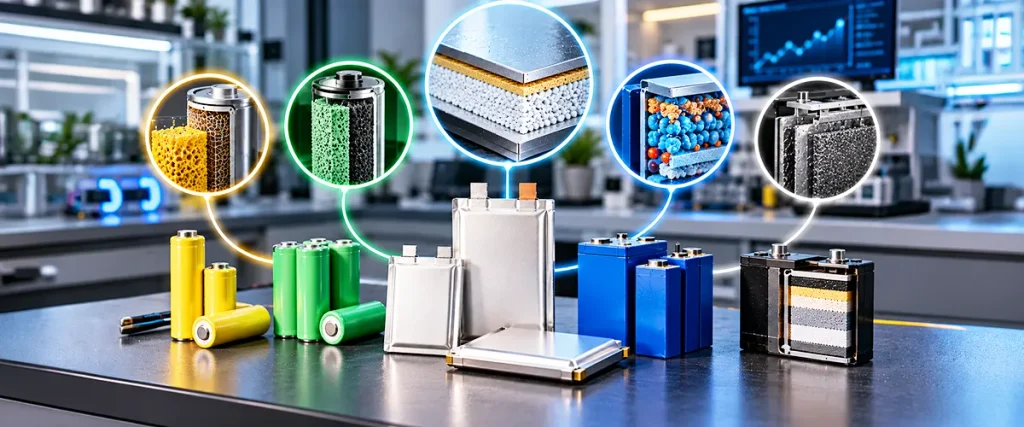
Solid state batteries are different from conventional rechargeable chemistries primarily because of their electrolyte construction. However, solid-state and lithium-ion are not always mutually exclusive categories; some solid-state batteries also use lithium-ion-based electrochemistry.
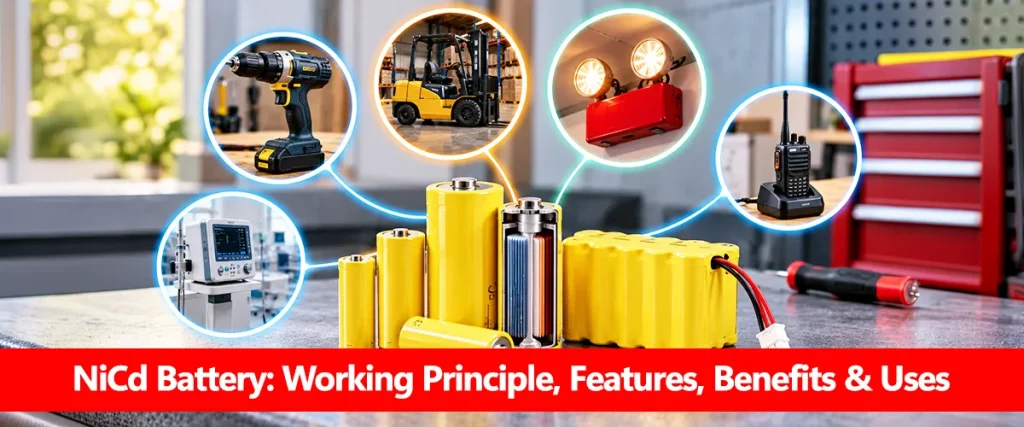
Traditional NiMH batteries use an alkaline electrolyte and hydrogen-absorbing metal alloys, while NiCd batteries use nickel and cadmium electrode materials.
Similarly, LiFePO4 batteries are defined by their lithium iron phosphate positive electrode chemistry rather than by a requirement for a particular electrolyte state. These distinctions are important because battery chemistry, electrolyte construction, and intended application are separate characteristics.
Conclusion
Solid state batteries use solid electrolytes to transport ions between electrodes, offering a different approach to electrochemical energy storage. Their potential benefits include improved energy density in certain designs, reduced liquid-electrolyte hazards, and opportunities for compact battery construction.
However, manufacturing costs, material interfaces, durability, and large-scale production remain important challenges. Their performance and availability depend on the specific technology rather than the solid-state label alone. Explore the Battery Types and Chemistries section at Batteries Hub to understand other rechargeable battery technologies.
Frequently Asked Questions
What Are Solid State Batteries?
Solid state batteries are batteries that use a solid electrolyte to transport ions between electrodes instead of relying on a conventional liquid electrolyte.
Are Solid State Batteries Rechargeable?
Many solid-state batteries are rechargeable, but rechargeability depends on the specific battery chemistry and design.
Are Solid State Batteries Better Than Lithium Ion Batteries?
Some solid-state designs may offer advantages in energy density or safety, but performance depends on the materials and cell construction. Solid-state technology can also use lithium-based chemistry.
Are Solid State Batteries Available Today?
Yes. Certain specialized solid-state batteries are commercially available, while many advanced designs intended for electric vehicles and larger energy storage systems remain under development or commercialization.
How Long Do Solid State Batteries Last?
Cycle life depends on electrode materials, electrolyte stability, charging conditions, temperature, and cell design. There is no single lifespan that applies to every solid-state battery.
Are Solid State Batteries Completely Safe?
No. Solid electrolytes may reduce certain hazards associated with liquid electrolytes, but solid-state batteries can still experience short circuits, overheating, and other failures.
What Is the Main Challenge of Solid State Batteries?
Major challenges include maintaining stable contact between solid materials, controlling internal resistance, achieving reliable cycle life, and manufacturing advanced cells at competitive costs.