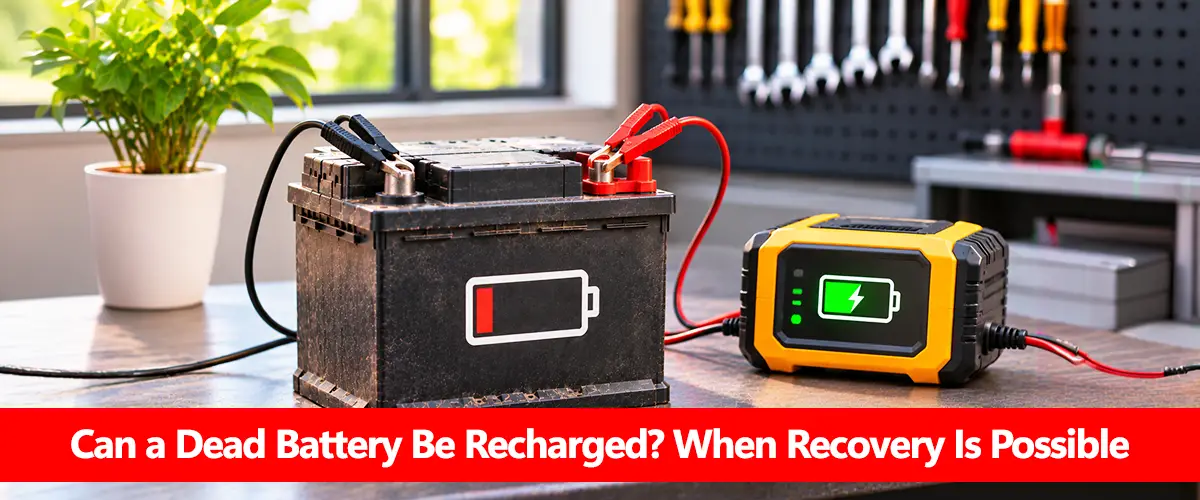
Can dead battery be recharged? Yes, a dead battery can sometimes be recharged if it has simply lost its stored electrical charge and remains physically and chemically healthy. However, a battery with severe internal damage, advanced deterioration or unsafe physical symptoms may no longer be recoverable.
The word dead can describe several situations. A car battery may be too weak to start an engine, a UPS battery may shut down at low voltage, or a lithium battery may have its protection system activated. These conditions do not automatically mean the battery is permanently damaged, but they require different responses.
Dead Battery vs Permanently Damaged Battery
The first step is understanding whether the battery is discharged or has lost the ability to function reliably.
| Battery Condition | Can It Be Recharged? | Recommended Action |
| Recently discharged, physically healthy | Often yes | Use an approved charger |
| Deeply discharged lead-acid battery | Sometimes | Seek manufacturer-approved assessment |
| Lithium battery with BMS low-voltage protection | Depends on system and cell condition | Follow manufacturer guidance |
| Battery with severe capacity loss | Recovery may be inadequate | Arrange a health test |
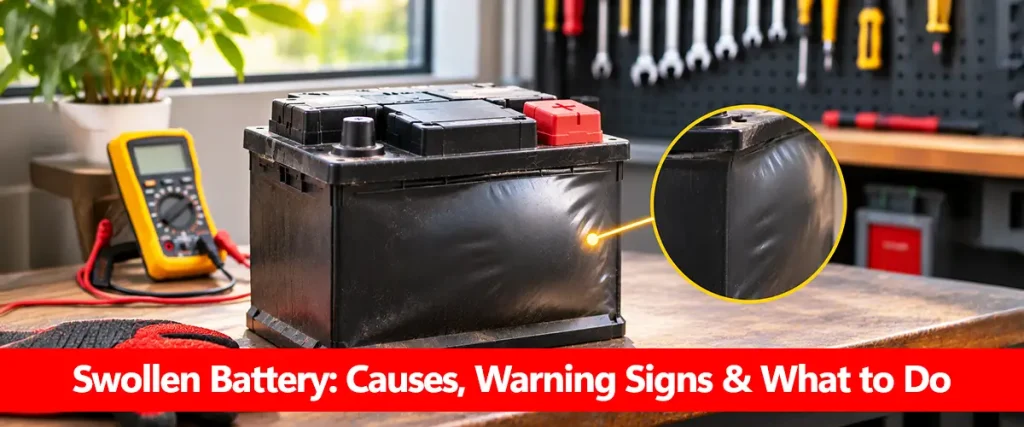
| Swollen, leaking or unusually hot battery | Do not attempt charging | Stop use and seek professional help |
A battery may show a low state of charge (SoC) while still retaining useful capacity. By contrast, poor state of health (SoH) indicates deterioration that charging alone cannot necessarily correct.
Understanding this difference helps avoid replacing a good battery or attempting to restore one that is unsafe. See how to check battery health for further guidance.
Can a Completely Dead Lead-Acid Battery Be Recharged?
A deeply discharged lead-acid battery may recover if the discharge happened recently and its internal plates have not suffered major damage.
For example, a car battery that becomes weak after the headlights were left on overnight may still accept a normal charging cycle. However, a battery left discharged for several months can develop persistent lead-sulfate deposits, making recovery more difficult.
This condition is known as battery sulfation. Severe sulfation reduces charge acceptance and can permanently affect capacity. Yuasa explains that excessively discharged lead-acid batteries may require specialist equipment and professional assessment. Ordinary smart chargers may not initiate charging when battery voltage falls below their detection threshold. Do not attempt uncontrolled high-voltage charging or connect another battery to bypass charger protection. Recovery procedures must be approved for the exact battery and performed by appropriately qualified personnel.
Can a Dead Lithium Battery Be Recharged?

Lithium batteries behave differently from conventional lead-acid batteries. Most rechargeable lithium packs use a Battery Management System (BMS) to monitor cell voltage, current and temperature. When a cell reaches a low-voltage protection threshold, the BMS may disconnect the load. This can make the battery appear completely dead even though some energy remains. However, lithium battery over-discharge can cause permanent cell damage. Victron Energy warns that very deeply discharged cells may become defective and that recovery is not guaranteed.
A lithium battery should only be reactivated through the manufacturer’s approved procedure. Do not open the pack, bypass the BMS or attempt to force current into a battery with unknown cell condition. If the pack is damaged, swollen or heating abnormally, stop and follow the safety guidance in swollen battery.
Why Does a Charger Refuse to Charge a Dead Battery?
A smart charger may refuse to start when the battery voltage is too low for its detection circuit. The charger may display an error, remain in standby mode or show no charging progress. CTEK explains that a charger cannot detect the battery in some circumstances because the connection is poor, the battery voltage is below the charger’s detection requirement or lithium undervoltage protection has activated.
Before assuming the battery is permanently dead, check:
- Whether the charger has a working power supply.
- Whether the battery voltage and chemistry match the charger.
- Whether cables and approved charging connections are secure.
- Whether the charger displays a recognizable error code.
- Whether the battery has visible damage or abnormal temperature.
If a charger repeatedly refuses to operate, consult its manual or contact a battery technician. Do not bypass its safety features. For more detailed charger-related faults, see battery not charging.
How to Decide Whether a Dead Battery Is Safe to Recharge
For an accessible, undamaged low-voltage rechargeable battery, a simple decision process helps determine the next step.
- Inspect the battery first. Look for cracks, swelling, leaks, corrosion or unusual heat.
- Identify its chemistry. Confirm whether it is flooded lead-acid, AGM, GEL or lithium.
- Check the equipment manual. Find the manufacturer’s permitted charging and recovery procedures.
- Measure voltage if permitted. Use an appropriately rated multimeter at accessible approved test points.
- Select a compatible charger. Match voltage, chemistry and charging settings.
- Follow the approved charging cycle. Stop if an error, abnormal heating or other warning occurs.
- Assess performance afterward. If the battery remains unreliable, arrange a professional battery-health test.
This is a decision checklist, not permission to recover severely over-discharged batteries yourself.
For example, a conventional 12V lead-acid battery may show around 12.6–12.8V when well charged and rested. A lower voltage indicates reduced charge but does not establish whether recovery is possible.
Different AGM and lithium products have different voltage characteristics. Our how to test battery with multimeter guide explains basic voltage checks.
How Do You Know If Recharging Worked?
A successful charging cycle means the charger completed its approved program. It does not necessarily prove that the battery is healthy. After charging, a battery should be able to support its intended equipment under normal conditions. A car battery must deliver sufficient starting current, while a UPS battery must provide appropriate backup energy.
Watch for these problems:
- Voltage drops unusually quickly after charging.
- The starter motor remains slow.
- UPS backup duration stays significantly below normal.
- The charger repeatedly reports errors.
- The battery heats abnormally during operation.
If these symptoms continue, the battery may have reduced capacity, increased internal resistance or another fault. The battery won’t hold charge guide explains what to investigate when charging appears successful but energy retention remains poor.
When Is Battery Replacement the Better Option?

Replacing a battery is usually more appropriate when it has physical damage, confirmed internal deterioration or inadequate performance after proper charging and testing. A battery that has remained deeply discharged for a long period may also have suffered irreversible damage. Repeated attempts to revive it can waste time and may create safety risks. Battery replacement should be based on its condition, not a fixed voltage reading alone. A professional capacity or load test helps determine whether the battery can still perform its intended function.
Stop immediately if the battery is swollen, leaking, smoking, hissing or becoming unusually hot. Do not touch or move a battery showing signs of imminent fire or venting; move away and contact emergency services. Our battery getting hot guide covers overheating symptoms and precautions.
How to Prevent a Battery From Becoming Deeply Discharged
Preventing extreme discharge is generally easier than recovering a damaged battery. Lead-acid batteries particularly benefit from prompt recharging after use, while lithium batteries need compatible monitoring and discharge protection.
A few helpful habits include:
- Avoid leaving electrical accessories running unnecessarily.
- Recharge lead-acid batteries after significant discharge.
- Follow the manufacturer’s lithium battery discharge limits.
- Use approved battery maintainers during extended storage.
- Check for excessive standby electrical consumption.
- Investigate repeated low-voltage shutdowns before continued use.
Our battery maintenance guide covers routine preventive care. For long periods without use, follow how to store batteries.
Conclusion
So, can a dead battery be recharged? Yes, when it is simply discharged and remains safe and capable of accepting charge. Recently discharged lead-acid batteries may recover, while deeply discharged or damaged batteries require greater caution. Lithium batteries may appear dead when their BMS activates, but severe over-discharge can cause permanent damage. The safest approach is to inspect the battery, follow manufacturer-approved charging instructions and arrange professional testing when recovery is uncertain. Never attempt to revive a physically damaged battery.
Frequently Asked Questions
Can a Completely Dead Car Battery Be Recharged?
Sometimes. If the battery is physically healthy and was recently discharged, proper charging may restore it. Severe sulfation or internal damage can prevent recovery.
Can a Dead Battery Come Back to Life?
A discharged battery may return to normal operation after charging. A battery with permanent chemical deterioration generally cannot recover its original capacity.
Why Won’t My Charger Charge a Dead Battery?
Some smart chargers cannot recognize batteries below their minimum detection voltage. Poor connections and lithium BMS protection can also prevent charging.
Can a Dead AGM Battery Be Recharged?
An undamaged AGM battery may recover through an approved AGM charging program. Deeply discharged AGM batteries may require professional assessment.
Is It Safe to Recharge a Dead Lithium Battery?
Only when the battery manufacturer permits it and the battery is undamaged. Severe lithium over-discharge can make recovery unsafe or unsuccessful.
How Long Does It Take to Recharge a Dead Battery?
Charging time depends on battery capacity, remaining charge, charger output and chemistry. A deeply discharged battery may need more time or specialist evaluation.
Can a Dead Battery Show Voltage?
Yes. A discharged or deteriorated battery can still show measurable voltage. Voltage alone does not prove that it can supply sufficient power.
When Should I Replace a Dead Battery Instead of Charging It?
Replace it when it has physical damage or fails an approved performance test after correct charging. Serious overheating, leakage or swelling requires stopping use immediately.