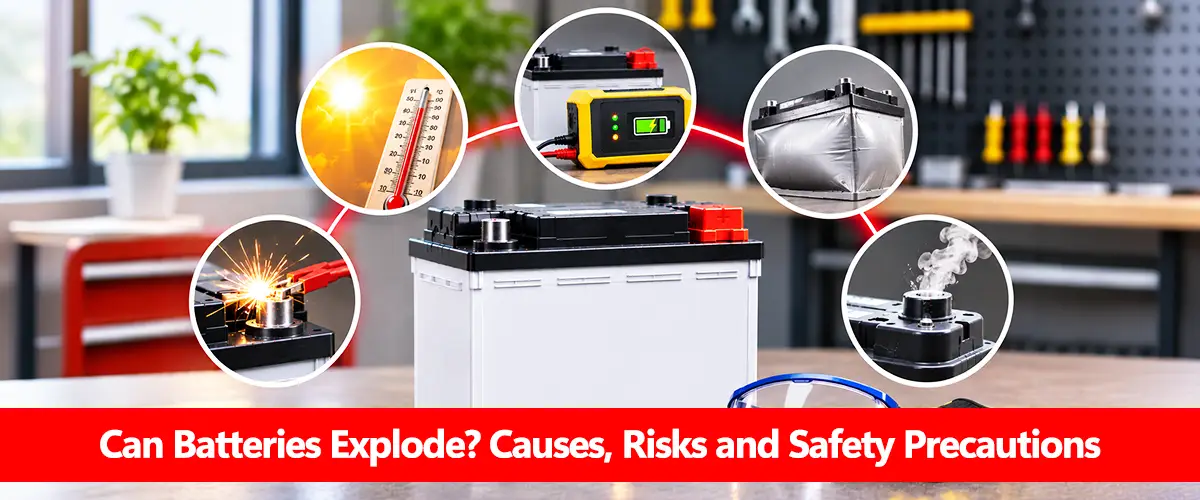
Can batteries explode? Yes, certain batteries can explode, rupture or violently release gas under dangerous conditions. Lead-acid batteries may explode when accumulated hydrogen gas ignites, while lithium-ion batteries can experience violent venting, fire or explosion following severe internal failure.
However, batteries do not normally explode during everyday use. Proper charging equipment, suitable installation and careful handling greatly reduce the risk. Understanding what causes these incidents is especially important for car batteries, UPS systems, electric bikes and lithium battery storage.
What Actually Causes a Battery Explosion?
A battery explosion is not always the same event. Some incidents involve ignition of flammable gases outside or inside a battery enclosure, while others involve internal pressure, sudden venting or a rapid fire-related failure.
Different battery chemistries present different hazards.
| Battery Type | Main Explosion-Related Hazard | Common Contributing Factors |
| Flooded lead-acid | Ignition of accumulated hydrogen gas | Overcharging, poor ventilation, sparks |
| Sealed AGM or GEL | Pressure release or ignition of vented gas | Incorrect charging, heat, internal faults |
| Lithium-ion | Violent venting, fire or explosive gas ignition | Internal short circuit, damage, overheating |
| Alkaline household cells | Leakage or case rupture | Short circuits, heating, incorrect charging |
The amount of stored energy, battery condition and surrounding environment all influence the severity of an incident. Our broader battery safety guide covers handling precautions for different battery types.
Why Can Lead-Acid Batteries Explode?
Lead-acid batteries can produce hydrogen and oxygen during charging. This is particularly relevant to flooded batteries, where gas generation increases under certain charging conditions. The main concern is the hydrogen gas explosion risk. When hydrogen accumulates in a poorly ventilated space, a spark, flame or electrical arc can ignite the gas mixture. The Canadian Centre for Occupational Health and Safety identifies hydrogen accumulation as an important battery-charging hazard.
For example, a car battery being charged in a poorly ventilated area may release hydrogen. If an electrical spark occurs nearby, the accumulated gas can ignite and potentially rupture the battery case.
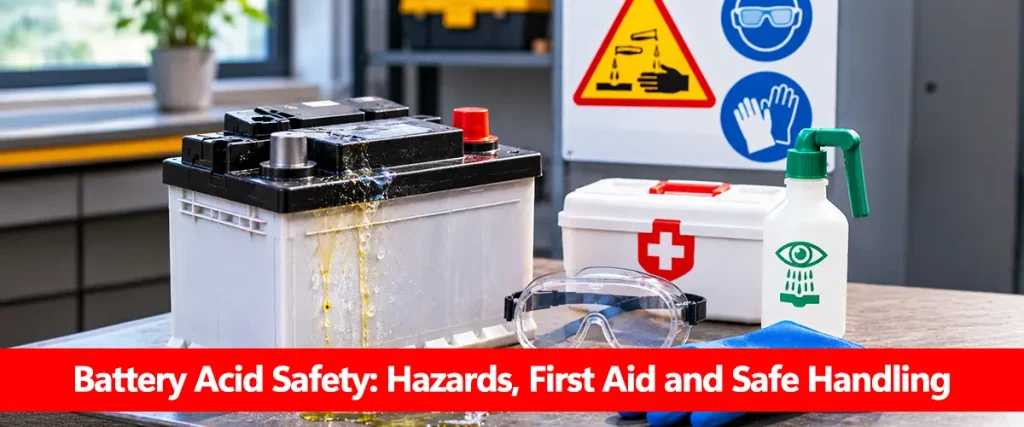
Sealed lead-acid batteries also require suitable charging and ventilation precautions, even though their normal gas-release characteristics differ from flooded batteries. Never smoke, use open flames or create sparks near charging lead-acid batteries. Damaged cases can also release corrosive electrolyte, as explained in our battery acid safety article.
Can Lithium-Ion Batteries Explode?
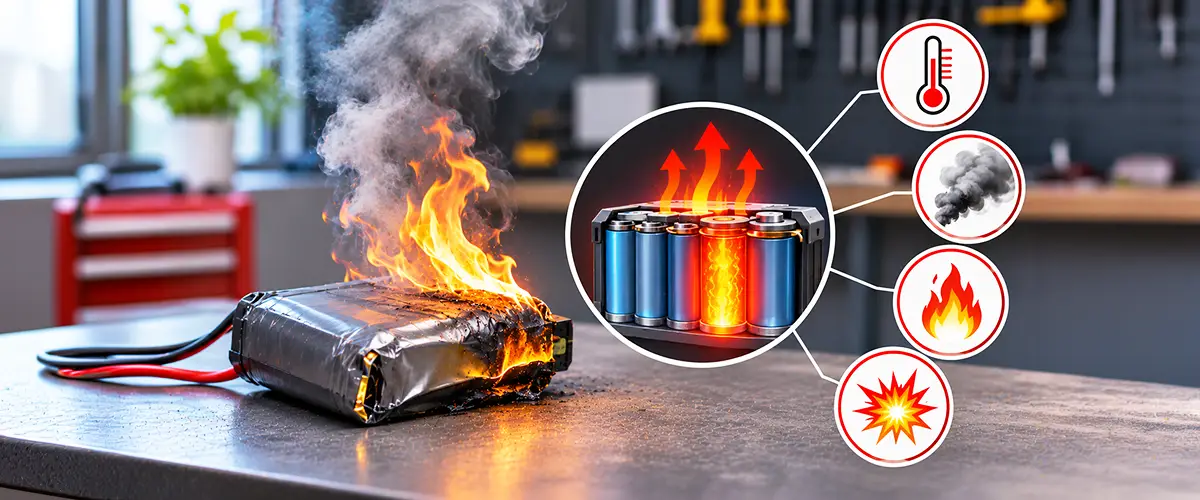
Yes. Lithium-ion batteries can undergo dangerous failures involving rapid heating, gas venting and fire.
One important mechanism is thermal runaway, an uncontrolled self-heating process that may develop following internal damage, certain electrical faults or severe overheating.
According to UL Research Institutes, thermal runaway can produce extremely high temperatures, smoke and the violent release of gas or particles.
In some conditions, flammable gases released during a battery failure may ignite. However, not every lithium battery failure results in an explosion; some incidents primarily involve venting, smoke or fire.
Lithium batteries in electric bikes, power banks, laptops and energy storage systems may have protective electronics, but these cannot eliminate every risk. For an explanation of lithium-specific failure mechanisms, read why lithium batteries catch fire.
Warning Signs Before a Battery Fails
Some battery failures happen with limited warning, but others show visible or audible signs beforehand.
<escape>Common warning signs include:</escape>
- Swelling or bulging: The battery case changes shape or pushes against its enclosure.
- Excessive heat: Temperature increases abnormally during charging, use or storage.
- Unusual smells: Chemical or burning odors develop around the battery.
- Hissing or popping sounds: Gas may be escaping or internal damage may be developing.
- Smoke or visible vapors: A potentially serious failure may already be underway.
Not every warm battery is dangerous. Mild heating can occur during normal operation, but rapid or unusual temperature increases require attention. If you notice deformation, consult swollen battery. For temperature-related problems, see battery getting hot. If a battery is hissing, smoking, venting gas or rapidly heating, move away immediately. Do not touch, carry, disconnect or attempt to cool it yourself.
How to Reduce the Risk of Battery Explosions
Preventing dangerous battery failures begins with correct charging, suitable equipment and regular inspection.
Follow these precautions:
- Use compatible chargers. Match the battery’s voltage, chemistry and manufacturer-approved charging limits.
- Maintain proper ventilation. Follow installation guidance for lead-acid charging systems.
- Prevent short circuits. Keep metal objects away from exposed terminals.
- Avoid excessive temperatures. Do not expose batteries to extreme heat or direct sunlight for prolonged periods.
- Inspect for damage. Stop using batteries with swelling, cracks, leaks or abnormal heat.
- Avoid unauthorized modifications. Never bypass a lithium battery management system or protective circuitry.
For large UPS and solar battery installations, qualified technicians should ensure appropriate cabling, protective devices and ventilation. Incorrect charging may also contribute to overheating and deterioration. See can you overcharge a battery for that specific issue.
What Should You Do if a Battery Starts Smoking or Bursts?
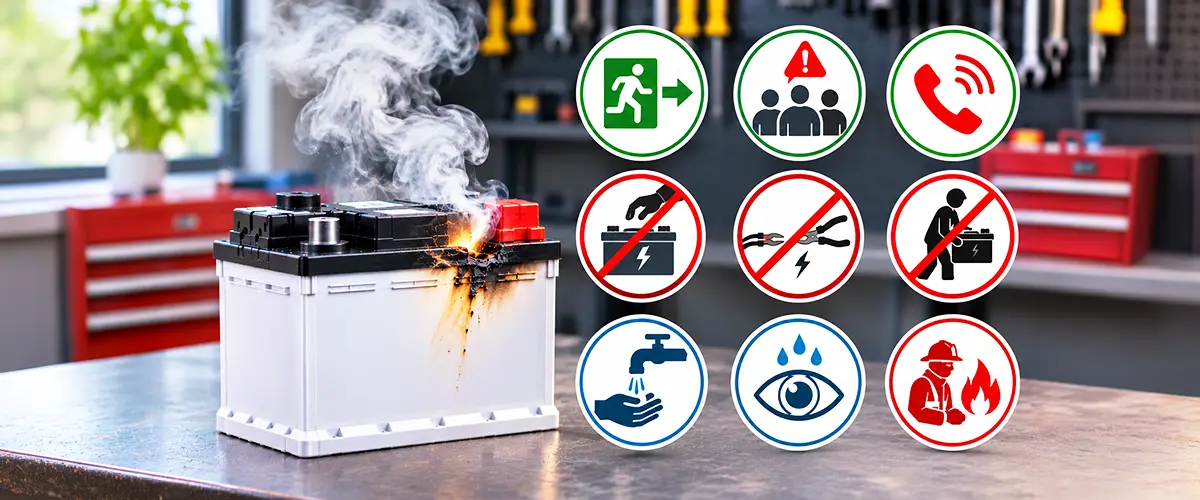
A battery incident can involve hazardous fumes, fire, corrosive material and energized electrical components. If a battery starts smoking, hissing or showing signs of violent failure, leave the affected area, warn others and contact local emergency services. Avoid inhaling smoke or gases. Do not attempt to open the battery enclosure, disconnect damaged wiring or carry the battery outside once dangerous warning signs have developed.
For large energy storage systems, remain clear of the installation and follow the emergency response instructions provided by the manufacturer or installer. If battery electrolyte contacts your skin or eyes, immediately rinse the affected area with running water for at least 15 minutes and seek urgent medical attention. Eye exposure requires emergency assessment. Firefighting procedures depend on the battery chemistry, installation and surrounding hazards. They should be handled by trained responders rather than improvised household methods.
What Should You Do With a Damaged Battery?
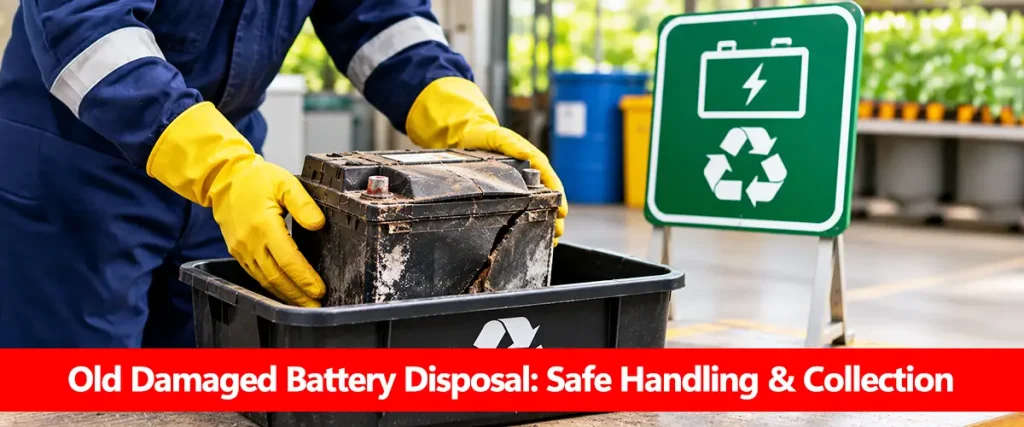
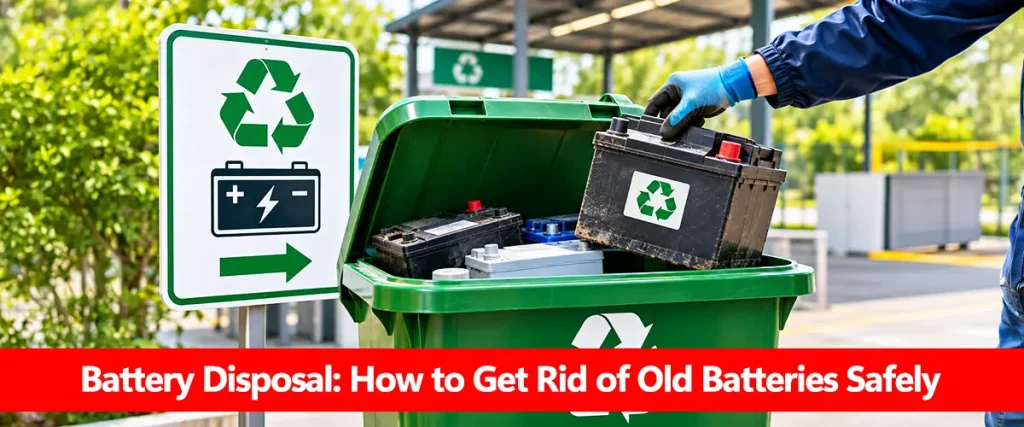
A battery that has swollen, ruptured, overheated severely or experienced a fire-related incident should not be recharged or reused without appropriate professional assessment. Damaged lithium-ion batteries require special handling. The US Environmental Protection Agency recommends safe battery recycling through appropriate collection facilities rather than ordinary household waste or municipal recycling bins.
For batteries showing physical damage, contact the manufacturer, an established battery service provider or a qualified recycler before handling or transporting them. Do not puncture, crush, dismantle or attempt to discharge a damaged battery as a disposal method. Our battery disposal guide explains general end-of-life handling, while old damaged battery disposal addresses damaged units requiring additional precautions.
Conclusion
So, can batteries explode? Yes, although the causes differ by battery chemistry. Lead-acid batteries can produce flammable hydrogen during charging, while lithium-ion batteries may experience violent venting, fires or explosions following serious internal failure.
Using compatible chargers, maintaining ventilation, preventing electrical short circuits and recognizing warning signs reduce avoidable risks. If a battery becomes swollen, starts venting or produces smoke, prioritize personal safety and seek professional assistance rather than attempting repairs.
Frequently Asked Questions
Can a Car Battery Explode?
Yes. Car batteries containing lead-acid chemistry can release hydrogen during charging. If accumulated gas ignites, an explosion may occur.
Can Lithium Batteries Explode While Charging?
Yes, particularly when internal damage, incompatible charging equipment or serious faults create unsafe conditions. Properly designed charging and protection systems reduce these risks.
Can a Battery Explode When Not Charging?
Yes. Physical damage, internal faults, short circuits or severe heating can sometimes lead to dangerous failures even when a battery is not actively charging.
Can Small AA Batteries Explode?
Some household batteries can leak, rupture or burst when misused, overheated, short-circuited or charged incorrectly. The hazard depends on battery chemistry and conditions.
Does a Swollen Battery Mean It Will Explode?
Not necessarily, but swelling indicates a potentially unsafe condition. Stop using or charging the battery and arrange appropriate replacement or disposal.
Can Overcharging Cause a Battery Explosion?
Yes. Overcharging may increase heat and gas generation. The specific danger depends on battery chemistry and charging conditions.
What Should I Do if a Battery Makes a Hissing Sound?
Move away and keep others clear. Hissing can indicate gas release or a developing failure. Contact emergency services if the battery is overheating, smoking or venting.
Can Batteries Explode in Hot Weather?
High temperatures can accelerate deterioration and contribute to unsafe operating conditions. Heat alone does not guarantee an explosion, but severely overheated or damaged batteries are hazardous.
Is It Safe to Recharge a Battery After It Has Swollen?
No. A visibly swollen battery should not be recharged or reused. Seek professional guidance for safe replacement and disposal.