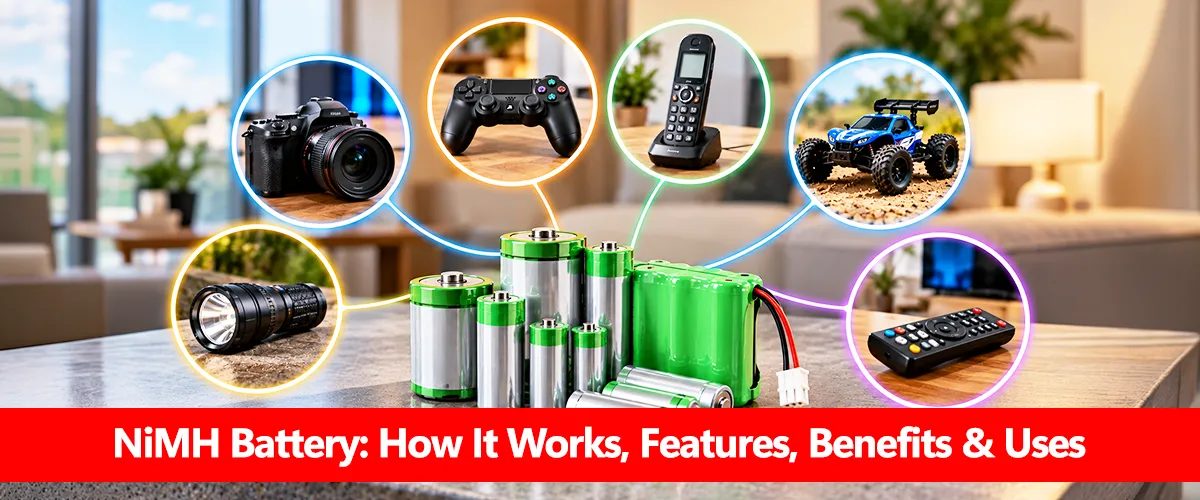
A NiMH battery (Nickel-Metal Hydride battery) is a rechargeable battery that uses nickel-based positive electrodes and hydrogen-absorbing metal alloys in its negative electrodes. It is commonly used in rechargeable AA and AAA batteries, portable electronics, toys, and household devices.
NiMH batteries are known for their rechargeable design, relatively high capacity in standard cylindrical sizes, and suitability for repeated everyday use.
How Does a NiMH Battery Work?
A NiMH battery stores and releases energy through reversible electrochemical reactions. During discharge, the negative metal-hydride electrode releases stored hydrogen through an electrochemical reaction, while the nickel-based positive electrode is reduced. Charging reverses these reactions.
Main components include:
- Positive electrode: Uses nickel oxyhydroxide in the charged state.
- Negative electrode: Contains a hydrogen-absorbing metal alloy.
- Electrolyte: Typically uses an alkaline potassium hydroxide solution.
- Separator: Prevents direct contact between electrodes.
- Battery casing: Protects internal components.
- Terminals: Provide electrical connections.
Unlike lithium-ion batteries, NiMH cells generally operate at a nominal voltage of approximately 1.2V.
Key Features of NiMH Batteries
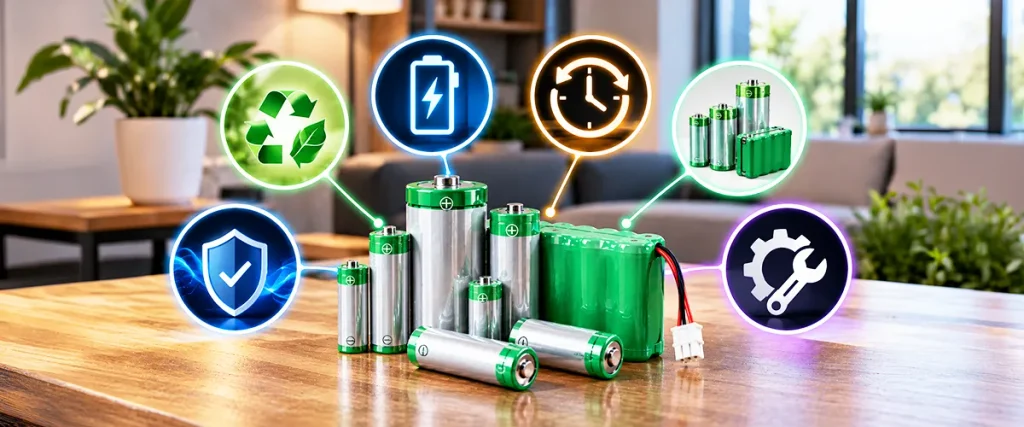
NiMH batteries have several characteristics that make them suitable for rechargeable consumer devices.
| Feature | Description |
| Battery chemistry | Nickel-Metal Hydride |
| Rechargeability | Rechargeable |
| Nominal cell voltage | Approximately 1.2V |
| Common sizes | AA, AAA and battery packs |
| Electrolyte | Alkaline |
| Maintenance | No routine electrolyte refilling |
| Common applications | Electronics, toys and portable equipment |
Capacity, cycle life, and self-discharge rates vary by battery design and manufacturer.
Common Applications of NiMH Batteries
NiMH batteries are commonly used in devices requiring rechargeable power.
Main applications include:
- Digital cameras: Powering compatible portable cameras.
- Remote controls: Supplying energy for household electronics.
- Toys: Supporting rechargeable battery-operated products.
- Wireless accessories: Powering compatible keyboards and other devices.
- Portable equipment: Supplying electricity to selected electronic devices.
- Hybrid vehicles: Used in certain hybrid-electric vehicle battery systems.
Device compatibility should always be checked because NiMH cells have different voltage characteristics from disposable alkaline batteries.
Advantages of NiMH Batteries
NiMH batteries provide several benefits for rechargeable applications.
Main advantages:
- Rechargeable for repeated use.
- Available in common AA and AAA sizes.
- Good capacity for many portable devices.
- No cadmium in their active chemistry.
- Suitable for devices requiring repeated battery replacement.
- Low-maintenance sealed construction.
Modern low-self-discharge NiMH batteries can also retain charge better during storage than many older conventional NiMH designs.
Limitations of NiMH Batteries
NiMH technology also has several operating limitations.
Important limitations include:
- Higher self-discharge than some other rechargeable chemistries, depending on design.
- Lower nominal voltage than disposable alkaline cells.
- Sensitive to excessive charging and overheating.
- Capacity and cycle life decline with aging.
- Charging performance varies with temperature.
- Lower energy density than many lithium-ion batteries.
NiMH batteries are not suitable for every device, particularly equipment requiring a specific battery voltage or chemistry.
NiMH Battery Charging and Maintenance
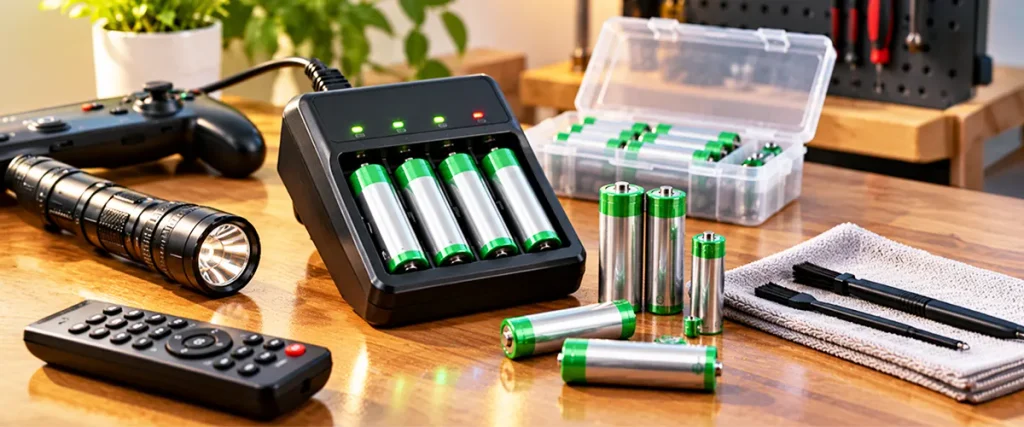
Proper charging helps maintain NiMH battery performance and lifespan.
Recommended practices:
- Use a charger specifically designed for NiMH batteries.
- Follow manufacturer charging current recommendations.
- Avoid prolonged overcharging.
- Keep batteries away from excessive heat.
- Do not mix batteries with different capacities or charge levels in the same device.
- Inspect batteries for leakage, swelling, or damage.
- Store batteries according to manufacturer recommendations.
NiMH chargers commonly use voltage changes, temperature monitoring, or other termination methods to detect when charging is complete. Lithium-ion charging profiles should not be used for NiMH cells.
Important NiMH Battery Specifications
Understanding battery specifications helps assess performance.
| Specification | Meaning |
| Nominal voltage | Approximately 1.2V per cell |
| Rated capacity (mAh) | Charge capacity under specified conditions |
| Energy capacity (Wh) | Stored electrical energy |
| State of charge (SoC) | Estimated remaining charge |
| Depth of discharge (DoD) | Percentage of capacity discharged |
| Cycle life | Number of cycles under defined conditions |
| Internal resistance | Influences voltage drop and power delivery |
Actual performance depends on discharge rate, temperature, age, and battery condition.
NiMH vs Other Rechargeable Batteries
NiMH batteries differ from other rechargeable technologies in voltage, energy density, charging requirements, and applications. Compared with lithium-ion batteries, NiMH cells generally have lower energy density and different charging characteristics.
NiMH batteries also differ from NiCd batteries in negative electrode chemistry and environmental considerations. For a broader overview, explore our types of batteries guide.
Conclusion
A NiMH battery is a rechargeable nickel-based battery widely used in household electronics, portable devices, and selected vehicle systems. Its 1.2V nominal voltage, reusable design, and availability in standard battery sizes make it practical for many everyday applications.
However, correct charging, device compatibility, and temperature management are important for maintaining performance and lifespan. Explore the Battery Types and Chemistries category or visit Batteries Hub for more battery education.
FAQs About NiMH Battery
What Does NiMH Stand For?
NiMH stands for Nickel-Metal Hydride, a rechargeable battery chemistry using nickel-based positive electrodes and hydrogen-absorbing metal alloys.
Are NiMH Batteries Rechargeable?
Yes. NiMH batteries are designed for repeated charging and discharging with compatible charging equipment.
What Is the Voltage of a NiMH Battery?
A typical NiMH cell has a nominal voltage of approximately 1.2V.
How Long Does a NiMH Battery Last?
Its lifespan depends on battery quality, charging conditions, temperature, discharge patterns, and usage frequency.
Can NiMH Batteries Replace Alkaline Batteries?
NiMH batteries can replace alkaline batteries in many compatible devices, but their lower nominal voltage may affect equipment designed for specific voltage requirements.
Do NiMH Batteries Have a Memory Effect?
NiMH batteries are generally much less susceptible to the classic memory effect associated with some NiCd applications. However, repeated operating patterns and poor charging practices can still affect performance.