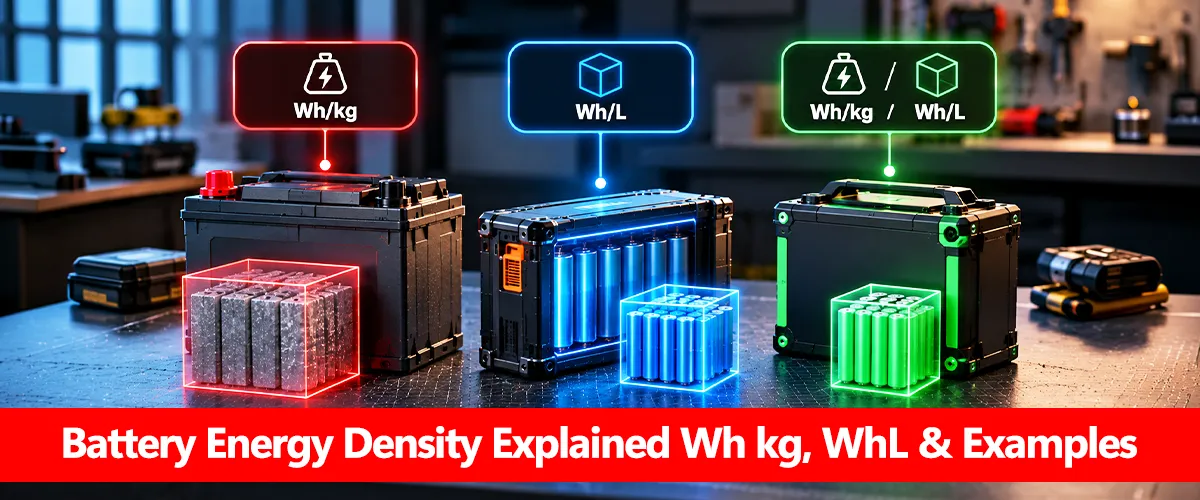
Battery energy density describes how much energy a battery stores relative to its weight or volume, making it a key factor in how small, light, and practical a battery can be. Two batteries may store the same amount of energy, yet one could weigh significantly less or occupy far less space because its energy density is higher.
This difference matters in electric vehicles, smartphones, portable power stations, and solar storage systems. However, higher energy density does not automatically mean a battery is safer, longer-lasting, or better suited to every application. This guide explains the two main ways energy density is measured, how battery chemistries compare, and when energy density matters most.
What Is Battery Energy Density?
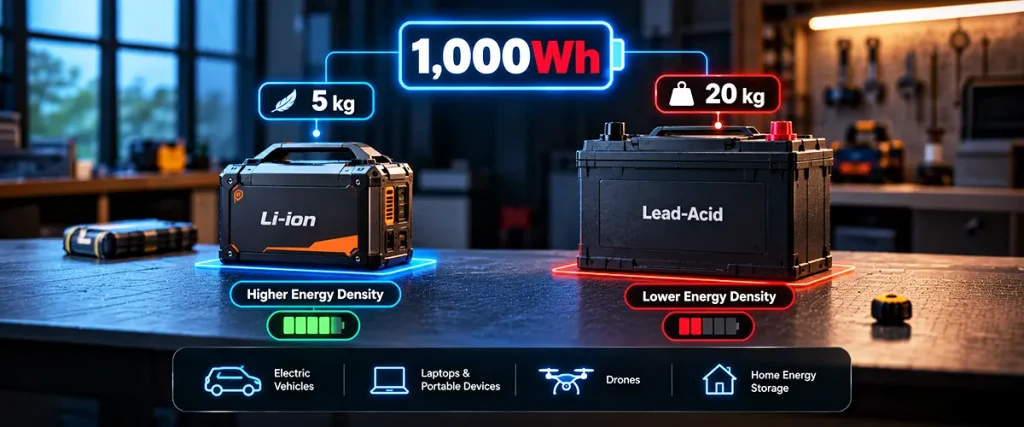
Battery energy density is the amount of electrical energy a battery can store relative to its mass or volume. It describes how efficiently the battery uses physical space or weight to store energy. A battery with higher energy density can generally store more energy in the same mass or volume than a lower-density alternative.
For example, if two battery packs each store 1,000Wh but one weighs 5kg and the other weighs 20kg, the lighter pack has a higher gravimetric energy density. Energy density is particularly important when battery weight affects performance, as in electric vehicles and portable electronics. For stationary applications, where weight is less critical, other factors such as cost, durability, and safety may carry more importance.
What Are the Two Types of Battery Energy Density?
Energy density is commonly expressed in two ways: by mass and by volume. Both measurements are useful, but they answer different questions.
Gravimetric Energy Density (Wh/kg)
Gravimetric energy density measures the amount of energy stored per kilogram of battery mass.
Gravimetric Energy Density = Energy (Wh) ÷ Mass (kg)
For example, a battery containing 1,000Wh of energy and weighing 5kg has a gravimetric energy density of:
1,000Wh ÷ 5kg = 200Wh/kg
This measurement is especially relevant for electric vehicles, drones, and portable devices because extra weight affects efficiency and usability.
Volumetric Energy Density (Wh/L)
Volumetric energy density measures the amount of energy stored per litre of battery volume.
Volumetric Energy Density = Energy (Wh) ÷ Volume (L)
If a battery stores 1,000Wh and occupies 2.5 litres, its volumetric energy density is:
1,000Wh ÷ 2.5L = 400Wh/L
This measurement matters when a device has limited space for battery installation, such as a smartphone or laptop.
Wh/kg vs Wh/L: Quick Comparison
| Feature | Wh/kg | Wh/L |
| Measures | Energy per unit of mass | Energy per unit of volume |
| Main concern | Battery weight | Battery size |
| Important for | EVs, drones, portable electronics | Phones, laptops, compact battery packs |
| Higher value means | More energy for the same weight | More energy for the same volume |
A battery can perform well in one measurement without being the best in the other. Both should be considered when evaluating compact energy storage.
How Does Battery Chemistry Affect Energy Density?
Battery chemistry has a major influence on energy density because different electrode materials and electrochemical reactions store different amounts of energy.
The table below provides broad, illustrative gravimetric energy-density ranges for commercially used rechargeable battery cells. Actual values vary by design, manufacturer, and generation.
| Battery Chemistry | Approximate Cell-Level Energy Density |
| Lead-acid | 30–50Wh/kg |
| Nickel-metal hydride (NiMH) | 60–120Wh/kg |
| Lithium iron phosphate (LiFePO4) | 90–180Wh/kg |
| Lithium-ion (NMC/NCA-based) | 150–300Wh/kg |
These are approximate ranges, not guaranteed specifications. Complete battery packs usually have lower Wh/kg values than individual cells because they include enclosures, wiring, cooling, and battery management systems.
Why Do Lithium-Ion Batteries Have Higher Energy Density?
Lithium-ion technology generally provides higher energy density because its electrode materials and electrochemical properties allow relatively large amounts of energy to be stored at a comparatively low weight. This is one reason lithium-ion batteries are widely used in smartphones, laptops, and electric vehicles.
However, lithium-ion is a family of chemistries rather than a single battery design. NMC, NCA, and LiFePO4 cells have different energy-density ranges and performance characteristics.
LiFePO4 typically has lower gravimetric energy density than high-energy NMC or NCA cells, but it is often selected for applications that prioritize cycle life, thermal stability, and durability.
Why Is Lead-Acid Energy Density Lower?
Lead-acid batteries use relatively heavy electrode materials, which contribute to lower gravimetric energy density.
They can still be suitable for automotive starting and stationary backup applications where cost, established technology, and operating requirements may be more important than minimizing weight. A lead-acid battery may therefore be much heavier than a lithium-based battery with a similar nominal energy rating.
What Is the Difference Between Energy Density and Power Density?
Energy density measures how much energy a battery stores, while power density measures how quickly it can deliver that energy relative to its mass or volume. A battery with high energy density may provide long operating duration, but that does not necessarily mean it can deliver very high current.
| Feature | Energy Density | Power Density |
| Main question | How much energy can it store? | How quickly can it deliver energy? |
| Common gravimetric unit | Wh/kg | W/kg |
| Relevant to | Runtime and battery weight | Acceleration, high-current loads, rapid discharge |
| Influenced by | Chemistry and cell design | Internal resistance, chemistry, and design |
For example, an electric vehicle battery must store enough energy for driving range while also delivering sufficient power for acceleration.
A battery optimized for maximum energy density may involve trade-offs in power capability, cost, durability, or thermal management. Our guide to battery C-rate explains how discharge current relates to battery capacity.
Does Higher Energy Density Mean Better Battery Performance?
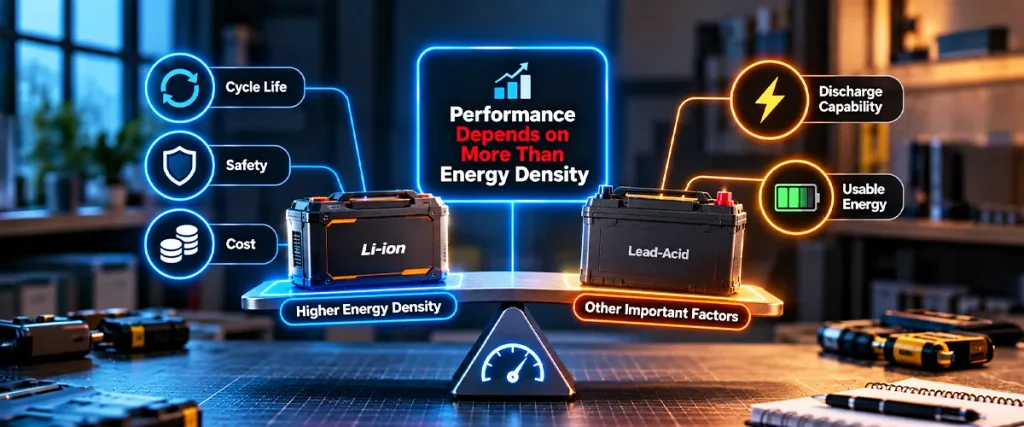
Not necessarily. Higher energy density is valuable when weight and space are important, but battery performance involves several other characteristics.
- Cycle life: Some chemistries with lower energy density can tolerate more charge-discharge cycles under suitable conditions.
- Safety: Thermal behavior, cell construction, and battery management affect safety. Energy density alone does not establish whether a battery is safe.
- Cost: High-energy cells may involve different materials, manufacturing requirements, and costs.
- Discharge capability: A battery must support the power demanded by its application, regardless of how much energy it stores.
- Usable energy: The battery’s permitted discharge range determines how much of its stored energy is available in normal operation.
For this reason, battery selection should balance energy density with the actual requirements of the device or storage system.
Why Does Battery Energy Density Matter in Real-World Applications?
Energy density affects different applications in different ways.
| Application | Why Energy Density Matters |
| Smartphones | Allows more battery energy in limited internal space |
| Laptops | Helps balance battery life, size, and weight |
| Electric vehicles | Influences battery pack mass and available driving energy |
| Drones | Lower battery weight can improve flight performance |
| Portable power stations | Makes backup energy easier to carry |
| Solar and UPS storage | Can reduce installation weight and space requirements |
Energy Density in Electric Vehicles
Electric vehicles need substantial stored energy without excessive battery weight. Higher gravimetric energy density can help reduce pack mass or allow greater energy capacity within a similar weight limit. Volumetric energy density also matters because battery packs must fit within the vehicle’s available space.
However, driving range depends on more than energy density. Vehicle efficiency, battery pack design, usable capacity, and operating conditions also matter.
Energy Density in Solar and UPS Systems in Pakistan
For home UPS and solar installations in Pakistan, energy density can influence the weight and space needed for battery storage. A lithium-based battery system may provide similar nominal energy to a much heavier lead-acid installation. This can be useful where storage space is limited or equipment must be installed in a compact area.
However, stationary storage does not always require the highest energy density. Installation cost, expected cycle life, charging compatibility, maintenance, and safety may be more important. Battery systems should be selected according to the inverter manufacturer’s requirements and the intended backup application.
What Is the Difference Between Energy Density and Battery Capacity?
Battery capacity describes how much electric charge or energy a battery can deliver. Energy density describes how much energy it stores relative to its mass or volume. A physically large battery may have a high total energy capacity but relatively low energy density. A small lithium-ion cell may have much higher energy density while storing less total energy.
For example:
| Battery | Stored Energy | Mass | Energy Density |
| Battery A | 1,000Wh | 20kg | 50Wh/kg |
| Battery B | 1,000Wh | 5kg | 200Wh/kg |
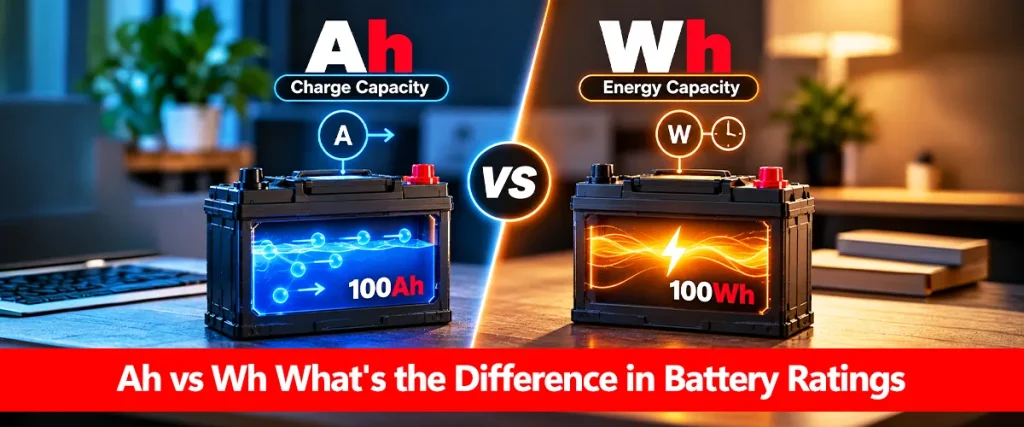
Both batteries store the same nominal energy, but Battery B stores four times as much energy per kilogram. For more detail on energy ratings, read our guides to battery watt-hours and Ah vs Wh.
Does Depth of Discharge Affect Energy Density?
A battery’s published energy-density rating is generally based on its specified energy capacity and physical mass or volume.
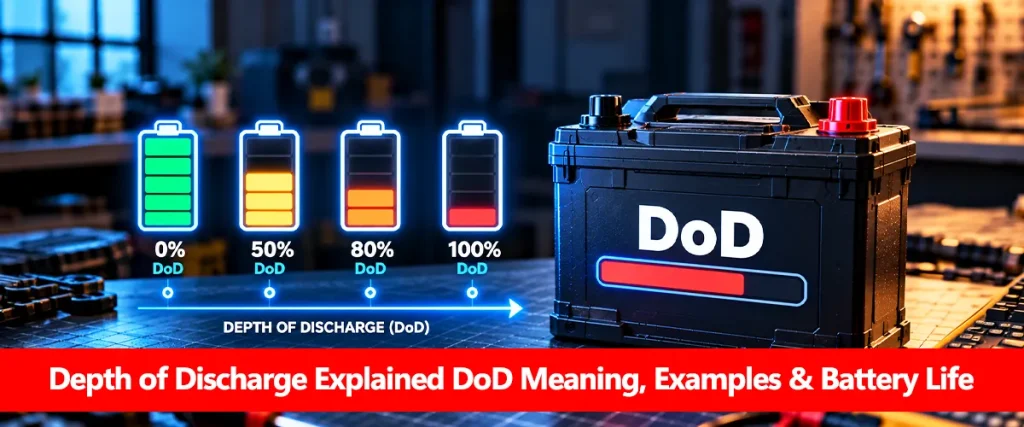
Depth of discharge (DoD) determines how much of that capacity is used during operation. If a system limits discharge, the usable energy per kilogram or litre will be lower than the nominal energy-density figure suggests. For example, two battery systems with similar nominal energy density may provide different usable energy because their permitted discharge limits differ. Our dedicated guide to depth of discharge explains these operating limits.
Common Misconceptions About Battery Energy Density
| Misconception | Correct Explanation |
| Higher energy density always means a better battery | Cost, safety, lifespan, and power capability also matter |
| Energy density and battery capacity are identical | Energy density measures energy relative to weight or volume |
| All lithium-ion batteries have the same energy density | Values differ by chemistry and cell design |
| Cell-level and pack-level energy density are equal | Battery packs include additional components that add weight and volume |
| Higher energy density guarantees longer runtime | Runtime also depends on usable energy and device consumption |
Conclusion
Battery energy density measures how much energy a battery stores relative to its weight or volume. Wh/kg describes energy per kilogram, while Wh/L describes energy per litre.
Higher energy density is particularly useful for electric vehicles and portable electronics, but it is only one part of battery performance. Cycle life, safety, power capability, cost, and usable capacity also influence which battery is suitable for an application.
To continue learning, explore our guides to battery watt-hours, battery C-rate, and depth of discharge. Find more educational content in the Battery Fundamentals category at Batteries Hub.
Frequently Asked Questions About Battery Energy Density
What Is a Good Battery Energy Density?
It depends on the application and chemistry. For many lithium-ion cells, gravimetric energy density can range from roughly 150 to 300Wh/kg, while lead-acid batteries are generally much lower. A suitable value depends on weight, space, cost, and performance requirements.
Which Battery Has the Highest Energy Density?
Among widely used commercial rechargeable batteries, high-energy lithium-ion chemistries such as NMC and NCA generally offer some of the highest gravimetric energy densities. Research-stage technologies may report higher values, but laboratory results are not always representative of commercial products.
Is LiFePO4 Energy Density Lower Than Lithium-Ion?
LiFePO4 is a type of lithium-ion battery. It generally has lower energy density than high-energy NMC or NCA lithium-ion cells, although it offers different advantages in cycle life and thermal stability.
What Does 200Wh/kg Mean?
It means the battery stores 200 watt-hours of nominal energy per kilogram of mass. A 5kg battery with that energy density would have approximately 1,000Wh of nominal energy.
Does Higher Energy Density Mean Faster Charging?
No. Charging speed depends on battery chemistry, cell design, temperature, charging current limits, and the charging system. Energy density alone does not determine charging speed.
Is Energy Density More Important Than Cycle Life?
Neither is universally more important. Portable devices may prioritize low weight and compact size, while stationary storage may place greater emphasis on cycle life, cost, and reliability.
Why Is Energy Density Important for Electric Vehicles?
Higher energy density can reduce battery weight or increase stored energy within a given space, helping vehicle designers balance driving range, efficiency, and packaging constraints.