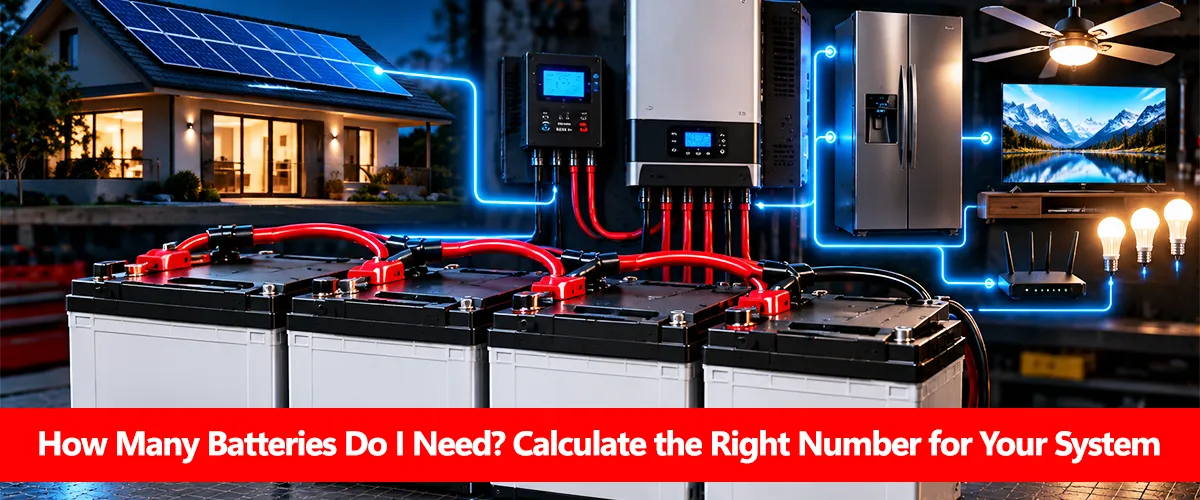
How many batteries do I need? The answer depends on your electricity consumption, required backup duration, individual battery capacity, and system voltage. For example, if your appliances require 2,000Wh of energy and each battery provides 1,000Wh of usable energy, you theoretically need at least two batteries—provided their configuration meets your system’s voltage and power requirements. However, battery quantity is not determined by energy alone. The batteries must also be compatible with your inverter, charging system, and permitted series or parallel configuration.
Whether you’re planning home backup during load shedding or adding batteries to a solar installation, this guide explains how to calculate the required number without confusing amp-hours, watt-hours, and battery-bank voltage.
Key Takeaways
- Calculate the energy your appliances need before selecting batteries.
- Use usable battery energy rather than nominal capacity alone.
- Round battery quantity up to a whole number.
- Check system voltage before deciding the final configuration.
- Verify discharge-current limits and manufacturer compatibility requirements.
Start by Calculating Your Electricity Requirement
The first step is identifying how much electrical energy your appliances will consume during the intended backup period. A battery that supports two LED lights for several hours may not be sufficient for fans, a refrigerator, or other equipment operating simultaneously. For constant-power appliances, multiply their wattage by the number of operating hours. Add the results for all connected equipment.
Consider this household example:
| Appliance | Power | Usage | Energy |
| Two fans | 120W | 5 hours | 600Wh |
| Four LED lights | 40W | 5 hours | 200Wh |
| Wi-Fi router | 10W | 8 hours | 80Wh |
| Television | 100W | 3 hours | 300Wh |
| Total | 1,180Wh |
The household requires approximately 1.18kWh of appliance energy. This is the amount that must reach the equipment, not necessarily the total nominal energy the batteries must store.
Formula: How Many Batteries Do I Need?
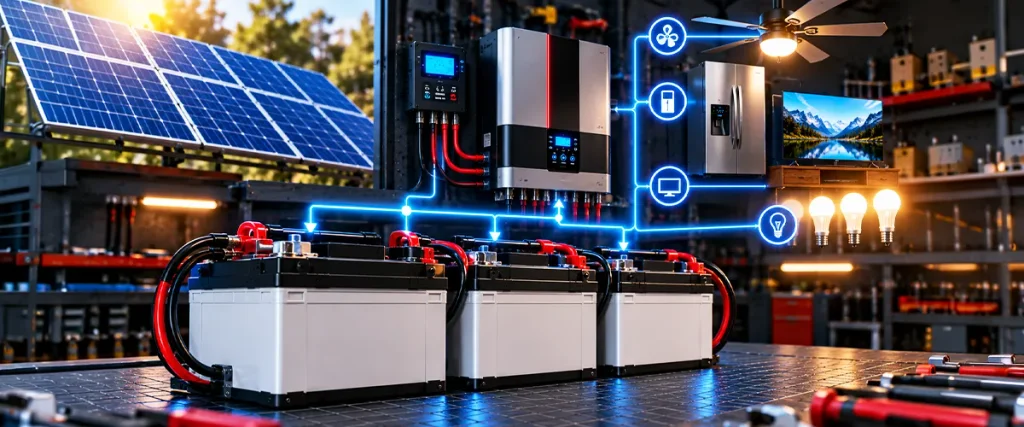
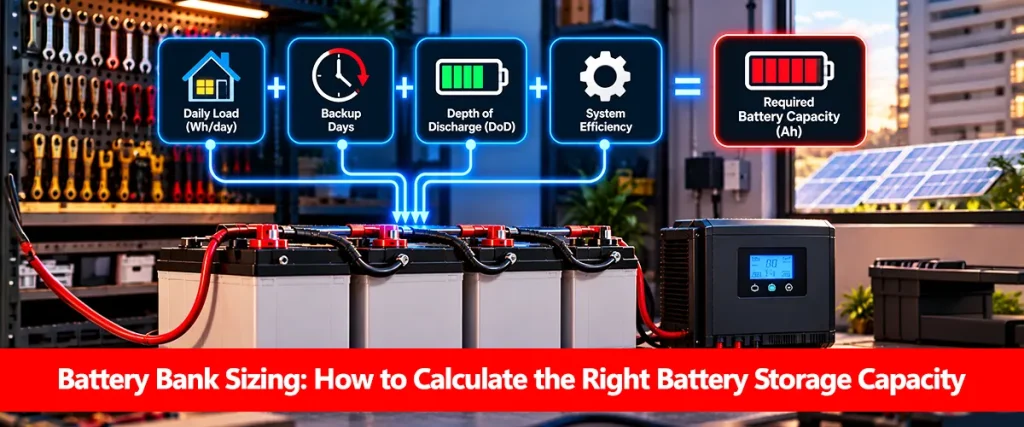
Once you know your energy requirement, divide it by the usable energy supplied by one battery. The basic calculation must account for depth of discharge and any relevant conversion losses.
Number of Batteries = Required Load Energy (Wh) ÷ Usable Energy per Battery (Wh)
For an AC backup system:
Usable Energy per Battery ≈ Voltage × Ah × DoD × Inverter Efficiency
Suppose you have a 12V 100Ah battery, an 80% permitted discharge allowance, and 90% inverter efficiency.
- Nominal battery energy: 12 × 100 = 1,200Wh.
- Usable battery-side energy: 1,200 × 0.80 = 960Wh.
- Estimated AC energy: 960 × 0.90 = 864Wh.
If your required appliance energy is 2,000Wh:
2,000 ÷ 864 = 2.31 batteries
You must round up, giving a theoretical minimum of three batteries by energy. However, the final number may need to be increased to satisfy the inverter’s required battery-bank voltage.
Example: Batteries Needed for Six Hours of Backup
Imagine a household in Pakistan wants to operate two fans, several LED lights, and a Wi-Fi router during six hours of load shedding. The combined continuous load is estimated at 200W.
The required energy is:
200W × 6 hours = 1,200Wh
Assume each available 12.8V 100Ah LiFePO4 battery has 80% usable depth of discharge and the inverter operates at 90% efficiency.
Each battery provides an estimated:
12.8 × 100 × 0.80 × 0.90 = 921.6Wh
The battery count becomes:
1,200 ÷ 921.6 = 1.30
Therefore, at least two batteries are required by energy capacity under these assumptions.
This does not automatically mean that two batteries can be connected to any inverter. The supported battery voltage, configuration, and current ratings must also be checked.
How Many 100Ah Batteries Do You Need?
A 100Ah battery’s stored energy depends on its nominal voltage. For example, a 12V 100Ah battery has approximately 1,200Wh, while a 12.8V 100Ah LiFePO4 battery has approximately 1,280Wh.
The following chart shows illustrative battery quantities for different appliance-energy requirements. It assumes each 12.8V 100Ah LiFePO4 battery provides approximately 921.6Wh of usable AC energy.
| Required AC Energy | Minimum Batteries by Energy |
| 500Wh | 1 |
| 1,000Wh | 2 |
| 2,000Wh | 3 |
| 3,000Wh | 4 |
| 5,000Wh | 6 |
These quantities are energy-based estimates. A valid battery-bank configuration may require additional units, and the manufacturer must approve the connection arrangement. For a battery-specific discussion, read how long a 100Ah battery lasts.
Does Using 200Ah Batteries Reduce the Quantity?
A 200Ah battery has twice the rated charge capacity of a 100Ah battery at the same nominal voltage. Therefore, fewer 200Ah batteries may be required to meet a particular energy-storage target.
For example, a 12.8V 200Ah battery stores approximately 2,560Wh of nominal energy. At 80% DoD and 90% inverter efficiency, its estimated usable AC energy is 1,843.2Wh.
If your required appliance energy is 3,000Wh:
- One battery provides approximately 1,843Wh.
- Two batteries provide approximately 3,686Wh.
- Two 200Ah batteries meet the example energy requirement.
The final configuration must still satisfy voltage and discharge-current requirements. See how long a 200Ah battery lasts for more context.
Why Does System Voltage Change the Battery Count?
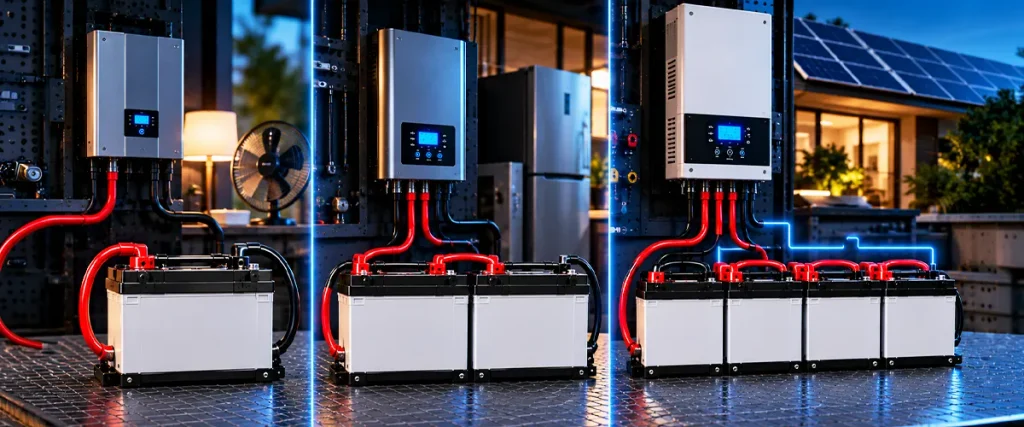
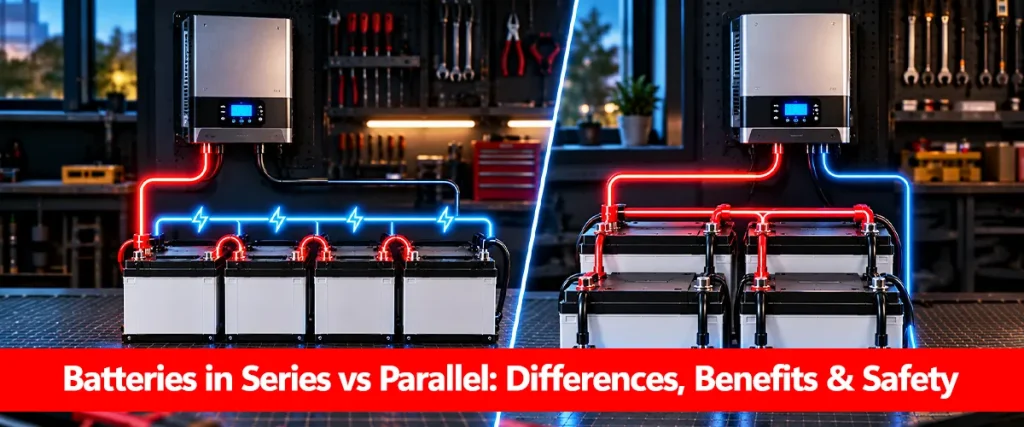
An inverter may require a 12V, 24V, or 48V-class battery bank. When individual batteries have lower nominal voltage than the required bank, multiple compatible units may need to be connected in series.
For example:
- A 12V system may use one compatible 12V battery.
- A 24V system may require two compatible 12V batteries in series.
- A 48V system may require four compatible 12V batteries in series.
These are illustrative arrangements, not universal installation instructions. Actual battery voltages and permitted series connections vary by product. Even if your energy calculation suggests only three 12V batteries, a compatible 48V system might require four batteries to form one complete series string. For detailed connection principles, see batteries in series vs parallel.
How Many Batteries Are Needed for Solar?
Solar battery quantity depends on the amount of energy that must be stored for use when solar generation is insufficient. A household with substantial nighttime consumption generally needs more storage than one that uses most of its electricity during daylight.
When estimating battery quantity for solar applications, consider:
- Nighttime electrical consumption: Energy used after sunset.
- Required backup duration: How long the system must operate without adequate generation.
- Usable battery capacity: Energy available within permitted discharge limits.
- Charging capability: Whether the solar system can replenish the selected storage.
- Battery-bank voltage: Compatibility with the inverter and charge controller.
Solar panel wattage alone does not determine battery quantity. Storage should be based on the energy requirement and the overall system design.
Common Mistakes When Calculating Battery Quantity
Battery-count estimates can be misleading when they ignore voltage requirements or use rated capacity as though all energy were available. These errors can lead to insufficient backup or incompatible battery connections.
Avoid the following:
- Dividing appliance watts directly by battery Ah.
- Ignoring depth of discharge and inverter losses.
- Rounding down a fractional battery requirement.
- Mixing incompatible batteries in the same bank.
- Forgetting that series connections increase voltage, not Ah.
- Assuming battery quantity alone determines available power.
The manufacturer’s approved wiring configurations, charging requirements, and discharge limits should always take priority over simplified calculations.
Conclusion
How many batteries do I need? Start by calculating the energy your appliances require, determine the usable energy available from each battery, and divide the two values. Round the result up, then verify that the selected battery count can form a compatible system. For dependable home backup or solar storage, also check inverter voltage, discharge-current limits, charging capability, and manufacturer-approved configurations. The right number of batteries must satisfy both energy and electrical compatibility requirements.
Explore more guides on battery bank sizing, battery capacity calculations, and battery runtime calculations. Browse Battery Calculations and Sizing or visit Batteries Hub for more practical battery education.
Frequently Asked Questions
How Many Batteries Do I Need for a 1,000W Inverter?
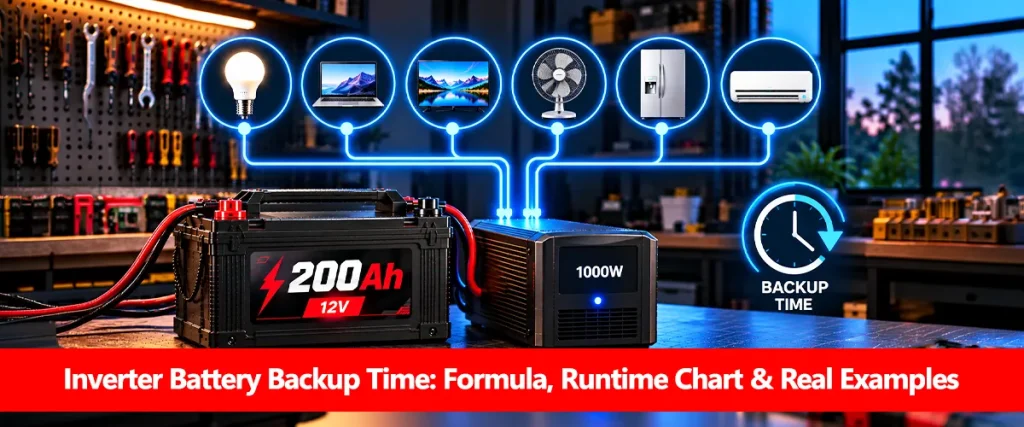
An inverter’s 1,000W rating does not determine battery quantity. You also need the intended operating time, actual appliance load, battery voltage, usable capacity, and inverter efficiency.
How Many 12V Batteries Do I Need for a 24V System?
A compatible 24V-class system may use two 12V batteries connected in series. The exact arrangement depends on the battery’s actual nominal voltage and the manufacturer’s approved configuration.
Can I Use One Large Battery Instead of Two Smaller Batteries?
Possibly, if the larger battery provides sufficient usable energy, supports the required power, and matches the system’s voltage and charging specifications.
How Many Batteries Do I Need for Eight Hours of Backup?
Multiply your average electrical load by eight hours to estimate energy demand. Then divide by the usable energy per battery and round up, while checking the required bank configuration.
Is Battery Quantity the Same as Battery Bank Sizing?
Not exactly. Battery bank sizing determines the required total storage capacity, while battery quantity determines how many individual units are needed to achieve that capacity. Read our battery bank sizing guide for the broader planning process.