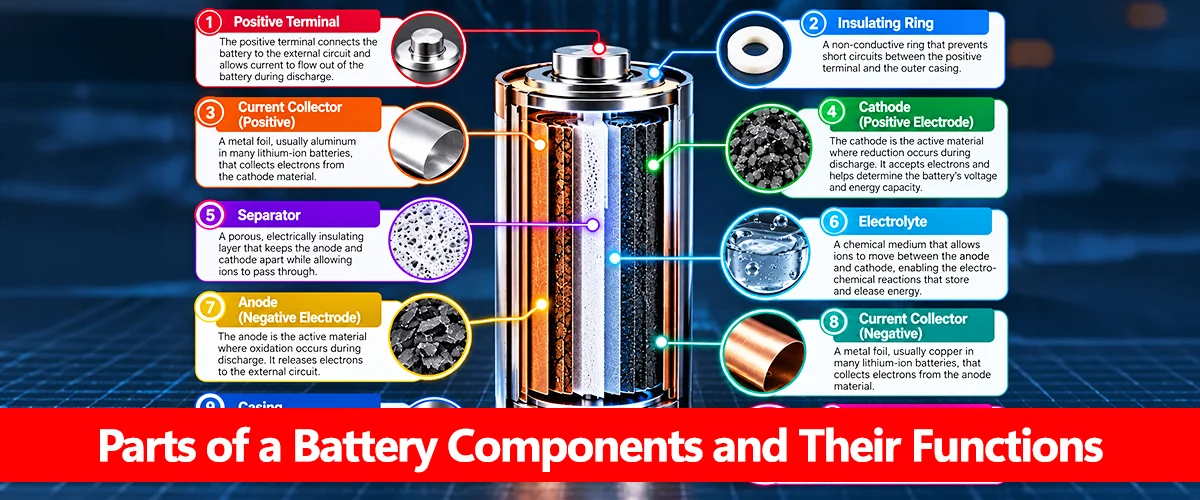
Parts of a battery work together to turn stored chemical energy into usable electricity, but what does each component actually do? Every electrochemical cell contains two electrodes—an anode and a cathode—and an electrolyte that allows charged particles to move. Many designs also include a separator, current collectors, terminals, and a protective casing. Each component has a specific role in electrical performance, energy storage, and safety.
The materials inside an alkaline AA cell are different from those in a car battery or lithium-ion battery. Still, their basic functions are similar. This guide explains the main battery components, their functions, the materials used in different chemistries, and how these parts work together.
Key Takeaways
- Anode and cathode: The two electrodes where electrochemical reactions take place.
- Electrolyte: Carries ions between the electrodes.
- Separator: Prevents direct electrode contact while allowing ion movement in designs that use one.
- Current collectors, terminals, and casing: Transfer electrical current, provide external connections, and protect the internal structure.
What Are the Main Parts of a Battery?
The main parts of a battery are the anode, cathode, electrolyte, separator, current collectors, terminals, and casing. The first three form the essential electrochemical system, while the other components provide electrical connections, structural support, and protection.
| Battery Part | Main Function |
| Anode | Releases electrons through oxidation during discharge |
| Cathode | Accepts electrons through reduction during discharge |
| Electrolyte | Conducts ions between electrodes |
| Separator | Keeps electrodes physically apart in many cell designs |
| Current collectors | Carry electrons between electrodes and terminals |
| Positive and negative terminals | Connect the cell to an external circuit |
| Casing | Contains and protects the internal components |
The exact arrangement depends on battery chemistry and construction. For example, cylindrical lithium-ion cells often contain tightly wound electrode layers, whereas lead-acid batteries use groups of positive and negative plates.
What Is the Anode in a Battery?
The anode is the electrode where oxidation occurs during discharge. This chemical reaction releases electrons into the external circuit, allowing electrical energy to reach connected equipment. In a discharging cell, the anode is the negative electrode. Its material varies by chemistry: alkaline cells commonly use zinc, conventional lithium-ion cells typically use graphite, and charged lead-acid batteries use sponge lead.
Anode materials influence electrical performance, capacity, charging behavior, and durability. In rechargeable cells, the electrochemical reaction direction reverses during charging, although manufacturers commonly continue calling the negative electrode the anode.
What Is the Cathode in a Battery?
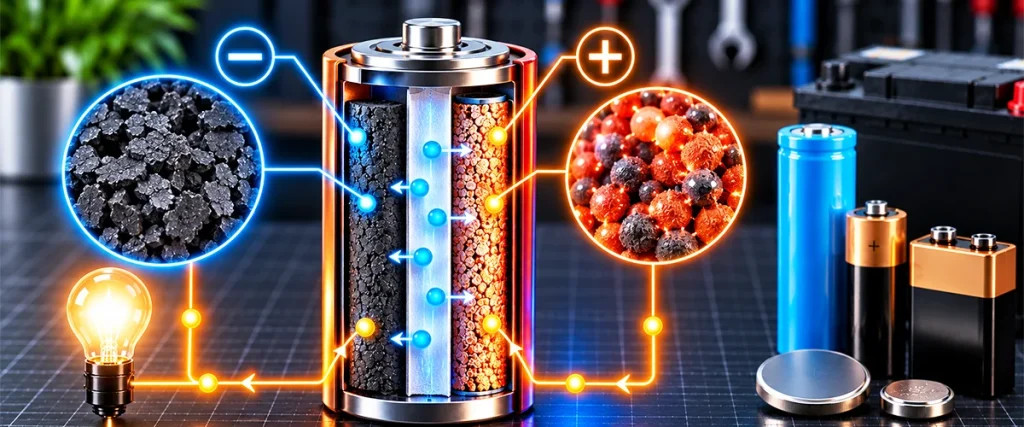
The cathode is the electrode where reduction occurs during discharge. It accepts electrons arriving through the external circuit and participates in the chemical reactions that allow electricity to flow. During discharge, the cathode is the positive electrode. Common cathode materials include manganese dioxide in alkaline cells, lead dioxide in charged lead-acid batteries, and lithium-containing compounds in many lithium-ion designs.
Cathode composition plays an important role in nominal cell voltage, energy storage characteristics, and thermal behavior. For instance, lithium iron phosphate (LiFePO4) and nickel-manganese-cobalt (NMC) batteries use different positive electrode materials, giving them different performance characteristics.
What Is the Difference Between an Anode and a Cathode?
| Feature | Anode | Cathode |
| Reaction during discharge | Oxidation | Reduction |
| Electron behavior | Releases electrons | Accepts electrons |
| Polarity during discharge | Negative | Positive |
| Example in a charged lead-acid cell | Sponge lead | Lead dioxide |
| Example in a conventional lithium-ion cell | Graphite-based negative electrode | Lithium-containing positive electrode |
Both electrodes are necessary for an electrochemical cell to operate. Their reactions occur together rather than independently.
What Is the Electrolyte in a Battery?
The electrolyte is the ion-conducting medium inside a battery. It allows charged particles to move between the electrodes, supporting the chemical reactions that produce electrical current. Electrolytes may be liquid, gel-like, or solid, depending on the technology. Their chemical composition affects ionic conductivity, temperature performance, stability, and safety.
Common examples include:
- Alkaline batteries: Potassium hydroxide solution.
- Flooded lead-acid batteries: Dilute sulfuric acid.
- Conventional lithium-ion batteries: Lithium salts dissolved in organic solvents.
- Solid-state batteries: Solid ion-conducting materials.
The electrolyte conducts ions internally, while electrons primarily travel through the external electrical circuit. This distinction is essential to understanding how a cell delivers power.
What Is a Battery Separator?
A separator is an insulating barrier that keeps the positive and negative electrodes from making direct electrical contact. Without adequate separation, the electrodes could short-circuit, causing rapid discharge, heat generation, or damage. In many lithium-ion cells, the separator is a thin, porous polymer membrane. Its pores allow ions to pass through the electrolyte while blocking direct electronic conduction between the electrodes.
Separator materials must maintain their structure under the battery’s intended operating conditions. Some lithium-ion designs also use specialized coatings or shutdown features to improve thermal protection. Not every battery uses a separate membrane with the same construction. The method of keeping electrodes apart depends on the cell design and electrolyte system.
What Do Current Collectors and Battery Terminals Do?
Current collectors and terminals create the conductive pathway between the internal electrodes and the external circuit. Although they are sometimes overlooked, they are essential for transferring electrical current efficiently.
Current Collectors
Current collectors are conductive components that gather electrons from electrode materials and transfer them toward the electrical connections. In conventional lithium-ion cells, copper foil is commonly used on the negative electrode and aluminium foil on the positive electrode. Their design affects electrical resistance, current distribution, weight, and heat generation.
Positive and Negative Terminals
Battery terminals are the external connection points marked positive (+) and negative (−). They allow electrical equipment, cables, and charging systems to connect to the cell or battery pack.
Terminals must provide reliable electrical contact. Loose or corroded connections can increase resistance, cause voltage drops, and generate heat, particularly in high-current applications.
What Is the Purpose of a Battery Casing?
The casing holds the internal components together and protects them from physical damage and environmental exposure. It also helps contain the electrolyte and maintain the intended arrangement of the electrodes.
Casing materials vary according to construction:
- Alkaline cells: Commonly use a steel container.
- Lead-acid batteries: Typically use a durable, acid-resistant plastic case.
- Lithium-ion cells: May use cylindrical metal cans, prismatic housings, or flexible pouch packaging.
Some designs also incorporate vents, pressure-relief mechanisms, or other protective features. These components help manage abnormal internal conditions but do not make a damaged battery safe to use.
How Do Battery Components Work Together?
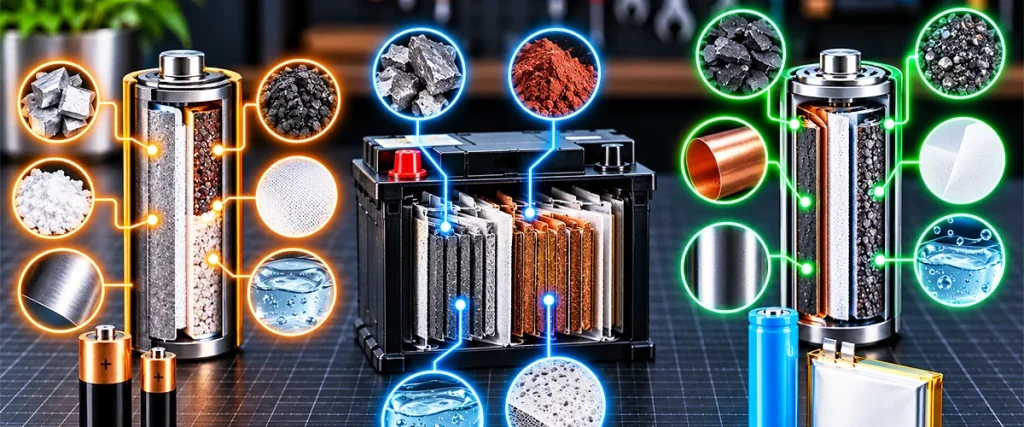
A battery supplies electricity when its internal electrochemical reactions and external electrical circuit operate together. The electrodes exchange electrons through oxidation and reduction, while ions move through the electrolyte to maintain charge balance.
The process can be summarized as follows:
- Oxidation at the anode releases electrons during discharge.
- Electrons travel through the current collector and external circuit.
- At the same time, ions move through the electrolyte between the electrodes.
- Reduction at the cathode accepts electrons, completing the electrochemical process.
The separator prevents unwanted direct electrode contact, while the casing and terminals support safe containment and electrical connections. To understand the broader operating principle, read what is a battery. Our guide to how batteries store energy covers the energy-storage process in greater detail.
How Do Battery Components Differ by Chemistry?
The basic components remain similar across battery technologies, but their materials and internal construction can be very different.
| Component | Alkaline Battery | Lead-Acid Battery | Lithium-Ion Battery |
| Negative electrode during discharge | Zinc | Sponge lead when charged | Usually graphite |
| Positive electrode during discharge | Manganese dioxide | Lead dioxide when charged | Lithium-containing compound |
| Electrolyte | Potassium hydroxide | Dilute sulfuric acid | Typically lithium salt in organic solvent |
| Electrode separation | Porous separator | Porous insulating separator | Usually polymer separator |
| Typical casing | Steel | Acid-resistant plastic | Metal can or pouch |
These differences influence voltage, weight, rechargeability, durability, and operating requirements. For example, a conventional lead-acid cell has a nominal voltage of about 2V, while many lithium-ion cells have nominal voltages around 3.6–3.7V. LiFePO4 cells typically operate at a nominal 3.2V.
The material differences are particularly relevant in Pakistan, where lead-acid and lithium-based batteries are used in UPS, inverter, solar, and automotive applications. Understanding their construction helps explain why different systems require different charging equipment and handling precautions.
What Happens When a Battery Component Fails?
Damage or deterioration in one component can affect the performance of the entire cell. The symptoms depend on the battery chemistry, operating conditions, and severity of the problem.
| Component Issue | Possible Effect |
| Electrode deterioration | Reduced capacity or increased internal resistance |
| Electrolyte loss or degradation | Poor performance and shortened service life |
| Separator damage | Internal short circuit |
| Loose or corroded terminal | Voltage drop, resistance, and overheating |
| Damaged casing | Leakage, contamination, or exposure to hazardous materials |
A battery that is swollen, leaking, cracked, or overheating should not be opened or repaired without appropriate professional procedures. Sealed lithium-ion cells and battery packs should never be dismantled by untrained users.
Conclusion
The main parts of a battery—anode, cathode, electrolyte, separator, current collectors, terminals, and casing—work together to store and deliver electrical energy. Each component has a distinct function, and the materials used determine important characteristics such as voltage, performance, durability, and safety.
Understanding battery construction makes it easier to recognize differences between alkaline, lead-acid, and lithium-ion technologies. For the next step, read our guides on battery energy storage and whether batteries supply AC or DC, or explore the Battery Fundamentals category on Batteries Hub.
Frequently Asked Questions About Battery Components
What Are the Three Essential Components of a Battery?
The three essential electrochemical components are the anode, cathode, and electrolyte. Many practical designs also use a separator, current collectors, terminals, and protective housing.
Which Part of a Battery Stores Energy?
Chemical energy is stored in the electrochemical system, particularly through the chemical states of the active electrode materials. The electrolyte supports ion movement, but it is not simply a container holding electricity.
What Is the Difference Between an Electrode and an Electrolyte?
An electrode is an electrically conductive part where oxidation or reduction takes place. An electrolyte is the medium that conducts ions between electrodes.
Why Is a Separator Important in a Battery?
A separator prevents direct electrical contact between electrodes while allowing the ionic movement needed for normal operation. This reduces the risk of internal short circuits.
Are the Parts of a Car Battery and a Lithium-Ion Battery the Same?
Both use electrodes, an electrolyte, and electrical connections, but their materials and construction differ. Lead-acid car batteries typically contain lead-based plates and sulfuric acid, while conventional lithium-ion cells use materials such as graphite, lithium-containing cathodes, and lithium-salt electrolytes.
Can You Replace Individual Parts Inside a Battery?
Most sealed consumer batteries are not designed for internal component replacement. Opening them can expose hazardous chemicals or create electrical and thermal risks. Use manufacturer-approved servicing or replace the affected battery when necessary.