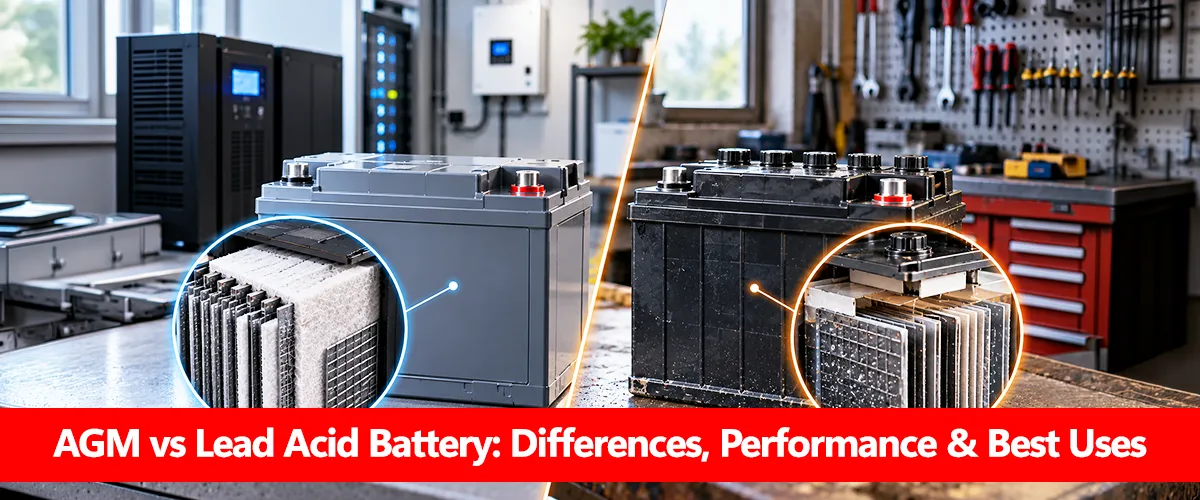
AGM vs lead acid battery is a common comparison when choosing batteries for vehicles, UPS systems, solar storage, and backup power. However, AGM batteries are themselves a type of lead-acid battery. The meaningful comparison is between AGM and conventional flooded lead-acid batteries.
AGM batteries use fiberglass mats to absorb their electrolyte, while flooded batteries contain freely flowing liquid electrolyte. This difference affects maintenance, charging, current delivery, installation, and overall cost. Understanding these characteristics helps identify which battery design is more suitable for different electrical applications.
What Is an AGM Battery?
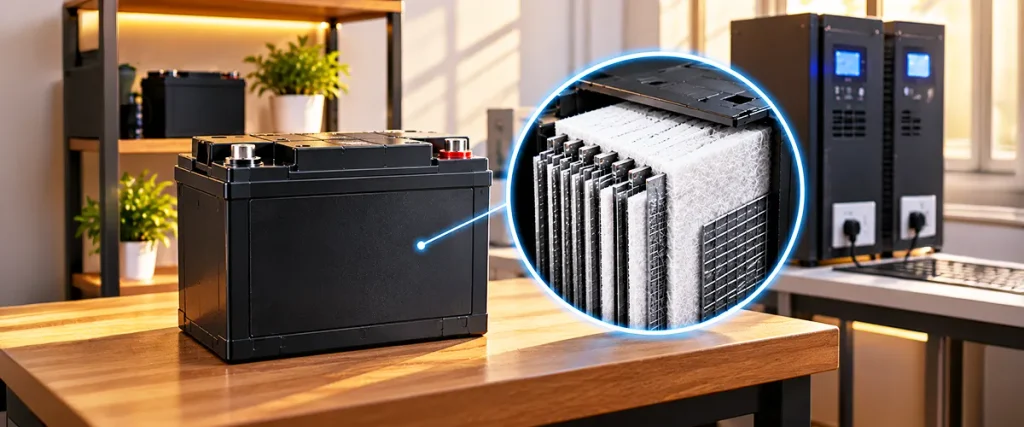
An AGM battery (Absorbent Glass Mat battery) is a valve-regulated lead-acid battery that holds sulfuric acid electrolyte within fiberglass separators. Its sealed construction reduces electrolyte movement and eliminates routine water refilling.
AGM batteries generally have low internal resistance and can deliver high currents when designed for that purpose. They are commonly used in modern vehicles, UPS systems, and backup power applications. For more information about its construction and applications, read our AGM battery guide.
What Is a Conventional Lead Acid Battery?
A conventional flooded lead-acid battery uses lead-based positive and negative plates immersed in liquid sulfuric acid electrolyte. During discharge, electrochemical reactions convert stored chemical energy into electrical energy.
Flooded batteries are widely used in automotive starting systems, inverter installations, and industrial applications. Many serviceable designs require periodic electrolyte inspection and distilled-water replenishment.
Our lead acid battery guide explains the chemistry, while the flooded lead acid battery article covers its specific construction.
AGM vs Lead Acid Battery: Quick Comparison
The main difference between AGM and flooded lead-acid batteries is how the electrolyte is held inside the battery.
| Feature | AGM Battery | Flooded Lead Acid Battery |
| Electrolyte | Absorbed in fiberglass mats | Free-flowing liquid |
| Construction | Valve-regulated | Vented or serviceable |
| Water refilling | Not required | Required in many models |
| Internal resistance | Generally lower | Often higher in comparable designs |
| High-current delivery | Strong in suitable designs | Strong in starting-rated designs |
| Charging | Requires compatible voltage settings | Requires flooded-compatible settings |
| Spill resistance | Better electrolyte containment | Greater spill risk |
| Maintenance | Low | Usually higher |
| Initial cost | Generally higher | Generally lower |
| Common uses | Vehicles, UPS, backup systems | Vehicles, inverters, industrial systems |
Both technologies are rechargeable and available in different capacities, voltages, and performance ratings.
AGM vs Lead Acid Battery Performance
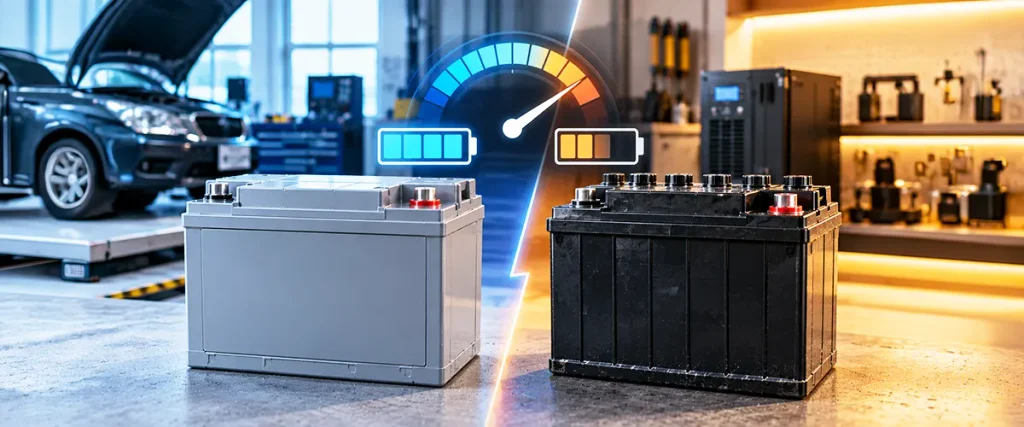
AGM batteries generally have lower internal resistance than comparable flooded batteries. This can improve high-current delivery and reduce voltage drop under demanding electrical loads. However, performance depends on plate construction, capacity, temperature, and intended application. A flooded starting battery may deliver greater starting current than an AGM battery designed for deep cycling.
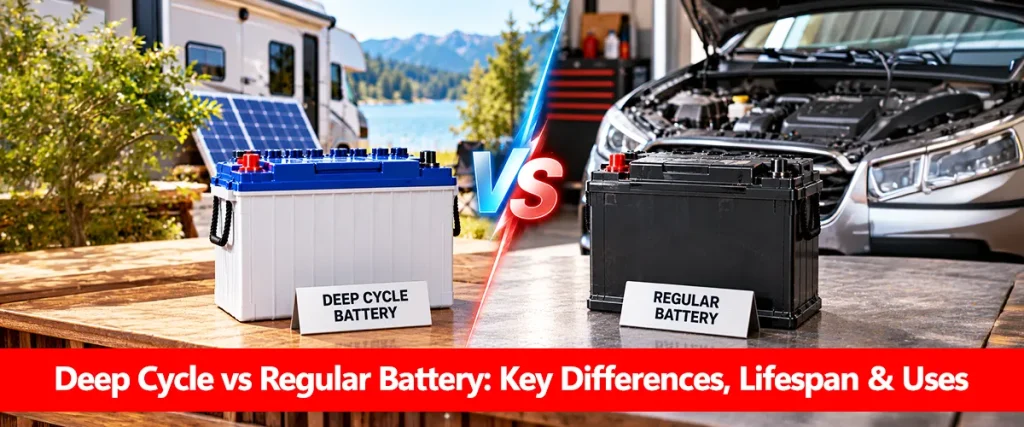
For repeated discharge applications, a properly rated deep cycle battery is more important than choosing solely by electrolyte construction. Both AGM and flooded batteries also experience reduced usable capacity at high discharge rates, although the extent varies by design.
AGM vs Lead Acid Battery Charging
AGM and flooded lead-acid batteries require charging profiles suited to their construction. Both commonly use bulk, absorption, and float charging stages, but their recommended voltage limits can differ.
Flooded batteries may tolerate certain charging procedures that are unsuitable for AGM batteries. Excessive charging voltage in an AGM battery can cause gas venting and permanent water loss.
Important charging considerations include:
- Use the manufacturer’s recommended charging voltage.
- Select the correct battery type on the charger.
- Apply temperature compensation where required.
- Avoid prolonged overcharging and undercharging.
- Ensure the charging current matches the battery specifications.
Incorrect charging can contribute to sulfation, reduced capacity, and premature battery failure. For backup systems, charging compatibility should be checked before replacing a flooded battery with an AGM model.
AGM vs Lead Acid Battery Lifespan
The lifespan of AGM and flooded batteries depends on battery quality, temperature, charging practices, and depth of discharge. Some AGM batteries offer good cycle-life performance, particularly when designed for deep-cycle applications. However, high-quality flooded deep-cycle batteries can also provide long service life when properly maintained.
Repeated deep discharge, excessive heat, and prolonged undercharging can shorten the lifespan of both technologies. Understanding battery cycle life and depth of discharge helps explain why batteries with similar capacity ratings may perform differently over time.
Maintenance and Safety Differences
Maintenance is one of the clearest differences in the AGM vs lead acid battery comparison. AGM batteries do not require routine water refilling because their valve-regulated design supports internal gas recombination. However, they still need correct charging, terminal inspection, and suitable ventilation.
Many flooded batteries require regular electrolyte-level checks and distilled-water replenishment. Their vented construction also requires attention to hydrogen gas release during charging.
Both battery types contain sulfuric acid and lead, so safe handling and appropriate recycling are essential. For related low-maintenance designs, see our sealed lead acid battery guide.
AGM vs Lead Acid Battery Cost
Conventional flooded batteries generally have a lower initial purchase price than comparable AGM batteries. AGM batteries typically cost more because of their internal construction and manufacturing requirements.
However, initial price does not represent total ownership cost. Battery lifespan, maintenance requirements, charging efficiency, replacement frequency, and operating conditions all influence long-term value.
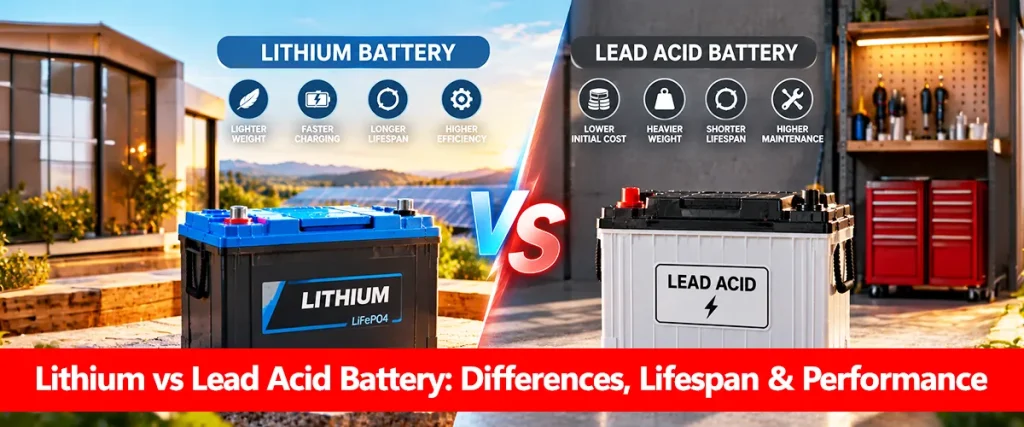
AGM may offer practical advantages where routine maintenance is difficult, while flooded batteries may remain economical in installations where regular servicing is possible. For users considering other technologies, our lithium vs lead acid battery guide covers broader chemistry differences.
Which Is Better: AGM or Flooded Lead Acid?
The better battery depends on its intended application and operating conditions.
| Application | Practical Recommendation |
| Modern vehicles with start-stop systems | AGM when specified by the manufacturer |
| Conventional vehicle starting | Either, according to vehicle requirements |
| UPS backup | AGM often offers convenient low-maintenance operation |
| Solar energy storage | Deep-cycle AGM or flooded, based on system requirements |
| Budget-sensitive installations | Flooded may offer lower initial cost |
| Limited maintenance access | AGM is often more convenient |
| Regularly serviced battery banks | Flooded may be suitable |
If the application involves repeated cycling, battery construction should be evaluated alongside rated cycle life and discharge requirements. For another lead-acid comparison, explore tubular vs flat plate battery.
How to Choose Between AGM and Lead Acid Batteries
Choosing between AGM and flooded lead-acid batteries requires evaluating the complete electrical system rather than focusing only on purchase price.
Consider these factors before making a decision:
- Application: Determine whether the battery is for starting, standby, or deep-cycle use.
- Voltage and capacity: Match the battery to the system’s electrical requirements.
- Charging compatibility: Confirm that the charger supports the selected battery type.
- Maintenance access: Consider whether regular electrolyte inspection is practical.
- Operating temperature: Review manufacturer performance and charging limits.
- Expected lifespan: Compare cycle-life ratings under similar conditions.
- Total cost: Consider maintenance, replacement, and charging requirements.
When replacing an existing battery, follow equipment manufacturer recommendations. AGM and flooded batteries should not be treated as automatically interchangeable.
Related Lead Acid Battery Comparisons
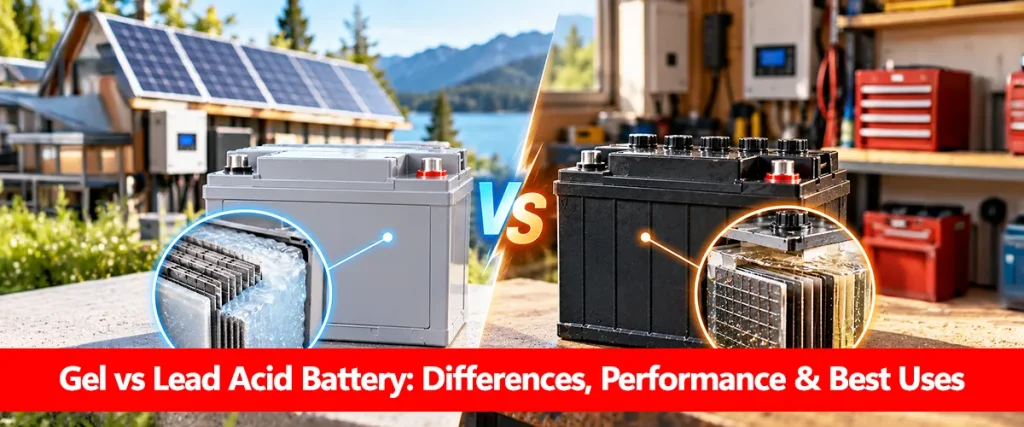
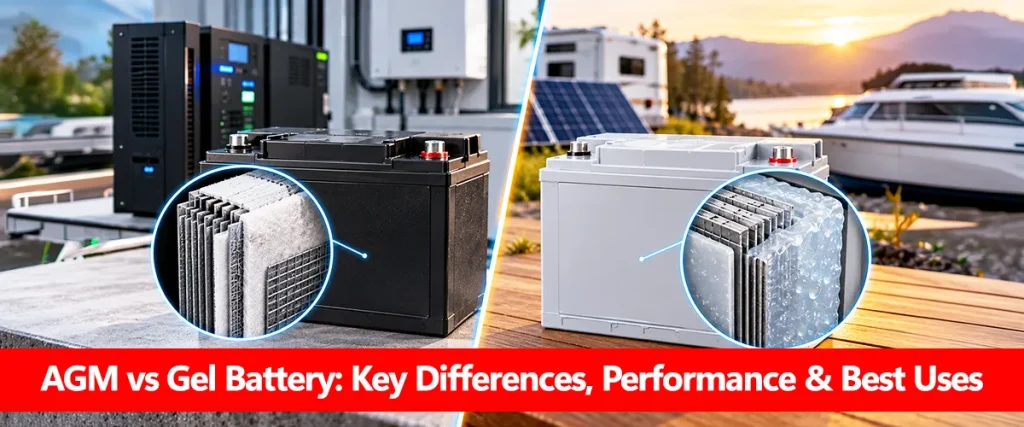
AGM and flooded batteries are part of a broader family of lead-acid technologies. Other designs use different electrolyte structures or plate constructions to achieve specific operating characteristics. For further information, explore AGM vs gel battery and gel vs lead acid battery. These comparisons explain how valve-regulated gel batteries differ from AGM and conventional flooded designs.
If you are evaluating backup power upgrades, our replace UPS lead acid battery with lithium guide covers compatibility considerations. For renewable energy applications, see lead acid vs lithium solar battery.
Conclusion
The AGM vs lead acid battery comparison shows that AGM and conventional flooded batteries share the same basic chemistry but differ in electrolyte construction, maintenance, charging requirements, and installation characteristics. AGM batteries generally offer lower maintenance and improved electrolyte containment, while flooded batteries often provide a lower initial cost and remain suitable for regularly serviced installations.
The best choice depends on application requirements, charging compatibility, maintenance access, and expected operating life. Explore more articles in the Battery Comparisons category at Batteries Hub.
Frequently Asked Questions
Is an AGM Battery a Lead Acid Battery?
Yes. AGM is a type of lead-acid battery that uses fiberglass separators to absorb the sulfuric acid electrolyte.
What Is the Main Difference Between AGM and Lead Acid Batteries?
The main difference is electrolyte construction. AGM batteries immobilize electrolyte within fiberglass mats, while conventional flooded batteries contain freely flowing liquid electrolyte.
Does an AGM Battery Last Longer Than a Regular Lead Acid Battery?
Not necessarily. Lifespan depends on battery quality, operating conditions, charging practices, and cycle-life design.
Can I Replace a Lead Acid Battery With an AGM Battery?
Yes, in some applications, provided the AGM battery meets the equipment’s specifications and the charging system is compatible.
Do AGM Batteries Need Water?
No. AGM batteries are valve-regulated and do not require routine water refilling.
Which Is Better for UPS: AGM or Lead Acid?
AGM batteries are often convenient for UPS applications because of their low maintenance requirements. However, properly rated flooded batteries can also be suitable for certain installations.
Are AGM Batteries More Expensive Than Flooded Batteries?
AGM batteries generally have a higher initial cost than comparable flooded lead-acid batteries, although pricing varies by brand, capacity, and construction.