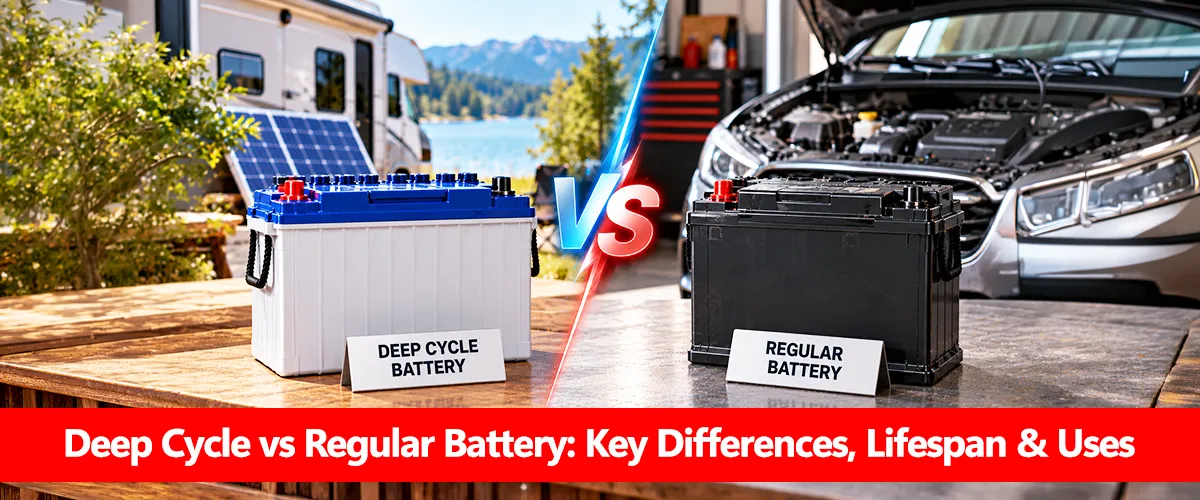
Deep cycle vs regular battery is an important comparison when selecting batteries for vehicles, UPS systems, solar storage, inverters, and backup power. The main difference is how each battery is designed to deliver electrical energy.
A deep-cycle battery is built to supply power over extended periods and withstand repeated discharge cycles. A regular automotive starting battery is designed to deliver a high burst of current for a short time, followed by relatively shallow discharge during normal operation. Although both may use similar battery chemistry, their internal construction and intended applications differ significantly.
What Is a Deep Cycle Battery?
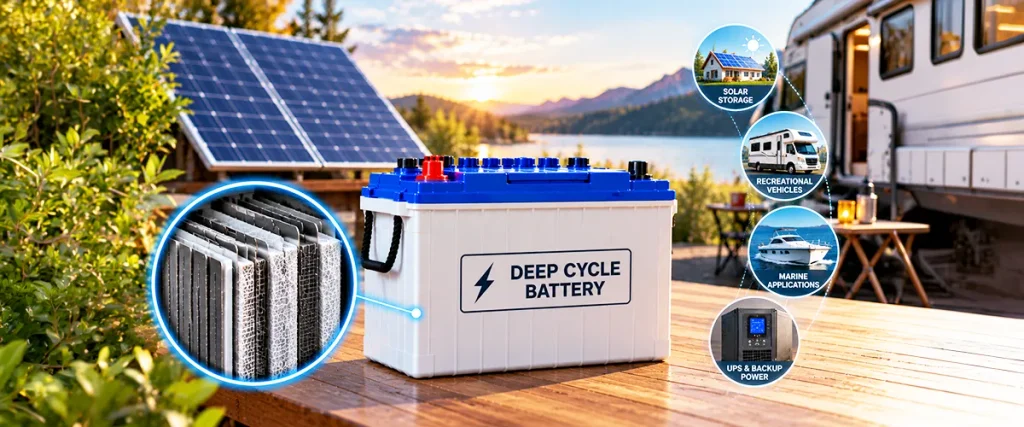
A deep-cycle battery is designed to provide sustained electrical energy and tolerate repeated discharge and recharge cycles within its specified operating limits.
Deep-cycle batteries are commonly used in solar energy storage, UPS systems, recreational vehicles, marine equipment, and off-grid applications. They are available in several chemistries, including lead-acid and lithium-based designs. Our deep cycle battery guide explains their construction, performance, and common applications.
What Is a Regular Battery?
A regular battery, in this comparison, refers to a conventional automotive starting battery. It is designed to deliver high current for a short period to start an engine. Starting batteries typically use plate structures optimized for high power delivery rather than frequent deep discharge. After engine startup, the vehicle’s charging system replenishes the energy used.
Many conventional starting batteries use lead acid battery chemistry, although different designs and technologies are available.
Deep Cycle vs Regular Battery: Quick Comparison
The main difference between deep-cycle and starting batteries is their intended discharge pattern.
| Feature | Deep Cycle Battery | Regular Starting Battery |
| Main purpose | Sustained energy delivery | Short bursts of high current |
| Discharge pattern | Repeated cycling | Usually shallow discharge |
| Plate construction | Optimized for cycling | Optimized for starting power |
| High-current capability | Depends on design | Generally strong |
| Cycle-life performance | Designed for repeated discharge | Limited under repeated deep discharge |
| Rated capacity | Commonly emphasized in Ah or Wh | Often rated using starting-current specifications |
| Charging | Depends on chemistry and design | Depends on chemistry and vehicle system |
| Typical applications | Solar, UPS, inverter, marine | Automotive engine starting |
| Initial cost | Varies by chemistry and capacity | Often lower for conventional models |
Both battery types are rechargeable, but their design priorities are different.
Deep Cycle vs Regular Battery Performance
Performance depends on how the battery delivers electrical energy. Deep-cycle batteries are designed to provide power over longer discharge periods. They are commonly rated according to capacity and cycle-life performance at specified discharge conditions.
Regular starting batteries prioritize high current delivery for short periods. Their performance is often evaluated using cold cranking amps (CCA) and related starting-current ratings. A starting battery may successfully power a small load, but repeated deep discharge can shorten its lifespan. For a better understanding of electrical capacity, explore our battery capacity and battery C-rate guides.
Deep Cycle vs Regular Battery Charging
Charging requirements depend on battery chemistry, construction, and operating conditions. Lead-acid deep-cycle and starting batteries may use similar charging principles, but their recommended voltage limits, charging currents, and operating profiles can differ.
Lithium-based deep-cycle batteries require chemistry-specific charging controls and protection systems.
Important charging considerations include:
- Use a charger compatible with the battery chemistry.
- Follow manufacturer voltage and current limits.
- Avoid prolonged overcharging and undercharging.
- Apply temperature compensation when required.
- Confirm charging compatibility before replacing an existing battery.
For example, a LiFePO4 battery requires a different charging approach from a conventional flooded lead-acid starting battery. Charging time also depends on battery capacity, charger output, and charging efficiency.
Deep Cycle vs Regular Battery Lifespan
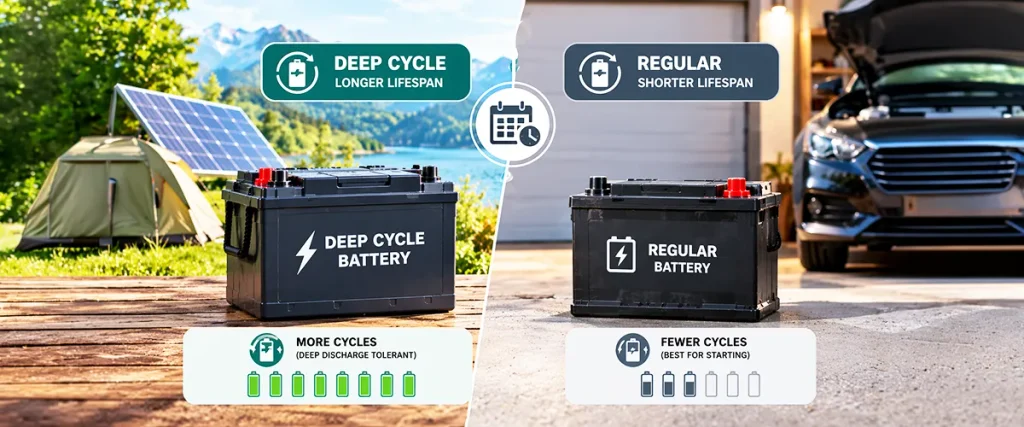
Deep-cycle batteries are generally designed to tolerate more repeated discharge cycles than conventional starting batteries. However, lifespan depends on depth of discharge, temperature, charging quality, and battery construction.
Repeated deep discharge can damage starting batteries because their plate structures are not typically optimized for that operating pattern. Deep-cycle batteries are designed for repeated cycling, but excessive discharge can still reduce their service life. Understanding battery cycle life and depth of discharge helps explain why batteries with similar voltage and capacity ratings may have different lifespans.
Maintenance and Safety Differences
Maintenance requirements depend primarily on battery chemistry and construction rather than whether the battery is designed for deep cycling or starting. Flooded lead-acid batteries may require periodic electrolyte inspection and distilled-water replenishment. Sealed batteries generally require less routine maintenance.
For example, AGM batteries are available in both starting and deep-cycle designs, while many tubular batteries are intended for repeated cycling.
All batteries require correct charging, suitable installation, and protection from excessive temperatures. Lead-acid batteries also require proper ventilation and responsible recycling.
Deep Cycle vs Regular Battery Cost
Deep-cycle batteries may have a higher initial cost than conventional starting batteries, particularly when designed for demanding cycling applications. However, comparing purchase prices alone can be misleading because the two battery types serve different purposes. A starting battery may be economical for engine starting but become expensive when repeatedly replaced after deep-discharge use.
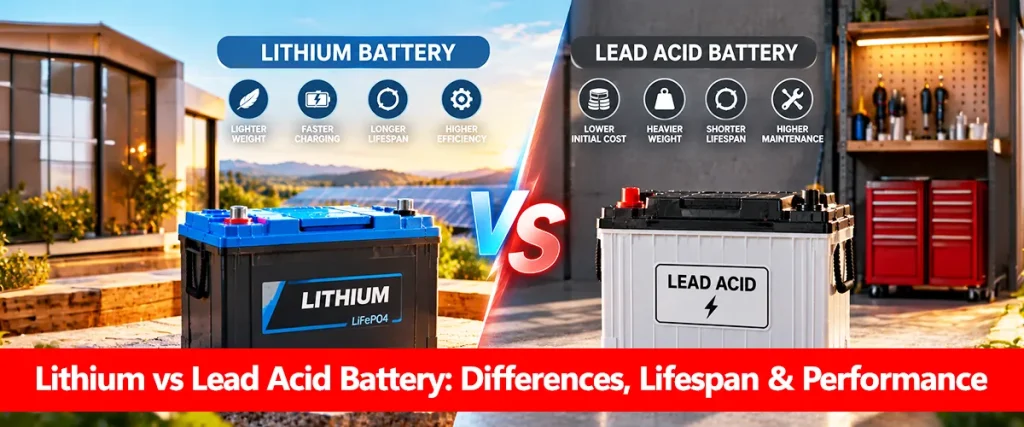
A correctly specified deep-cycle battery may provide better long-term value for solar, UPS, or inverter applications. For users comparing battery chemistries, our lithium vs lead acid battery guide explains broader cost and performance differences.
Which Is Better: Deep Cycle or Regular Battery?
The better battery depends on the equipment and expected discharge pattern.
| Application | Practical Recommendation |
| Automotive engine starting | Starting-rated battery |
| Solar energy storage | Deep-cycle battery |
| Home UPS backup | Deep-cycle battery commonly suitable |
| Inverter backup | Deep-cycle battery |
| Recreational vehicles | Deep-cycle battery for house loads |
| Marine engine starting | Marine starting-rated battery |
| Repeated discharge applications | Deep-cycle battery |
| Short high-current bursts | Starting-rated battery |
Some dual-purpose batteries are designed to support both starting and cycling, but their suitability depends on manufacturer ratings.
How to Choose Between Deep Cycle and Regular Batteries
Choosing the right battery requires understanding the electrical load and expected usage pattern.
Consider the following factors:
- Application: Determine whether the battery is intended for engine starting or sustained power delivery.
- Voltage: Match the battery to the equipment requirements.
- Rated capacity: Check the required energy storage.
- Discharge current: Confirm the battery can support the connected load.
- Cycle-life rating: Review manufacturer specifications for repeated discharge.
- Charging compatibility: Ensure the charging system supports the battery.
- Total ownership cost: Consider lifespan and replacement frequency.
For battery system planning, understanding battery voltage and battery bank sizing can help identify the appropriate configuration.
Related Battery Comparisons
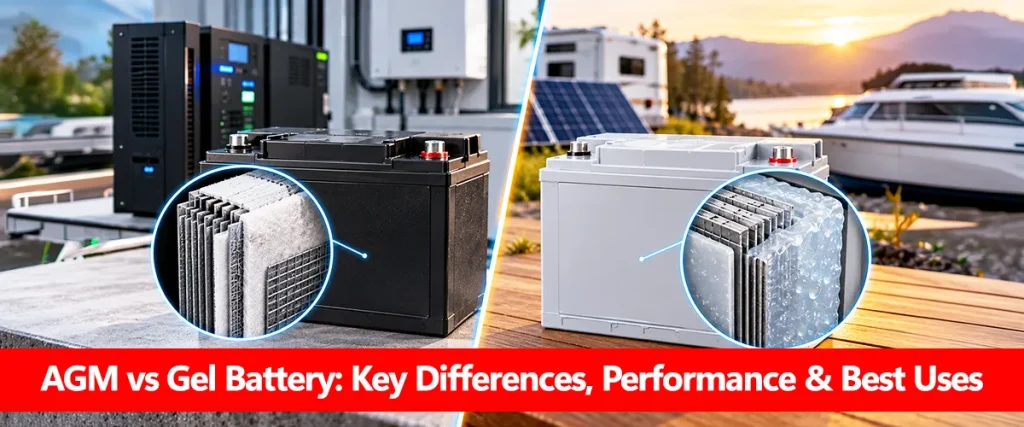
Deep-cycle and starting batteries are defined by their intended operating characteristics, but battery chemistry and construction also affect performance. For lead-acid construction differences, explore tubular vs flat plate battery and tubular vs AGM battery. To compare sealed lead-acid designs, read AGM vs gel battery. For lithium-based technologies, our LiFePO4 vs lithium ion guide explains how lithium iron phosphate differs from other common lithium-ion chemistries.
Conclusion
The deep cycle vs regular battery comparison shows that the main difference is intended discharge behavior. Deep-cycle batteries are designed for sustained energy delivery and repeated cycling, making them suitable for solar storage, UPS systems, and inverter applications. Regular starting batteries are optimized for short bursts of high current, making them suitable for engine starting.
The best choice depends on the electrical load, discharge frequency, charging compatibility, and expected lifespan. Explore more guides in the Battery Comparisons category at Batteries Hub.
Frequently Asked Questions
What Is the Main Difference Between a Deep Cycle and Regular Battery?
A deep-cycle battery is designed for repeated sustained discharge, while a regular automotive starting battery is designed for short bursts of high current.
Can I Use a Regular Battery Instead of a Deep Cycle Battery?
A starting battery may temporarily power some loads, but repeated deep discharge can significantly shorten its lifespan. A properly rated deep-cycle battery is generally more suitable for sustained backup power.
Can a Deep Cycle Battery Start a Car?
Some deep-cycle or dual-purpose batteries can start engines if they meet the required starting-current specifications. However, not every deep-cycle battery is suitable for engine starting.
Which Battery Lasts Longer: Deep Cycle or Regular?
Deep-cycle batteries generally tolerate repeated discharge better, but actual lifespan depends on battery chemistry, design, charging conditions, and usage.
Are Deep Cycle Batteries Better for Solar?
Yes. Deep-cycle batteries are commonly used in solar storage because they are designed for repeated charging and discharging.
Do Deep Cycle Batteries Need Special Chargers?
Charging requirements depend on chemistry and construction. The charger must support the specific battery’s voltage and charging profile.
Are Deep Cycle Batteries More Expensive?
Deep-cycle batteries can cost more initially than conventional starting batteries, but they may offer better long-term value in applications requiring repeated cycling.