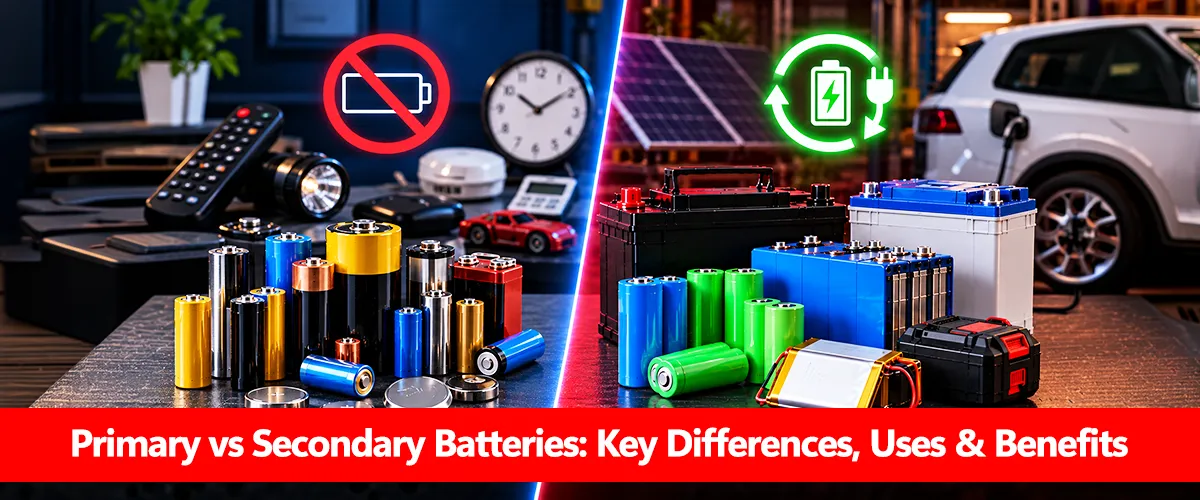
Primary vs secondary batteries differ mainly in their rechargeability and electrochemical behavior. Primary batteries are designed for single-use discharge, while secondary batteries can be recharged through reversible electrochemical reactions.Both types convert stored chemical energy into electrical energy. However, their charging requirements, lifespan, maintenance, cost, and applications vary significantly.
Understanding these differences helps identify the appropriate battery type for everyday electronics, vehicles, and energy storage systems.
What Are Primary Batteries?
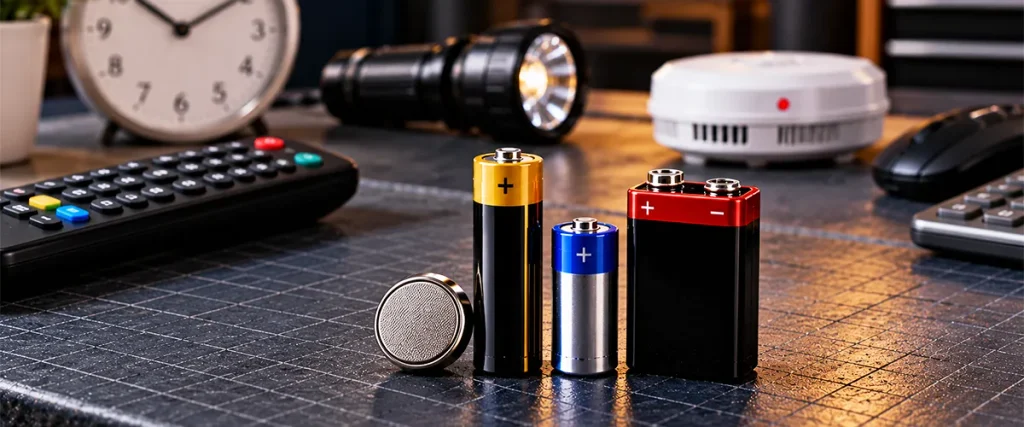
Primary batteries are non-rechargeable electrochemical cells designed to provide electrical energy until their usable chemical reactants are depleted. Their reactions are not intended to be reversed through ordinary charging.
Key characteristics:
- Designed for single-use operation.
- Often have a long shelf life.
- Require no charging equipment.
- Suitable for low-power and intermittent-use devices.
- Must be replaced after discharge.
Common primary chemistries include alkaline, zinc-carbon, primary lithium, and silver-oxide batteries.
What Are Secondary Batteries?
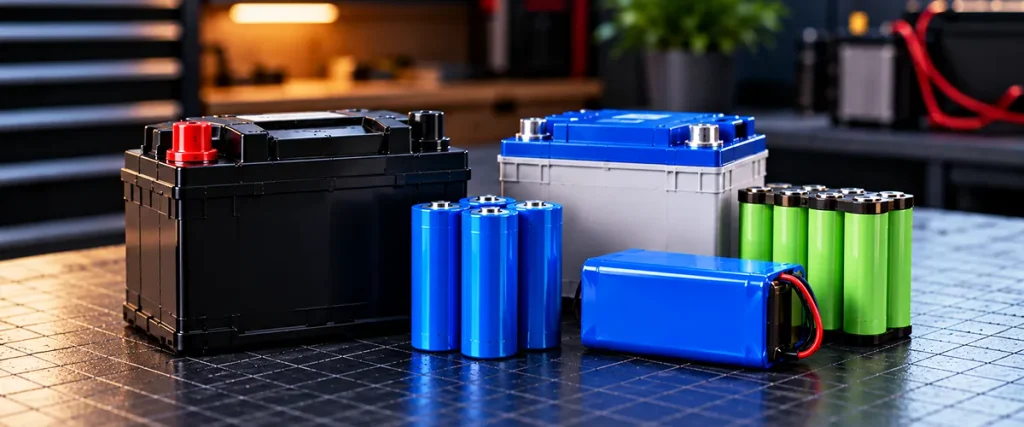
Secondary batteries are rechargeable electrochemical cells that store and release energy through reactions that can be reversed during charging.
Key characteristics:
- Support repeated charging and discharging.
- Require compatible charging equipment.
- Have a limited cycle life.
- Can reduce replacement frequency.
- Require appropriate charging and safety controls.
Common secondary chemistries include lithium-ion, lead-acid, nickel-metal hydride (NiMH), and nickel-cadmium (NiCd). For an overview of battery classifications, read types of batteries.
Primary vs Secondary Batteries: Comparison Table
| Feature | Primary Batteries | Secondary Batteries |
| Rechargeability | Non-rechargeable | Rechargeable |
| Electrochemical reaction | Not practically reversible | Reversible during charging |
| Initial cost | Often lower | Often higher |
| Replacement frequency | After discharge | After useful service life |
| Cycle life | Single discharge | Multiple cycles |
| Charging equipment | Not required | Required |
| Shelf life | Often long | Chemistry-dependent |
| Environmental impact | More frequent disposal | Repeated use, eventual recycling |
| Common applications | Clocks, remotes, sensors | Phones, vehicles, UPS |
Actual voltage, energy density, internal resistance, and performance depend on the specific battery chemistry rather than rechargeability alone.
Performance, Lifespan and Cost Differences
Primary batteries are often suitable for devices that consume small amounts of energy over long periods. Their storage stability and convenience make them practical when frequent charging would be inconvenient.
Secondary batteries are generally more suitable for equipment requiring regular energy replenishment. Although their initial cost may be higher, repeated charging can lower the cost per use.
Important performance factors include:
- Nominal voltage: Depends on cell chemistry.
- Rated capacity: Determines stored charge under specified conditions.
- Cycle life: Important for rechargeable batteries.
- Internal resistance: Influences voltage drop and power delivery.
- State of charge (SoC): Indicates remaining charge.
- Depth of discharge (DoD): Influences usable capacity and battery life.
Rechargeable batteries also require compatible chargers and proper operating conditions to maintain performance.
Which Battery Type Should You Choose?
The better choice depends on how frequently the device operates, its energy requirements, and whether charging is practical.
Choose primary batteries when:
- The device has low or intermittent power consumption.
- Long storage life is important.
- Recharging is inconvenient or unnecessary.
- The equipment specifically requires non-rechargeable cells.
Choose secondary batteries when:
- The device is used frequently.
- Repeated charging is practical.
- Long-term replacement costs matter.
- The application requires rechargeable energy storage.
For automotive and backup applications, lead-acid batteries remain an established rechargeable technology.
Safety and Environmental Considerations
Both primary and secondary batteries require proper handling. Attempting to recharge ordinary primary batteries can cause leakage, overheating, or rupture.
Rechargeable batteries also require chemistry-compatible charging systems to prevent overcharging, excessive temperature, and other hazards. Used batteries should be disposed of or recycled according to local regulations. Some chemistries contain materials requiring specialized handling.
Conclusion
Understanding primary vs secondary batteries helps distinguish single-use energy sources from rechargeable storage technologies. Primary batteries offer convenience and storage stability, while secondary batteries support repeated use and are often more economical for frequently powered equipment. The right choice depends on device requirements, charging availability, expected usage, and safety considerations.
Explore rechargeable vs non-rechargeable batteries and the Battery Types and Chemistries category for more information. Visit Batteries Hub for practical battery education.
Frequently Asked Questions
What Is the Main Difference Between Primary and Secondary Batteries?
Primary batteries are designed for single use, while secondary batteries can be recharged and used repeatedly.
Are Primary Batteries Better Than Secondary Batteries?
Neither is universally better. Primary batteries suit many low-drain, infrequently used devices, while secondary batteries are usually more practical for frequent use.
Which Batteries Have a Longer Lifespan?
Primary batteries can offer long storage life, while secondary batteries support multiple charge-discharge cycles. Actual lifespan depends on chemistry and operating conditions.
Can Primary Batteries Be Recharged?
Ordinary primary batteries should not be recharged. Doing so can create safety hazards because they are not designed for conventional charging.
Are Secondary Batteries More Environmentally Friendly?
Their repeated use can reduce the number of discarded batteries, but environmental impact also depends on manufacturing, electricity sources, service life, and recycling.