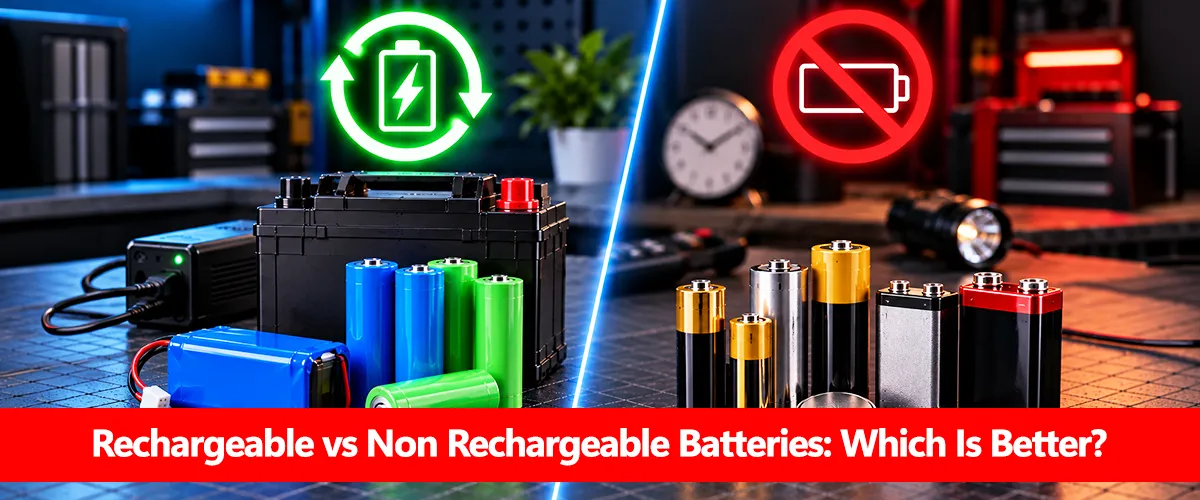
Rechargeable vs non rechargeable batteries differ primarily in how often they can be used, their replacement costs, and their charging requirements. Rechargeable batteries can restore stored energy through compatible charging, while non-rechargeable batteries are designed to be replaced after their usable charge is depleted.
Rechargeable batteries are often practical for frequently used electronics. Non-rechargeable batteries remain useful for devices with low energy consumption, long storage periods, or limited access to charging. Choosing the right type depends on device compatibility, usage frequency, battery chemistry, and long-term convenience.
What Are Rechargeable Batteries?
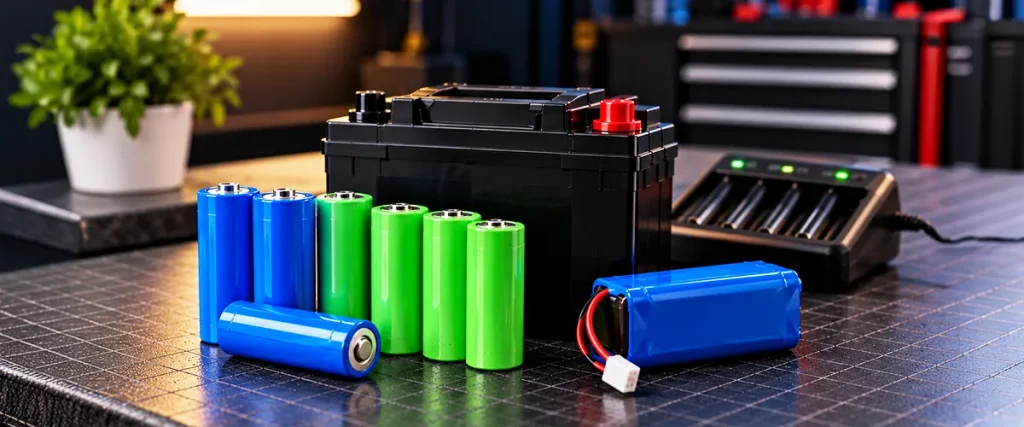
Rechargeable batteries use reversible electrochemical reactions to store energy during charging and release it during discharge. They are designed for repeated use within their specified operating limits. Common rechargeable technologies include lithium-ion, nickel-metal hydride (NiMH), and lead-acid batteries.
Main advantages:
- Can be reused through multiple charging cycles.
- Reduce frequent battery replacement.
- Often cost less per use over time.
- Suitable for regularly operated devices.
- Available in different capacities and chemistries.
Their limitations include charging time, battery aging, and the need for compatible chargers.
What Are Non Rechargeable Batteries?
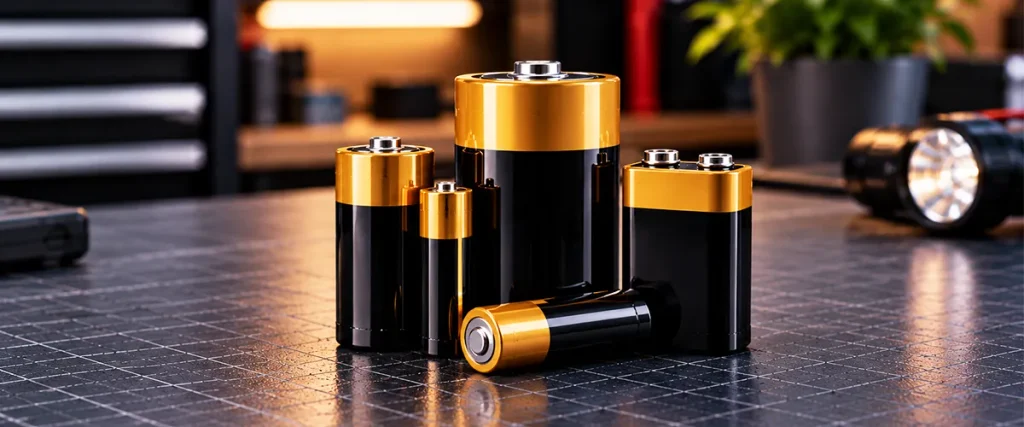
Non-rechargeable batteries are designed to deliver their stored electrical energy without conventional recharging. They are commonly used in devices that consume relatively little electricity. Alkaline, zinc-carbon, and primary lithium batteries are familiar non-rechargeable technologies.
Main advantages:
- Ready to use without charging.
- Often have a long shelf life.
- Convenient for occasional-use equipment.
- Generally lower initial purchase cost.
- Available in common consumer sizes.
Their main disadvantage is the need for replacement after discharge, which can increase long-term costs and waste.
Rechargeable vs Non Rechargeable Batteries: Key Differences
| Feature | Rechargeable | Non Rechargeable |
| Reusability | Multiple cycles | Single use |
| Initial cost | Usually higher | Usually lower |
| Long-term cost | Often lower with frequent use | Can increase with replacements |
| Charging required | Yes | No |
| Shelf life | Depends on chemistry | Often longer |
| Maintenance | Charging and proper storage | Replacement and proper storage |
| Best suited for | Frequent use | Occasional or low-drain use |
| Environmental impact | Fewer replacements | More frequent disposal |
Actual performance varies by chemistry, operating temperature, discharge rate, and device requirements.
Which Battery Lasts Longer?
Battery lifespan can mean either operating time on one charge or total useful service life. These are different measurements. A non-rechargeable battery may operate for a long period in a low-drain device, while a rechargeable battery can provide a longer overall service life through repeated charging cycles.
Important factors include:
- Rated capacity: Amount of electrical charge stored.
- Nominal voltage: Must match device requirements.
- Self-discharge: Energy lost during storage.
- Cycle life: Number of usable charging cycles.
- Operating temperature: Influences performance and aging.
For technical classification, read primary vs secondary batteries.
Are Rechargeable Batteries More Cost-Effective?
Rechargeable batteries generally become more economical when used frequently because the purchase cost is spread across multiple charging cycles. However, they also require compatible charging equipment and eventually need replacement. Their economic benefit depends on usage frequency, electricity costs, charger cost, and battery lifespan. Non-rechargeable batteries may remain more convenient for rarely used equipment where replacement is infrequent.
Which Batteries Are Better for Different Devices?
Battery selection should match the device’s electrical specifications and usage pattern rather than relying only on whether a battery is rechargeable.
Rechargeable batteries are often suitable for:
- Digital cameras and photography equipment.
- Frequently used toys and gaming controllers.
- Portable electronics designed for rechargeable cells.
- Emergency backup and energy storage systems.
Non-rechargeable batteries are often suitable for:
- Wall clocks and remote controls.
- Low-power sensors.
- Devices stored for extended periods.
- Equipment specifically requiring primary batteries.
Some rechargeable AA and AAA cells have different nominal voltages from alkaline batteries. Always verify device compatibility before switching.
Safety and Environmental Considerations
Rechargeable batteries must be charged using equipment designed for their chemistry and voltage. Incorrect charging can cause overheating, leakage, or battery damage.
Non-rechargeable batteries should never be placed in ordinary rechargeable battery chargers unless explicitly designed and approved for that purpose. Both types require responsible disposal. Battery recycling helps recover valuable materials and reduces improper waste handling.
Conclusion
The choice between rechargeable vs non rechargeable batteries depends on how often a device is used, its power requirements, and the convenience of charging. Rechargeable batteries generally offer better long-term value for frequent use, while non-rechargeable batteries remain practical for occasional-use and low-power devices. Explore types of batteries, primary vs secondary batteries, and the Battery Types and Chemistries category. Visit Batteries Hub for more battery education.
Frequently Asked Questions
Are Rechargeable Batteries Better Than Regular Batteries?
Rechargeable batteries are often better for frequently used devices, while non-rechargeable batteries can be more convenient for low-drain or occasional-use equipment.
Do Rechargeable Batteries Lose Charge When Not Used?
Yes. Rechargeable batteries experience self-discharge, although the rate depends on their chemistry, design, temperature, and storage conditions.
Can Rechargeable Batteries Replace Alkaline Batteries?
Sometimes. Compatibility depends on battery size, nominal voltage, and the device manufacturer’s requirements.
Are Non Rechargeable Batteries More Powerful?
Not necessarily. Power delivery depends on battery chemistry, internal resistance, discharge capability, and operating conditions.
Which Battery Type Is Better for the Environment?
Rechargeable batteries can reduce replacement frequency, but total environmental impact depends on manufacturing, usage, charging, service life, and recycling.