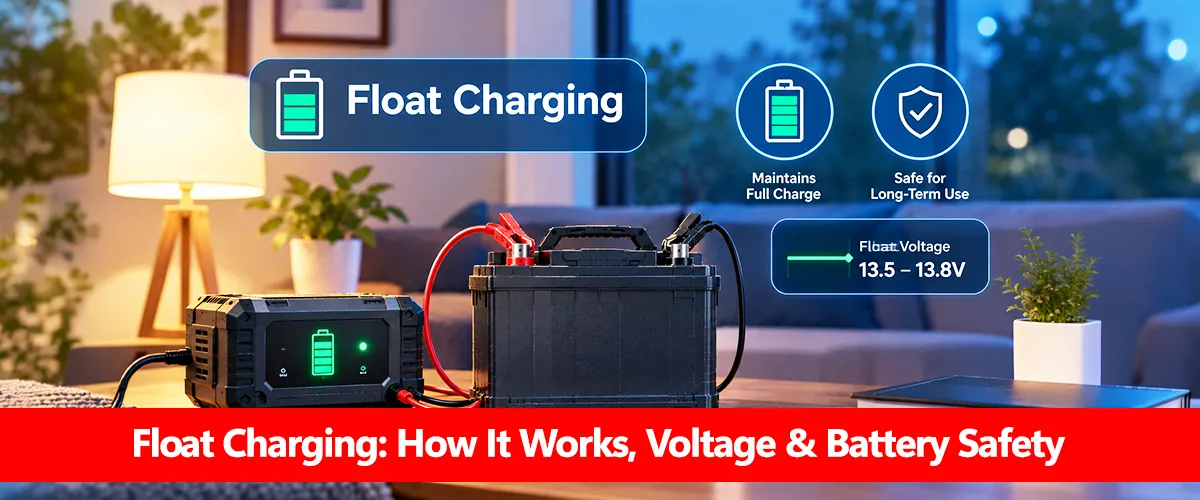
Float charging is a battery maintenance method that keeps a suitable rechargeable battery near full charge by applying a controlled, relatively low voltage. It compensates for natural self-discharge and helps maintain battery readiness during extended standby periods.
Float charging is primarily used with lead-acid batteries in UPS systems, emergency lighting, telecommunications and backup power installations. Unlike normal recharging, its main purpose is to maintain an already charged battery without continuously applying a higher charging voltage. Understanding how battery charging works helps explain why this maintenance stage is important.
How Does Float Charging Work?
During float charging, a compatible charger maintains the battery at a manufacturer-specified voltage. Once the battery reaches a charged state, the current typically decreases to the level needed to compensate for self-discharge and any small connected loads.
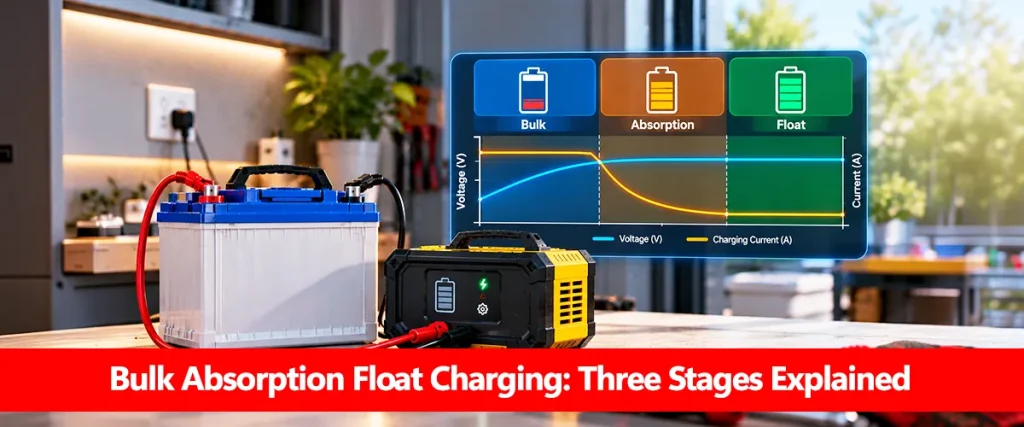
The charger regulates voltage rather than continuously forcing a fixed current into the battery. This helps suitable lead-acid batteries remain available for backup power without repeatedly undergoing full charging cycles. Float charging is commonly the final stage of bulk absorption float charging, following the bulk and absorption stages.
What Is the Correct Float Charging Voltage?
The correct float voltage depends on battery chemistry, cell count and temperature. For many 12V lead-acid batteries, typical float charging voltage falls around 13.5–13.8V at approximately 25°C, although manufacturer recommendations vary.
| Lead-Acid Battery System | Illustrative Float Voltage |
| 6V | 6.75–6.90V |
| 12V | 13.5–13.8V |
| 24V | 27.0–27.6V |
| 48V | 54.0–55.2V |
These figures are illustrative ranges for lead-acid battery systems, not universal settings. Flooded, AGM and gel batteries may require different float voltages. The correct battery charging voltage must always follow the manufacturer’s specifications.
Float Charging and Battery Temperature
Battery temperature directly affects float charging requirements. Lead-acid batteries generally require a lower charging voltage at higher temperatures and a higher voltage at lower temperatures, within their approved operating range.
Many advanced chargers use temperature compensation to adjust float voltage automatically. Without suitable compensation, excessive voltage can cause battery heating and water loss, while insufficient voltage can leave the battery undercharged. Correct temperature control also helps protect long-term battery cycle life.
Which Batteries Support Float Charging?
Float charging is commonly associated with lead-acid batteries, although the exact maintenance requirements depend on their construction. Lithium batteries generally use different charging and storage practices.
| Battery Type | Float Charging Compatibility |
| Flooded lead-acid | Commonly supported with correct settings |
| AGM | Supported when manufacturer-approved |
| Gel | Requires carefully controlled voltage |
| LiFePO4 | Conventional lead-acid float charging generally not recommended |
| Other lithium-ion | Continuous float charging generally unsuitable |
Lithium-ion batteries normally use chemistry-specific charging profiles and charge termination. Their battery management system provides monitoring and protection but does not make an incompatible float charger suitable.
Where Is Float Charging Used?
Float charging is especially useful in installations where batteries remain connected for long periods but are only discharged occasionally. It helps keep standby batteries ready without requiring repeated manual charging.
Common applications include:
- UPS systems: Maintaining batteries for power interruptions.
- Emergency lighting: Keeping backup batteries available.
- Telecommunications: Supporting standby power equipment.
- Security systems: Maintaining batteries during normal operation.
- Backup power installations: Compensating for lead-acid battery self-discharge.
For these applications, float charging must be matched to the battery’s chemistry and charging specifications. A correctly configured charger helps maintain battery readiness while limiting unnecessary charging stress.
Float Charging vs Trickle Charging
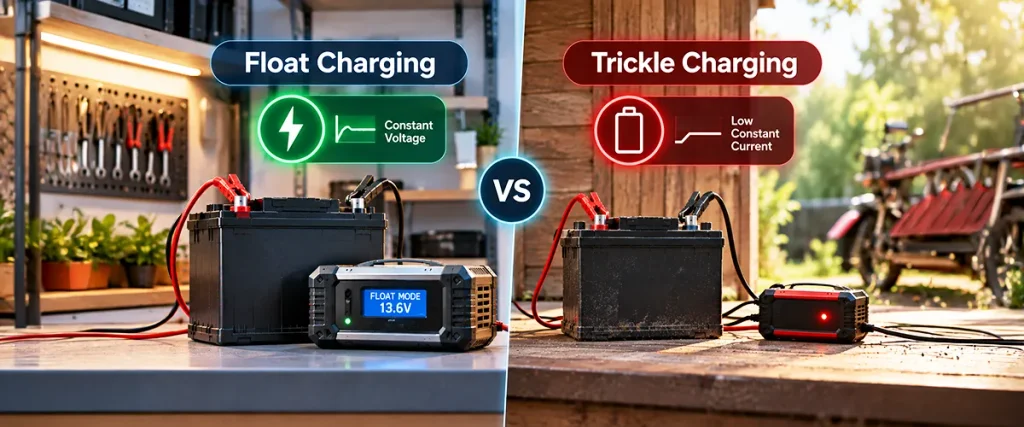
Float charging and trickle charging are both associated with battery maintenance, but their control methods differ.
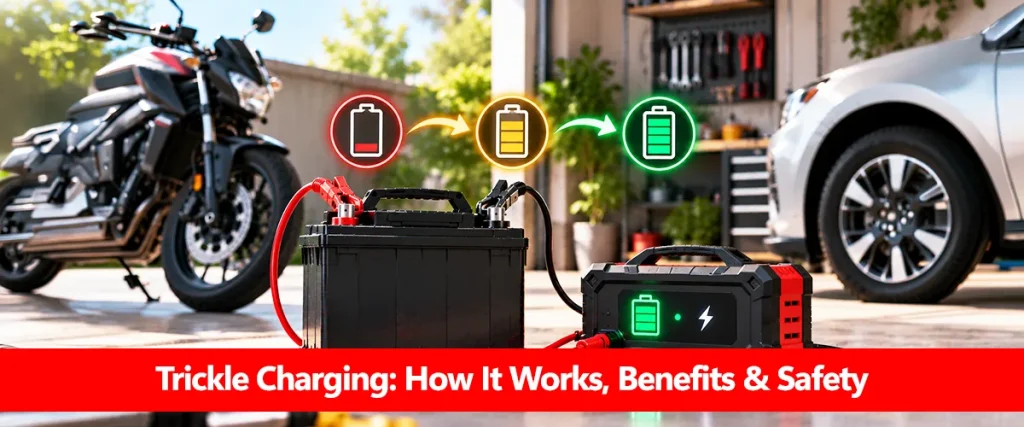
Float charging maintains a specified voltage, allowing charging current to adjust according to battery demand. Trickle charging generally supplies a small current, which may continue even after the battery reaches full charge if the charger lacks appropriate regulation.
This distinction matters because uncontrolled low-current charging can still damage batteries over time. Our trickle charging guide explains where that method is appropriate.
Can Float Charging Damage a Battery?
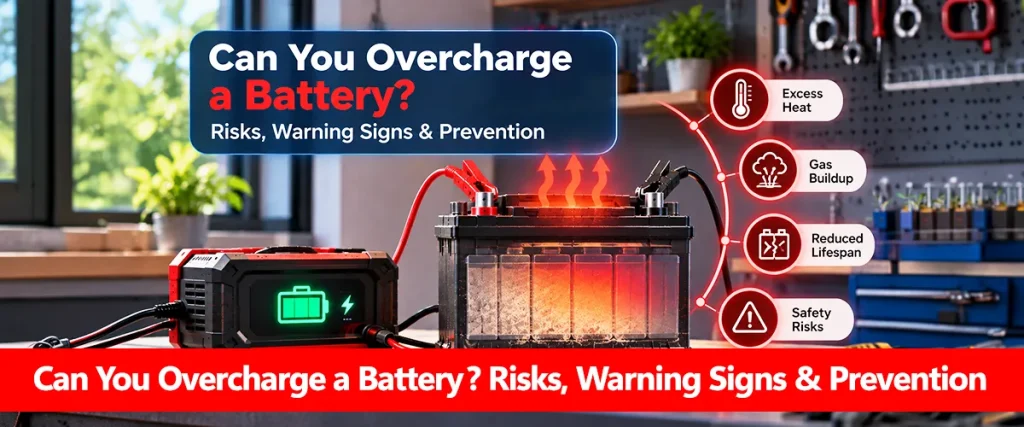
Float charging can damage a battery when the voltage is incorrect, temperature compensation is inadequate or the charger is incompatible with the battery chemistry. Excessive float voltage can contribute to gassing, electrolyte loss and premature aging in lead-acid batteries, while insufficient voltage may result in prolonged undercharging.
To maintain safe float charging:
- Follow manufacturer-approved float voltage settings.
- Use a charger compatible with the battery chemistry.
- Apply temperature compensation where required.
- Ensure suitable ventilation for lead-acid installations.
- Inspect battery terminals and connections periodically.
- Avoid conventional float charging for lithium batteries unless specifically approved.
A charger displaying a maintenance mode does not automatically guarantee compatibility. Understanding can you overcharge a battery and the effects of battery overcharging helps explain why voltage regulation remains important.
Conclusion
Float charging helps maintain suitable lead-acid batteries near full charge by applying a controlled maintenance voltage. It is particularly useful for UPS systems, emergency equipment and other standby power applications where batteries need to remain ready for use.
However, correct voltage settings, temperature compensation and charger compatibility are essential. Improper float charging can reduce battery life, while lithium batteries generally require different charging and storage methods. Explore more charging information in the Battery Charging section at Batteries Hub.
Frequently Asked Questions
What Is Float Charging?
Float charging is a maintenance charging method that applies a controlled voltage to keep a suitable rechargeable battery near full charge during standby operation.
What Is the Float Voltage of a 12V Battery?
Many 12V lead-acid batteries use float voltages around 13.5–13.8V at approximately 25°C. The correct setting depends on battery type and manufacturer specifications.
Is Float Charging Safe for Lead-Acid Batteries?
Yes, when the charger uses appropriate voltage settings, temperature compensation and manufacturer-approved charging conditions.
Can You Float Charge a Lithium Battery?
Conventional lead-acid float charging is generally unsuitable for lithium-ion batteries. Use charging and maintenance methods approved for the specific lithium battery.
What Is the Difference Between Float and Trickle Charging?
Float charging maintains a controlled voltage, while trickle charging generally supplies a small current. Their charging behavior and suitability differ.
Does Float Charging Extend Battery Life?
Proper float charging can help maintain standby lead-acid batteries by preventing prolonged undercharging. Incorrect settings, however, can accelerate degradation.
Can a Battery Stay on Float Charge Continuously?
Suitable lead-acid batteries may remain on correctly configured float chargers for extended periods when permitted by their manufacturers. Regular monitoring and appropriate temperature compensation remain important.