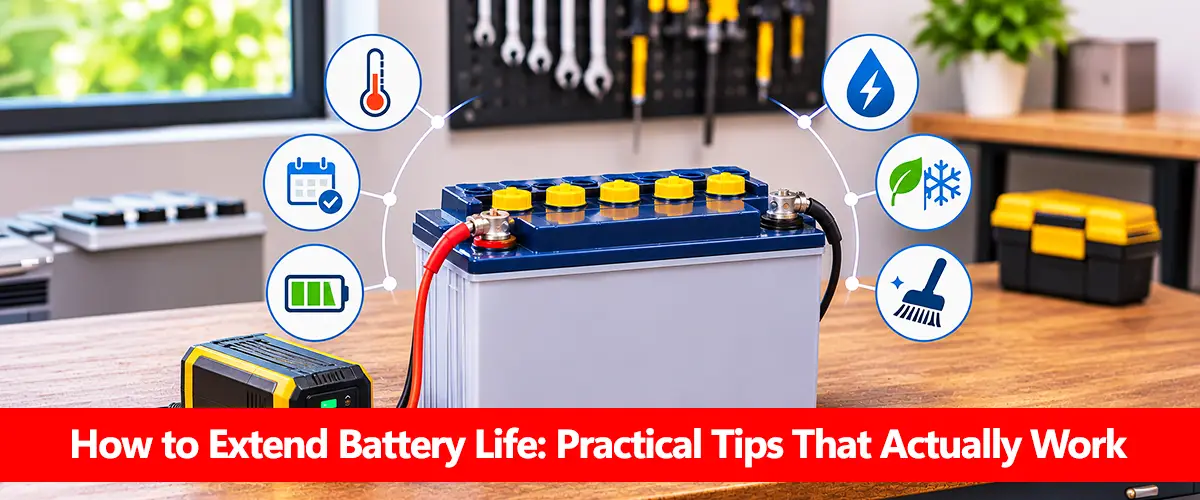
Learning how to extend battery life starts with three habits: charge your battery correctly, avoid excessive discharge and protect it from extreme temperatures. Whether you use a car battery, UPS battery, solar battery or lithium storage system, these practices can help reduce premature deterioration.
However, different battery technologies require different care. A flooded lead-acid battery benefits from regular full charging and approved electrolyte maintenance, while a lithium battery depends on suitable charging limits and battery management. The goal is not to stop battery aging completely but to preserve useful capacity and performance for as long as possible.
7 Practical Ways to Extend Battery Life
Small changes in everyday battery use can make a meaningful difference. Start with the following steps, adjusting them according to your battery manufacturer’s specifications.
- Use the correct charger. Match the battery’s voltage, chemistry and charging-current requirements.
- Avoid deep discharge. Do not routinely drain the battery to its lowest permitted level.
- Prevent excessive heat. Maintain ventilation and keep batteries away from unnecessary heat sources.
- Recharge at the right time. Avoid leaving lead-acid batteries partially discharged for extended periods.
- Keep electrical connections secure. Check for loose, damaged or corroded terminals.
- Reduce unnecessary electrical loads. Avoid drawing power from equipment that is not needed.
- Monitor battery performance. Watch for declining capacity, abnormal temperatures and charging errors.
These are preventive practices rather than repairs. Our battery maintenance guide covers routine inspections, while the steps below focus on habits that influence battery lifespan.
Don’t Discharge the Battery Deeper Than Necessary

Every rechargeable battery has a limited ability to withstand charge and discharge cycling. Deep discharge can place additional stress on its internal materials, particularly when repeated frequently.
For many deep-cycle flooded lead-acid batteries, Trojan recommends limiting routine discharge to approximately 50% of rated capacity or less. Lithium batteries often support greater usable depth of discharge, but their recommended limits depend on the specific model.
Consider this simplified example using a 100Ah battery:
| Depth of Discharge (DoD) | Charge Removed | Charge Remaining |
| 30% | 30Ah | 70Ah |
| 50% | 50Ah | 50Ah |
| 80% | 80Ah | 20Ah |
A 50% discharge means using half the rated charge capacity, not half the battery’s expected lifespan. The actual energy delivered also depends on voltage, discharge current, temperature and battery condition. For more information, see depth of discharge and battery cycle life.
Choose Charging Habits Based on Battery Chemistry
One common mistake is assuming every battery should be charged and maintained in the same way. Incorrect charging can accelerate deterioration even when the battery initially appears to work normally.
| Battery Type | Lifespan-Friendly Charging Practice |
| Flooded lead-acid | Recharge promptly after use and follow approved full-charge procedures |
| AGM / GEL | Use chemistry-specific charging settings and avoid overcharging |
| LiFePO4 | Use compatible BMS protection and manufacturer-approved voltage/current limits |
| Other lithium-ion | Follow the pack manufacturer’s charge limits and storage recommendations |
For example, lead-acid batteries can develop sulfation when left undercharged. By contrast, some lithium-ion batteries experience additional aging when held at high charge levels and elevated temperatures for prolonged periods.
Avoid applying lead-acid equalization charging to AGM, GEL or lithium batteries unless their manufacturer explicitly approves it. Incorrect charging modes can permanently damage the battery. The battery charging voltage and how to choose a battery charger guides explain these requirements in more detail.
Keep Batteries Away From Excessive Heat
Temperature has a significant effect on battery performance and aging. High temperatures can accelerate internal chemical reactions, while very low temperatures may reduce available power and create charging restrictions.
This matters in Pakistan, where batteries installed in poorly ventilated UPS cabinets, rooftop storage areas or direct sunlight can experience additional thermal stress. Practical precautions include keeping ventilation openings clear, following installation-clearance requirements and avoiding heat sources. Never enclose a battery in an unapproved airtight cabinet.
For lithium batteries, charging at low temperatures may also be restricted. Some LiFePO4 systems use a BMS to stop charging below their permitted temperature. Always follow the manufacturer’s temperature limits instead of using one universal rule. Our temperature effect on battery guide covers this topic separately.
Reduce Battery Stress in Everyday Applications
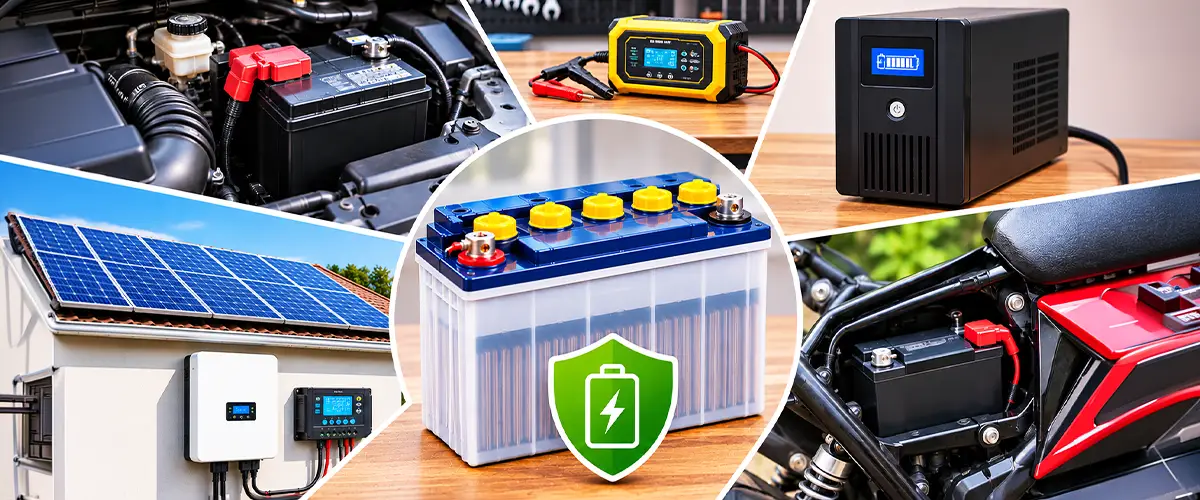
Battery lifespan also depends on how equipment uses stored energy. Frequent high-current discharge can generate extra heat and may reduce effective capacity, depending on battery chemistry.
A few application-specific habits can help:
- Car batteries: Avoid leaving lights and accessories running with the engine switched off. Have the charging system checked if starting performance declines.
- UPS batteries: Reduce unnecessary connected loads and avoid repeated deep discharge during load-shedding.
- Solar batteries: Configure inverter discharge limits according to the battery manufacturer’s recommendations.
- Motorcycle batteries: Avoid prolonged inactivity without approved charge maintenance.
For systems using multiple batteries, ensure that the battery bank configuration and charging equipment follow manufacturer specifications. Mixing incompatible batteries can create uneven charging and performance problems. For extended periods without use, refer to how to store batteries rather than assuming that disconnecting a battery is sufficient.
Recognize When Battery Aging Is Already Advanced
Even with good care, batteries gradually lose capacity because of chemical aging. Internal resistance may increase, reducing the battery’s ability to supply power under demanding loads. Warning signs include shorter backup duration, slower engine starting, repeated charging problems and noticeable performance decline under normal conditions.
Before replacing a battery, distinguish between a low state of charge (SoC) and poor state of health (SoH). A discharged battery may recover through approved charging, but a severely deteriorated battery may no longer deliver its rated performance. The state of charge vs state of health guide explains this difference, while how to check battery health covers relevant testing methods.
Safety: Stop using or charging a battery that is swollen, leaking, cracked, smoking or unusually hot. Do not attempt to repair damaged lithium battery packs or open sealed batteries. Seek qualified assistance when electrical faults or physical damage are present.
Conclusion
Understanding how to extend battery life comes down to controlling charging, discharge depth, temperature and unnecessary electrical stress. Lead-acid batteries benefit from timely charging and avoiding prolonged low charge, while lithium batteries require compatible charging equipment, suitable operating limits and effective BMS protection.
These habits cannot eliminate natural aging, but they can help maintain reliable performance and prevent avoidable battery failure.
Frequently Asked Questions
What Is the Best Way to Extend Battery Life?
Use manufacturer-approved charging settings, avoid unnecessary deep discharge, control operating temperatures and monitor battery condition regularly.
Does Charging a Battery Frequently Reduce Its Life?
Not necessarily. Charging habits affect chemistries differently. Lead-acid batteries generally benefit from timely recharging, while lithium batteries should follow their manufacturer’s recommended charging limits.
Does Fully Discharging a Battery Make It Last Longer?
No. Deep discharge can accelerate deterioration in many rechargeable batteries. Lead-acid batteries do not require complete discharge to prevent a memory effect.
How Can I Extend UPS Battery Life?
Avoid excessive discharge, maintain proper ventilation, use correct inverter charging settings and reduce unnecessary electrical loads.
Is Heat Bad for Battery Lifespan?
Yes. Excessive heat accelerates battery aging and can reduce service life. Follow the manufacturer’s approved temperature range and ventilation requirements.
Do Lithium Batteries Last Longer Than Lead-Acid Batteries?
Many LiFePO4 batteries offer higher rated cycle-life potential than conventional lead-acid batteries, but actual lifespan depends on battery design, temperature and usage.
Can an Old Battery Be Restored to Its Original Capacity?
Not reliably. Charging can restore a discharged battery’s available energy, but it generally cannot reverse significant chemical aging or permanent internal damage.