



Your cart is currently empty!.
You may check out all the available products and buy some in the shop.
Continue ShoppingLiFePO4 vs AGM battery is an important comparison when choosing rechargeable batteries for solar energy storage, UPS systems, inverters, and backup power.
Tubular vs lithium battery is an important comparison when selecting rechargeable batteries for UPS systems, home inverters, and backup power.
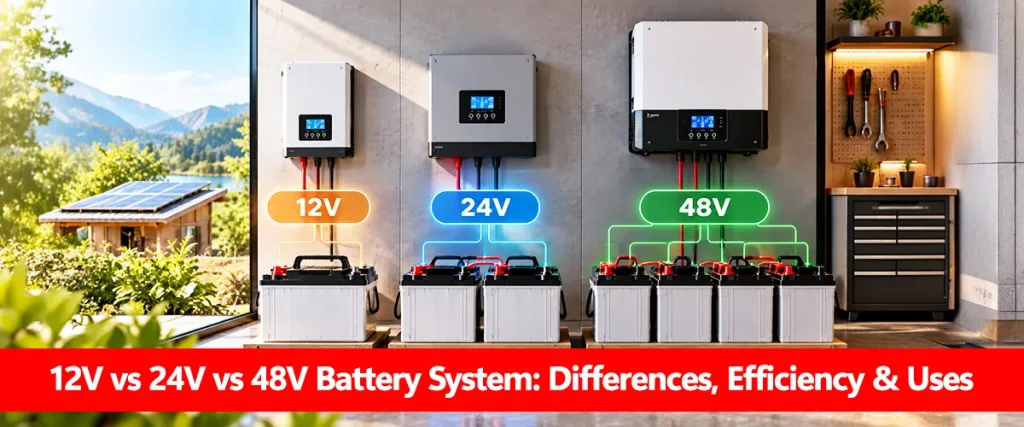
12V vs 24V vs 48V battery system is an important comparison when choosing an electrical setup for solar energy storage, home inverters, UPS systems,…
How to charge a battery safely depends on its chemistry, voltage, capacity, and the type of charger being used.
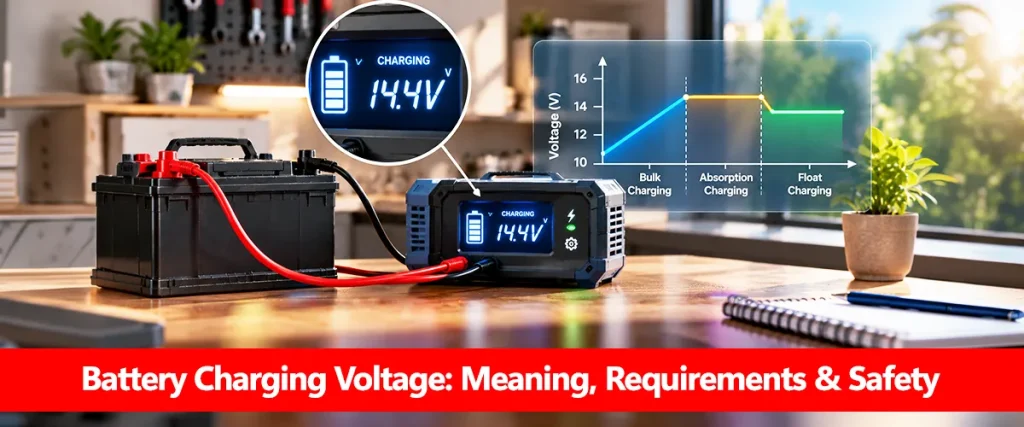
Battery charging voltage is the electrical potential applied by a charger to recharge a battery. It must be suitable for the battery's chemistry, cell…
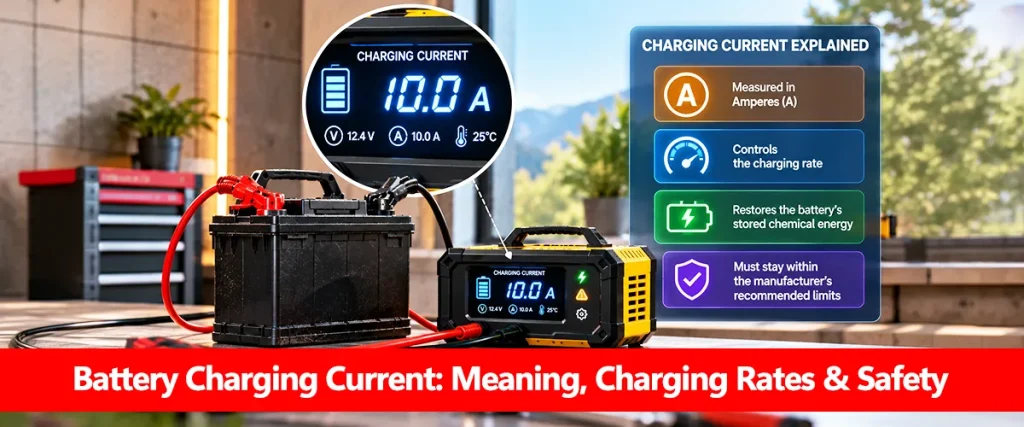
Battery charging current is the amount of electrical current flowing into a rechargeable battery during charging, measured in amperes (A).
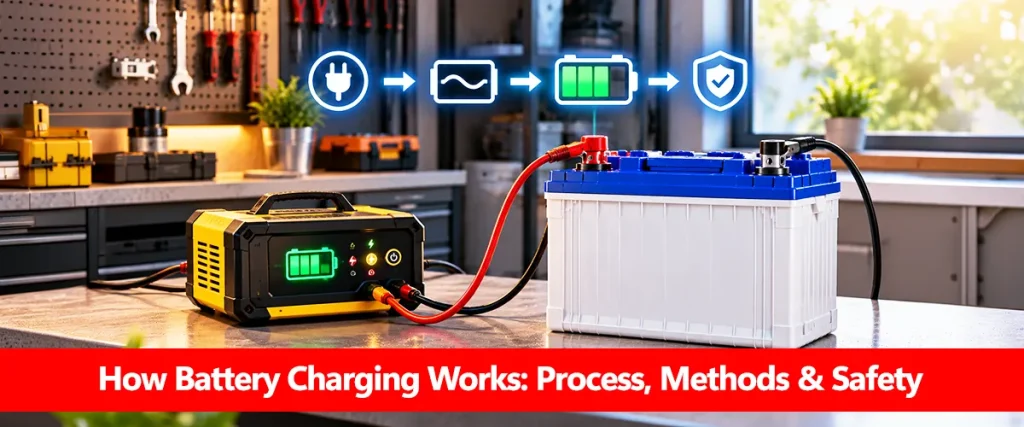
How battery charging works is based on using electrical energy to reverse the chemical reactions that occur when a rechargeable battery discharges. A compatible…
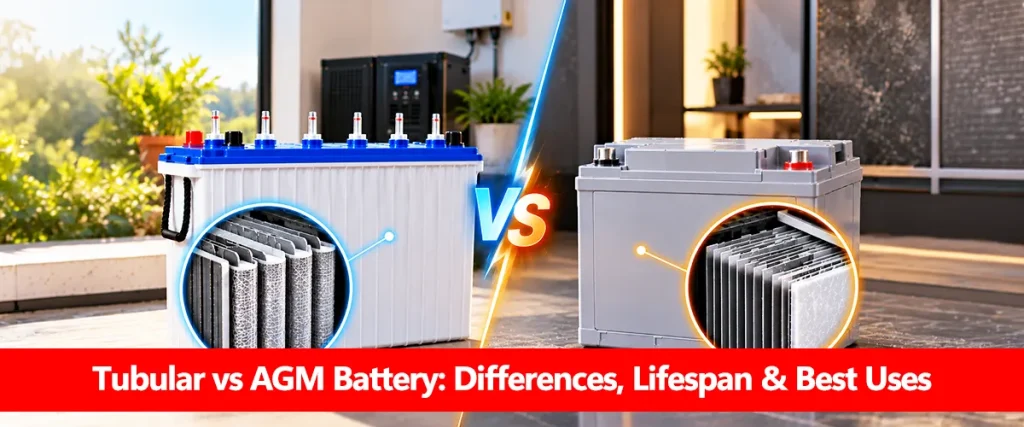
Tubular vs AGM battery is an important comparison when choosing a lead-acid battery for UPS systems, home inverters, solar storage, and backup power.
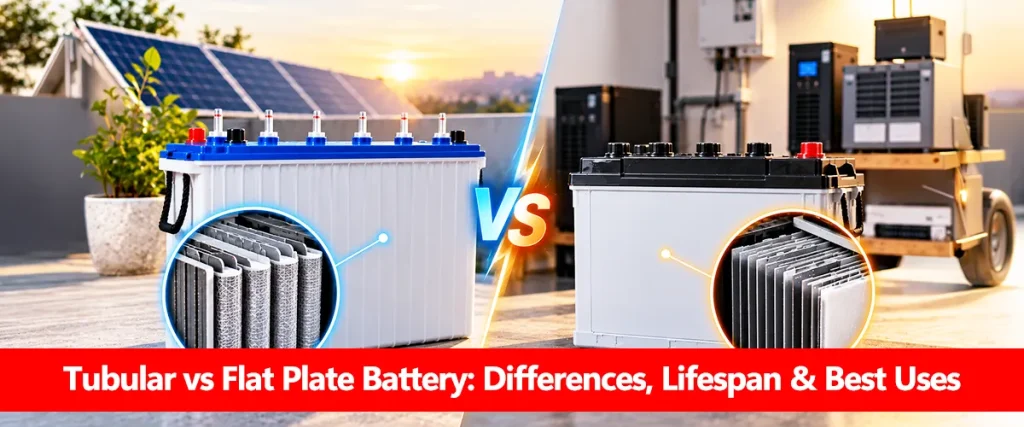
Tubular vs flat plate battery is an important comparison when choosing a lead-acid battery for UPS systems, home inverters, solar energy storage, and backup…
A NiMH battery (Nickel-Metal Hydride battery) is a rechargeable battery that uses nickel-based positive electrodes and hydrogen-absorbing metal alloys in its negative electrodes.
