

Your cart is currently empty!.
You may check out all the available products and buy some in the shop.
Continue ShoppingAn AGM battery (Absorbent Glass Mat battery) is a rechargeable lead-acid battery that holds its electrolyte within fiberglass separators between the positive and negative…
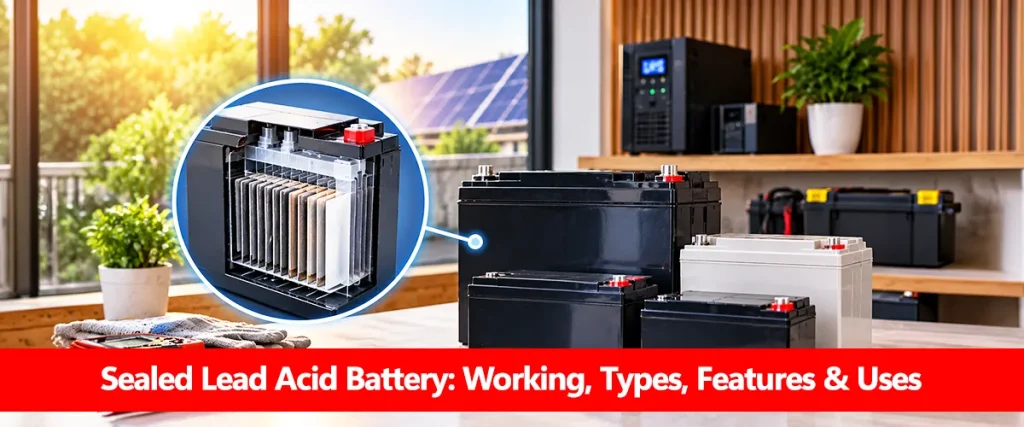
A sealed lead acid battery is a rechargeable battery designed to operate without routine electrolyte refilling.
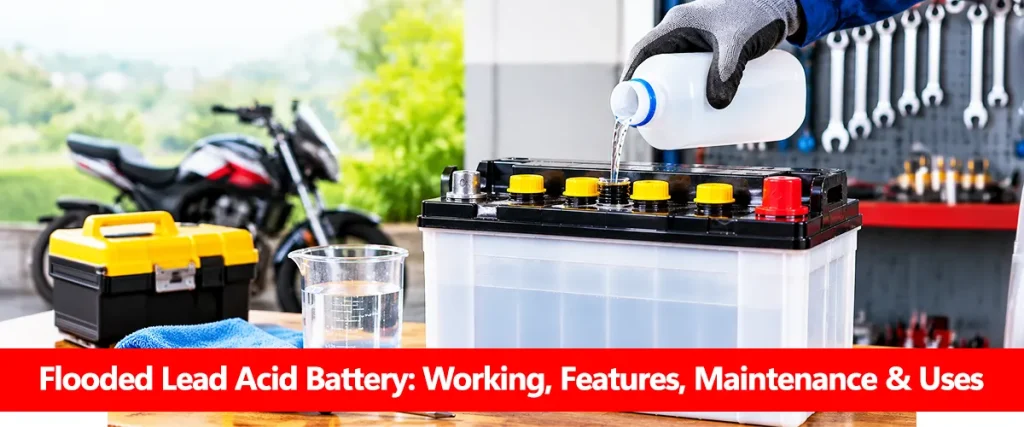
A flooded lead acid battery is a rechargeable battery that contains lead-based plates immersed in a liquid sulfuric acid electrolyte.
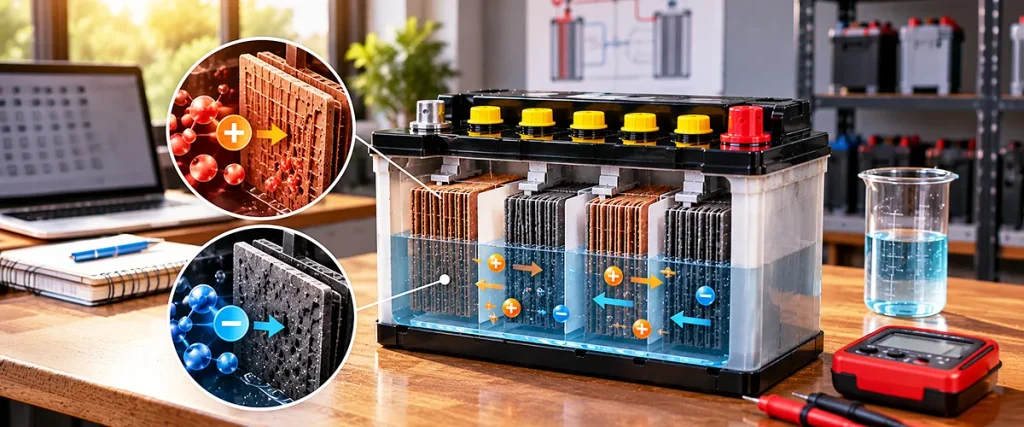
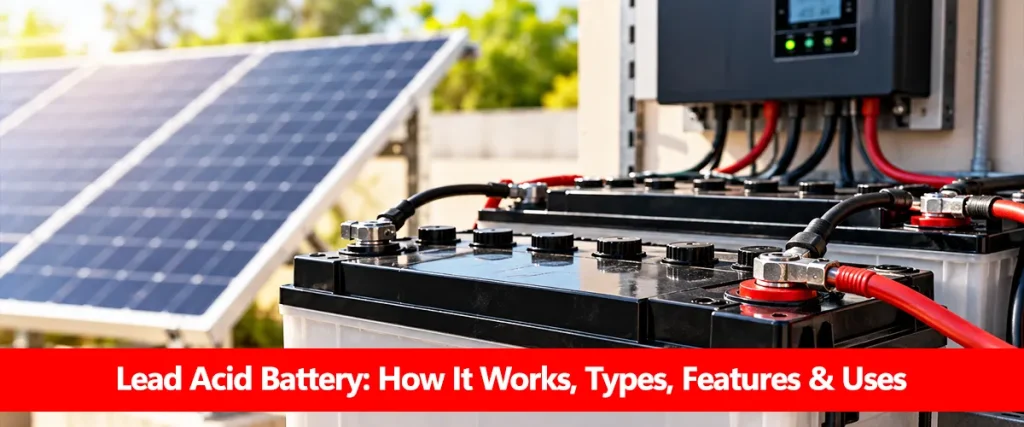
A lead acid battery is a rechargeable electrochemical battery that uses lead-based electrodes and a sulfuric acid electrolyte to store and release electrical energy.
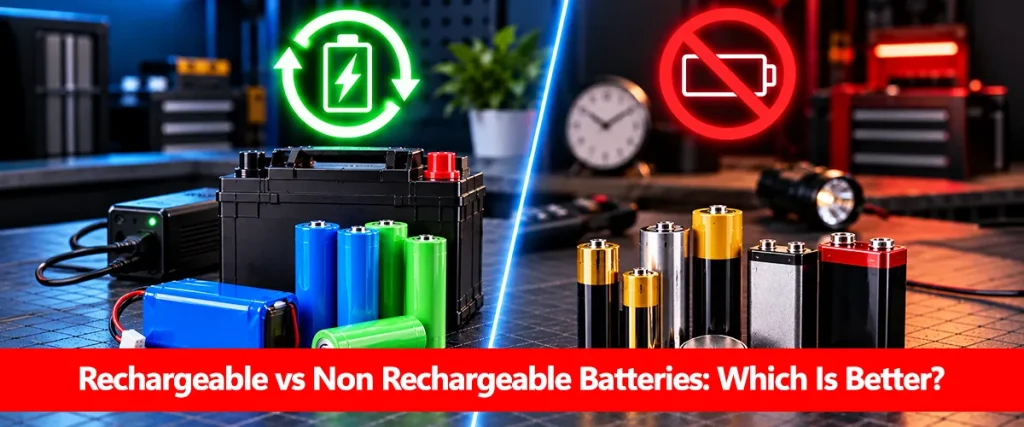
Rechargeable vs non rechargeable batteries differ primarily in how often they can be used, their replacement costs, and their charging requirements.
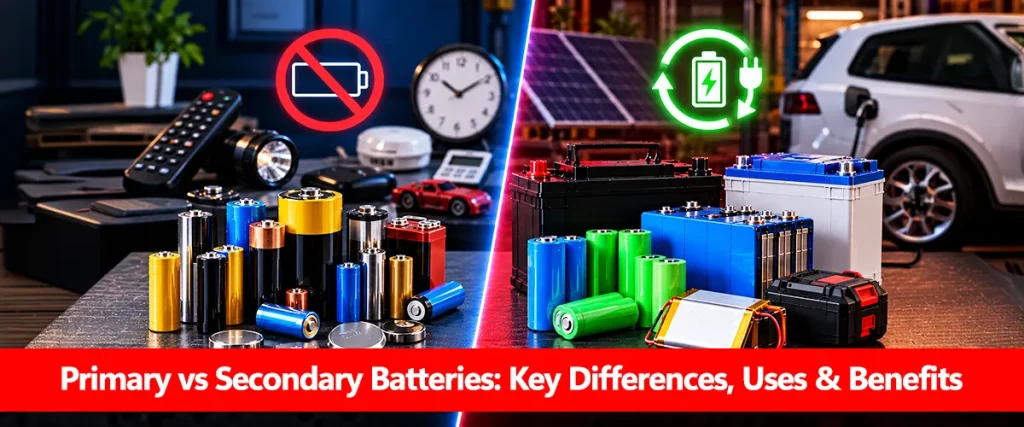
Primary vs secondary batteries differ mainly in their rechargeability and electrochemical behavior.
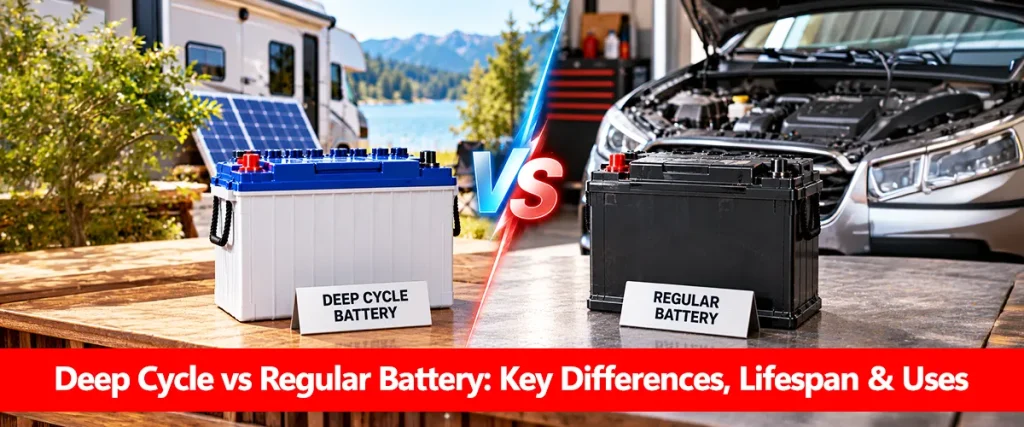
Deep cycle vs regular battery is an important comparison when selecting batteries for vehicles, UPS systems, solar storage, inverters, and backup power.
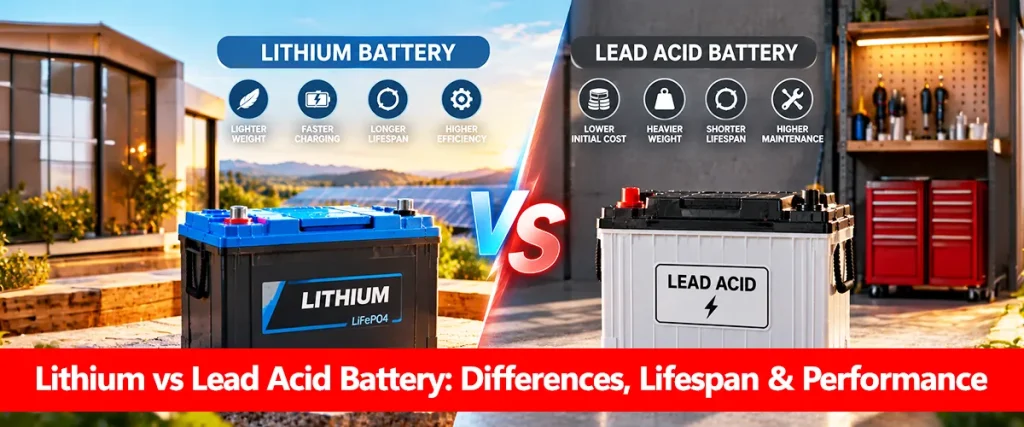
Lithium vs lead acid battery is an important comparison when choosing rechargeable batteries for UPS systems, solar energy storage, electric vehicles, and backup power.
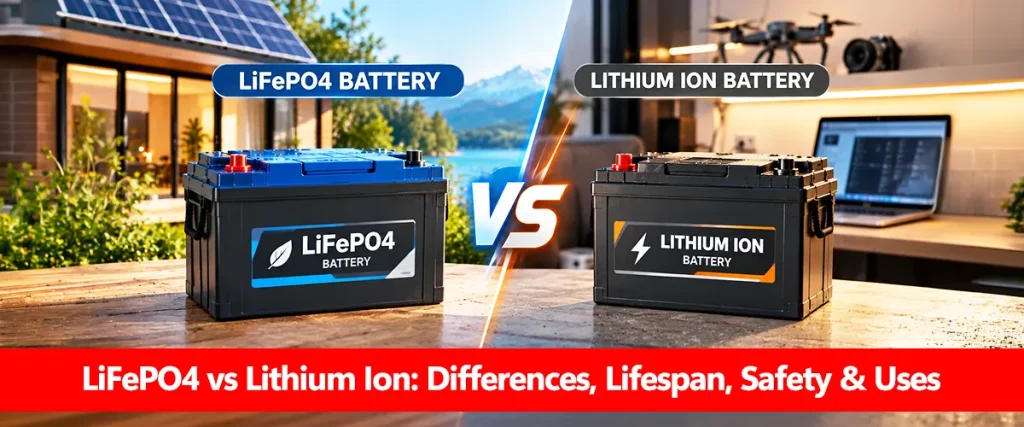
LiFePO4 vs lithium ion is a common comparison when choosing rechargeable batteries for solar energy storage, electric vehicles, portable electronics, UPS systems, and backup…
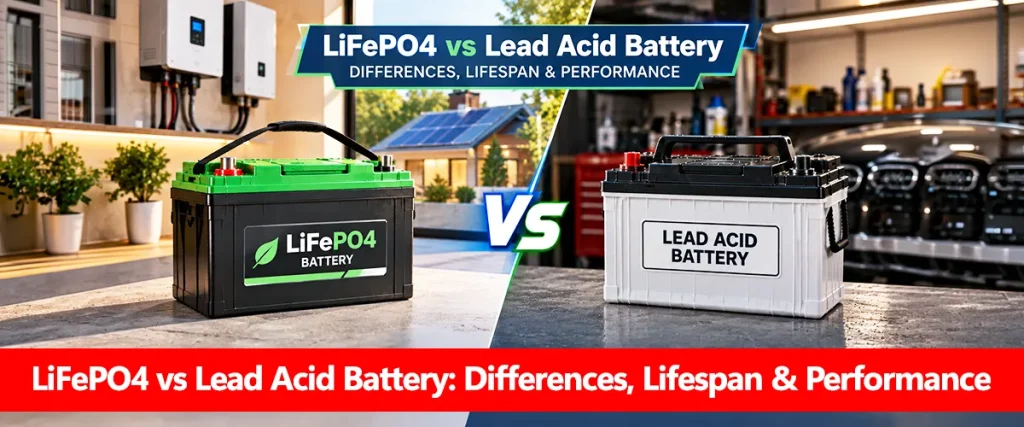
LiFePO4 vs lead acid battery is an important comparison for anyone choosing energy storage for UPS systems, solar installations, inverters, and backup power.
