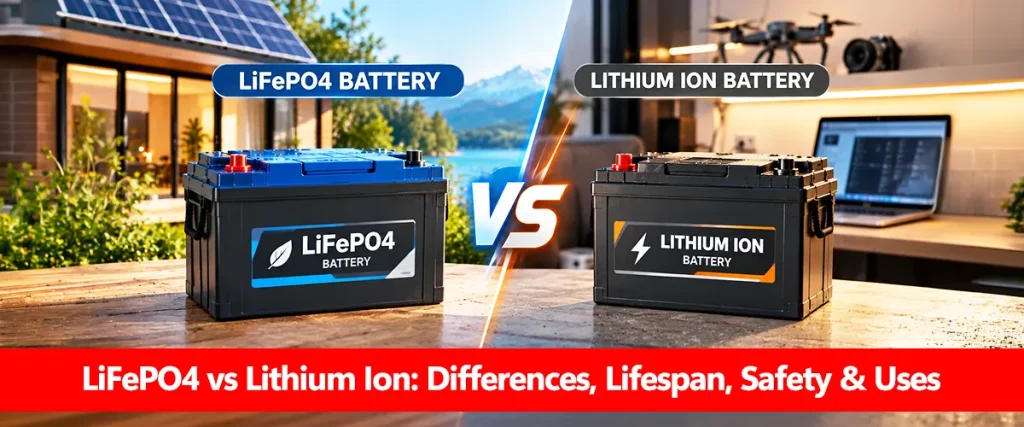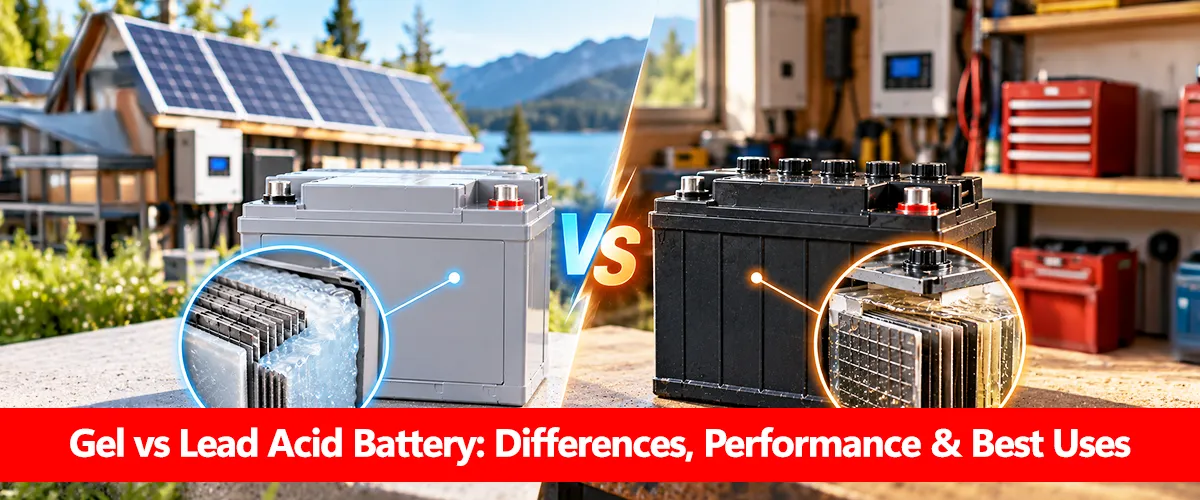
Gel vs lead acid battery is an important comparison when selecting batteries for solar systems, UPS installations, inverters, and backup power applications. However, a gel battery is itself a type of lead-acid battery. The meaningful comparison is between gel and conventional flooded lead-acid batteries.
Gel batteries use silica-thickened electrolyte, while flooded batteries contain freely flowing liquid electrolyte. This difference affects charging requirements, maintenance, electrolyte containment, and operating characteristics. Both technologies store electrical energy through lead-acid electrochemical reactions, but their construction makes them suitable for different applications.
What Is a Gel Battery?
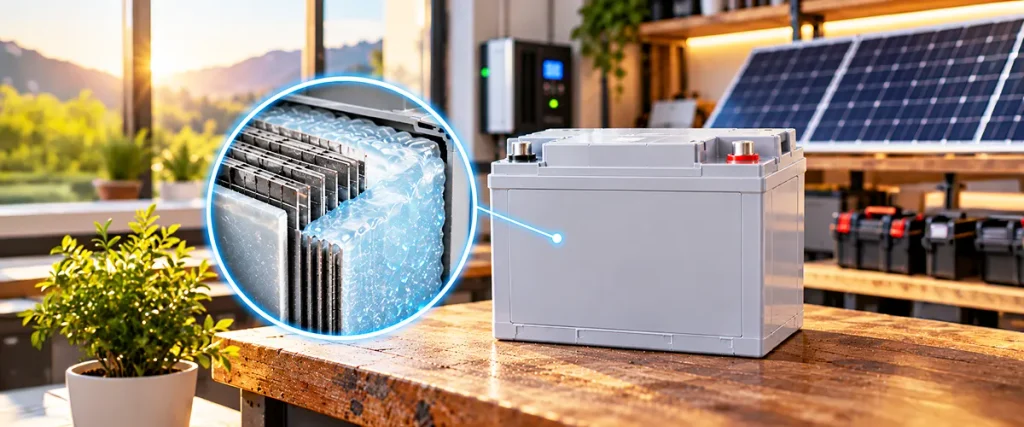
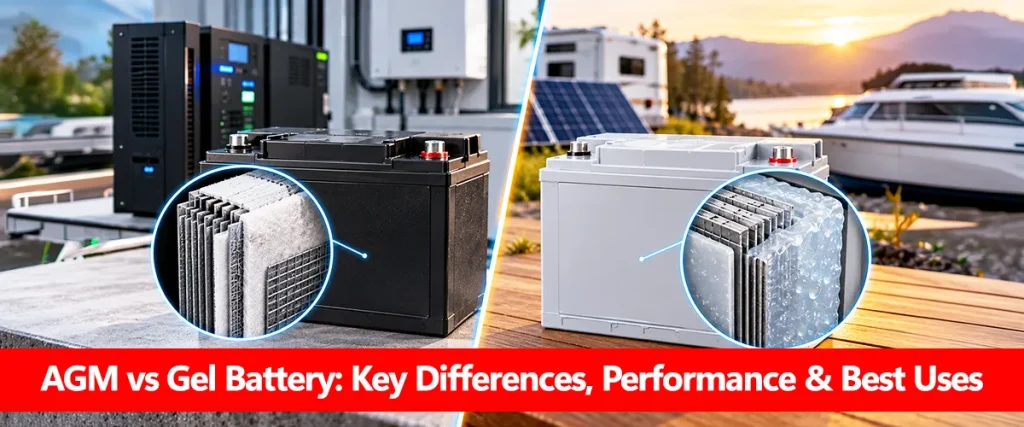
A gel battery is a valve-regulated lead-acid (VRLA) battery that uses silica to immobilize its sulfuric acid electrolyte. Its construction reduces liquid movement and allows operation without routine water refilling.
Gel batteries are commonly used in selected deep-cycle, mobility, and backup power applications. They require carefully controlled charging because excessive voltage can cause gas pockets and permanent battery damage. Learn more about their construction and applications in our gel battery guide.
What Is a Flooded Lead Acid Battery?
A conventional flooded lead-acid battery contains positive and negative lead-based plates immersed in liquid sulfuric acid electrolyte. During discharge, chemical reactions produce electrical energy, while charging reverses these reactions.
Flooded batteries are widely used in vehicles, inverter systems, and industrial backup installations. Many serviceable designs require periodic electrolyte inspection and distilled-water replenishment. Our flooded lead acid battery guide explains this construction, while the lead acid battery article covers the underlying chemistry.
Gel vs Lead Acid Battery: Quick Comparison
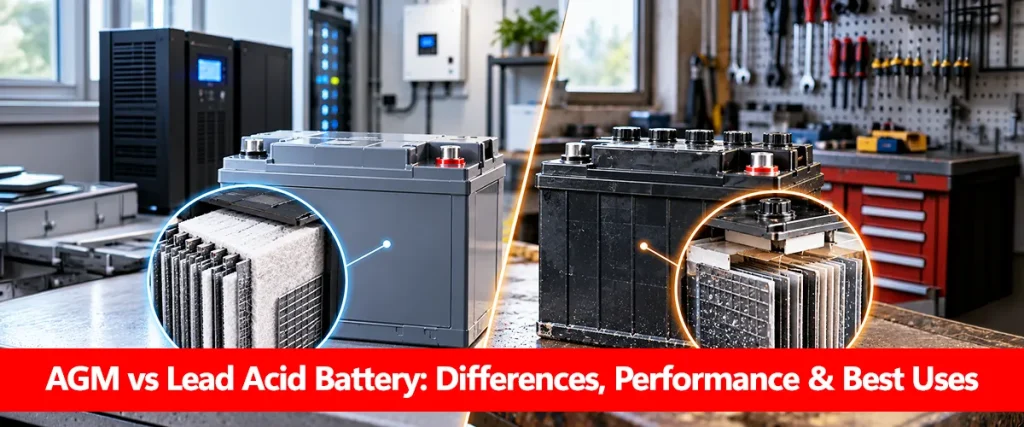
The primary difference between gel and flooded batteries is the physical form of their electrolyte. Both technologies are rechargeable, but their maintenance and charging requirements differ.
| Feature | Gel Battery | Flooded Lead Acid Battery |
| Electrolyte | Silica-thickened gel | Free-flowing liquid |
| Construction | Valve-regulated | Vented or serviceable |
| Water refilling | Not required | Required in many models |
| Charging sensitivity | Particularly sensitive to overvoltage | Depends on design and charging method |
| Spill resistance | Reduced liquid leakage risk | Greater liquid spill risk |
| Maintenance | Low | Usually higher |
| Deep-cycle capability | Available in deep-cycle designs | Available in deep-cycle designs |
| Ventilation | Still required | Required |
| Initial cost | Often higher | Generally lower |
| Common applications | Mobility, backup, solar | Vehicles, inverters, solar |
Neither battery type is automatically superior. Performance depends on design, rated capacity, charging conditions, and intended use.
Gel vs Lead Acid Battery Performance
Gel and flooded batteries use similar electrochemical reactions, but their electrolyte construction influences performance. Gel batteries are often designed for moderate-current applications and repeated cycling. However, their current-delivery capability depends on the specific model.
Flooded lead-acid batteries are available in both starting and deep-cycle designs. Some provide high starting currents, while others are built for sustained discharge.
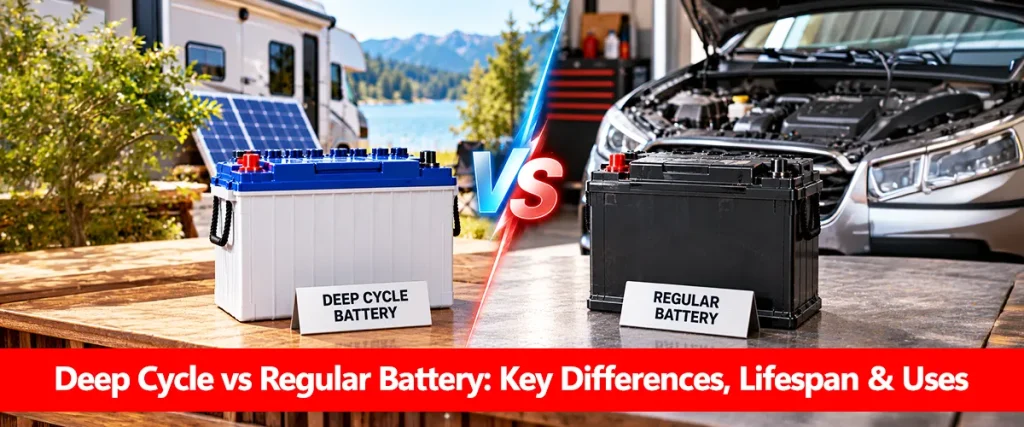
For applications involving repeated discharge, selecting a properly rated deep cycle battery is more important than relying on the electrolyte type alone. Battery capacity, internal resistance, temperature, and discharge rate also influence real-world performance.
Gel vs Lead Acid Battery Charging Requirements
Charging compatibility is one of the most important differences in the gel vs lead acid battery comparison. Gel batteries require charging profiles that prevent excessive gas generation. Overvoltage can create gas pockets within the gel electrolyte and cause irreversible capacity loss.
Flooded batteries generally allow greater flexibility in certain charging and maintenance procedures, but they still require appropriate voltage and current limits.
Important charging considerations include:
- Use a charger compatible with the battery type.
- Follow manufacturer bulk, absorption, and float voltage limits.
- Apply temperature compensation where recommended.
- Avoid prolonged overcharging and undercharging.
- Confirm charging compatibility before replacing an existing battery.
A charging profile designed for a flooded battery should not automatically be used for a gel battery. For another sealed lead-acid design, see our AGM battery guide.
Gel vs Lead Acid Battery Lifespan
Battery lifespan depends on depth of discharge, charging quality, temperature, and construction. Some gel batteries provide good cycle-life performance in applications involving repeated moderate discharge. However, high-quality flooded deep-cycle batteries can also deliver long service life when correctly maintained.
Prolonged undercharging can contribute to sulfation in both technologies, while excessive charging can cause water loss and damage. Understanding battery cycle life and depth of discharge helps explain why batteries with similar capacity ratings may have different service lives.
Maintenance and Safety Differences
Gel batteries are generally easier to maintain because they do not require routine water replenishment. Their immobilized electrolyte also reduces the risk of liquid acid spills during normal handling. Flooded batteries often require electrolyte-level inspection, distilled-water replenishment, and regular terminal maintenance.
However, gel batteries are not completely gas-tight. Their pressure-relief valves can release gas under abnormal conditions, making appropriate ventilation important. Both technologies contain lead and sulfuric acid, so safe handling and responsible recycling are essential. Our sealed lead acid battery article explains valve-regulated construction and maintenance requirements.
Gel vs Lead Acid Battery Cost and Efficiency
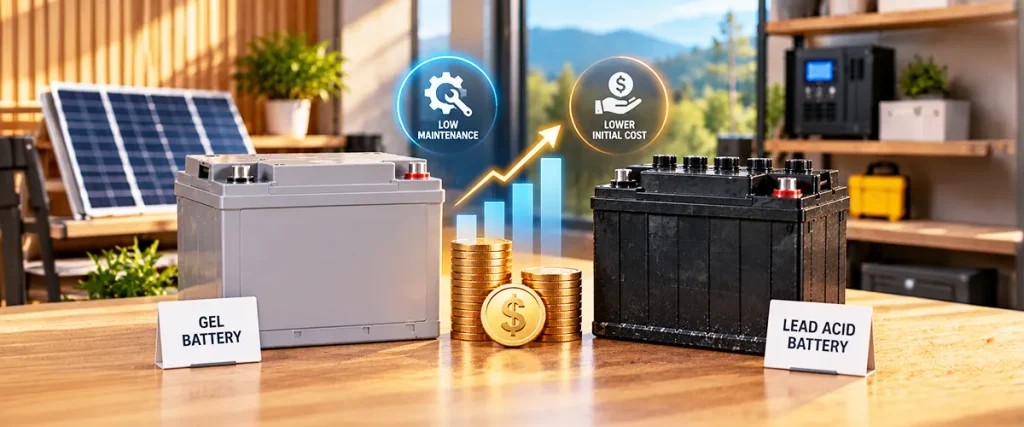
Conventional flooded batteries generally have a lower initial purchase price than comparable gel batteries. Gel batteries often cost more because of their electrolyte construction and manufacturing requirements. However, total ownership cost depends on battery lifespan, maintenance, charging conditions, and replacement frequency.
Charging and energy efficiency also vary by design. It is not accurate to assume that every gel battery is more efficient than every flooded battery.
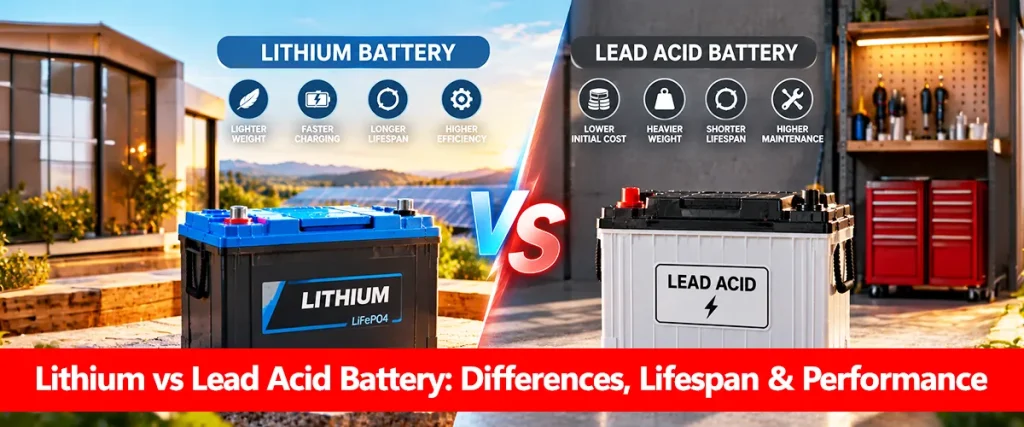
For applications where initial cost is important and regular servicing is practical, flooded batteries may offer good value. Gel batteries may be preferable where low maintenance and reduced electrolyte movement are priorities. For broader chemistry differences, explore lithium vs lead acid battery.
Which Is Better: Gel or Flooded Lead Acid?
The best option depends on application requirements, maintenance access, and charging compatibility.
| Application | Practical Recommendation |
| Solar energy storage | Deep-cycle gel or flooded, based on specifications |
| Home UPS systems | Either, depending on charger compatibility |
| Mobility equipment | Gel may be suitable when specified |
| Conventional vehicle starting | Starting-rated flooded battery is commonly suitable |
| Limited maintenance access | Gel may be more convenient |
| Budget-sensitive installations | Flooded often has a lower initial cost |
| Regularly serviced battery banks | Flooded can be practical |
For systems using tubular batteries, our tubular vs flat plate battery comparison explains another important construction difference.
How to Choose Between Gel and Lead Acid Batteries
Choosing the appropriate battery requires evaluating the electrical system and operating conditions.
Consider the following factors:
- Application: Determine whether the battery is intended for standby, starting, or deep-cycle operation.
- Voltage and capacity: Match the battery to the equipment requirements.
- Charging compatibility: Confirm that the charger supports the selected battery.
- Maintenance requirements: Consider whether electrolyte inspection is practical.
- Cycle-life rating: Review manufacturer data under comparable discharge conditions.
- Operating temperature: Check recommended temperature limits.
- Total cost: Consider purchase price, maintenance, and replacement frequency.
For installations using multiple batteries, correct system configuration is also important. Learn more in our 12V vs 24V vs 48V battery system guide.
Related Battery Comparisons
Gel batteries are one of several lead-acid designs used in backup power and energy storage systems. Other technologies differ in electrolyte construction, plate design, charging characteristics, and maintenance needs. To compare sealed lead-acid technologies, read AGM vs gel battery and AGM vs lead acid battery.
For alternative lead-acid constructions, explore tubular vs AGM battery. If you are considering lithium-based energy storage, see lead acid vs lithium solar battery or replace UPS lead acid battery with lithium.
Conclusion
The gel vs lead acid battery comparison shows that gel and conventional flooded batteries share the same basic chemistry but differ in electrolyte construction, charging sensitivity, maintenance requirements, and installation characteristics. Gel batteries offer reduced electrolyte movement and low routine maintenance, while flooded batteries generally provide a lower initial cost and remain suitable for regularly serviced installations.The best choice depends on charging compatibility, discharge requirements, expected lifespan, and total ownership cost. Explore more articles in the Battery Comparisons category at Batteries Hub.
Frequently Asked Questions
Is a Gel Battery a Lead Acid Battery?
Yes. A gel battery is a type of lead-acid battery that uses silica-thickened sulfuric acid electrolyte.
What Is the Main Difference Between Gel and Lead Acid Batteries?
The main difference is electrolyte construction. Gel batteries immobilize their electrolyte, while conventional flooded batteries contain freely flowing liquid electrolyte.
Do Gel Batteries Last Longer Than Flooded Batteries?
Not necessarily. Lifespan depends on battery design, charging practices, temperature, and depth of discharge.
Can I Replace a Flooded Lead Acid Battery With a Gel Battery?
Replacement is possible when the gel battery meets the equipment requirements and the charging system supports its specified charging profile.
Do Gel Batteries Need Water?
No. Gel batteries are valve-regulated and do not require routine water refilling.
Which Battery Is Better for Solar: Gel or Flooded Lead Acid?
Both can be suitable for solar storage. The appropriate choice depends on cycle-life requirements, charging compatibility, maintenance access, and operating conditions.
Are Gel Batteries More Expensive Than Flooded Batteries?
Gel batteries often have a higher initial cost than comparable flooded batteries, although pricing varies by capacity, manufacturer, and battery design.