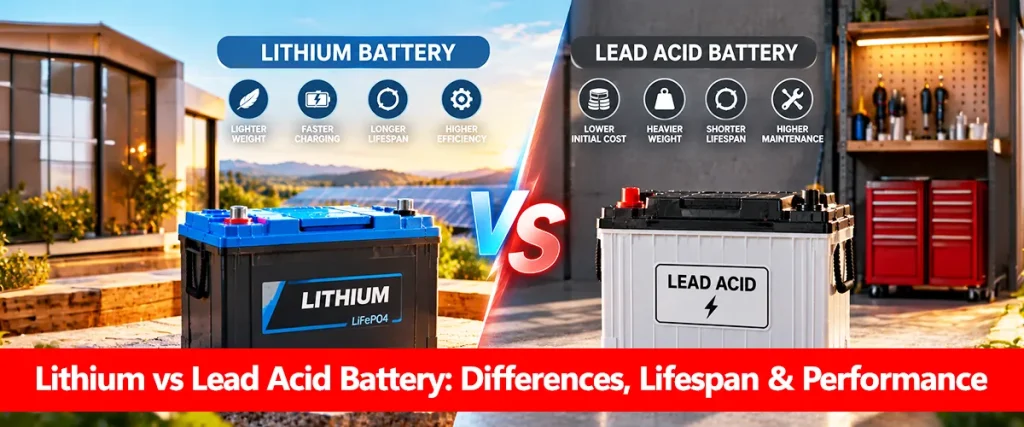
LiFePO4 vs lead acid battery is an important comparison for anyone choosing energy storage for UPS systems, solar installations, inverters, and backup power. Both are rechargeable battery technologies, but they differ in chemistry, usable capacity, charging efficiency, weight, lifespan, and maintenance requirements.
LiFePO4 batteries generally offer longer cycle life, higher usable energy, and lower weight. Lead-acid batteries remain popular because they are widely available and usually cost less initially. Understanding these differences helps determine which technology offers better performance and long-term value for a particular application.
What Is a LiFePO4 Battery?
A LiFePO4 battery, also known as a lithium iron phosphate or LFP battery, is a type of rechargeable lithium-ion battery. It uses lithium iron phosphate as its positive electrode material and transfers lithium ions between electrodes during charging and discharging.
LiFePO4 batteries are widely used in solar energy storage, backup systems, and electric vehicles because of their cycle-life potential and thermal stability. Most LiFePO4 battery packs use a battery management system to monitor cell voltage, current, temperature, and balancing. Read our LiFePO4 battery guide for more details about this chemistry.
What Is a Lead Acid Battery?
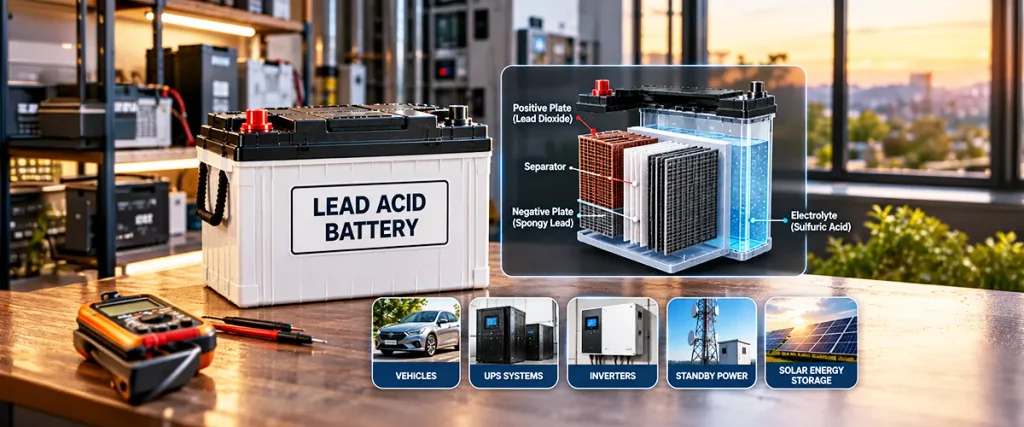
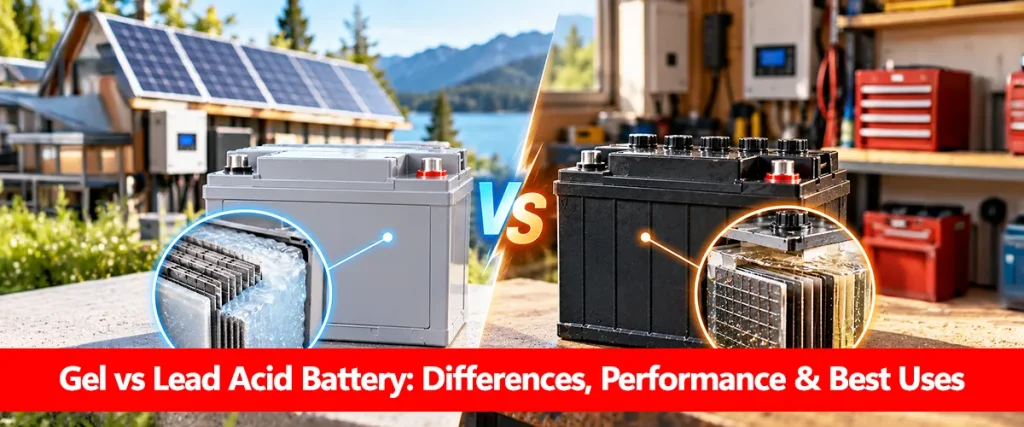
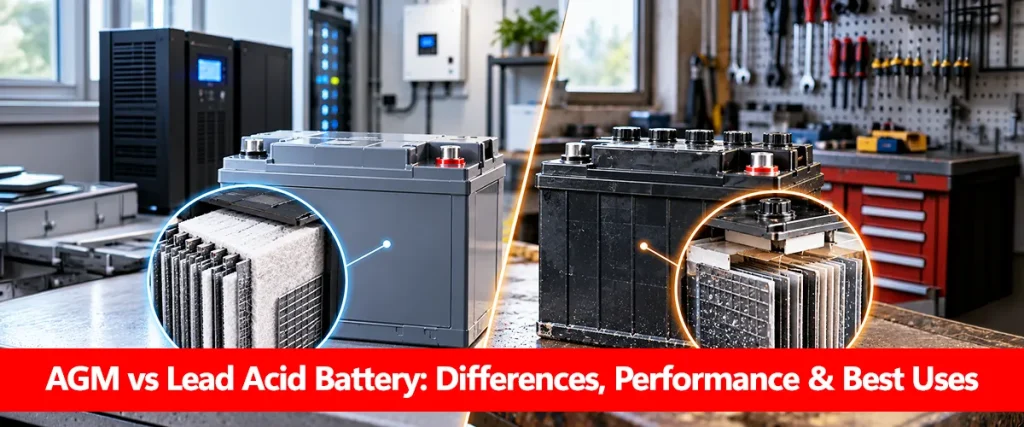
A lead-acid battery stores electrical energy through reactions involving lead-based electrodes and sulfuric acid electrolyte. Lead-acid technology includes flooded, AGM, gel, and tubular designs. These batteries are commonly used in vehicles, UPS systems, inverters, and standby power installations.
Their performance depends on plate construction, electrolyte design, charging conditions, and intended discharge pattern. Our lead acid battery guide explains the technology and its common applications.
LiFePO4 vs Lead Acid Battery: Quick Comparison
| Feature | LiFePO4 Battery | Lead-Acid Battery |
| Chemistry | Lithium iron phosphate | Lead and sulfuric acid |
| Nominal cell voltage | Approximately 3.2V | Approximately 2V |
| Energy density | Generally higher | Generally lower |
| Weight | Lighter for comparable energy | Heavier |
| Usable capacity | Often supports deeper discharge | Deep discharge usually reduces cycle life |
| Cycle life | Generally longer | Generally shorter under frequent deep cycling |
| Charging efficiency | Generally higher | Generally lower |
| Charging speed | Often faster with suitable equipment | Usually slower near full charge |
| Maintenance | Generally low | Depends on battery design |
| Initial cost | Usually higher | Usually lower |
| Battery protection | BMS commonly required | Appropriate charging and electrical protection |
| Common uses | Solar, UPS, energy storage | UPS, vehicles, backup systems |
These are general differences. Actual performance varies by manufacturer, battery quality, and operating conditions.
LiFePO4 vs Lead Acid Battery Performance
LiFePO4 batteries generally have higher energy density than lead-acid batteries. This allows them to store comparable amounts of energy with less weight and often less installation space. LiFePO4 batteries also tend to maintain a relatively stable voltage during much of their discharge cycle. Lead-acid batteries usually show a more noticeable voltage decline as their state of charge decreases.
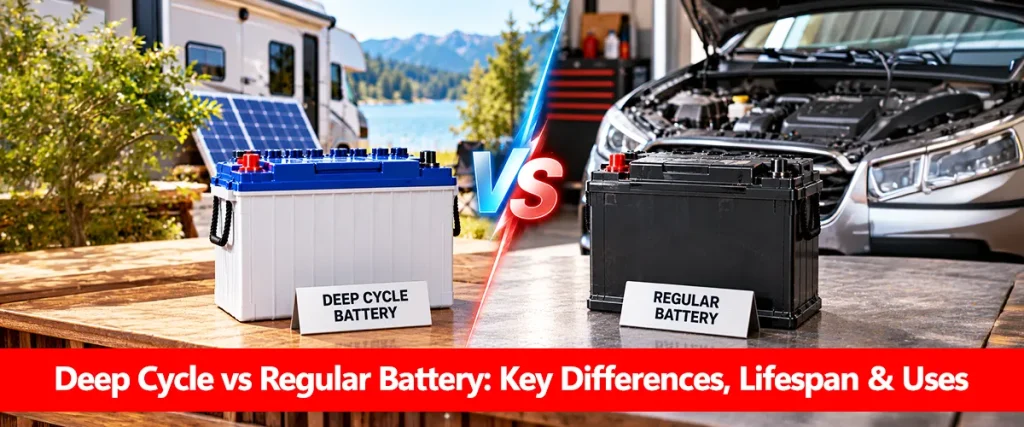
Both technologies can supply substantial power, but maximum discharge current depends on the battery’s design and specifications. For applications involving frequent cycling, our deep cycle battery guide explains why sustained discharge capability matters.
Usable Capacity and Depth of Discharge
Rated battery capacity does not always represent the amount of energy that should be used during normal operation. LiFePO4 batteries can often operate at a greater depth of discharge while maintaining good cycle-life performance. Lead-acid batteries generally experience faster degradation when repeatedly discharged deeply.
For this reason, two batteries with similar rated energy capacity may provide different amounts of practical usable energy. The appropriate discharge limit depends on the manufacturer and operating conditions. Learn more in our depth of discharge guide.
LiFePO4 vs Lead Acid Battery Charging
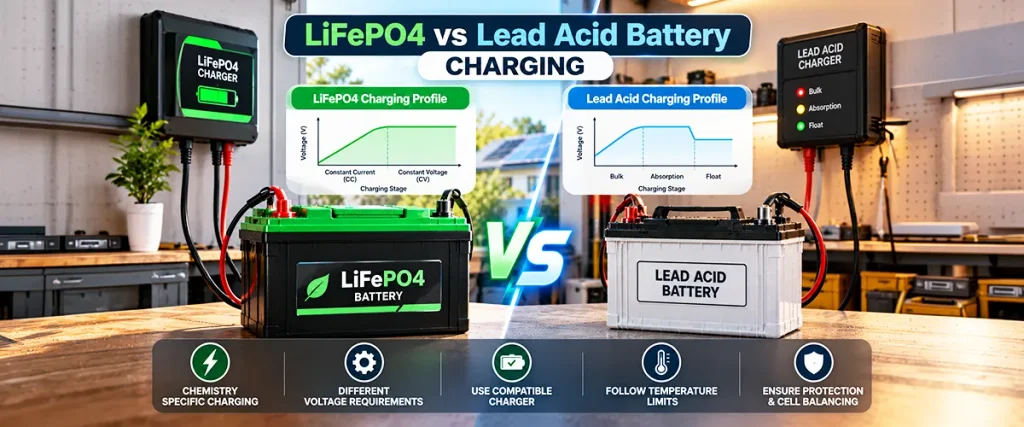
LiFePO4 and lead-acid batteries require different charging profiles. LiFePO4 batteries use chemistry-specific charging voltage and current limits. Their battery management systems help protect against overcharging, overdischarging, excessive current, and unsuitable temperatures.
Lead-acid batteries commonly use bulk, absorption, and float charging stages. Flooded, AGM, and gel designs can have different voltage requirements.
Important charging considerations include:
- Use a charger compatible with the battery chemistry.
- Follow manufacturer voltage and current limits.
- Confirm inverter charging settings before replacing batteries.
- Avoid charging outside the recommended temperature range.
- Ensure the LiFePO4 battery has suitable protection and cell balancing.
A lead-acid charger should not automatically be used with LiFePO4. Compatibility must be confirmed before installation. Our battery management system guide explains how lithium battery packs monitor and protect their cells.
LiFePO4 vs Lead Acid Battery Lifespan
LiFePO4 batteries generally provide longer cycle life than conventional lead-acid batteries in repeated cycling applications. Their chemistry is well suited to regular charging and discharging, making them attractive for energy storage systems used frequently.
Lead-acid batteries can experience sulfation, active-material degradation, and reduced capacity when repeatedly discharged deeply or operated under unsuitable charging conditions. However, lifespan depends on temperature, battery quality, charging practices, and depth of discharge. Our battery cycle life guide explains how cycling affects battery longevity.
Safety and Thermal Management
Both technologies require appropriate electrical protection and safe installation. LiFePO4 has relatively strong thermal stability compared with many other lithium-ion chemistries. However, LiFePO4 batteries can still experience hazardous failures under severe electrical, thermal, or mechanical abuse.
Lead-acid batteries contain corrosive sulfuric acid and toxic lead. Flooded designs can release hydrogen gas during charging, making ventilation important. LiFePO4 systems require suitable battery management and temperature protection, while lead-acid systems require appropriate charging controls and precautions against acid exposure and gas accumulation. For differences within lithium technology, read LiFePO4 vs lithium ion.
Maintenance Requirements
LiFePO4 batteries generally require less routine maintenance than flooded lead-acid batteries. They do not require electrolyte-level checks or distilled-water refilling.
Flooded lead-acid batteries may require periodic water replenishment, terminal inspection, and ventilation checks. Sealed AGM and gel batteries eliminate routine water refilling but still require proper charging and care. For a direct comparison with one sealed lead-acid design, explore LiFePO4 vs AGM battery.
LiFePO4 vs Lead Acid Battery Cost
Lead-acid batteries usually have a lower initial purchase price than LiFePO4 batteries with comparable nominal energy capacity. LiFePO4 batteries generally cost more initially because of their cells, battery management electronics, and system requirements. However, longer cycle life, higher usable capacity, and lower maintenance needs can improve their long-term value in frequently used applications.
Total ownership cost depends on:
- Initial battery purchase and installation.
- Usable energy capacity.
- Expected cycle life.
- Charging efficiency.
- Maintenance requirements.
- Replacement frequency.
The most economical option depends on how frequently the battery is used and how long the system is expected to operate.
Which Is Better: LiFePO4 or Lead Acid Battery?
| Application | Practical Recommendation |
| Frequent solar storage cycling | LiFePO4 often offers advantages |
| Home UPS with regular outages | LiFePO4 may provide better long-term value |
| Occasional standby backup | Lead-acid may be economical |
| Weight-sensitive installations | LiFePO4 generally preferred |
| Low initial budget | Lead-acid often costs less |
| Frequent deep discharge | LiFePO4 commonly suitable |
| Existing lead-acid system | Check compatibility before switching |
| Automotive engine starting | Use the manufacturer-specified starting battery |
For solar-specific battery selection, read our best battery type for solar guide.
How to Choose Between LiFePO4 and Lead Acid Batteries
Choosing the right battery requires evaluating operating conditions and system compatibility.
Consider these factors:
- Application: Determine whether the battery is intended for standby or frequent cycling.
- Voltage compatibility: Match the battery system to the inverter or equipment.
- Usable capacity: Compare practical energy delivery rather than rated capacity alone.
- Charging requirements: Confirm charger and inverter compatibility.
- Cycle-life rating: Review manufacturer specifications at comparable discharge depths.
- Safety: Consider ventilation, temperature limits, and battery protection.
- Total cost: Evaluate purchase price and expected replacement frequency.
For broader chemistry differences, explore lithium vs lead acid battery.
Related Battery Comparisons
LiFePO4 and lead-acid batteries are available in different designs, and their performance depends on construction and application.
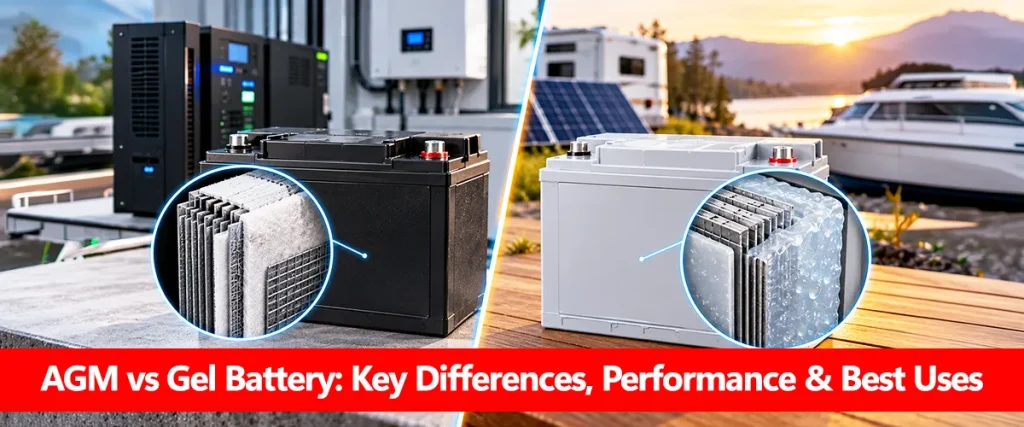
For another lead-acid comparison, read AGM vs gel battery. Our tubular vs lithium battery guide covers the differences between commonly used tubular lead-acid batteries and lithium alternatives. Users planning a UPS conversion should also review replace UPS lead acid battery with lithium before changing battery chemistry.
Conclusion
The LiFePO4 vs lead acid battery comparison shows that LiFePO4 generally offers longer cycle-life potential, higher usable capacity, lower weight, and reduced routine maintenance. Lead-acid batteries remain practical for applications where initial cost, availability, and compatibility with existing equipment are important.
For frequent cycling and long-term energy storage, LiFePO4 often offers advantages. For occasional standby applications, a properly selected lead-acid battery may remain economical. Explore more guides in the Battery Comparisons category at Batteries Hub.
Frequently Asked Questions
What Is the Main Difference Between LiFePO4 and Lead Acid Batteries?
LiFePO4 uses lithium iron phosphate chemistry, while lead-acid batteries use lead-based electrodes and sulfuric acid electrolyte. They differ in energy density, weight, charging requirements, and cycle life.
Does LiFePO4 Last Longer Than Lead Acid?
LiFePO4 batteries generally provide longer cycle life in repeated cycling applications, although actual lifespan depends on battery quality, temperature, and operating conditions.
Can I Replace a Lead Acid Battery With LiFePO4?
Replacement may be possible if voltage, charging settings, discharge-current capability, battery protection, and equipment compatibility are suitable.
Is LiFePO4 Better for Solar Energy Storage?
LiFePO4 often offers advantages for frequently cycled solar storage because of its usable capacity, cycle-life potential, and relatively low maintenance requirements.
Which Battery Charges Faster: LiFePO4 or Lead Acid?
LiFePO4 batteries can often accept faster charging with compatible equipment, but actual charging speed depends on battery specifications and charger output.
Are LiFePO4 Batteries Safer Than Lead Acid Batteries?
Both technologies have safety risks. LiFePO4 requires electrical and temperature protection, while lead-acid batteries require precautions against acid exposure and gas generation.
Are LiFePO4 Batteries Worth the Higher Cost?
LiFePO4 may provide better long-term value in applications involving frequent cycling, but the result depends on purchase price, usable capacity, expected lifespan, and system requirements.