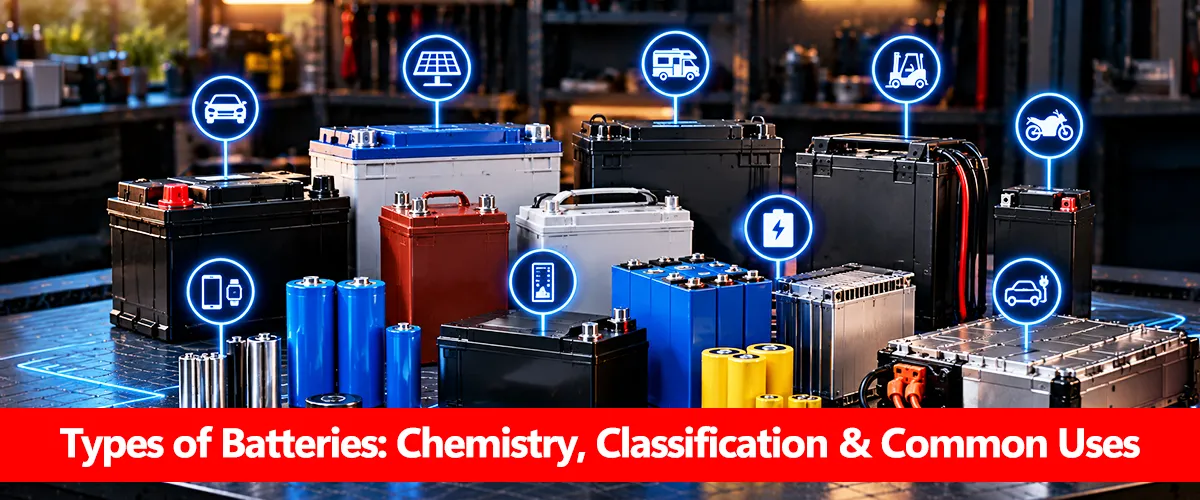
Types of batteries are classified according to their chemical composition, rechargeability, construction, and intended applications. The two main categories are primary batteries, which are generally designed for single use, and secondary batteries, which can be recharged and used repeatedly.
Common battery chemistries include alkaline, lead-acid, lithium-ion, nickel-metal hydride (NiMH), and nickel-cadmium (NiCd). Each offers different characteristics in terms of voltage, energy storage, lifespan, safety, and performance. Understanding these differences helps you identify suitable battery technologies for electronics, vehicles, solar systems, and backup power applications.
Main Classification of Batteries
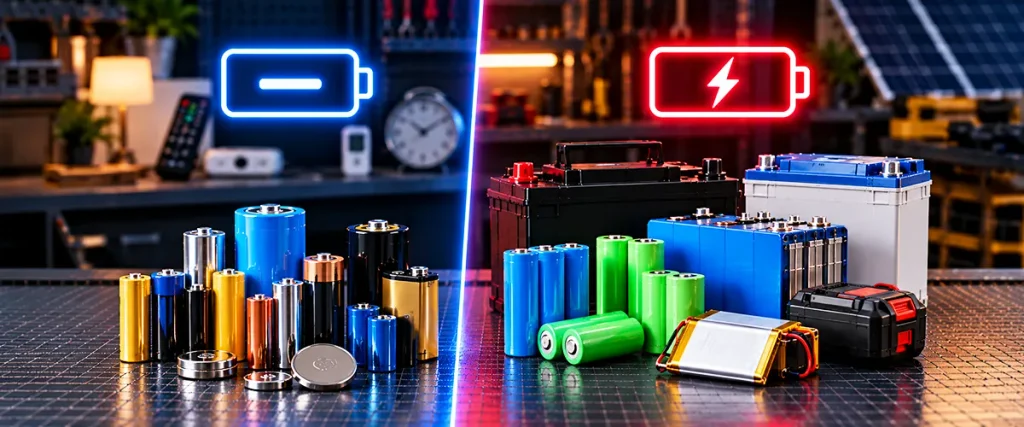
Batteries are broadly divided into two categories based on whether their electrochemical reactions can be practically reversed through charging.
1. Primary Batteries
Primary batteries are generally non-rechargeable and designed to supply electricity until their usable chemical energy is depleted.
Common types include:
- Alkaline batteries
- Zinc-carbon batteries
- Primary lithium batteries
- Silver-oxide batteries
- Zinc-air batteries
They are widely used in remote controls, clocks, watches, sensors, and other devices with relatively low or intermittent power demands.
2. Secondary Batteries
Secondary batteries use rechargeable electrochemical systems, allowing electrical energy to be stored and released through repeated charging and discharging.
Common types include:
- Lead-acid batteries
- Lithium-ion batteries
- Lithium iron phosphate (LiFePO4) batteries
- Nickel-metal hydride batteries
- Nickel-cadmium batteries
These batteries are commonly used in vehicles, smartphones, laptops, UPS systems, and renewable energy storage. Learn more in primary vs secondary batteries and rechargeable vs non-rechargeable batteries.
Different Types of Batteries by Chemistry
Battery chemistry determines many important performance characteristics, including nominal cell voltage, charging requirements, energy density, and cycle life.
| Battery Type | Key Characteristic | Common Applications |
| Alkaline | Widely available, non-rechargeable | Remote controls, clocks |
| Lead-acid | Established, relatively low-cost technology | Vehicles, UPS, solar backup |
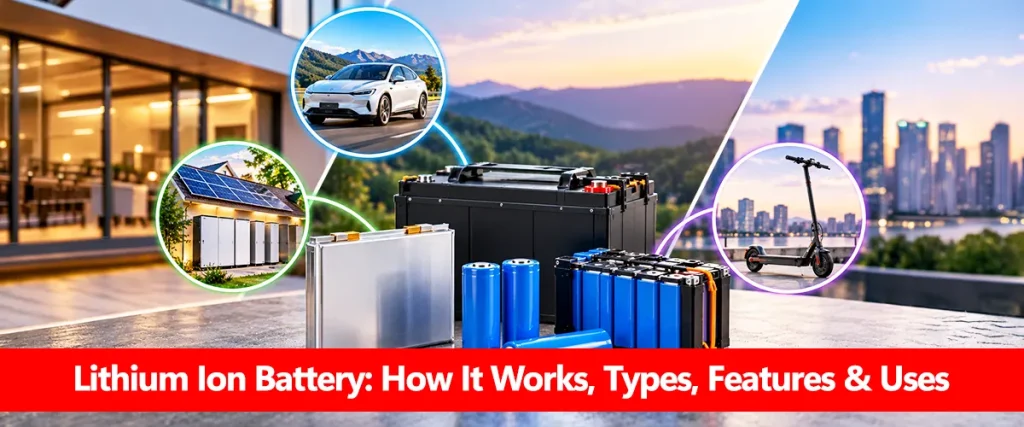
| Lithium-ion | High energy density | Phones, laptops, electric vehicles |
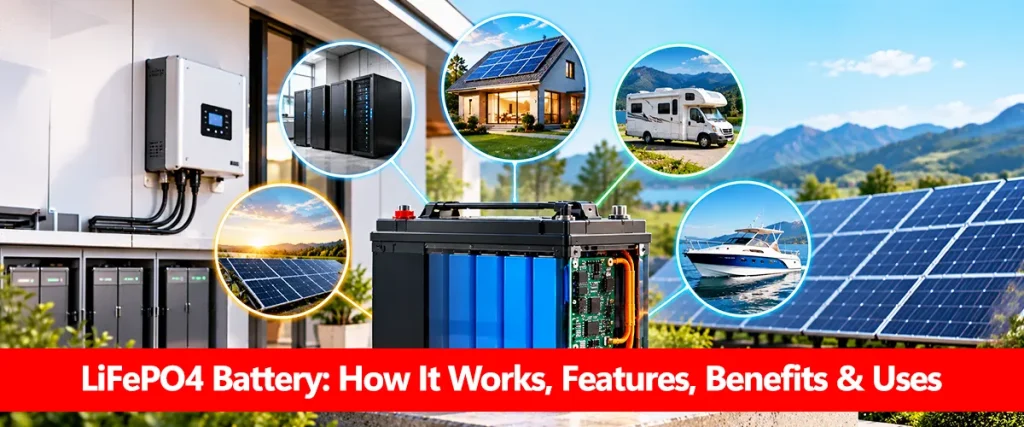
| LiFePO4 | Long cycle life and good thermal stability | Solar storage, backup systems |
| NiMH | Rechargeable alternative for many consumer cells | Cameras, household electronics |
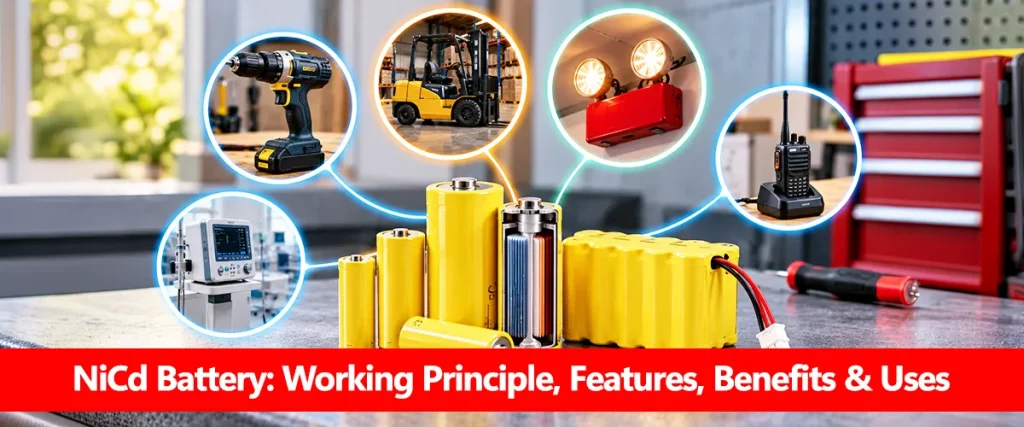
| NiCd | Durable rechargeable chemistry | Industrial equipment |
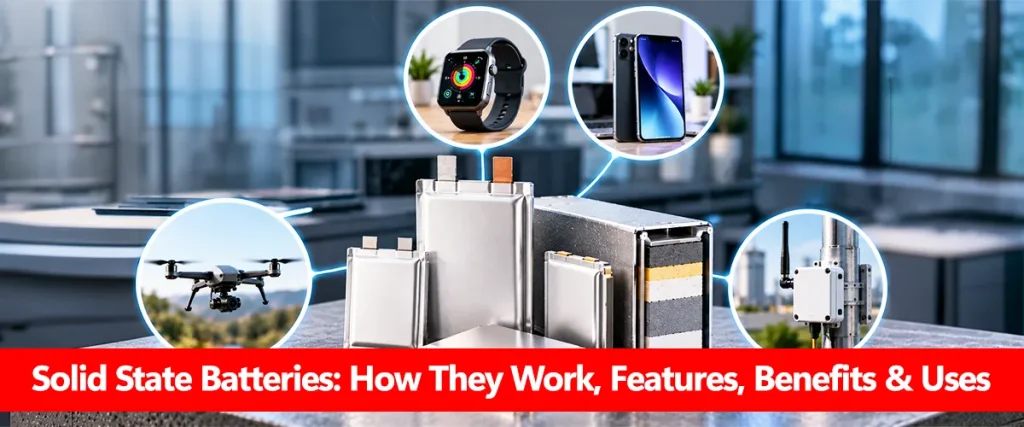
| Solid-state | Uses a solid electrolyte | Emerging battery applications |
Actual performance varies by cell design, manufacturer, and operating conditions.
Lead-Acid Batteries
Lead-acid batteries use lead-based electrodes and a sulfuric acid electrolyte. They are widely used where dependable power delivery and established charging technology are important.
Common lead-acid designs include:
- Flooded lead-acid batteries
- Sealed lead-acid batteries
- AGM batteries
- Gel batteries
- Tubular batteries
Lead-acid technology is generally heavier and has lower energy density than many lithium-based alternatives. Read our lead-acid battery guide for further details.
Lithium-Ion Batteries
Lithium-ion batteries transfer lithium ions between electrodes during charging and discharging. They are popular because they can store substantial energy in relatively compact, lightweight designs. Different lithium-ion chemistries have different safety characteristics, nominal voltages, and service-life expectations. They require suitable charging controls and protective systems. Explore lithium-ion batteries for a chemistry-specific explanation.
Lithium Iron Phosphate (LiFePO4) Batteries
LiFePO4 is a lithium-ion chemistry that uses lithium iron phosphate as its positive electrode material. It is valued for its cycle-life potential, thermal stability, and suitability for many stationary energy-storage applications. Its limitations include lower energy density than some other lithium-ion chemistries and charging restrictions at low temperatures. Read more about LiFePO4 batteries.
Nickel-Based Batteries
Nickel-metal hydride (NiMH) and nickel-cadmium (NiCd) batteries are rechargeable technologies used in consumer and industrial applications.
NiMH batteries are common in rechargeable household cells, while NiCd batteries are associated with certain industrial and legacy applications. Cadmium’s toxicity creates important environmental and disposal considerations. Explore our dedicated guides to NiMH batteries and NiCd batteries.
Solid-State Batteries
Solid-state batteries use a solid electrolyte rather than the liquid electrolyte found in many conventional battery designs. Researchers and manufacturers are developing these technologies for potential improvements in safety, energy density, and performance. However, solid-state battery characteristics depend on the specific materials and cell design. Manufacturing complexity, cost, and durability remain important development challenges. Learn more about solid-state batteries.
How Do Different Batteries Work?
Most conventional batteries generate electrical energy through electrochemical reactions. During discharge, electrons flow through an external circuit while ions move internally through the electrolyte.
The essential components include:
- Anode: The electrode where oxidation occurs during discharge.
- Cathode: The electrode where reduction occurs during discharge.
- Electrolyte: Enables ionic movement within the cell.
- Separator: Helps prevent direct electrical contact between electrodes where required.
- Terminals: Provide electrical connections to the external circuit.
Rechargeable batteries reverse the relevant electrochemical processes during charging. The specific reactions depend on the chemistry. For a detailed introduction, see what is a battery.
Important Battery Terminology
Understanding battery terminology makes it easier to interpret product specifications and compare technologies.
| Term | Meaning |
| Nominal voltage | Reference operating voltage of a cell or battery |
| Rated capacity (Ah) | Specified charge capacity under defined conditions |
| Watt-hours (Wh) | Measurement of stored electrical energy |
| State of charge (SoC) | Estimated remaining charge percentage |
| Depth of discharge (DoD) | Percentage of capacity discharged |
| Cycle life | Number of charge-discharge cycles under defined conditions |
| Internal resistance | Resistance within a battery affecting losses and voltage drop |
| Energy density | Energy stored relative to mass or volume |
These ratings are not always directly comparable unless testing conditions are similar.
How Are Batteries Used in Different Applications?
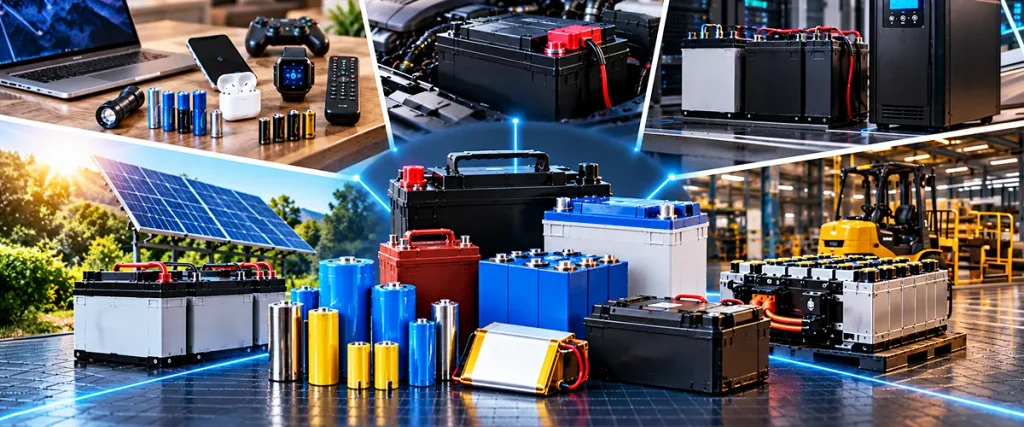
Battery selection depends on the equipment’s electrical requirements, operating environment, and expected usage.
Common applications include:
- Consumer electronics: Compact alkaline, lithium-ion, and NiMH batteries.
- Automotive systems: Lead-acid starting batteries and lithium-based traction batteries.
- UPS systems: Lead-acid and compatible lithium battery technologies.
- Solar energy storage: Deep-cycle lead-acid and lithium-based batteries.
- Industrial equipment: Specialized lead-acid, nickel-based, and lithium battery systems.
A deep-cycle battery describes a battery designed for repeated substantial discharges rather than a separate chemical family.
Advantages and Limitations of Different Battery Types
No battery chemistry is ideal for every application. Each technology involves trade-offs in performance, maintenance, weight, cost, and service life.
Important considerations include:
- Energy density and available storage capacity
- Charging and discharge-current limits
- Expected cycle life
- Operating temperature range
- Maintenance requirements
- Safety and protective systems
- Environmental impact and recycling
Always match the battery’s specifications to the intended equipment rather than choosing solely by chemistry name.
Conclusion
Understanding the types of batteries helps explain why different technologies are used for different electrical applications. Primary and secondary batteries form the broad classification, while chemistry determines important characteristics such as energy density, charging behavior, safety, and cycle life.
From alkaline cells to lead-acid and lithium-ion storage systems, each battery type offers distinct advantages and limitations. The best choice depends on the required electrical performance and operating conditions. Explore the Battery Types and Chemistries category or visit Batteries Hub for more battery education.
Frequently Asked Questions
What Are the Two Main Types of Batteries?
The two main categories are primary batteries, which are generally non-rechargeable, and secondary batteries, which are rechargeable.
What Are the Most Common Battery Chemistries?
Common chemistries include alkaline, lead-acid, lithium-ion, LiFePO4, NiMH, and NiCd.
Are All Lithium Batteries Rechargeable?
No. Some lithium batteries are primary, non-rechargeable cells, while lithium-ion batteries are rechargeable.
Is a Tubular Battery a Separate Chemistry?
Not necessarily. Tubular refers to an electrode construction commonly used in certain lead-acid batteries rather than an entirely separate electrochemical family.
Which Battery Type Has the Longest Life?
Battery lifespan depends on chemistry, cell design, operating conditions, and manufacturer specifications. Some LiFePO4 batteries offer high cycle-life ratings, but no single chemistry guarantees the longest service life in every application.