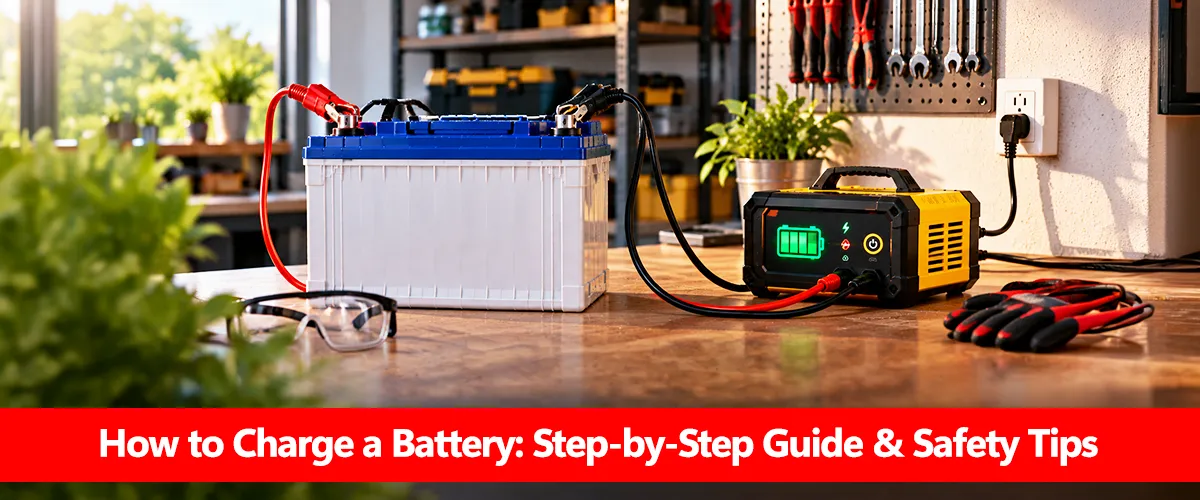
How to charge a battery safely depends on its chemistry, voltage, capacity, and the type of charger being used. The basic process involves selecting a compatible charger, checking the battery’s condition, connecting it correctly, and allowing the charger to complete its recommended charging cycle. Lead-acid, AGM, gel, and lithium-ion batteries have different charging requirements. Using the wrong charger or incorrect settings can damage the battery and create safety risks.
This guide explains a practical method for charging common rechargeable batteries safely. For the science behind the process, read our how battery charging works guide.
What Do You Need to Charge a Battery?
Before charging, confirm that the battery is rechargeable and identify its chemistry and voltage rating.
Basic requirements include:
- A rechargeable battery in suitable condition.
- A charger compatible with its chemistry and voltage.
- The battery manufacturer’s charging specifications.
- Suitable cables and connectors.
- A dry, well-ventilated charging area where required.
- Appropriate protective equipment when handling exposed lead-acid batteries.
Battery voltage and capacity are usually printed on the label. These ratings help determine which charger can be used. If you are unfamiliar with these specifications, our battery voltage explained and battery capacity guides provide useful background.
How to Charge a Battery: Step-by-Step
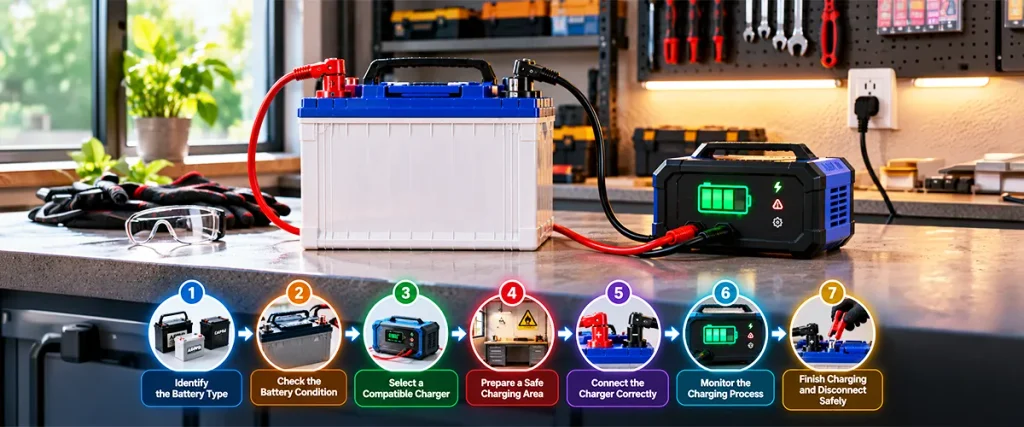
The following method applies to many standalone rechargeable batteries using a compatible automatic charger. Always follow the battery and charger manufacturers’ instructions where they differ.
Step 1: Identify the Battery Type
Check whether the battery is flooded lead-acid, AGM, gel, LiFePO4, or another rechargeable lithium-ion chemistry. Different chemistries require different charging voltage limits and charging profiles. Never attempt to recharge a non-rechargeable battery unless the manufacturer explicitly identifies it as rechargeable.
Step 2: Check the Battery Condition
Inspect the battery for visible damage before connecting a charger. Do not charge a battery showing signs of swelling, leakage, severe overheating, cracks, or other physical damage. Check that the terminals and connectors are in suitable condition. If the battery is unusually hot, frozen, or otherwise outside its approved charging temperature range, do not begin charging.
Step 3: Select a Compatible Charger
Choose a charger that matches the battery chemistry, nominal voltage, and manufacturer-approved charging current. For example, a charger designed for a 12V lead-acid battery may not be suitable for a 12.8V nominal LiFePO4 battery.
Check the charger’s supported battery types and operating voltage range. Our how to choose battery charger guide explains charger compatibility in more detail.
Step 4: Prepare a Safe Charging Area
Place the battery in a stable location away from heat sources, sparks, flames, and combustible materials. Flooded lead-acid batteries require suitable ventilation because charging can produce hydrogen gas. Keep the charger protected from moisture and ensure its cables are positioned safely.
Step 5: Connect the Charger Correctly
With the charger disconnected from its power source, follow the manufacturer’s connection procedure.
For a typical standalone battery:
- Connect the positive charger lead to the positive battery terminal.
- Connect the negative charger lead to the negative battery terminal.
- Check that the connections are secure and polarity is correct.
- Select the appropriate battery chemistry and charging mode.
- Connect the charger to its power source and start charging as instructed.
For batteries installed in vehicles or connected to other equipment, follow the equipment manufacturer’s connection and grounding instructions. The negative lead may need to connect to a designated chassis ground rather than directly to the battery terminal.
Step 6: Monitor the Charging Process
A compatible automatic charger controls charging voltage and current according to its selected profile. During charging, check for unusual heat, odors, swelling, or charger fault indications. Stop charging safely if anything abnormal occurs.
Charging time depends on battery capacity, initial state of charge, charger output, and battery chemistry. Learn more about battery charging voltage and battery charging current to understand these requirements.
Step 7: Finish Charging and Disconnect Safely
Allow the charger to reach its recommended completion stage or indicate that charging is finished. Follow the charger’s shutdown procedure. For a typical standalone charger, disconnect its power source before removing the battery leads.
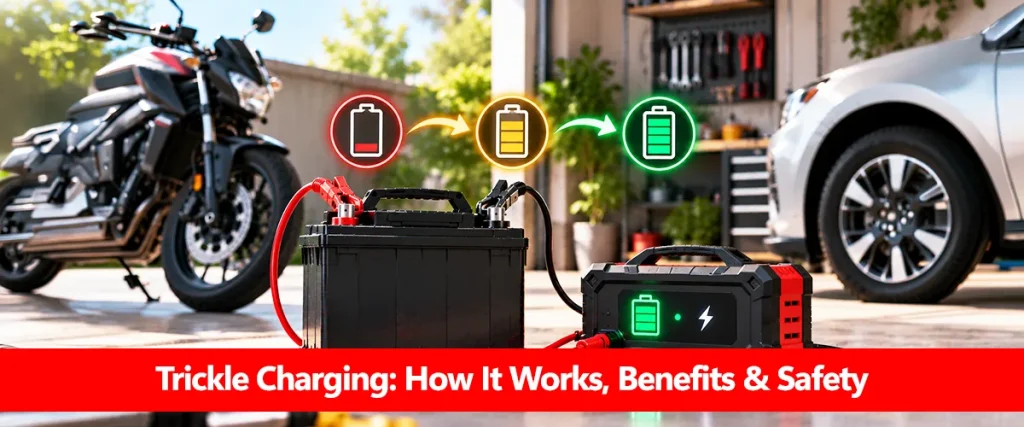
Remove the negative lead first, followed by the positive lead, unless the manufacturer specifies a different procedure. Do not leave a battery connected indefinitely unless the charger and battery are specifically approved for that operating mode.
How to Charge Different Battery Types
Battery charging requirements vary by chemistry and construction.
| Battery Type | Charging Considerations |
| Flooded lead-acid | Use the specified lead-acid charging profile and suitable ventilation |
| AGM | Use an AGM-compatible charger and approved voltage settings |
| Gel | Use gel-compatible voltage limits to avoid damage |
| LiFePO4 | Use a LiFePO4-compatible profile and suitable BMS protection |
| Other lithium-ion | Use a charger matched to the exact cell chemistry and pack configuration |
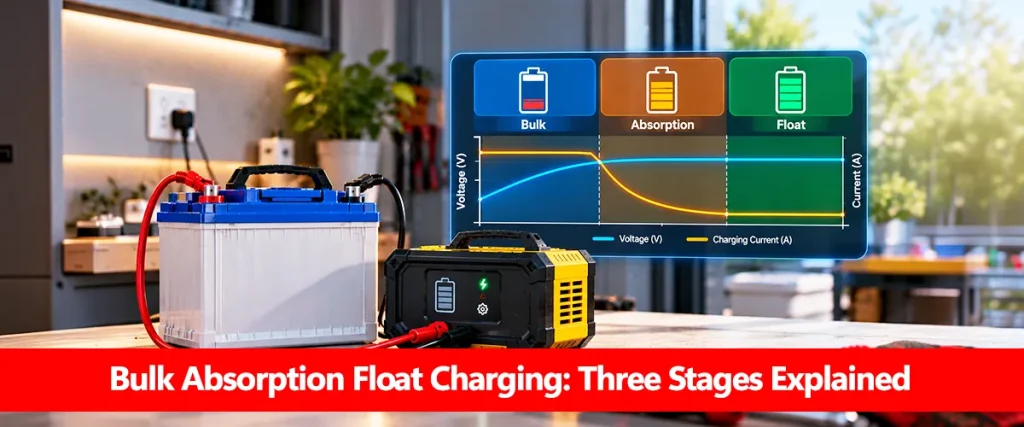
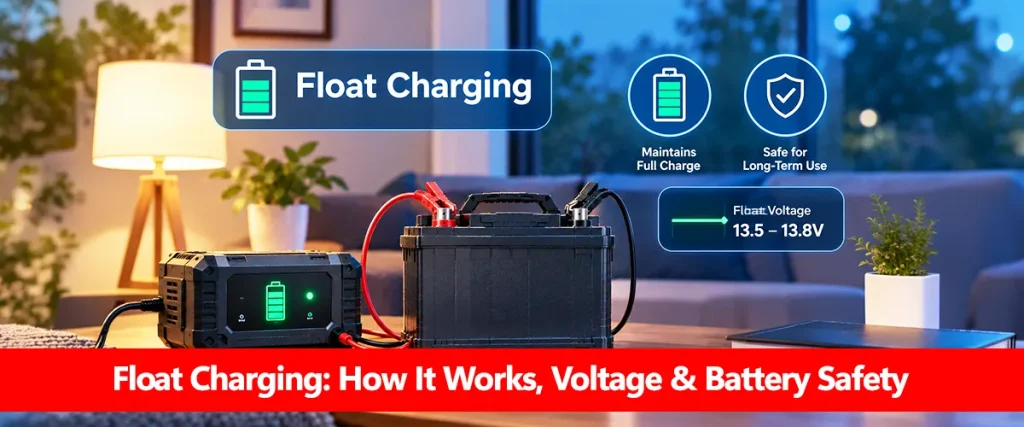
Lead-acid batteries commonly use bulk and absorption charging stages, followed by float charging where appropriate. Many lithium-ion batteries use constant-current and constant-voltage charging with chemistry-specific termination limits. For an explanation of lead-acid charging stages, read our bulk absorption float charging guide.
How Long Does It Take to Charge a Battery?
Charging time depends on battery capacity, initial state of charge, charging current, and charging efficiency. A larger battery generally requires more energy to recharge, while a higher charging current can reduce charging time when supported by the battery.
However, many chargers reduce current near full charge, so charging time is not always directly proportional to capacity. Our battery charging time guide covers charging-time calculations and the factors affecting them.
Common Battery Charging Mistakes
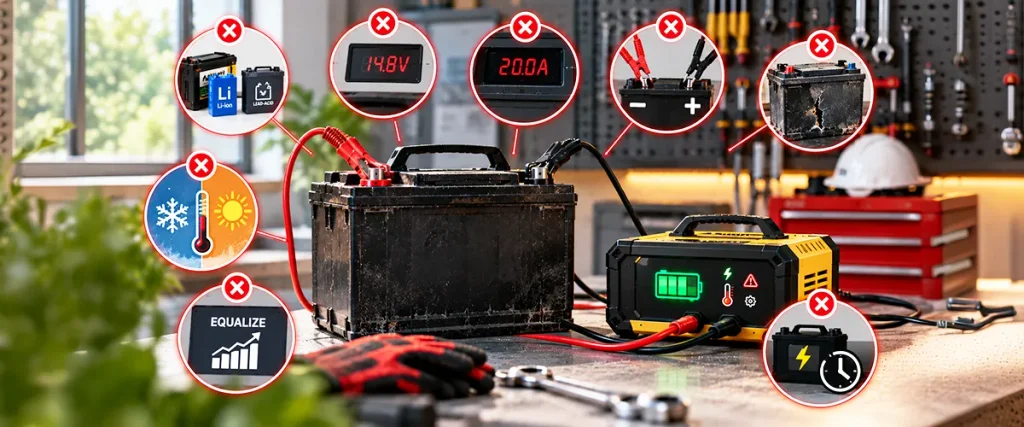
Incorrect charging practices can reduce battery performance and create safety risks.
Common mistakes include:
- Using a charger designed for the wrong battery chemistry.
- Selecting an incorrect charging voltage.
- Exceeding the manufacturer’s recommended charging current.
- Connecting positive and negative terminals incorrectly.
- Charging a visibly damaged battery.
- Ignoring battery temperature limits.
- Applying lead-acid equalization settings to lithium batteries.
- Leaving batteries on chargers that do not support safe charge termination or maintenance.
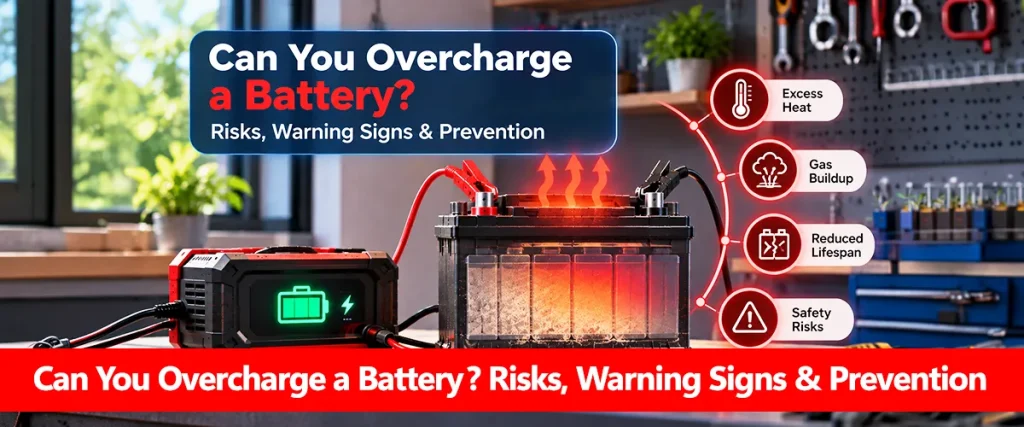
For more information about charging-related damage, read our battery overcharging guide.
Important Battery Charging Safety Tips
Battery charging should always follow manufacturer specifications and appropriate electrical safety practices.
- Never charge disposable batteries that are not designed for recharging.
- Keep chargers away from moisture and excessive heat.
- Use suitable ventilation for batteries that may release gas.
- Avoid loose or damaged charging connections.
- Do not bypass lithium battery protection systems.
- Stop charging if the battery becomes unusually hot or shows signs of damage.
- Follow manufacturer guidance when charging a battery installed in equipment.
Lithium batteries often include a battery management system that monitors voltage, temperature, and current. This protection does not replace the need for a compatible charger.
What If the Battery Is Not Charging?
A battery may fail to charge because of an incompatible charger, poor connections, unsuitable temperature, a protection-system shutdown, or battery deterioration. If the charger displays a fault, stop and check the manufacturer’s instructions.
Do not attempt to force-charge a deeply discharged or damaged lithium battery by bypassing its BMS or using an incompatible charger. Our battery not charging guide covers common causes and appropriate troubleshooting considerations.
When Should You Consult the Manufacturer?
Manufacturer documentation is especially important when:
- The battery chemistry or voltage is unclear.
- The charger does not explicitly support the battery.
- A lithium battery has entered protection mode.
- The battery is installed in a vehicle, UPS, or solar system.
- The battery requires temperature-specific charging settings.
- The battery has been deeply discharged, damaged, or exposed to extreme temperatures.
For charger compatibility questions involving different chemistries, read our lead acid charger for lithium battery guide.
Conclusion
Learning how to charge a battery safely starts with identifying the correct battery chemistry, selecting a compatible charger, and following the recommended connection and charging procedure. Lead-acid and lithium batteries require different charging profiles, and charging voltage, current, temperature, and battery condition all affect safety and performance.
Using manufacturer-approved equipment and avoiding common charging mistakes helps protect battery performance and service life. Explore more educational guides in the Battery Charging category at Batteries Hub.
Frequently Asked Questions
What Is the Correct Way to Charge a Battery?
Use a charger compatible with the battery chemistry and voltage, inspect the battery, connect the charger according to manufacturer instructions, and allow the recommended charging cycle to finish.
Can I Charge a Battery With Any Charger?
No. The charger must support the battery’s chemistry, voltage, and charging requirements.
How Do I Know When a Battery Is Fully Charged?
A compatible automatic charger usually indicates charging completion or changes to an approved maintenance mode. The exact indication depends on the charger and battery type.
Can I Charge a Lithium Battery With a Lead-Acid Charger?
Only when the charger explicitly supports the lithium battery’s charging requirements and the battery manufacturer permits its use.
Should I Disconnect a Battery Before Charging?
It depends on the equipment and charger. Some installed batteries can be charged in place, while others require isolation or specific connection procedures.
Can I Leave a Battery Charging Overnight?
Only if the battery and charger are designed for unattended operation under the manufacturer’s stated conditions. Do not assume every charger provides suitable charge termination or protection.
What Should I Do If My Battery Does Not Charge?
Check the charger instructions, battery compatibility, connections, and fault indicators. Stop if the battery is damaged or overheating, and consult the manufacturer before attempting further charging.