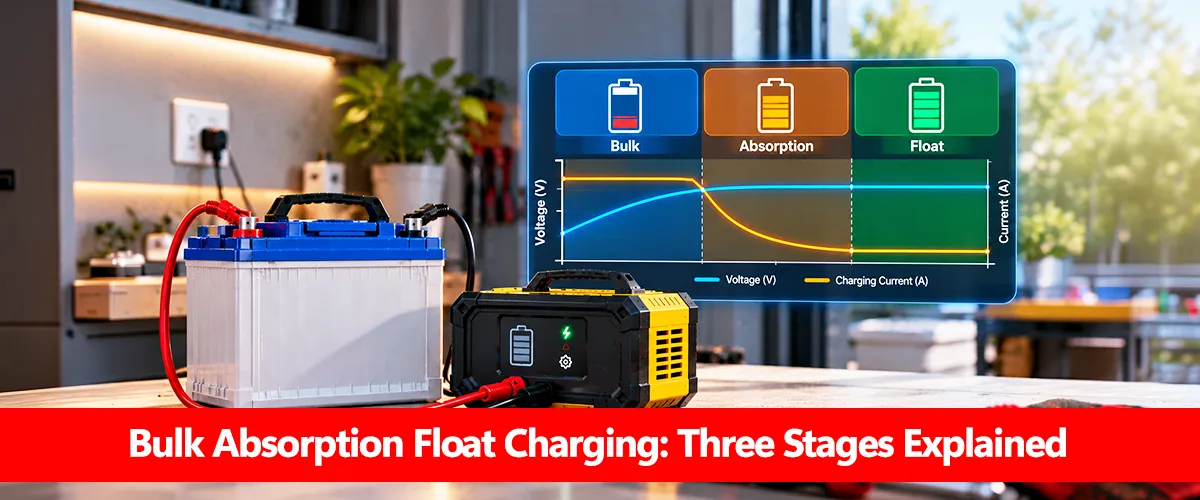
Bulk absorption float charging is a three-stage battery charging method primarily used for lead-acid batteries. It regulates charging voltage and current to restore battery energy, complete the charging process and maintain the battery during standby operation.
Each stage performs a specific function. Bulk charging restores a substantial portion of the battery’s charge, absorption charging brings it closer to full capacity, and float charging helps maintain its charge over time. This method is commonly used in UPS systems, solar battery banks and backup power installations. Understanding these stages is an important part of learning how battery charging works and why charging settings matter.
What Is Bulk Absorption Float Charging?
Bulk absorption float charging is a controlled charging process in which a compatible charger automatically adjusts its operation according to the battery’s charging condition. Instead of applying the same current and voltage throughout the entire process, the charger uses different stages to restore energy while reducing the risk of excessive charging.
The method is commonly associated with flooded, AGM and gel lead-acid batteries. However, their voltage requirements and charging limits can differ, so the charger must follow the battery manufacturer’s specifications.
Bulk vs Absorption vs Float Charging
The three stages have different purposes, voltage behavior and current requirements.
| Feature | Bulk Charging | Absorption Charging | Float Charging |
| Main purpose | Restore most of the charge | Complete charging | Maintain standby charge |
| Voltage | Rises toward the target | Held at absorption target | Reduced to float target |
| Current | Usually current-limited | Gradually decreases | Generally low |
| Battery condition | Partially discharged | Approaching full charge | Charged and on standby |
| Main benefit | Efficient energy restoration | Controlled charge completion | Compensates for self-discharge |
The charger moves between these stages based on voltage, current, time or other programmed conditions. The actual transition points depend on battery chemistry, charger design and manufacturer recommendations.
Stage 1: Bulk Charging
Bulk charging is the first stage of a typical three-stage charging cycle. During this stage, the charger supplies a controlled amount of current while the battery voltage gradually increases. Its purpose is to replace a substantial portion of the energy lost during discharge. Bulk charging normally continues until the battery reaches the specified absorption voltage.
Although bulk charging can restore energy relatively quickly, the charging current must remain within the battery’s approved limits. Excessive current can increase temperature and accelerate battery degradation, making correct battery charging current settings important for safe operation.
Stage 2: Absorption Charging
Absorption charging begins when the battery reaches its specified absorption voltage. The charger maintains this voltage while the charging current gradually decreases as the battery approaches full charge. This stage helps complete the charging process without continuously applying the higher current associated with bulk charging.
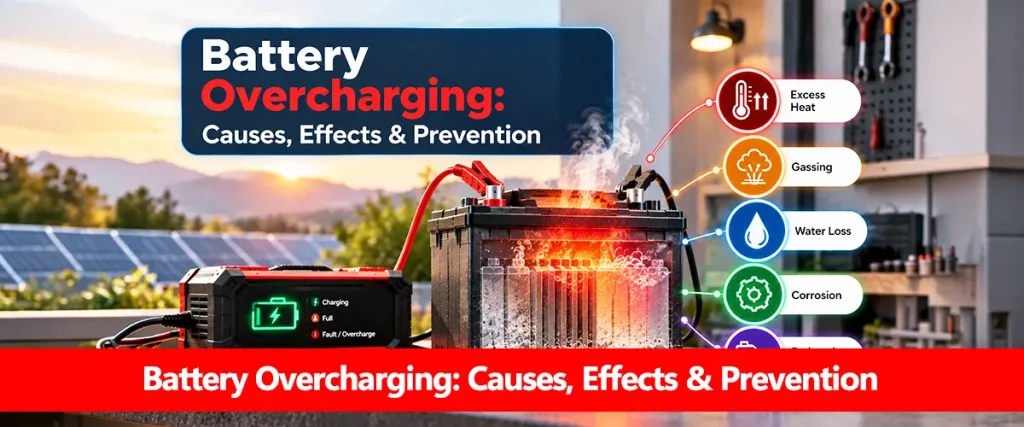
The absorption period may end according to a current threshold, a time limit or another manufacturer-defined condition. If it ends too early, the battery may remain undercharged. If it continues for too long, excessive gassing, water loss and deterioration may occur. Maintaining the correct battery charging voltage is therefore essential.
Stage 3: Float Charging
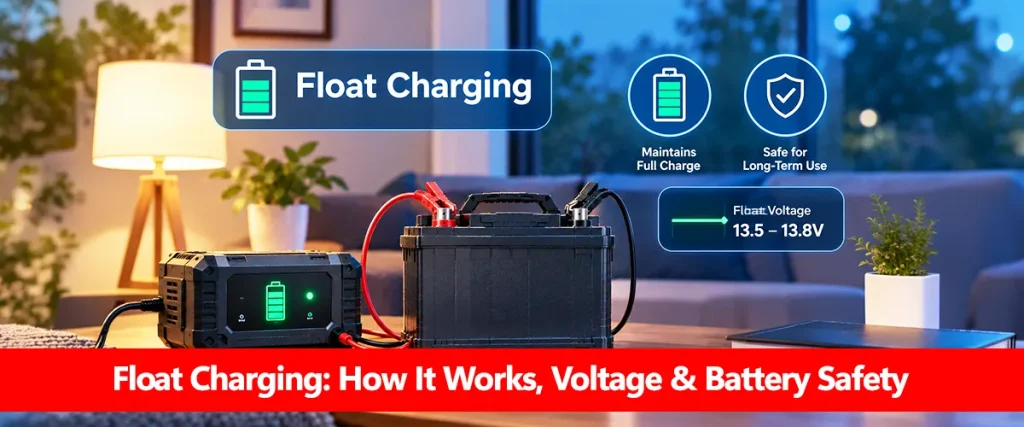
Float charging is the final maintenance stage used for suitable lead-acid batteries, particularly in standby applications. Once the absorption stage is complete, the charger reduces its output to a lower voltage that compensates for self-discharge and small standby loads. This helps keep the battery ready for use without maintaining the higher absorption voltage.
Float charging is widely used in UPS systems, emergency backup installations and other equipment that remains connected to a battery for extended periods. However, incorrect float voltage can still cause gradual overcharging or undercharging. Our dedicated float charging guide explains this method in more detail.
Charging Voltage During Bulk, Absorption and Float Stages
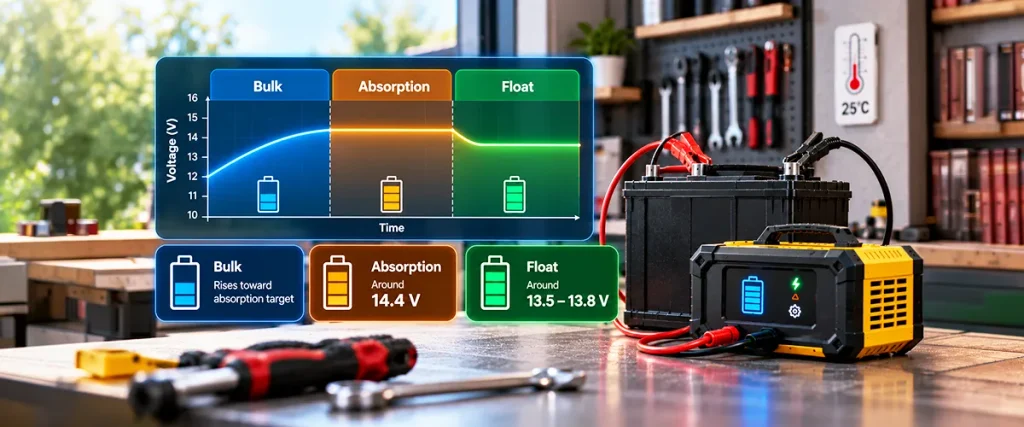
Charging voltage changes throughout the three-stage process. During bulk charging, the battery voltage rises toward the absorption target. The charger then maintains the absorption voltage before reducing it to a lower float level when charging is complete. For a typical 12V lead-acid battery at approximately 25°C, the following values illustrate how these stages differ.
| Charging Stage | Illustrative Voltage |
| Bulk | Rises toward the absorption target |
| Absorption | Around 14.4V |
| Float | Around 13.5–13.8V |
These values are examples, not universal recommendations. Flooded, AGM and gel batteries may require different settings, while temperature and battery condition also influence charging requirements. Always use the voltage limits specified by the manufacturer.
How Temperature Affects Three-Stage Charging
Battery temperature affects charging efficiency, charge acceptance and voltage requirements. Lead-acid batteries commonly use temperature-compensated charging, where the charger adjusts its voltage according to battery temperature. Within the approved operating range, charging voltage generally decreases as temperature increases and rises as temperature decreases.
Without proper temperature compensation, a charger may overcharge a warm battery or leave a cold battery insufficiently charged. Many automatic chargers use temperature sensors or built-in compensation settings to manage these changes. Correct temperature management also supports battery cycle life and long-term battery reliability.
Do Lithium Batteries Use Bulk, Absorption and Float Charging?
Lithium-ion batteries generally use chemistry-specific charging profiles rather than conventional three-stage lead-acid charging. Many lithium batteries use a constant-current/constant-voltage (CC/CV) process in which current is controlled initially, followed by a constant-voltage phase where current decreases before charge termination.
Although these phases share some similarities with bulk and absorption charging, lithium batteries have different voltage limits and charging termination requirements. Conventional lead-acid float charging should not automatically be applied to lithium batteries. Most lithium battery packs also rely on a battery management system to monitor voltage, current, temperature and cell balancing.
Benefits and Limitations of Three-Stage Charging
Three-stage charging offers a practical way to recharge and maintain compatible lead-acid batteries. By controlling charging current and voltage at different stages, it can help restore energy efficiently while reducing unnecessary stress on the battery.
Key benefits include:
- Restores battery charge in controlled stages.
- Reduces charging current as the battery approaches full charge.
- Supports standby maintenance through float charging.
- Allows automatic transitions between charging stages.
- Helps maintain battery performance when correctly configured.
However, three-stage charging is not suitable for every battery chemistry. Incorrect voltage settings, excessive absorption time or inadequate temperature compensation can reduce battery life or cause damage. For practical charging procedures, follow our how to charge a battery guide and the manufacturer’s instructions.
Bulk Absorption Float Charging vs Trickle Charging
Bulk absorption float charging and trickle charging serve different purposes. Three-stage charging uses controlled changes in current and voltage to recharge a lead-acid battery and then maintain it during standby operation. Trickle charging generally supplies a small charging current and is intended only for batteries and applications that support that method.
A continuous trickle current without suitable charge regulation may cause overcharging in some batteries. This is why the two approaches should not be treated as interchangeable. Our trickle charging guide explains its purpose and limitations.
Common Misconceptions About Three-Stage Charging
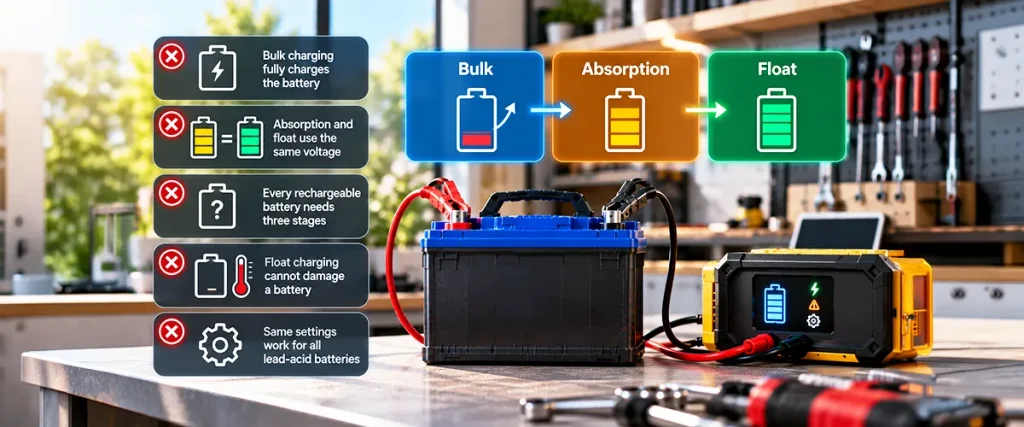
Several misunderstandings about charging stages can lead to incorrect charger settings and reduced battery performance.
- Bulk charging fully charges the battery: Bulk usually ends when the absorption voltage target is reached, while absorption helps complete charging.
- Absorption and float use the same voltage: Float charging normally maintains a lower voltage than absorption charging.
- Every rechargeable battery needs three stages: This charging method is primarily designed for suitable lead-acid batteries.
- Float charging cannot damage a battery: Incorrect float voltage or temperature compensation can still cause deterioration.
- A charger can use the same settings for all lead-acid batteries: Flooded, AGM and gel designs may require different charging profiles.
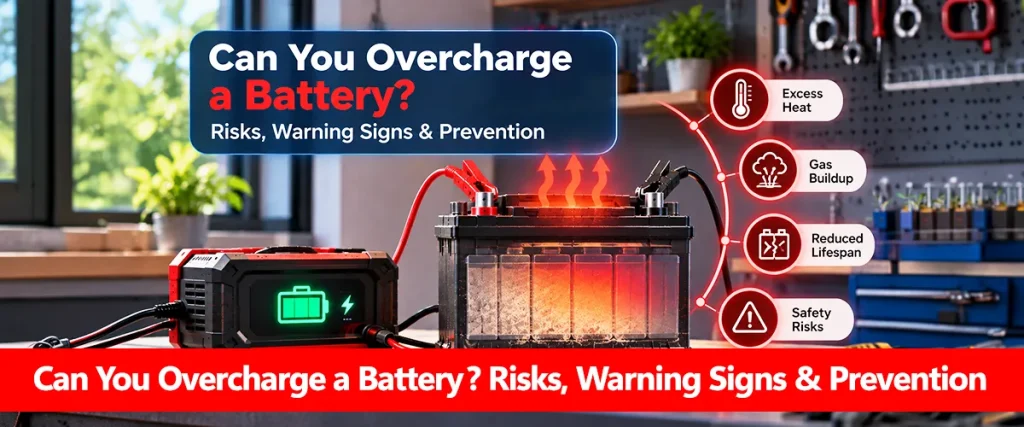
Understanding these differences helps reduce charging errors and the risks associated with battery overcharging.
Safety Tips for Bulk, Absorption and Float Charging
Safe three-stage charging depends on using a charger compatible with the battery’s chemistry, voltage and current requirements. A properly configured charger helps manage the transition between stages, but battery temperature, ventilation and physical condition must also be considered.
Important safety precautions include:
- Follow the manufacturer’s recommended charging voltage and current limits.
- Use the correct charging profile for flooded, AGM or gel batteries.
- Apply temperature compensation where required.
- Maintain suitable ventilation around lead-acid batteries.
- Avoid charging batteries that are damaged, leaking or overheating.
- Do not use lead-acid equalization settings on lithium batteries.
- Stop charging if the charger reports a fault or the battery behaves abnormally.
If the charger does not complete its normal cycle or the battery fails to accept charge, consult the manufacturer’s instructions and our battery not charging guide before attempting further charging.
Conclusion
Bulk absorption float charging is a three-stage method commonly used to recharge and maintain lead-acid batteries. Bulk charging restores much of the battery’s energy, absorption charging completes the process at a controlled voltage, and float charging maintains the battery during standby operation.
Each stage has a specific purpose, and proper charger settings are essential for safe performance. Choosing chemistry-compatible charging equipment, following voltage and current limits, and considering battery temperature can help improve charging reliability and service life. Explore more educational articles in the Battery Charging category at Batteries Hub.
Frequently Asked Questions
What Is Bulk Absorption Float Charging?
Bulk absorption float charging is a three-stage charging process primarily used for lead-acid batteries. It restores stored energy, completes charging and maintains the battery during standby operation.
What Happens During Bulk Charging?
During bulk charging, the charger supplies controlled current while battery voltage rises toward the absorption target. This stage restores a substantial portion of the battery’s charge.
What Is the Purpose of Absorption Charging?
Absorption charging helps complete battery charging by maintaining a specified voltage while the charging current gradually decreases.
What Is the Difference Between Absorption and Float Charging?
Absorption charging completes the charging process at a higher controlled voltage, while float charging uses a lower voltage to maintain a suitable battery during standby operation.
What Is the Float Voltage of a 12V Battery?
Many 12V lead-acid batteries use float voltages around 13.5–13.8V at approximately 25°C. However, the correct value depends on battery construction and manufacturer specifications.
Do AGM Batteries Use Bulk, Absorption and Float Charging?
Yes. AGM batteries commonly use these charging stages, although their voltage limits and charging requirements may differ from flooded or gel lead-acid batteries.
Can LiFePO4 Batteries Use Three-Stage Lead-Acid Charging?
Not automatically. LiFePO4 batteries require chemistry-specific charging voltage limits and termination conditions. A lead-acid charging profile should only be used when the battery and charger manufacturers explicitly support that configuration.