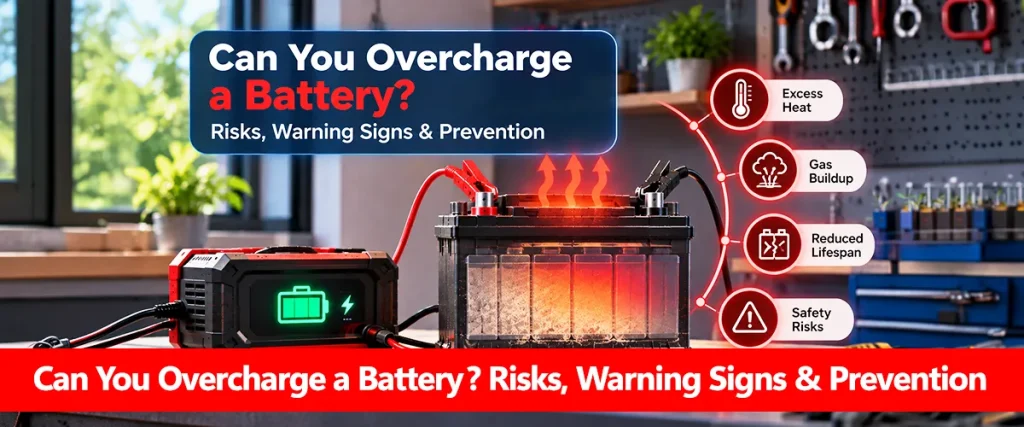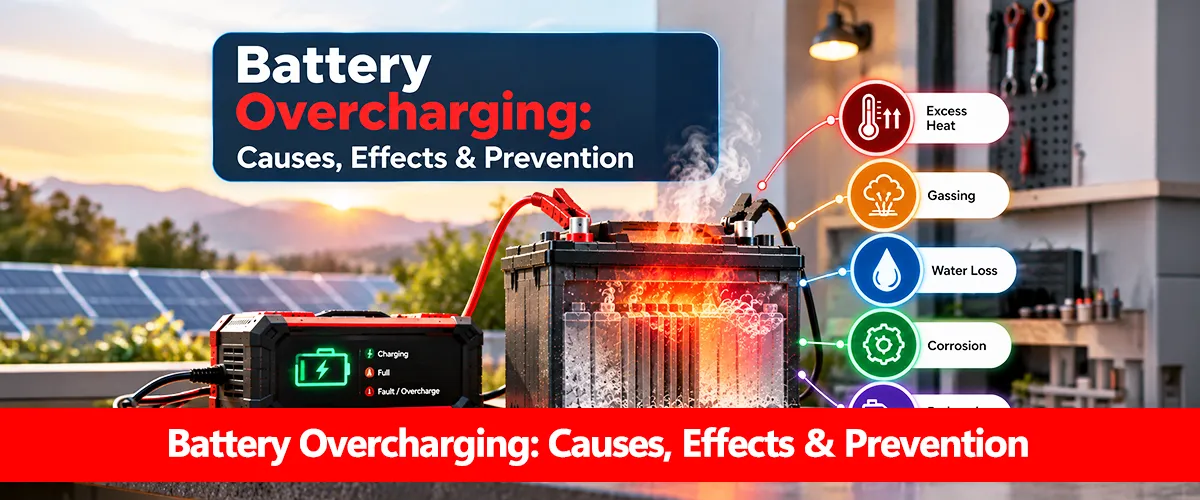
Battery overcharging occurs when a rechargeable battery receives charging energy beyond its safe operating limits. It can result from excessive charging voltage, incorrect charger settings, faulty charge termination or problems with the battery’s protection system.
When charging continues beyond the battery’s requirements, unwanted chemical reactions can generate heat, damage internal components and shorten battery life. The consequences differ between lead-acid and lithium-ion batteries, making correct charging control essential. Understanding how battery charging works helps explain why batteries need specific voltage and current limits.
What Causes Battery Overcharging?
Battery overcharging usually develops when the charger fails to regulate energy delivery according to the battery’s charging profile. A charger may apply excessive voltage, continue charging after the required endpoint or use settings intended for a different battery chemistry.
Common causes include:
- Incorrect charging voltage: Applying voltage above the manufacturer’s permitted limit.
- Incompatible charger: Using charging profiles intended for another battery chemistry.
- Faulty charge controller: Failing to reduce or terminate charging when required.
- Temperature problems: Using unsuitable voltage settings at elevated battery temperatures.
- Poor cell balancing: Allowing individual lithium cells to exceed their limits.
- Unregulated maintenance charging: Continuing charging current when the battery cannot safely accept it.
Charging current also affects heat generation and charging stress. The correct combination of battery charging voltage and battery charging current depends on battery chemistry, capacity and operating conditions.
What Happens Inside an Overcharged Battery?
A rechargeable battery stores energy through electrochemical reactions involving its electrodes and electrolyte. As its state of charge (SoC) approaches the permitted upper limit, the charger must reduce or terminate energy delivery according to the battery’s specifications.
If charging continues beyond those limits, unwanted reactions may begin to dominate. These reactions can consume electrolyte, generate heat and gas, increase internal resistance and permanently reduce usable capacity. Repeated damage also affects battery cycle life, even when the battery initially appears to operate normally.
How Overcharging Affects Different Battery Chemistries
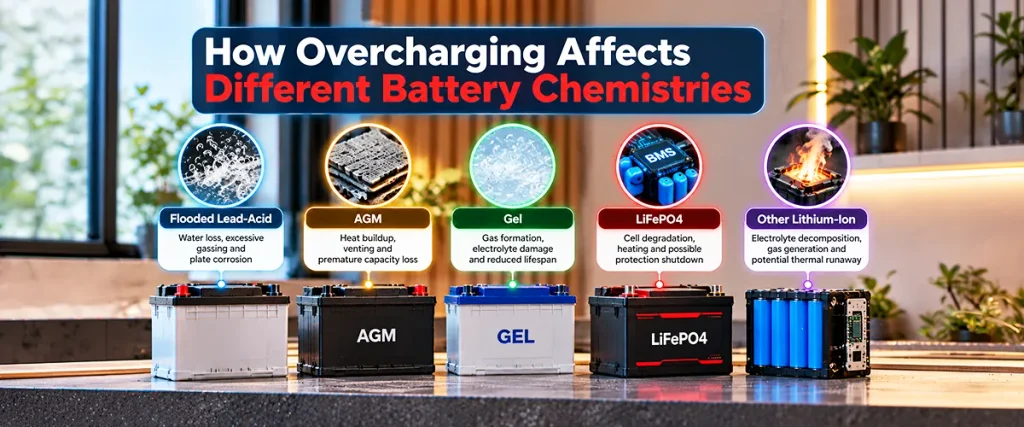
The type of battery determines which internal components are most vulnerable to overcharging. Lead-acid batteries commonly experience excessive gassing and corrosion, while lithium-ion batteries may experience electrode degradation and dangerous thermal reactions.
| Battery Type | Main Overcharging Effects |
| Flooded lead-acid | Water loss, excessive gassing and plate corrosion |
| AGM | Heat buildup, venting and premature capacity loss |
| Gel | Gas formation, electrolyte damage and reduced lifespan |
| LiFePO4 | Cell degradation, heating and possible protection shutdown |
| Other lithium-ion | Electrolyte decomposition, gas generation and potential thermal runaway |
In a lead acid battery, excessive charging can break down water in the electrolyte, producing hydrogen and oxygen. Sealed batteries are particularly vulnerable to sustained overcharging because lost electrolyte generally cannot be replaced.
A lithium ion battery requires strict cell-voltage control. Severe overcharging can trigger unwanted reactions, gas generation and thermal runaway. LiFePO4 has relatively strong thermal stability, but that does not make it immune to overcharge damage.
How Overcharging Damages Battery Performance
Not every overcharged battery fails immediately. Repeated or prolonged overcharging may gradually reduce usable capacity and increase internal resistance, causing the battery to provide shorter backup time or perform less efficiently.
Battery degradation may appear as:
- Reduced energy storage capacity.
- Shorter runtime between charges.
- Increased heat during operation.
- Faster performance deterioration.
- Greater risk of internal failure.
These changes affect battery health rather than simply its current charge level. Understanding state of charge vs state of health helps distinguish a fully charged battery from one that has lost capacity through aging or damage.
Why Charging Temperature Matters
Temperature can significantly increase the risk of battery overcharging. Lead-acid batteries generally require lower charging voltages at higher temperatures, so a fixed voltage that works in cool conditions may be excessive when the battery becomes hot.
Many lead-acid chargers use temperature compensation to manage this change. Lithium battery systems instead rely on chemistry-specific voltage and temperature restrictions, often supported by a battery management system. However, electronic protection cannot make an incorrectly configured charging system completely risk-free.
Can Float or Trickle Charging Cause Overcharging?
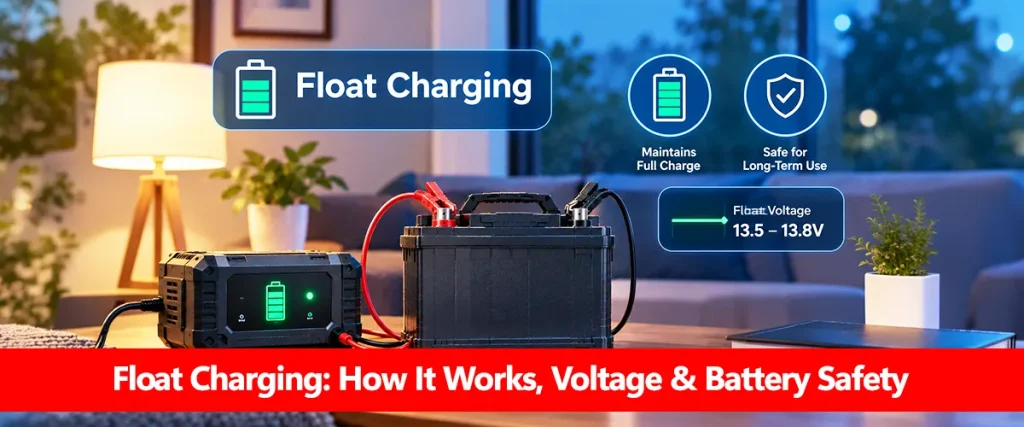
Maintenance charging is useful for compatible batteries, but incorrect settings can still cause damage. Proper float charging maintains a suitable lead-acid battery at a controlled voltage, while excessive float voltage can gradually increase corrosion and water loss.
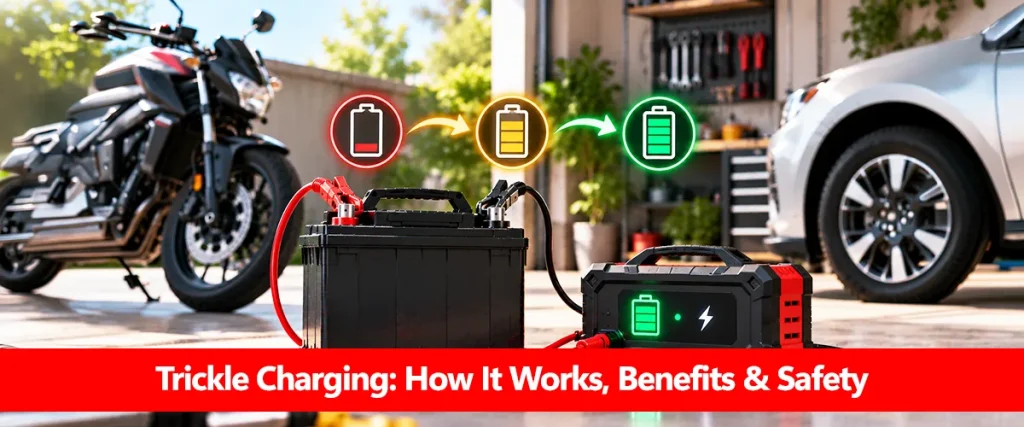
Similarly, basic trickle charging may continue supplying a small current after the battery reaches full charge. Although the current is low, uncontrolled charging can still create problems over time. The charging method must match the battery’s chemistry and maintenance requirements.
Battery Overcharging Warning Signs
Overcharging damage is not always visible, but abnormal battery temperature, physical changes or repeated charger faults may indicate a problem.
Warning signs to watch for include:
- Unusual heating during charging.
- Swelling or deformation of the battery case.
- Excessive bubbling in flooded lead-acid batteries.
- Leakage, unusual odors or visible venting.
- Repeated charger or BMS fault indications.
- Declining backup performance after charging.
These symptoms can have other causes and should not be treated as confirmation of overcharging. A battery that is swollen, leaking, smoking or excessively hot should not be handled or charged further. Follow appropriate emergency precautions and seek qualified assistance.
How to Prevent Battery Overcharging
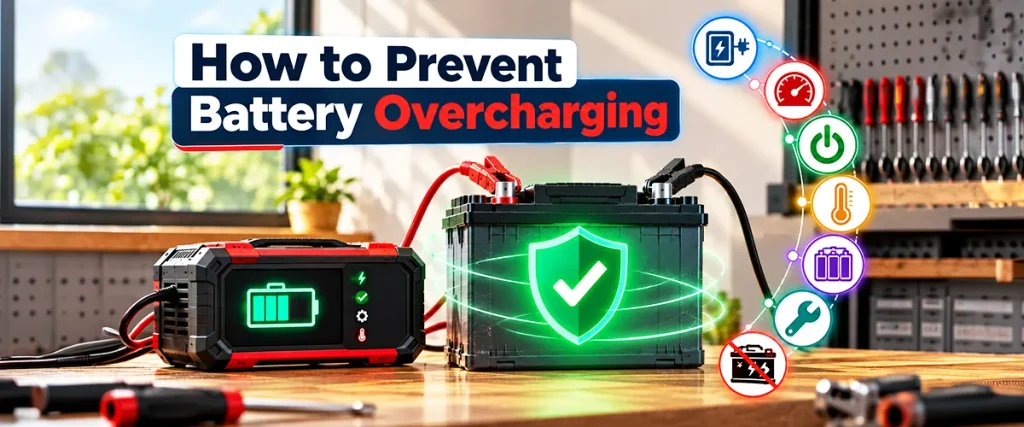
The most effective prevention is a compatible charging system that regulates voltage, current and charging termination according to manufacturer specifications.
Essential preventive measures include:
- Match the charger to the battery chemistry and nominal voltage.
- Use manufacturer-approved charging voltage and current limits.
- Confirm that automatic charge termination works correctly.
- Enable temperature compensation where required.
- Use suitable cell protection and balancing for lithium battery packs.
- Inspect connections and respond promptly to charging faults.
- Avoid charging damaged batteries or bypassing protection devices.
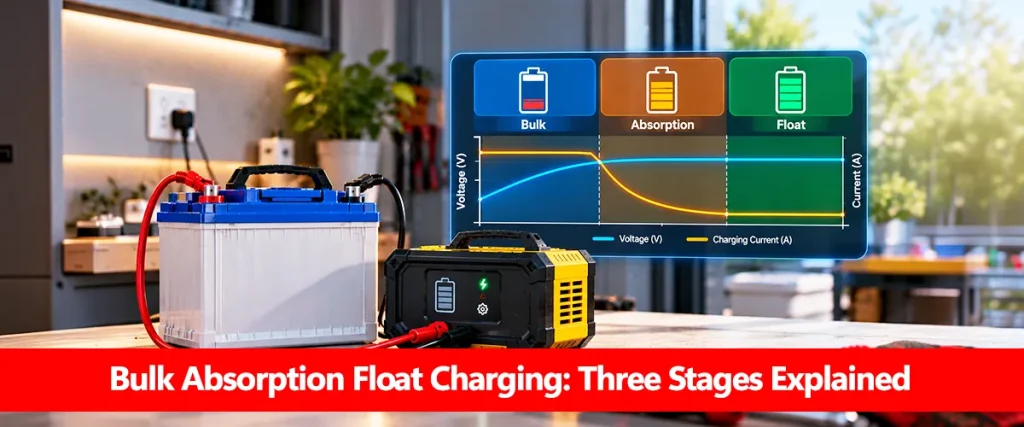
For lead-acid installations, correctly configured bulk absorption float charging helps control charging stages. When selecting replacement equipment, the battery charger selection guide covers compatibility considerations.
Does Reaching 100% Charge Mean a Battery Is Overcharged?
Reaching 100% state of charge does not automatically mean overcharging has occurred. A compatible charger is designed to recognize the battery’s permitted charging endpoint and reduce or stop charging as required.
Overcharging occurs when the battery’s specified limits are exceeded, not simply because it reaches full charge. However, maintaining some lithium batteries at a high state of charge for extended periods can accelerate aging even when their maximum voltage limits are not violated. This distinction is important when evaluating charging behavior in UPS systems, solar installations and equipment that can charge a battery while using it.
Conclusion
Battery overcharging is primarily caused by excessive charging voltage, unsuitable charging profiles, temperature-related errors or failures in charge regulation. It can damage electrodes, reduce usable capacity and create serious safety risks.
Lead-acid batteries are vulnerable to excessive gassing, water loss and corrosion, while lithium-ion batteries can experience harmful chemical reactions and thermal instability. Correct charger compatibility, temperature control and charge termination are essential for preventing these problems.
Frequently Asked Questions
What Is Battery Overcharging?
Battery overcharging occurs when charging continues beyond the battery’s permitted electrical or chemical limits, potentially causing heat generation, degradation and safety risks.
What Is the Main Cause of Battery Overcharging?
Common causes include incorrect charging voltage, incompatible chargers, faulty charge termination and inadequate temperature compensation.
Can Battery Overcharging Reduce Battery Life?
Yes. Overcharging can damage internal battery materials, increase resistance and reduce usable capacity, leading to shorter service life.
Can a Battery Overcharge Even With a Smart Charger?
Yes. A smart charger reduces the risk, but incorrect settings, incompatibility or equipment faults can still create overcharging conditions. For a direct explanation, see can you overcharge a battery.
Can Battery Overcharging Cause a Fire?
Severe overcharging can create fire hazards. Lithium-ion batteries may experience thermal runaway, while lead-acid batteries can release flammable hydrogen gas.
How Do I Know if My Battery Has Been Damaged by Overcharging?
Possible indicators include overheating, swelling, abnormal charging behavior and reduced capacity. A qualified battery technician may be needed to assess the damage.
What Should I Do if My Battery Stops Charging After Overcharging?
Stop further charging attempts if damage is suspected. Do not bypass protective circuits or force-charge the battery. Consult the manufacturer or a qualified technician, and refer to battery not charging for related charging-fault information.