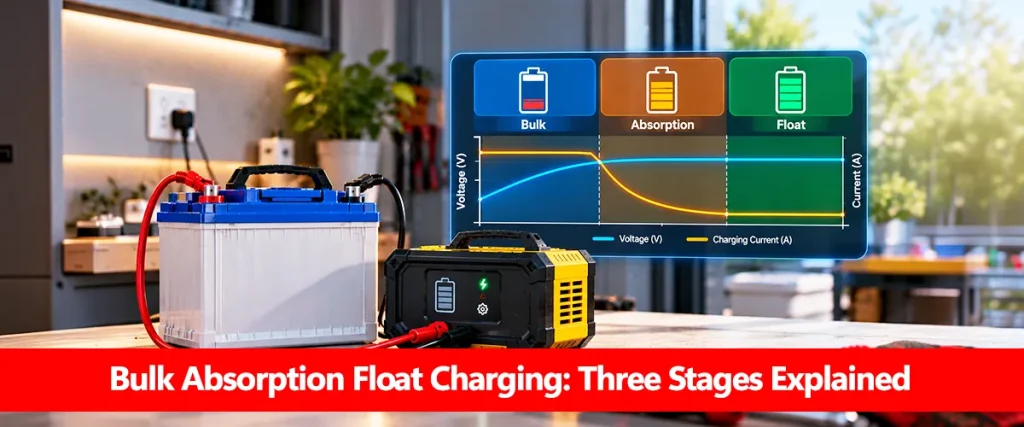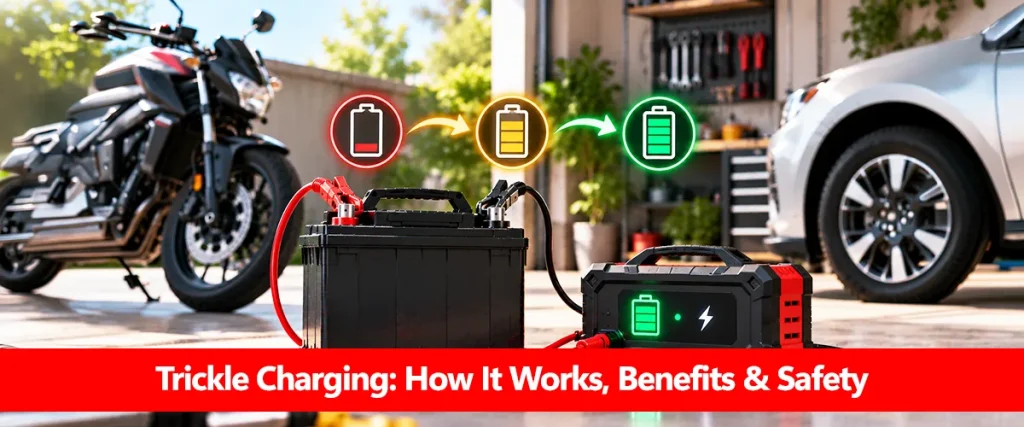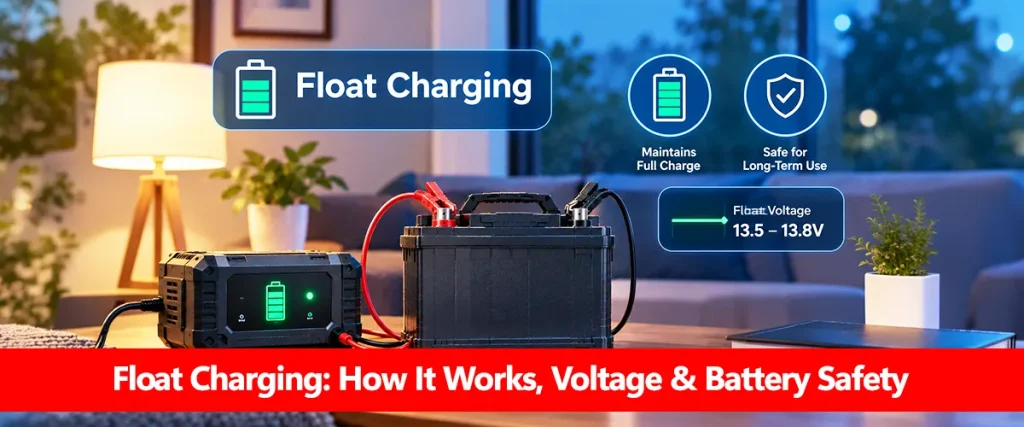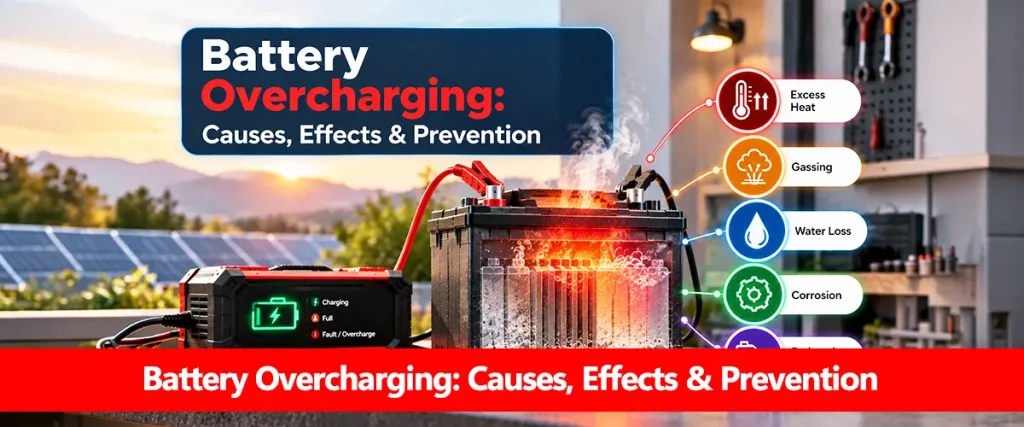
Charging the battery while using it is possible in electrical systems designed to support charging and power delivery at the same time. UPS systems, solar installations, laptops and some portable power stations use this arrangement to operate connected equipment while managing battery charging.
However, not every battery charger supports a connected load. Safe operation depends on charger capacity, battery chemistry, electrical connections and power management. Understanding how battery charging works helps explain how charging and energy consumption are managed.
Can You Charge and Use a Battery at the Same Time?
Yes, a battery can remain connected to equipment while a suitable charging system supplies power. However, the battery itself does not continuously charge and discharge in opposite directions through the same terminals. Its actual charging or discharging state depends on the net current flowing into or out of it.
When the charging source supplies more power than the connected equipment requires, the remaining available power can recharge the battery. If equipment demand exceeds available source power, the battery may provide the difference and begin discharging.
How Does Simultaneous Charging and Usage Work?
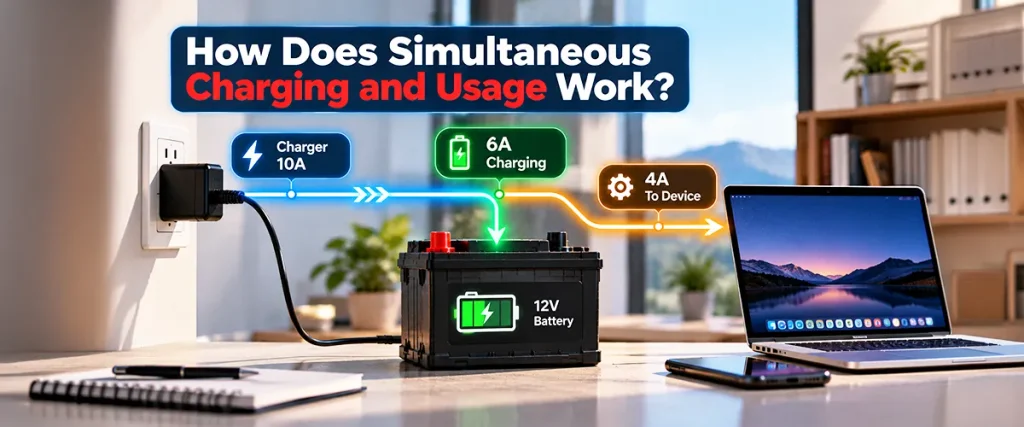
In a compatible system, electrical power from the charger or external source is distributed between the connected load and the battery. Some systems use dedicated power-path management to supply equipment directly while controlling battery charging separately.
Consider a simplified 12V system where a charger supplies 10A and the connected equipment draws 4A. Assuming both currents are measured at the same DC connection point, approximately 6A remains available for battery charging.
| Charger Current | Load Current | Battery Current |
| 10A | 4A | 6A charging |
| 10A | 10A | Approximately zero |
| 10A | 12A | 2A discharging |
These figures are illustrative and assume the charger can maintain its stated output. Actual current depends on voltage, losses, charger regulation and battery condition. The relationship between voltage, amperes and electrical power is explained in battery voltage explained and battery charging current.
Where Is Charging While Using a Battery Common?
Simultaneous charging and power delivery is common in equipment specifically designed to manage external power and battery operation. The charging source may support the load directly, recharge the battery or provide both functions depending on available power.
Typical applications include:
- UPS systems: Supply connected equipment while maintaining backup batteries.
- Solar installations: Distribute generated power between loads and battery storage.
- Laptops: Operate from an external adapter while charging the internal battery.
- Portable power stations: Support pass-through charging when permitted by the manufacturer.
- Vehicles: Use an alternator and electrical system to support equipment and recharge the battery.
These systems have different electrical designs, so their operating capabilities should not be assumed to be identical. For energy storage systems, battery bank sizing also affects how much energy is available when source power becomes insufficient.
What Happens When the Charger Cannot Supply Enough Power?
If connected equipment consumes more power than the charger can provide, a compatible system may draw additional energy from the battery. As a result, the battery’s state of charge can decrease even while the charger remains connected.
This situation is particularly important in solar installations, where power generation changes throughout the day. The battery may charge during periods of excess generation and discharge when electrical demand exceeds available supply. Understanding battery capacity and battery watt-hours helps distinguish stored energy from the power required by connected loads.
Does Battery Chemistry Affect Simultaneous Charging?
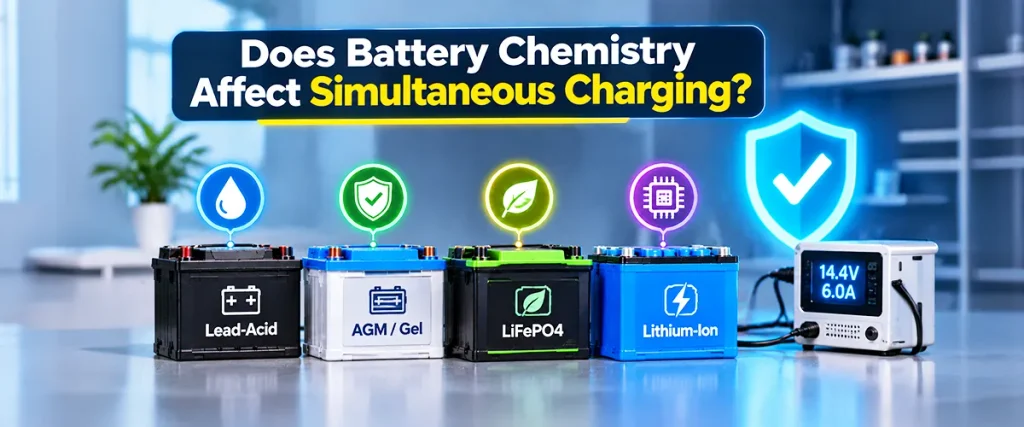
Battery chemistry determines the permitted charging voltage, current, temperature limits and charge termination requirements. A system designed for lead-acid batteries may behave differently from one using lithium-ion technology.
| Battery Type | Important Considerations |
| Flooded lead-acid | Compatible charging profile and ventilation |
| AGM and gel | Correct voltage and charging limits |
| LiFePO4 | Suitable BMS and chemistry-specific charger |
| Other lithium-ion | Correct cell-voltage limits and power-path control |
Lithium battery packs commonly rely on a battery management system for electrical and temperature protection. Using a lead acid charger for lithium battery without confirmed compatibility can introduce charging problems, whether equipment is operating or not.
Can Charging While Using a Battery Damage It?
Charging while using a battery does not automatically cause damage. Properly designed UPS systems, laptops and energy storage equipment routinely manage both functions. Problems are more likely when chargers are incompatible, current limits are exceeded or connected loads interfere with charging control.
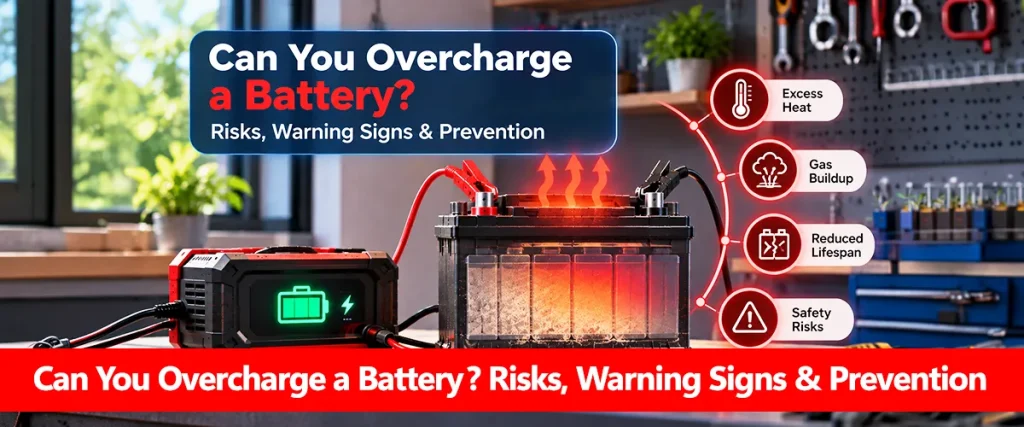
In some basic charging systems, a continuously connected load can prevent the charger from correctly detecting charge completion. This may extend charging unnecessarily or create battery overcharging risks. Frequent heat exposure and cycling can also affect battery cycle life over time.
What Should You Check Before Charging a Battery While Using It?
Before connecting a charger to an operating battery system, confirm that the equipment supports simultaneous charging and load operation. A charger with sufficient rated output is not necessarily suitable unless its charging controls and connection arrangement support the intended use.
Check these requirements:
- Equipment support: Confirm that simultaneous charging and operation are permitted.
- Charger capacity: Ensure the source can safely support the intended load and charging demand.
- Battery compatibility: Match chemistry, voltage and charging profile.
- Load connections: Follow approved wiring and power-path arrangements.
- Temperature limits: Avoid charging outside manufacturer-approved conditions.
- Electrical protection: Use suitable fuses, connectors and battery protection.
- Charge termination: Verify that connected loads do not interfere with charging control.
When equipment compatibility is unclear, consult the manufacturer before connecting a load. Our how to choose battery charger guide covers charger selection, while how to charge a battery explains general charging precautions.
Conclusion
You can charge a battery while using it when the charging system is specifically designed to support simultaneous power delivery and battery charging. The battery’s actual charging state depends on the difference between available source power and the connected load.
Proper charger capacity, chemistry compatibility and electrical protection are essential. Systems with dedicated power-path management can handle these conditions more effectively, while basic chargers may not support connected loads safely.
Frequently Asked Questions
Can I Charge a 12V Battery While Using It?
Yes, if the charger, battery and connected equipment support simultaneous operation. The charger must provide suitable voltage and current without interfering with charging controls.
Does a Battery Charge Slower When Being Used?
It can. When a connected load consumes some of the charger’s available power, less energy may remain for battery charging, increasing charging time.
Can I Charge a Lithium Battery While Using It?
Yes, in compatible systems with suitable charging electronics, battery protection and power-path control. Not every lithium battery or charger supports this arrangement.
What Happens if the Load Uses More Power Than the Charger Supplies?
In a properly designed system, the battery may supply the remaining power and discharge until the load decreases or charging source output increases.
Can Charging While Using a Battery Cause Overcharging?
It can contribute to charging problems if connected loads interfere with charge termination or the charger is incorrectly configured. Learn more in can you overcharge a battery.
Is It Safe to Use a Battery While Charging Overnight?
Only when the equipment and charging system are designed for that operating mode and the manufacturer permits it. Unregulated chargers should not be assumed safe for unattended operation.