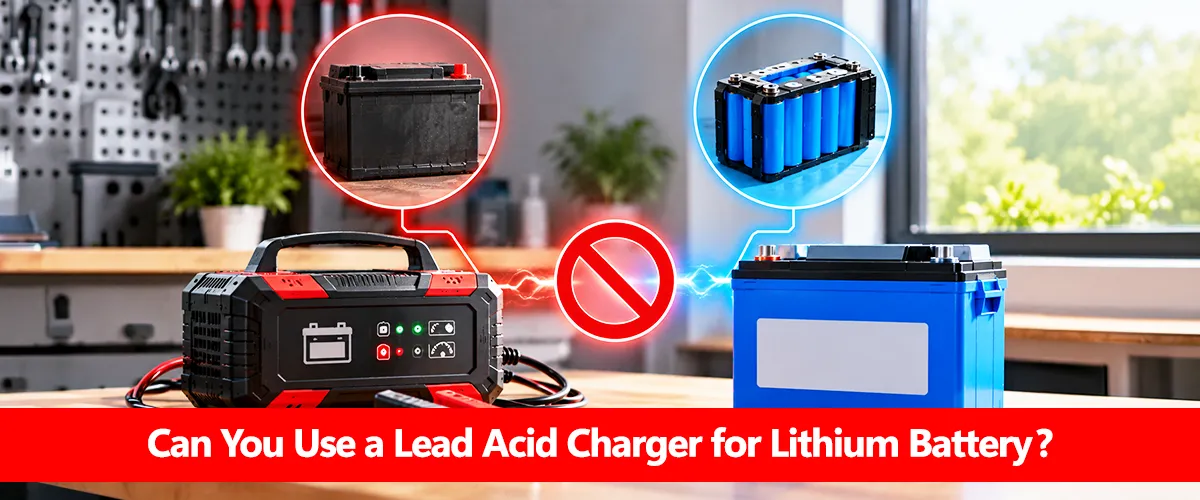
Using a lead acid charger for lithium battery charging is only possible when the charger supports the lithium battery’s specific voltage limits, charging profile and protection requirements. A standard lead-acid charger should not be assumed compatible simply because both batteries have similar nominal voltage ratings.
Some programmable chargers include dedicated lithium modes, while others use lead-acid charging stages that may damage lithium cells. The key is understanding how the charging requirements differ and checking compatibility before connecting the battery.
Why Lead Acid and Lithium Chargers Are Different
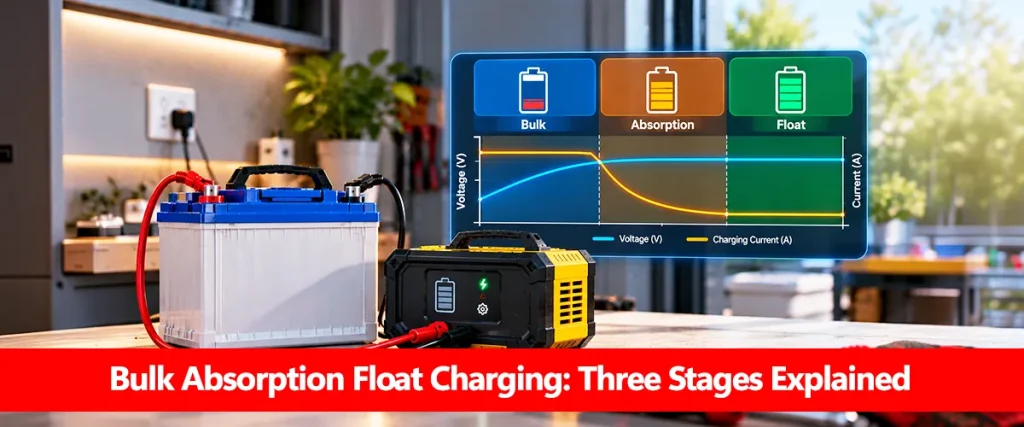
Lead-acid and lithium batteries store energy through different electrochemical reactions, so their charging requirements are not identical. Lead-acid chargers commonly use bulk, absorption and float stages, with some models offering equalization or reconditioning functions.
Lithium-ion batteries typically require controlled charging voltage, current and termination conditions matched to their chemistry. For example, a LiFePO4 battery has different cell-voltage limits from other lithium-ion batteries. This is why choosing a charger based only on a 12V or 24V label can be misleading.
Lead Acid Charger vs Lithium Charger
The main compatibility differences involve charging voltage, maintenance stages and protection systems.
| Feature | Lead-Acid Charger | Lithium-Compatible Charger |
| Charging profile | Typically bulk, absorption and float | Chemistry-specific charging |
| Voltage limits | Designed for lead-acid batteries | Matched to lithium cell configuration |
| Float charging | Commonly supported | Depends on lithium battery specifications |
| Equalization | Available on some models | Lead-acid equalization not permitted |
| Temperature control | May use voltage compensation | Must follow lithium temperature limits |
| BMS compatibility | Not always supported | May support required BMS controls |
Modern chargers can support multiple chemistries through selectable profiles. However, the correct mode must be selected before charging, and its actual settings must match the battery manufacturer’s requirements.
What Happens If You Use the Wrong Charger?
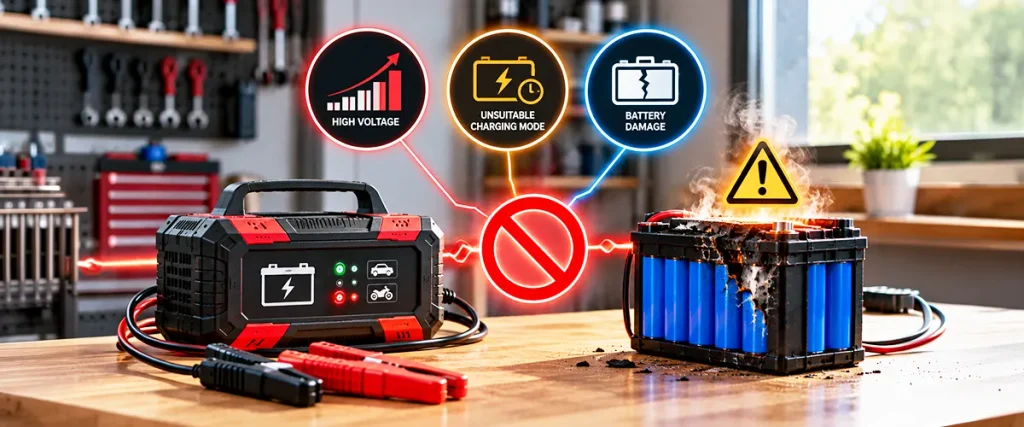
An incompatible lead-acid charger can apply excessive voltage, maintain unsuitable charging conditions or activate high-voltage reconditioning modes. These problems may trigger protection shutdowns, prevent proper charging or cause permanent battery damage.
Three charging differences deserve particular attention:
- Equalization: Some lead-acid chargers raise voltage above normal charging limits. This mode must not be applied to lithium batteries.
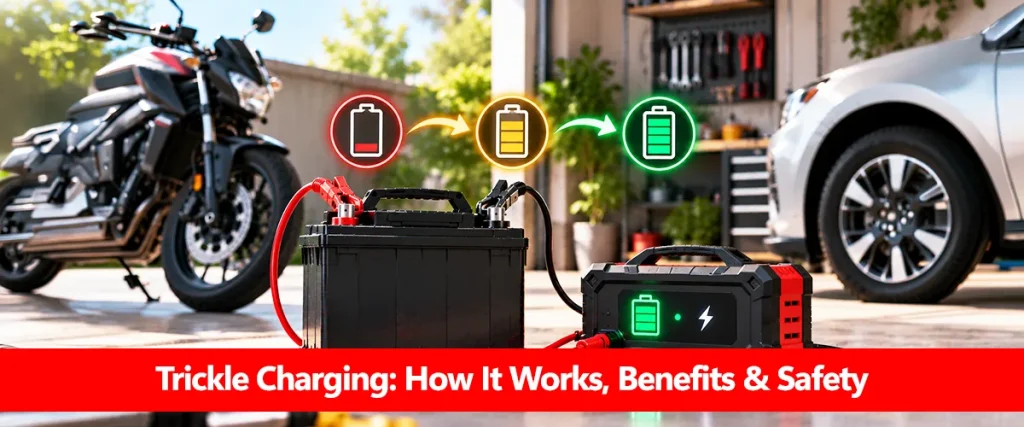
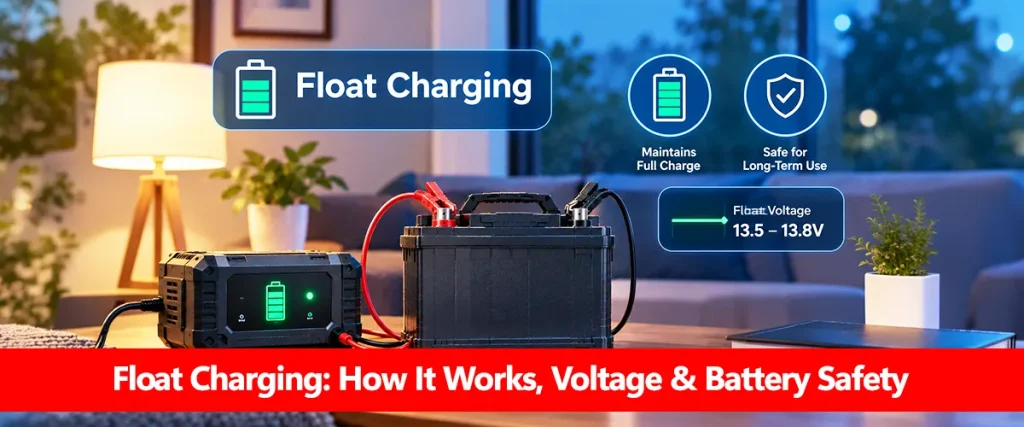
- Float charging: Conventional lead-acid float settings may be unsuitable for lithium batteries. Some lithium systems support a specifically configured lower-voltage maintenance stage, but only when approved.
- Charge termination: Lithium batteries may require different current thresholds or charging termination behavior.
Understanding bulk absorption float charging and battery charging voltage helps explain why these differences matter.
Can a 12V Lead Acid Charger Charge a 12V Lithium Battery?
A 12V lead-acid charger may work with certain 12.8V LiFePO4 battery packs, but only when the charging specifications are compatible and the battery manufacturer permits it.
For example, some 12.8V LiFePO4 batteries specify a charging voltage within approximately 14.2–14.6V. This may overlap with the absorption voltage of certain 12V lead-acid chargers. However, voltage overlap alone does not establish compatibility because equalization, float behavior, current limits and temperature restrictions must also be considered.
Other lithium chemistries may use entirely different cell configurations and voltage limits. Always verify the required battery charging current and voltage against the exact battery model rather than relying on nominal voltage.
Does a Lithium Battery BMS Make Any Charger Safe?
No. A battery management system (BMS) monitors operating conditions and may disconnect charging when voltage, temperature or current exceeds permitted limits. It does not replace proper charging regulation.
Some lithium batteries also require communication between the BMS and charger, particularly in larger energy storage systems. Repeated protection shutdowns should never be treated as normal charging behavior. A compatible battery management system and charger must work together according to manufacturer specifications.
How to Check Charger Compatibility
Before using an existing lead-acid charger with a lithium battery, examine the charger label, manual and available charging modes.
Check the following requirements:
- Battery chemistry: Confirm whether the charger supports LiFePO4 or the exact lithium-ion chemistry.
- Charging voltage: Verify the maximum voltage against the battery manufacturer’s specifications.
- Charging current: Ensure the charger stays within the battery’s permitted current limits.
- Equalization mode: Confirm that high-voltage equalization and desulfation are disabled.
- Float settings: Use only maintenance settings approved for that lithium battery.
- Temperature protection: Confirm that charging is restricted outside the battery’s permitted temperature range.
- BMS requirements: Check whether the charger needs external charge-enable control or communication.
If these conditions cannot be verified, use a dedicated lithium-compatible charger. Our how to choose battery charger guide covers the wider charger selection process.
What About Existing UPS and Solar Chargers?
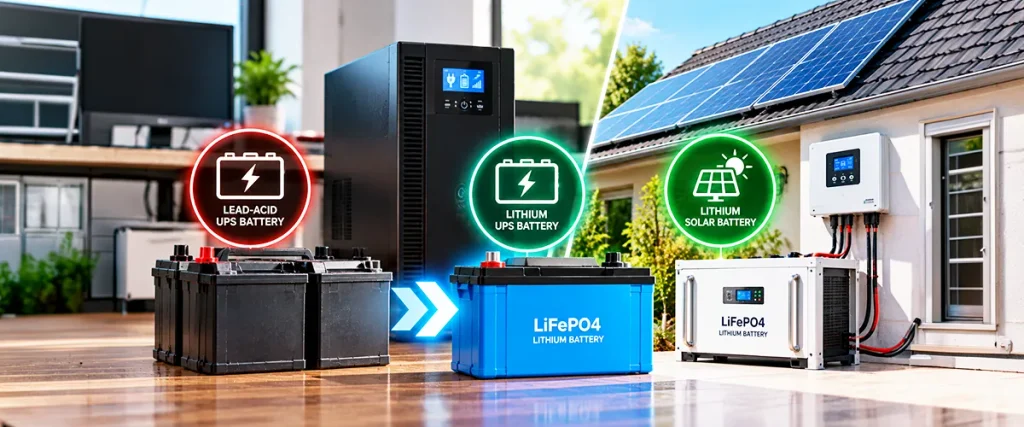
UPS and solar systems often contain built-in charging circuits designed for a particular battery chemistry. Replacing lead-acid batteries with lithium batteries may require changes to charging voltage, charge termination, low-voltage cutoffs and battery protection.
For example, an existing UPS may support a lithium battery for UPS only when its charger and electrical specifications are compatible. The same consideration applies to solar installations, where battery settings must match the selected chemistry. Our lead acid vs lithium solar battery comparison covers the broader storage differences.
For a complete conversion, review replace UPS lead acid battery with lithium before changing the battery type.
When Should You Avoid Using a Lead Acid Charger?
Avoid using a lead-acid charger when its voltage limits are unknown, equalization cannot be disabled or the manufacturer does not approve its use with the lithium battery. Chargers designed only for flooded lead-acid maintenance or reconditioning should not be assumed suitable.
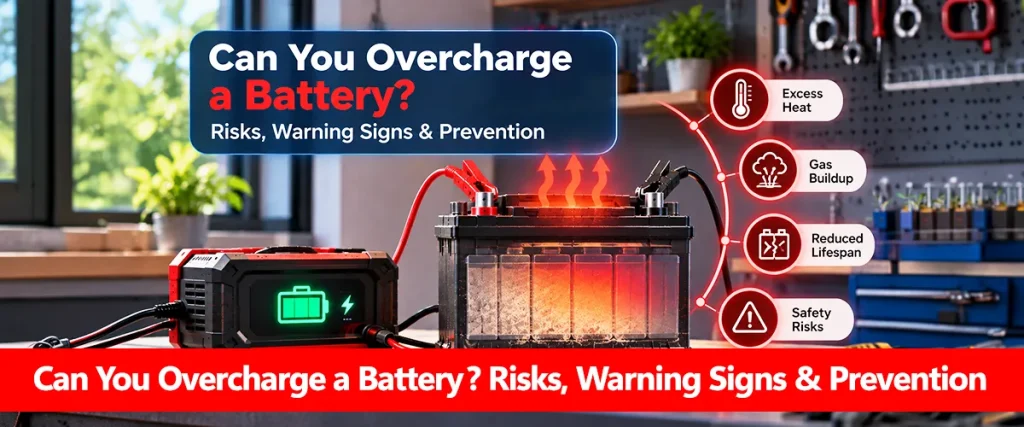
Incompatible charging can also increase the risk of battery overcharging, even when the charger is marketed as automatic. If compatibility is uncertain, consult the battery manufacturer or a qualified technician rather than attempting to bypass protection features.
Conclusion
A lead acid charger for lithium battery charging is acceptable only when its actual charging profile meets the lithium battery manufacturer’s requirements. Matching nominal voltage alone is not enough.
The safest approach is to use a charger with a suitable lithium mode, correct voltage and current limits, appropriate temperature protection and compatible BMS operation. Avoid equalization and unsupported charging settings, and verify all specifications before connecting the battery.
Frequently Asked Questions
Can I Use a Lead Acid Charger for a Lithium Battery?
Only if the charger supports the lithium battery’s specific charging requirements and its manufacturer approves the configuration. Otherwise, use a dedicated lithium-compatible charger.
Can a 12V Lead Acid Charger Charge a 12V LiFePO4 Battery?
Some chargers may be compatible because their charging voltage ranges overlap, but compatibility also depends on charging current, equalization, float settings and battery protection.
What Happens if You Charge Lithium With a Lead Acid Charger?
An incompatible charger may cause incomplete charging, BMS shutdowns, accelerated degradation or unsafe overvoltage conditions.
Can You Float Charge a Lithium Battery?
Some lithium battery systems support manufacturer-approved low-voltage maintenance settings, but conventional lead-acid float charging should not automatically be applied.
Can an AGM Charger Charge a LiFePO4 Battery?
An AGM charger should only be used if its actual charging profile matches the LiFePO4 battery specifications and the manufacturer permits it. AGM mode alone does not guarantee compatibility.
Why Does My Lead Acid Charger Not Charge a Lithium Battery?
Possible reasons include incompatible voltage settings, battery detection thresholds or a BMS protection shutdown. Do not bypass protection circuits to force charging; follow the manufacturer’s troubleshooting guidance.
Is a Dedicated Lithium Charger Better?
A compatible lithium charger is generally the more straightforward option because its charging profile is designed for the battery chemistry. Always confirm that its specifications match the battery.