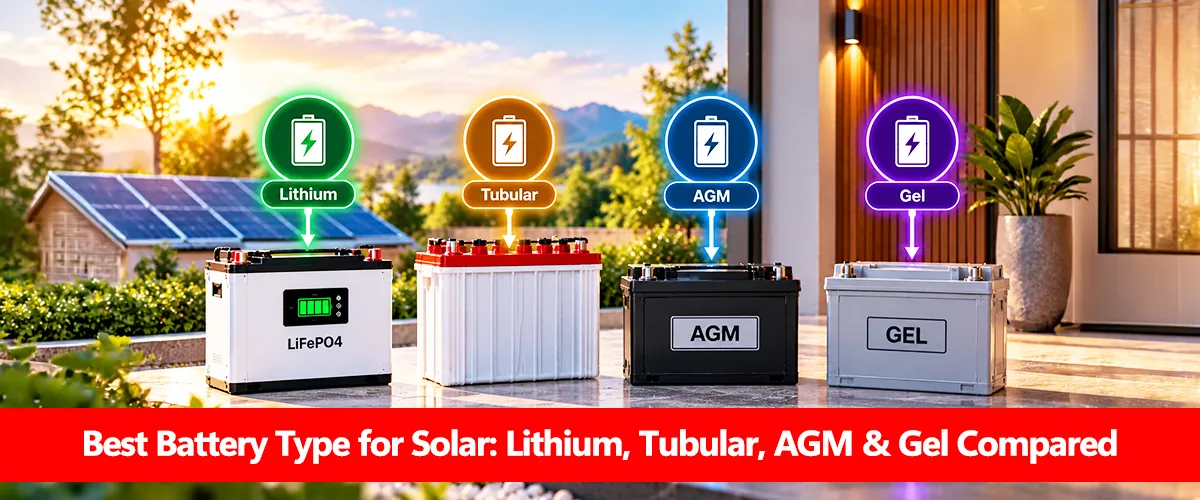
The best battery type for solar is generally LiFePO4 for frequent charging and discharging because of its long cycle-life potential, high usable capacity and relatively low maintenance. However, tubular lead-acid batteries can be a practical choice for lower initial budgets, while AGM and gel batteries suit selected backup applications.
Choosing the right battery depends on daily electricity consumption, backup requirements, inverter compatibility and long-term ownership costs. Different solar batteries offer different advantages, so the decision should be based on actual system requirements rather than chemistry alone.
Which Battery Types Are Used for Solar Systems?
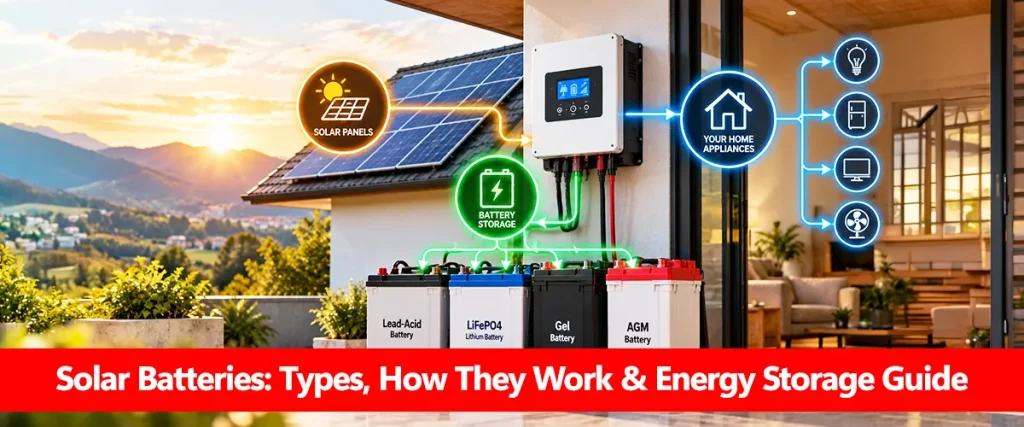
Solar energy storage commonly uses lithium-ion and lead-acid battery technologies. Their differences affect charging efficiency, maintenance, installation space and expected service life.
| Battery Type | Main Advantage | Main Limitation | Suitable Application |
| LiFePO4 | Long cycle life and high usable capacity | Higher initial investment | Daily solar storage |
| NMC lithium-ion | Higher energy density | Different thermal and aging characteristics | Space-sensitive systems |
| Tubular lead-acid | Lower initial cost | Heavier and often maintenance-intensive | Budget-conscious backup |
| AGM | Sealed, low-maintenance construction | Lower usable capacity under frequent deep cycling | Occasional standby |
| Gel | Sealed design with suitable deep-cycle models | Sensitive to incorrect charging | Selected backup installations |
These are general chemistry characteristics rather than guarantees for individual products. A well-designed LiFePO4 battery is often attractive for daily cycling, but battery quality and manufacturer specifications remain important.
LiFePO4: A Strong Choice for Daily Solar Storage
LiFePO4, or lithium iron phosphate, is a lithium-ion chemistry commonly used in residential solar storage. It generally offers strong thermal stability, high usable capacity and longer cycle-life potential than conventional lead-acid batteries.
LiFePO4 batteries also require relatively little routine maintenance and are available in modular systems that may support future capacity expansion. Their main considerations include initial cost, battery management system requirements and compatibility with the hybrid inverter. For homeowners expecting regular battery use, the differences explained in LiFePO4 vs lead acid battery are especially relevant.
When Does a Tubular Lead-Acid Battery Make Sense?
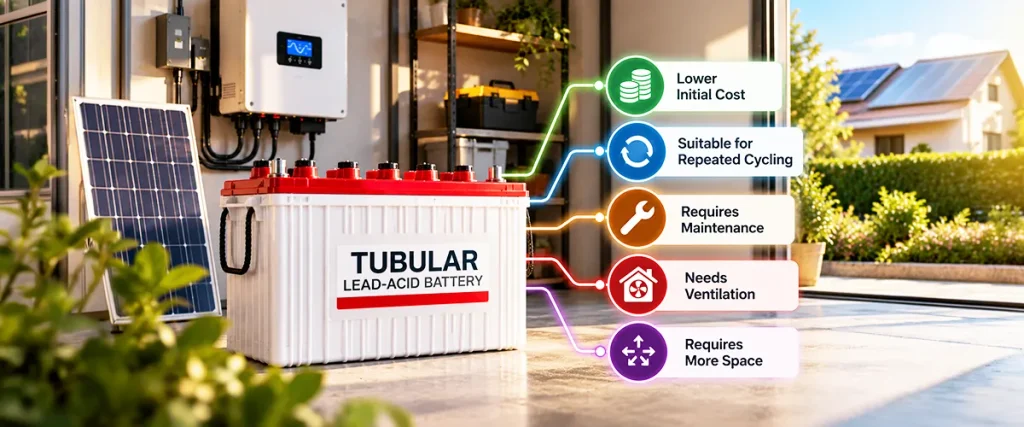
Tubular lead-acid batteries remain a practical option where initial purchase cost is the main priority. Their plate construction is intended to support repeated cycling, making them suitable for some inverter and backup installations.
However, flooded tubular batteries generally require electrolyte maintenance, ventilation and more installation space than lithium alternatives. Frequent deep discharge can also reduce their service life. The lithium vs tubular battery for solar comparison explains the trade-offs for solar applications.
Are AGM and Gel Batteries Good for Solar?
AGM and gel batteries are sealed lead-acid designs that eliminate routine distilled-water refilling. They can be useful where maintenance access is limited or where the installation already uses compatible lead-acid charging equipment.
Their main limitations include lower energy density and potentially shorter cycle life under frequent deep discharge compared with suitable LiFePO4 batteries. AGM models can be useful for standby applications, while gel batteries require carefully controlled charging voltage. The AGM vs gel battery guide covers their individual characteristics.
Best Solar Battery Type for Different Applications
There is no single battery chemistry that is ideal for every solar installation. The most suitable option depends on how frequently the battery cycles, how much energy it must deliver and the available budget.
| Solar Application | Battery Type to Consider | Main Reason |
| Daily home solar storage | LiFePO4 | Frequent cycling and usable capacity |
| Regular nighttime electricity use | LiFePO4 | Efficiency and cycle-life potential |
| Limited initial budget | Tubular lead-acid | Lower initial purchase cost |
| Occasional emergency backup | AGM or tubular | Standby suitability |
| Limited installation space | Lithium-ion | Higher energy density |
| Low-maintenance system | LiFePO4 or suitable sealed lead-acid | Reduced routine servicing |
| Existing lead-acid inverter setup | Compatible lead-acid or approved lithium | Equipment compatibility |
These recommendations assume properly matched equipment. The best option for a household that uses batteries every night may differ from one that needs backup only during occasional outages.
How Much Battery Capacity Do You Need?
Battery type and battery size are separate decisions. Even a suitable chemistry will perform poorly if the storage capacity is insufficient for household electricity demand.
Solar battery capacity is commonly expressed in kilowatt-hours (kWh). Buyers should compare usable capacity, not just the nominal energy printed on the label, because depth-of-discharge limits determine how much energy is available during normal operation.
Correct solar battery sizing considers daily consumption, backup duration and system losses. Once the required capacity is known, how many batteries for solar helps determine the number of individual units needed.
Check Inverter and Battery Compatibility Before Buying
A suitable battery must work with the solar inverter, charging equipment and existing electrical system. Matching nominal voltage alone is not enough, especially when replacing lead-acid batteries with lithium.
Check the following specifications:
- Operating voltage: Battery voltage range supported by the inverter.
- Charge and discharge current: Maximum current permitted by both devices.
- BMS communication: Required CAN, RS485 or manufacturer-specific protocols.
- Power output: Continuous and peak discharge capability.
- Connection limits: Supported battery expansion and parallel configurations.
- Temperature limits: Approved charging and operating conditions.
A compatible battery management system helps protect lithium cells, but the inverter must also support the battery’s electrical requirements. For existing solar installations, verify compatibility before adding batteries to an existing solar system.
Compare Battery Lifespan, Warranty and Long-Term Cost
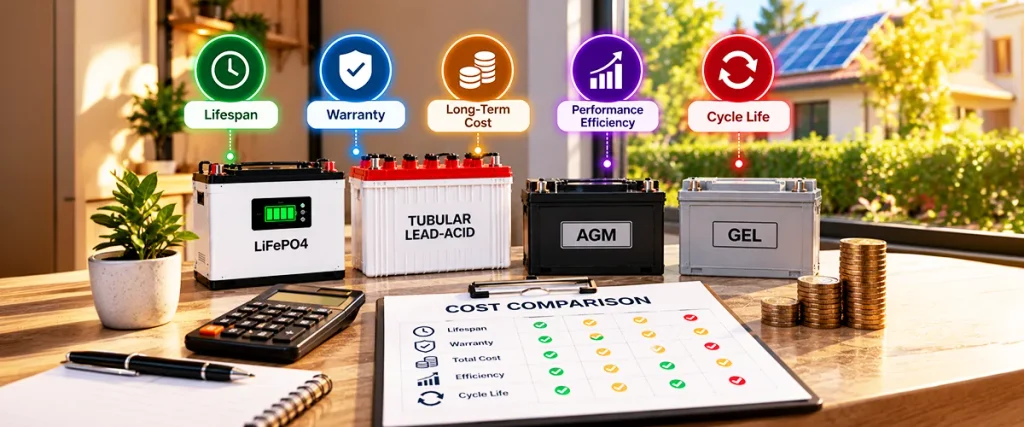
A lower purchase price does not always mean a battery will cost less over its service life. Batteries used for frequent daily cycling should be evaluated by their usable energy, expected cycle life, efficiency and potential replacement requirements.
Before selecting a product, compare the manufacturer’s published specifications.
| Specification | What to Check |
| Usable capacity | kWh available under permitted discharge conditions |
| Cycle-life rating | Test depth of discharge, temperature and remaining capacity |
| Round-trip efficiency | Percentage of charging energy recovered |
| Warranty duration | Number of years covered |
| Capacity retention | Guaranteed capacity at the warranty endpoint |
| Energy throughput | Total warranted energy delivered |
| Service support | Installation, replacement and warranty claim process |
A battery advertised with a high cycle count may not offer better value if its usable capacity or warranty conditions are less favorable. Understanding how long solar batteries last helps evaluate these claims. For cost comparisons, review solar battery price in Pakistan rather than relying on outdated product prices.
Final Checklist for Choosing a Solar Battery
Before purchasing, compare complete battery systems rather than individual specifications in isolation.
- Determine your required backup duration and usable energy.
- Select a chemistry suited to your expected cycling frequency.
- Confirm inverter voltage and communication compatibility.
- Compare continuous power output and charging limits.
- Review manufacturer-rated efficiency and cycle life.
- Check warranty conditions, capacity retention and throughput.
- Verify installation requirements, safety documentation and after-sales support.
- Compare total ownership costs, including possible replacements.
For buyers evaluating local availability and support, best solar battery in Pakistan provides a dedicated market-focused comparison.
Conclusion
The best battery type for solar depends on the purpose of the installation. LiFePO4 is often a strong option for frequent solar cycling because of its usable capacity, efficiency and cycle-life potential. Tubular lead-acid batteries remain practical when initial cost is the primary concern, while AGM and gel batteries suit selected backup requirements. Choose a battery based on usable energy, inverter compatibility, warranty, safety and long-term cost rather than chemistry or purchase price alone.
Frequently Asked Questions
Which Battery Type Is Best for Solar Panels?
LiFePO4 is often a suitable choice for regularly cycled solar storage because of its usable capacity, lifespan potential and low maintenance requirements. Other battery types may be preferable for different budgets and operating conditions.
Is Lithium Better Than Lead-Acid for Solar?
Lithium batteries generally provide higher energy density and usable capacity, while lead-acid batteries often cost less initially. Our lead acid vs lithium solar battery guide covers their differences.
Which Solar Battery Lasts the Longest?
Lifespan depends on chemistry, cell quality and operating conditions. LiFePO4 generally offers longer cycle-life potential than many conventional lead-acid batteries, but manufacturer ratings should determine the comparison.
Is a Tubular Battery Good for Solar?
Yes, a suitable tubular deep-cycle battery can support solar storage. However, maintenance requirements and reduced lifespan under frequent deep discharge should be considered.
What Is the Best Battery for a 5kW Solar System?
There is no fixed battery size or chemistry for every 5kW system. The appropriate battery depends on daily electricity consumption, backup duration, inverter specifications and budget.
Should I Choose a 5kWh or 10kWh Solar Battery?
Choose according to the required usable energy and backup duration. A larger battery stores more energy, but its power rating, voltage and inverter compatibility must also be suitable.
What Should I Check in a Solar Battery Warranty?
Check warranty years, permitted operating conditions, energy throughput, end-of-warranty capacity retention, replacement coverage and local after-sales support.