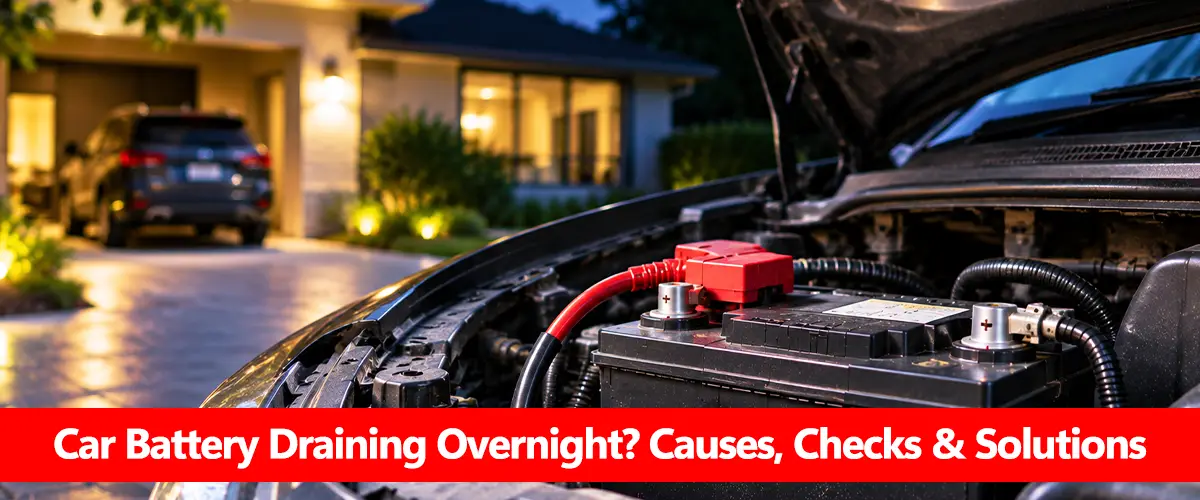
A car battery draining overnight is usually caused by excessive electrical consumption while the vehicle is parked, a weak battery or incomplete charging. Interior lights, dashcams, faulty relays and electrical modules that remain active are common reasons a car starts normally in the evening but fails the next morning. However, a dead battery does not always need replacement. Finding out whether the problem is the battery itself or an electrical drain can save you from unnecessary repairs.
What Causes a Car Battery to Drain Overnight?
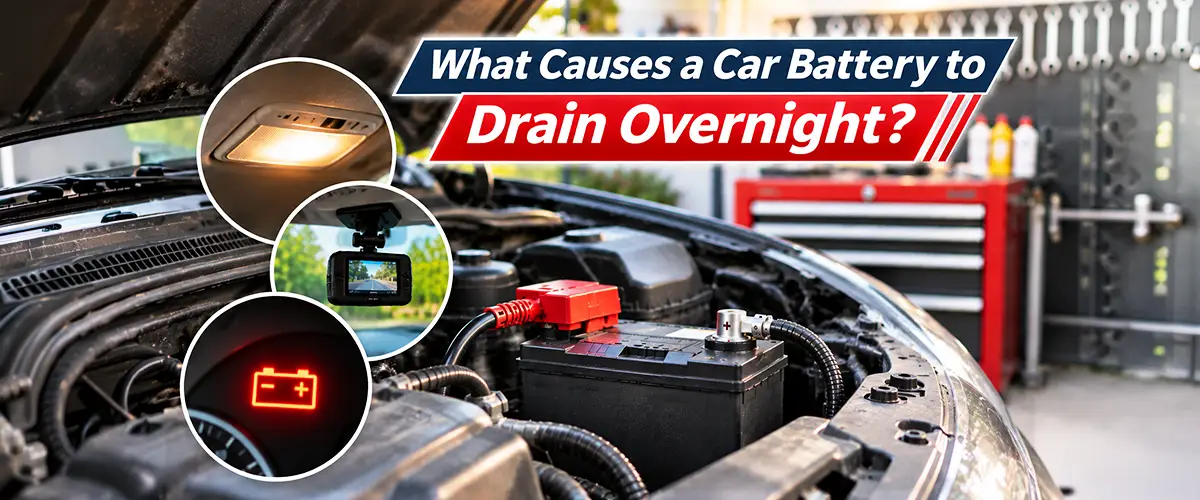
Modern cars continue using a small amount of electricity after the engine is switched off. Security systems, clocks and electronic modules need standby power. Problems occur when an accessory consumes too much electricity or the battery cannot retain enough charge.
Here are the most common causes:
| Cause | Why It Drains the Battery |
| Interior or boot lights | Lights remain on after parking |
| Dashcam or GPS tracker | Continuous recording or incorrect wiring |
| Faulty relay | Keeps an electrical circuit active |
| Electronic module fault | Prevents the vehicle from entering sleep mode |
| Weak battery | Cannot retain sufficient starting power |
| Charging-system issue | Battery is already undercharged when parked |
If the problem happens repeatedly, check the wider causes explained in car battery keeps dying. A vehicle that only struggles to start after several hours of parking is more likely to need standby-current and battery-health checks.
How Much Battery Drain Overnight Is Normal?
A small electrical drain is normal because certain vehicle systems remain active. Many cars have a resting current draw in the tens of milliamps, with around 50mA commonly used as an initial reference. However, the acceptable limit depends on the vehicle and should be confirmed using manufacturer specifications.
For example, a continuous 50mA draw consumes approximately 0.6Ah over 12 hours, while a 500mA draw consumes 6Ah during the same period. That larger drain can leave an already weak battery unable to start the engine.
A battery’s ability to start the car also depends on its charge level, condition and cold cranking amps (CCA). Even a relatively small drain can cause problems if the battery was already undercharged.
How to Find What Is Draining Your Car Battery
Start with basic checks before investigating electrical wiring. Many overnight battery problems come from accessories or simple issues that are easy to overlook.
- Check interior lights: Make sure boot, glove-box and cabin lights switch off completely.
- Inspect aftermarket devices: Check dashcams, GPS trackers and audio equipment for continuous power usage.
- Review battery age: Older batteries may struggle to retain enough starting power.
- Check battery voltage: A well-charged conventional 12V lead-acid battery commonly reads around 12.6–12.8V after resting.
- Consider your driving habits: Frequent short trips may leave the battery undercharged.
- Arrange a parasitic-draw test: If nothing obvious is found, ask a technician to check standby electrical consumption.
A low voltage reading does not automatically mean the battery is damaged. It may simply need charging. Our car battery voltage guide explains normal readings, while how to test a car battery covers battery condition checks.
How Do You Test for Parasitic Battery Drain?
Parasitic-draw testing measures how much electricity a vehicle consumes after its electronic systems enter sleep mode. A technician typically uses a suitable DC current clamp, automotive diagnostic equipment or a properly configured multimeter.
The vehicle must first be allowed to settle because opening doors or operating accessories can wake electronic modules and temporarily increase current consumption.
If excessive draw is detected, the technician can identify the responsible circuit and determine whether a relay, accessory or control module needs attention.
Safety note: Never connect a multimeter set to amperes directly across battery terminals. Testing live vehicle circuits without suitable equipment can damage electronics or cause injury.
How to Stop Your Car Battery From Draining Overnight
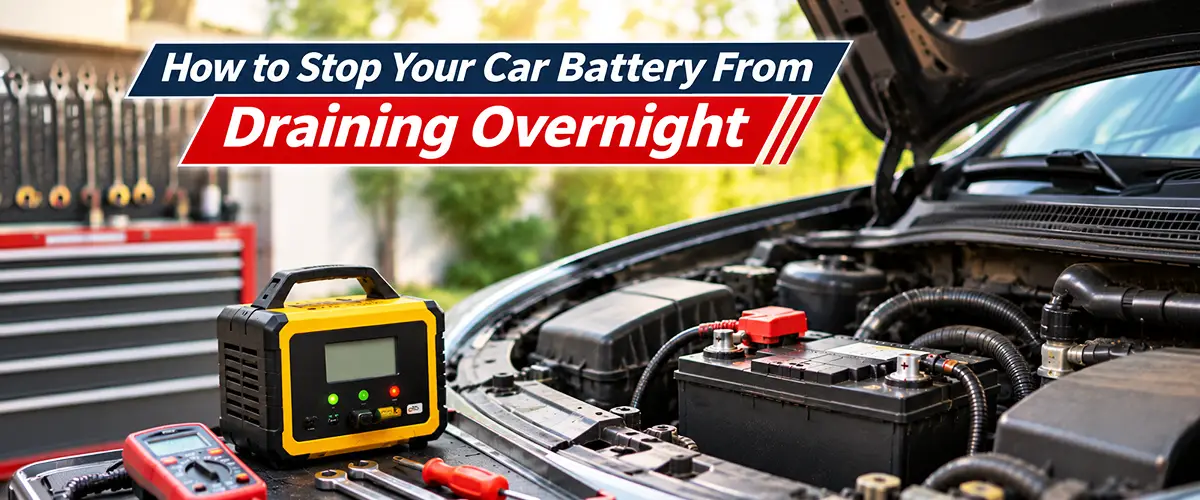
The correct fix depends on the actual cause. Replacing a battery will not solve the problem if an electrical accessory continues drawing excessive power.
Practical solutions include:
- Switch off unnecessary accessories before leaving the vehicle.
- Correct dashcam or tracker settings to prevent excessive parking-mode consumption.
- Repair faulty relays or wiring after professional diagnosis.
- Recharge an undercharged battery using compatible equipment.
- Check the alternator if the battery is not recharging during driving.
- Replace the battery if testing confirms poor starting performance or internal deterioration.
If the battery needs recharging, follow the steps in how to charge a car battery. For vehicles with repeated starting difficulties, the signs of a bad car battery guide can help identify other warning signs.
When Should You Replace the Car Battery?
If the vehicle’s standby electrical consumption is normal but the battery repeatedly fails after proper charging, it may have reached the end of its useful life. Conventional car batteries commonly last around 3–5 years, although heat, poor charging and frequent discharge can reduce that lifespan. Have the battery professionally tested before replacing it. If replacement is necessary, choose a battery that matches the vehicle’s required capacity, CCA, technology and physical size. Our car battery lifespan guide explains when replacement becomes more likely.
Important: Never charge or jump-start a swollen, leaking, cracked or unusually hot battery. Seek professional assistance if physical damage is visible.
Conclusion
A car battery draining overnight problem commonly results from excessive parasitic draw, incomplete charging or an aging battery. Start by checking interior lights, aftermarket accessories and battery condition before considering replacement. If the issue continues, professional parasitic-draw and charging-system testing can identify the cause. Fixing the underlying problem is more effective than repeatedly charging or replacing the battery.
Frequently Asked Questions
Why Does My Car Battery Die Overnight?
Common reasons include interior lights left on, faulty electrical modules, excessive parasitic draw, incomplete charging or an aging battery.
Can a Dashcam Drain a Car Battery Overnight?
Yes. Parking-mode recording can consume battery power, especially when the dashcam lacks suitable low-voltage protection.
What Is Normal Parasitic Draw in a Car?
Many vehicles have standby consumption in the tens of milliamps. Around 50mA is a common initial reference, but manufacturer specifications determine the correct limit.
Can a Bad Alternator Cause Overnight Battery Drain?
Yes. A faulty alternator may leave the battery undercharged before parking. Certain alternator electrical faults can also cause unwanted current draw.
How Can I Stop My Battery From Dying Overnight?
Check hidden lights and aftermarket accessories, confirm the battery is properly charged, and arrange parasitic-draw testing if the problem continues.
Should I Replace My Battery if It Dies Overnight?
Not immediately. Test the battery and charging system first. A healthy battery can also discharge overnight because of an electrical fault.