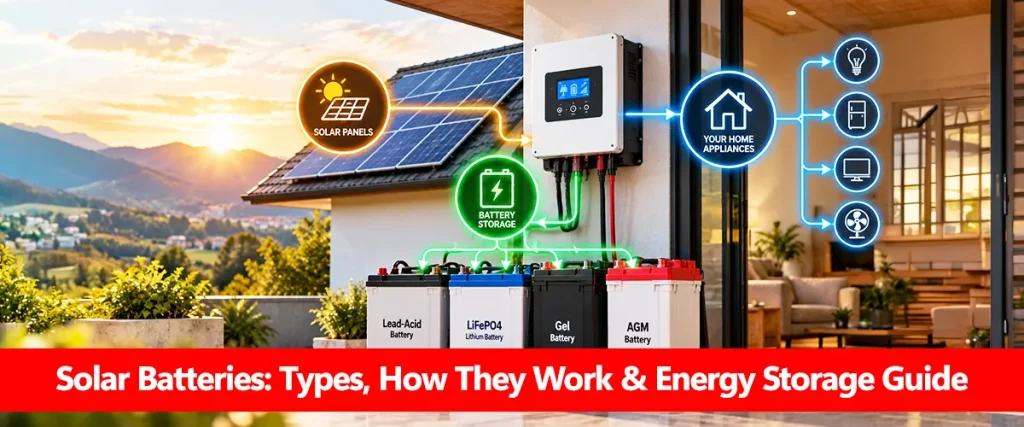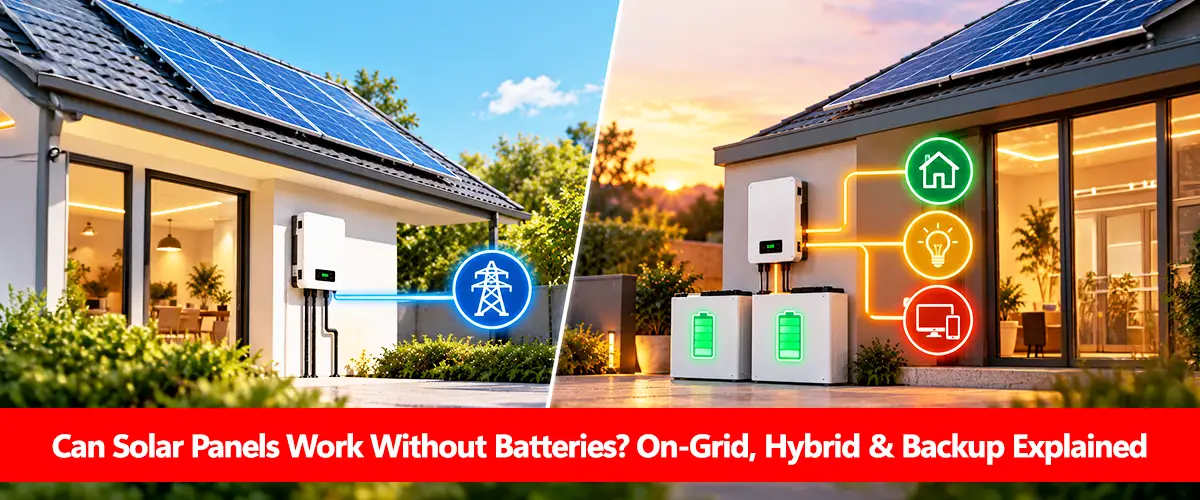
Solar panels use photovoltaic (PV) cells to convert sunlight into direct current (DC) electricity. A compatible solar inverter converts this electricity into alternating current (AC) for household appliances.
In a standard grid-connected installation, available solar electricity can supply household loads while the utility grid covers any shortfall. When solar production exceeds consumption, surplus electricity may be exported where permitted by the utility arrangement.
Unlike systems with solar battery storage, a battery-free installation cannot save unused energy for nighttime consumption. Electricity must be used, exported where permitted or limited by the system.
Which Solar Systems Can Operate Without Batteries?
Battery requirements vary between on-grid, hybrid and off-grid solar installations. Some systems are designed to operate without storage, while others require batteries for stable output or backup functionality.
| Solar System | Can Work Without Batteries? | Operation During Grid Outage |
| On-grid | Yes | Normally shuts down |
| Hybrid | Often, depending on model | Backup depends on supported features |
| Off-grid | Some specialized systems | Daytime operation only if specifically supported |
| Solar with battery backup | Uses batteries | Can supply backup loads when correctly configured |
An on-grid solar system is usually the simplest battery-free arrangement. Hybrid inverters may support operation without batteries, but this does not guarantee uninterrupted electricity during load-shedding.
For homeowners considering future storage, choosing compatible equipment is important before adding batteries to an existing solar system.
What Happens During a Power Outage?
One of the biggest limitations of conventional battery-free solar installations is their behavior during electricity outages.
Standard grid-tied inverters include anti-islanding protection. When the utility supply fails, the inverter disconnects to prevent electricity from flowing into lines that may be under repair.
This means a typical on-grid solar system stops supplying household electricity during load-shedding, even when sunlight is available.
For backup during outages, the installation must have suitable inverter and electrical isolation equipment. Batteries are commonly used because they provide stable power when solar generation changes or stops. A properly designed home backup battery system can support essential loads without depending entirely on immediate sunlight.
Can Solar Panels Run Appliances Directly During Daylight?
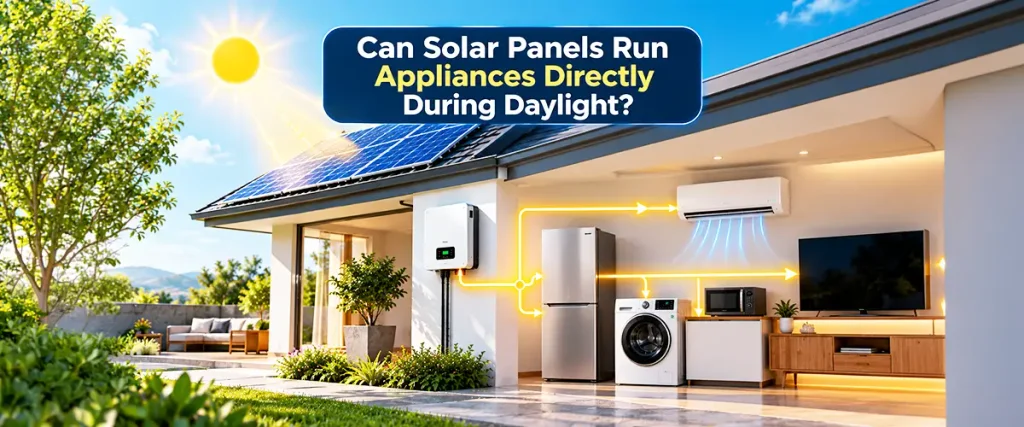
Yes, certain battery-free systems can power suitable appliances directly from available solar energy. However, they need compatible power-conversion equipment and must be designed for operation without storage.
For example, specialized solar water pumps and selected hybrid inverters can operate using solar generation during daylight. Some advanced inverter systems also support limited solar-only backup during grid outages.
Important limitations include:
- Output depends on available sunlight.
- Cloud cover can reduce power suddenly.
- High starting loads may exceed available solar output.
- Power may stop when generation becomes insufficient.
- Nighttime operation requires another power source.
A conventional grid-tied inverter cannot simply be disconnected from the grid and expected to power appliances. Battery-free operation must be explicitly supported by the equipment manufacturer.
What Happens When Solar Generation Is Lower Than Household Demand?
In a grid-connected system, the utility supply normally provides the electricity needed when solar production is insufficient. For example, if the solar inverter produces 2kW while household appliances consume 3kW, the grid may provide the remaining 1kW. In a specialized battery-free off-grid system, there may be no alternative power source. If the load exceeds available generation, equipment may shut down or the inverter may stop supplying electricity.
This is why electrical power and stored energy are different considerations. Battery capacity is relevant when storage is included, while the inverter’s power rating determines how much load it can support at a given time.
Do You Need Batteries for Nighttime Solar Power?
Solar panels cannot generate useful electricity from sunlight after sunset. A home without solar battery storage normally uses grid electricity at night, provided the utility supply is available. If nighttime electricity must come from solar energy generated earlier, storage is required. The amount of stored energy needed depends on daily electricity consumption, appliance loads and the desired operating duration.
Proper solar battery sizing considers these requirements, while how many batteries for solar explains how storage capacity translates into the number of battery units.
Solar Panels With vs Without Batteries
Adding batteries changes how solar electricity can be used. Battery-free installations mainly support immediate solar consumption, while storage systems can shift some daytime energy to later hours.
| Feature | Without Batteries | With Compatible Battery Storage |
| Daytime solar use | Yes | Yes |
| Nighttime stored solar energy | No | Yes |
| Initial equipment cost | Generally lower | Generally higher |
| Backup during outages | Usually unavailable | Available with backup-capable equipment |
| Battery maintenance | Not required | Depends on chemistry |
| Energy storage losses | No battery cycling losses | Charging and discharging losses |
| Installation complexity | Often lower | Generally higher |
Battery storage adds cost and conversion losses but provides additional flexibility. Its suitability depends on electricity consumption, outage frequency and system design rather than a universal rule.
When Is a Battery-Free Solar System a Good Choice?
A solar system without batteries can be practical when electricity demand occurs mainly during daylight and a reliable utility connection is available.
It may suit households that:
- Consume a substantial portion of electricity during sunny hours.
- Have relatively infrequent power outages.
- Want to reduce initial equipment costs.
- Do not require nighttime solar backup.
- Have a suitable grid-connected inverter and utility arrangement.
However, households facing frequent load-shedding or requiring reliable evening power may benefit from battery storage. When storage becomes necessary, best battery type for solar explains the available technologies, while lead acid vs lithium solar battery covers their practical differences.
Can You Add Batteries to a Solar System Later?
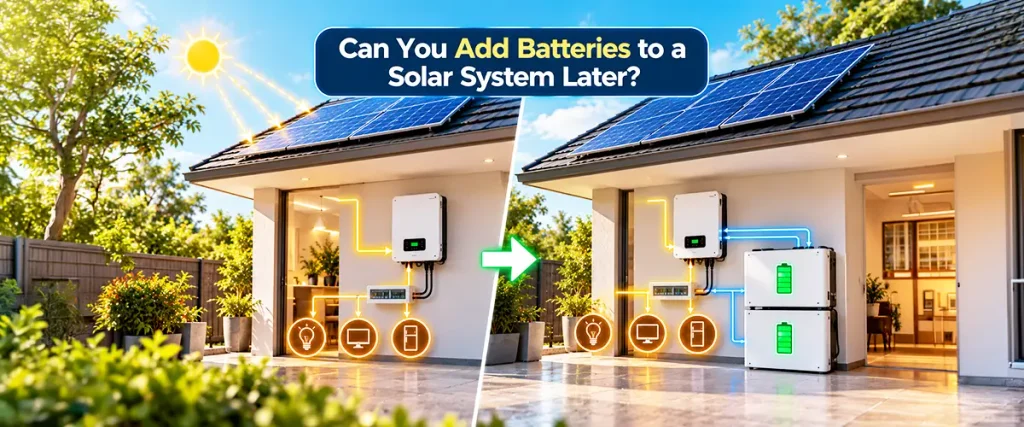
Yes, many existing solar installations can be upgraded with battery storage, but compatibility depends on the inverter and electrical configuration. Some hybrid inverters support compatible batteries directly, while conventional on-grid systems may require additional battery inverters, AC-coupled storage equipment or an inverter replacement.
Before upgrading, check:
- Whether the existing inverter supports battery storage.
- Battery voltage and charging compatibility.
- Backup output and grid-isolation requirements.
- Required usable storage capacity.
- Battery chemistry and maintenance needs.
- Installation costs and manufacturer warranty conditions.
For frequent cycling, a suitable LiFePO4 battery may offer advantages, while some lead-acid designs remain relevant for budget-sensitive backup installations. Understanding how long solar batteries last and solar battery maintenance helps assess long-term ownership requirements.
Important Checks Before Installing Solar Without Batteries
A battery-free solar system should be designed around its expected operating conditions. The installer must verify inverter compatibility, solar array specifications and utility connection requirements.
The most important question is whether the system is intended only to reduce daytime grid consumption or also to provide electricity during outages.
If backup is essential, confirm the exact inverter’s supported backup mode instead of assuming every hybrid inverter can operate without batteries. Any change to grid isolation or backup wiring must follow manufacturer instructions and applicable electrical requirements.
Conclusion
Can solar panels work without batteries? Yes. On-grid solar systems commonly generate electricity without battery storage, allowing households to use solar power during daylight while relying on the utility grid when necessary. However, conventional on-grid systems normally stop supplying electricity during outages, and battery-free installations cannot store daytime energy for nighttime use. A battery-free system may be sufficient for reducing daytime electricity consumption, while a properly configured battery-backed system offers greater flexibility and more dependable backup power.
Frequently Asked Questions
Can Solar Panels Work Without Batteries and an Inverter?
Solar panels generate DC electricity, but most household appliances require AC power. A compatible inverter is normally necessary for standard household use, although specialized DC equipment may operate through suitable solar power controllers.
Can Solar Panels Work at Night Without Batteries?
No. Solar panels require sunlight to generate useful electricity. Without battery storage, nighttime electricity must come from the grid or another available power source.
Do On-Grid Solar Systems Need Batteries?
No. Conventional on-grid solar systems can operate without batteries while the utility grid is available.
Can a Hybrid Solar Inverter Work Without Batteries?
Some hybrid inverters support battery-free operation, but capabilities vary by model. Battery-free operation does not automatically mean the inverter can provide backup during grid outages.
Can Solar Panels Work During Load-Shedding Without Batteries?
Standard grid-connected solar systems shut down during outages for safety. Certain specialized inverters support limited solar-only daytime backup, but the exact equipment must explicitly provide this feature.
Is Solar Without Batteries Cheaper?
Battery-free solar installations generally have lower initial equipment costs because they do not require battery storage. Total value depends on electricity usage, utility arrangements and backup requirements.
Is It Better to Install Solar Panels With or Without Batteries?
The better option depends on your needs. Battery-free solar is practical for daytime consumption with grid support, while battery storage is useful for nighttime solar energy and backup power. Storage requirements should be assessed before purchasing equipment.
Can I Upgrade My On-Grid Solar System With Batteries Later?
Yes, in many cases. The upgrade may require compatible battery storage equipment, additional power conversion hardware or an inverter replacement, depending on the existing system.