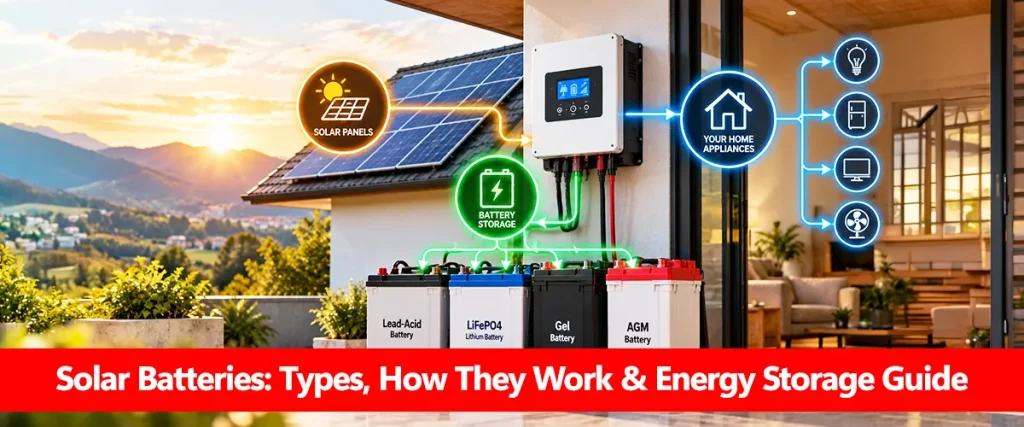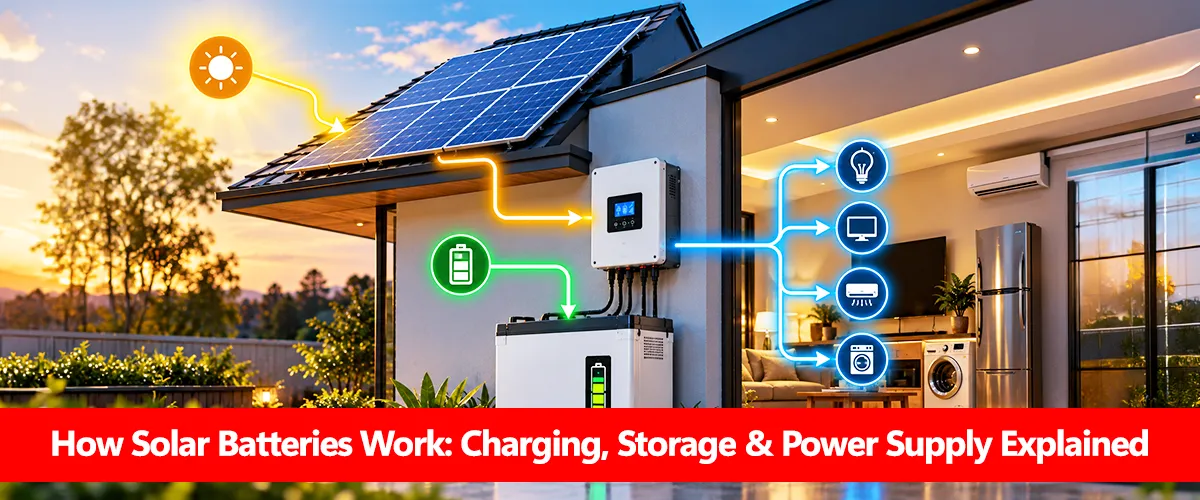
How solar batteries work is simple: solar panels generate electricity during daylight, a compatible charging system stores available energy in a rechargeable battery, and an inverter supplies that stored energy to household appliances when needed.
Unlike solar panels, batteries do not generate electricity. They store electrical energy through reversible chemical reactions and release it later. This allows a properly designed solar storage system to supply power after sunset or during electricity outages. Understanding the role of solar batteries helps explain how solar generation and backup storage work together.
How Solar Panels Charge a Battery
Solar panels contain photovoltaic (PV) cells that convert sunlight into direct current (DC) electricity. When solar generation exceeds immediate electricity demand, a compatible system can direct the available surplus toward charging the battery.
A charge controller or hybrid inverter regulates charging voltage and current according to the battery’s requirements. During charging, electrical energy is converted into stored chemical energy inside the battery cells. This process follows the principles explained in how batteries store energy and requires suitable battery charging voltage settings.
The Solar Battery Charging and Discharging Cycle
A solar battery system continuously responds to electricity generation, household consumption and the battery’s state of charge. Although operating priorities vary by system settings, the typical process follows these stages.
| Situation | How the Solar Battery System Works |
| Daytime with sufficient sunlight | Solar panels generate electricity for connected loads |
| Excess solar generation | Available surplus charges the battery |
| Evening or low sunlight | Battery supplies stored energy when configured to do so |
| Battery reaches discharge limit | Grid or another power source may take over |
| Grid power outage | Backup-capable inverter may supply selected loads |
The charging and discharging process is managed automatically by compatible equipment. Battery discharge limits also prevent the system from using more energy than permitted. Our depth of discharge guide explains how these operating limits affect usable energy.
How Does a Solar Battery Power Your Home at Night?
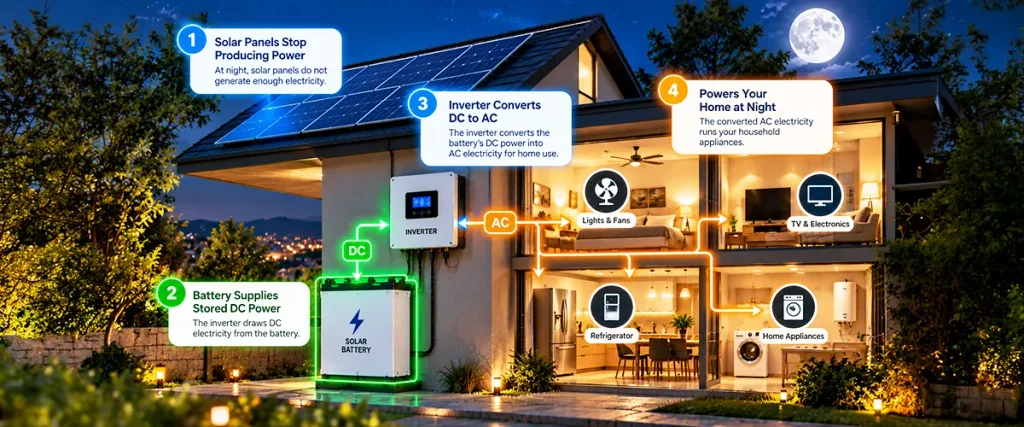
When solar panels stop producing sufficient electricity, a compatible inverter can use energy stored in the battery to operate household appliances. Since batteries store DC electricity and most household appliances require alternating current (AC), the inverter converts DC power into usable AC electricity.
The available backup time depends on stored energy, connected load and conversion losses. A battery with higher usable capacity can generally support the same load for longer, provided its power output is sufficient. Understanding battery watt-hours and solar battery sizing helps explain why battery capacity and household electricity consumption must be considered together.
What Is the Role of a Hybrid Inverter?
A hybrid inverter manages electricity conversion and power flow between solar panels, batteries, connected loads and the utility grid where supported. It can prioritize different energy sources according to system settings and available power.
Solar battery systems generally use one of two connection arrangements:
- DC-coupled storage: Solar-generated DC electricity can charge the battery through compatible DC-side charging equipment before conversion to household AC power.
- AC-coupled storage: Solar electricity is converted into AC before an additional battery inverter or conversion system manages charging.
Both arrangements can store solar electricity, but their conversion losses and equipment requirements differ. For existing installations, adding batteries to an existing solar system requires checking inverter compatibility.
What Happens When Solar Battery Storage Is Full?
When a solar battery reaches its permitted upper charging limit, the charging system reduces or stops charging. Any additional solar electricity may be used by connected appliances, exported to the grid where permitted, or limited by the inverter or solar controller.
If the battery is full and solar generation exceeds demand, the system must manage the surplus safely rather than continue charging indefinitely. Correct charging control helps prevent battery overcharging and protects battery performance.
How Solar Batteries Work During Power Outages
A solar battery can provide backup power during a grid outage only when the installation includes equipment designed for that purpose. A standard grid-connected solar inverter may shut down during an outage, even when sunlight is available.
A backup-capable hybrid inverter can isolate the relevant circuits from the grid and supply electricity from available battery storage or solar generation. However, the supported appliances and backup duration depend on the system’s power rating, usable battery capacity and configuration.
This is why a home backup battery installation requires more than simply connecting a battery to existing solar panels. Systems designed without storage may still operate normally during daylight, as explained in can solar panels work without batteries.
What Affects Solar Battery Storage Efficiency?
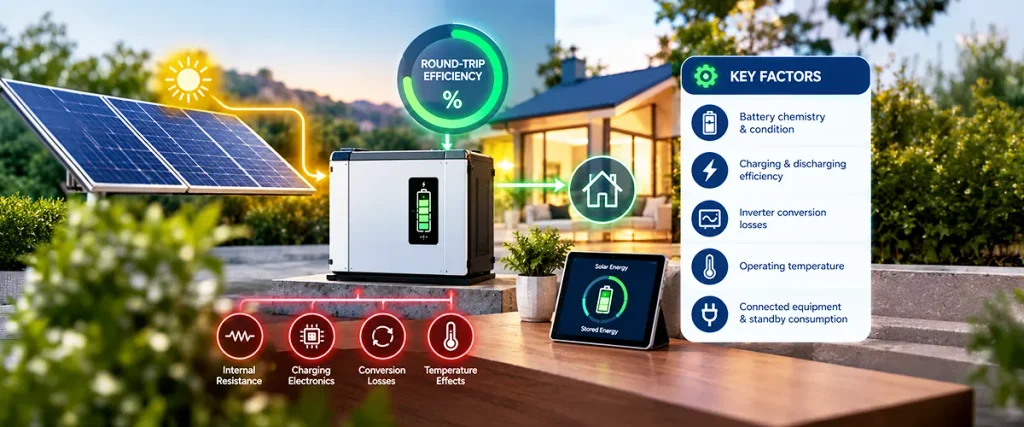
Not all electricity used to charge a solar battery is recovered during discharge. Some energy is lost through internal resistance, charging electronics, conversion equipment and temperature-related effects.
Round-trip efficiency measures how much energy is recovered compared with the energy supplied to storage. Actual performance depends on battery chemistry and system design.
Important factors include:
- Battery chemistry and condition.
- Charging and discharging efficiency.
- Inverter conversion losses.
- Operating temperature.
- Connected equipment and standby consumption.
Lithium batteries, particularly LiFePO4 batteries, are widely used in solar storage because of their charging characteristics and cycle-life potential. However, lead-acid batteries remain relevant in some installations, with different maintenance and usable-capacity considerations.
How Much Energy Can a Solar Battery Store?
Solar storage capacity is commonly measured in kilowatt-hours (kWh). A battery rated at 5kWh has a nominal energy capacity of 5 kilowatt-hours, but the amount available for household use depends on permitted discharge limits and system efficiency.
For instance, if a solar system produces more energy than the household consumes during daylight, the surplus can charge the battery until its available capacity or charging limits are reached. The actual number of batteries required depends on daily energy consumption, desired backup duration and system design.
These requirements are covered in how many batteries for solar, while long-term performance depends on factors such as battery cycle life and temperature.
Conclusion
Understanding how solar batteries work explains how electricity moves from solar panels into battery storage and later powers connected appliances. Solar panels generate electricity, charging equipment manages energy storage, and an inverter converts stored power into a form suitable for household use.
A properly designed system can improve solar self-consumption and provide backup power where supported. Its performance depends on battery capacity, inverter compatibility, charging efficiency and operating conditions.
Frequently Asked Questions
How Do Solar Batteries Work Without Sunlight?
Solar batteries use electricity stored earlier when sunlight was available. They can supply energy until their usable capacity reaches the permitted discharge limit.
Do Solar Panels Charge Batteries Directly?
Solar panels generate DC electricity, but battery charging normally requires compatible voltage and current regulation through a charge controller, hybrid inverter or other approved charging equipment.
Can Solar Batteries Power a House Overnight?
Yes, if the battery has sufficient usable energy and the inverter supports the required household loads. Backup duration depends on electricity consumption and battery capacity.
Do Solar Batteries Charge When the Grid Is Off?
They can, provided the solar installation supports off-grid or backup operation and has suitable charging equipment. Conventional grid-connected systems may shut down during outages.
Do Solar Batteries Store AC or DC Electricity?
Electrochemical batteries store energy chemically and deliver DC electrical power. Inverters convert this power into AC electricity for household appliances.
What Happens When a Solar Battery Is Fully Charged?
The charging system reduces or stops battery charging. Additional solar electricity may supply loads, be exported where permitted or be limited by the system.
Does a Solar Battery Need a Battery Management System?
Many lithium battery packs require a battery management system to monitor cell voltage, temperature and charging conditions. Protection requirements depend on battery chemistry and system design.